From Chips to Cash: Taiwan Shares the Gains From the AI Boom
From Chips to Cash: Taiwan Shares the Gains From the AI Boom
- Source: SemiVision
- Author: SEMIVISION
- Published: 2026-08-17T16:37:41+08:00
- URL: https://tspasemiconductor.substack.com/p/from-chips-to-cash-taiwan-shares
中文翻譯與英文原文(雙語)
從晶片到現金:台灣共享人工智慧繁榮紅利 --- From Chips to Cash: Taiwan Shares the Gains From the AI Boom


From Chips to Cash: Taiwan Shares the Gains From the AI Boom
從晶片到現金:台灣共享人工智慧繁榮紅利
Original Article By SemiVision Research [Reading time: 5 mins]
原文作者:SemiVision Research [閱讀時間:5 分鐘]

Aug 17, 2026
Share分享
From Chips to Cash: Taiwan Shares the Gains From the AI Boom
從晶片到現金:台灣分享人工智慧繁榮的紅利
Taiwan’s artificial-intelligence boom is no longer merely a semiconductor story. It is becoming a fiscal story as well.
台灣的人工智慧熱潮已不再只是半導體的故事,也逐漸成為財政的故事。
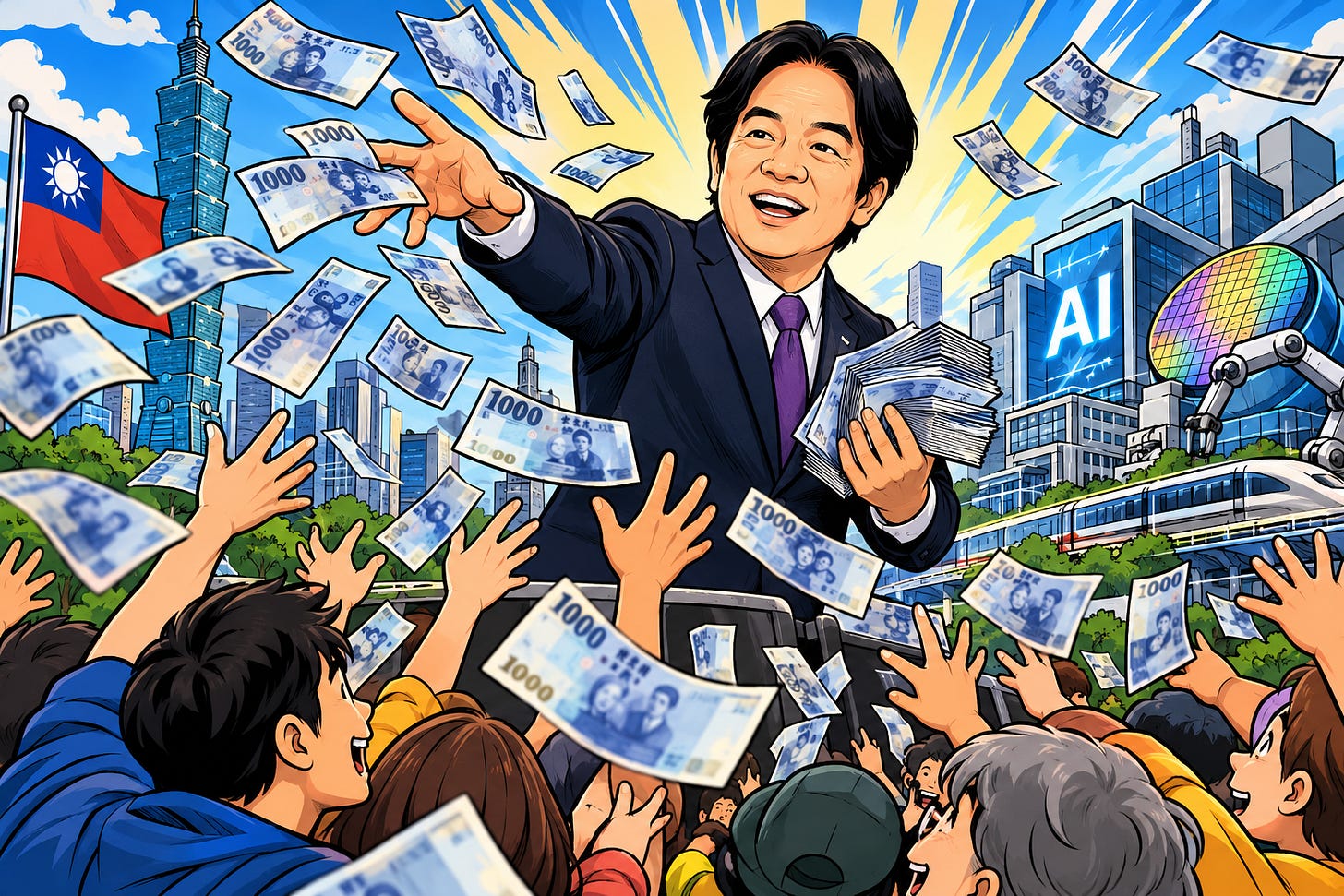
President Lai Ching-te said on Monday that Taiwan’s stronger-than-expected economic growth has given the government enough fiscal room to distribute NT$10,000 in cash to every eligible citizen next year, while still maintaining what the administration describes as a balanced budget and effectively zero new borrowing.
賴清德總統週一表示,台灣經濟成長優於預期,使政府擁有足夠的財政空間,明年可向每位符合資格的民眾發放新台幣 10,000 元現金,同時仍能維持行政院所稱的平衡預算,並實現實質零新增借貸。
The political message is straightforward: if AI is creating extraordinary growth, the benefits should not remain concentrated among semiconductor companies, exporters and their shareholders. Part of the windfall should flow back to households.
這項政策傳達的政治訊息明確:若人工智慧(AI)正創造非凡成長,其效益不應僅集中於半導體公司、出口商及其股東手中,部分紅利應回流至家庭部門。
The more important economic question is what Taiwan plans to do with the rest of that windfall.
更關鍵的經濟問題在於,台灣計畫如何運用其餘的這筆意外之財。

7月6日7 月 6 日
AI Is Changing Taiwan’s Fiscal Arithmetic
人工智慧正在改變台灣的財政算式
Taiwan’s economic growth has accelerated sharply as global demand for AI servers, high-performance computing and cloud infrastructure continues to rise.
隨著全球對 AI 伺服器、高效能運算及雲端基礎設施的需求持續攀升,台灣的經濟成長大幅加速。
According to the government’s latest estimates, first-quarter GDP growth in 2026 was revised upward from 14.55% to 15.43%, while second-quarter growth was estimated at 12.93%. Growth for the first half reached 14.15%.
根據政府最新預估,2026 年第一季 GDP 成長率由 14.55% 上修至 15.43%,第二季成長率則預估為 12.93%;上半年整體成長率達 14.15%。
The government now expects full-year GDP growth of 11.05%, up from an earlier forecast of 9.64%. If achieved, it would represent Taiwan’s strongest annual growth performance in 39 years.
政府目前預期全年國內生產總值(GDP)成長率將達 11.05%,高於先前預測的 9.64%。若此目標達成,將創下台灣 39 年來最強勁的年度經濟成長表現。
Behind these numbers sits an unusually powerful industrial engine.
這些數字背後,是一股異常強勁的產業引擎在驅動。
Taiwan has become one of the principal manufacturing hubs of the global AI economy. TSMC produces many of the world’s most advanced AI processors. Taiwanese companies manufacture AI servers, networking equipment, substrates, printed circuit boards, cooling systems and power electronics. A large portion of the infrastructure required to build modern AI data centres either passes through Taiwan or depends on Taiwanese suppliers.
台灣已成為全球人工智慧(AI)經濟體的主要製造樞紐之一。台積電(TSMC)生產許多全球最先進的 AI 處理器;台灣企業則負責製造 AI 伺服器、網路設備、基板、印刷電路板、散熱系統與電源電子元件。建構現代化 AI 資料中心所需的基礎設施中,有相當大比例需經過台灣,或仰賴台灣供應商。

4月17日4 月 17 日
This has translated into higher exports, stronger corporate investment and, increasingly, higher tax revenue.
這已轉化為更高的出口、更強勁的企業投資,以及日益增加的稅收。
For fiscal year 2027 — officially year 116 under Taiwan’s calendar — projected central-government revenue has been raised to NT$3.9266 trillion.
2027 會計年度(依台灣曆法為民國 116 年)的中央政府歲入預估已上調至新台幣 3.9266 兆元。
The government therefore plans to increase expenditure by NT$235.7 billion, including funding for a NT$10,000 cash payment per person.
因此,政府計畫增加支出新台幣 2,357 億元,其中包括每人發放新台幣 1 萬元現金的經費。
Lai has branded the policy as a way of ensuring that the “AI dividend” is shared by everyone.
賴清德將此政策定位為確保「AI 紅利」能由全民共享的措施。
The Distribution Problem Behind the Boom
繁榮背後的分配難題
There is an important economic rationale behind the political slogan.
這項政治口號背後存在重要的經濟邏輯。
Taiwan’s AI boom is highly uneven.
台灣的 AI 繁榮呈現高度不均衡的狀態。
Workers, investors and companies connected to semiconductors, servers and the broader technology supply chain have benefited disproportionately from the current investment cycle. But much of Taiwan’s workforce remains employed in services, traditional industries and small and medium-sized businesses where productivity growth — and wage increases — may be considerably slower.
與半導體、伺服器及更廣泛科技供應鏈相關的勞工、投資者和企業,從當前的投資週期中獲得了不成比例的利益。然而,台灣大部分勞動力仍受僱於服務業、傳統產業及中小企業,這些領域的生產力成長——以及薪資漲幅——可能明顯較為緩慢。

5月6日5 月 6 日
A country can therefore report double-digit GDP growth while many households experience only modest improvements in disposable income.
因此,一個國家可能呈現雙位數的 GDP 成長,而許多家庭的實質可支配收入卻僅有小幅改善。
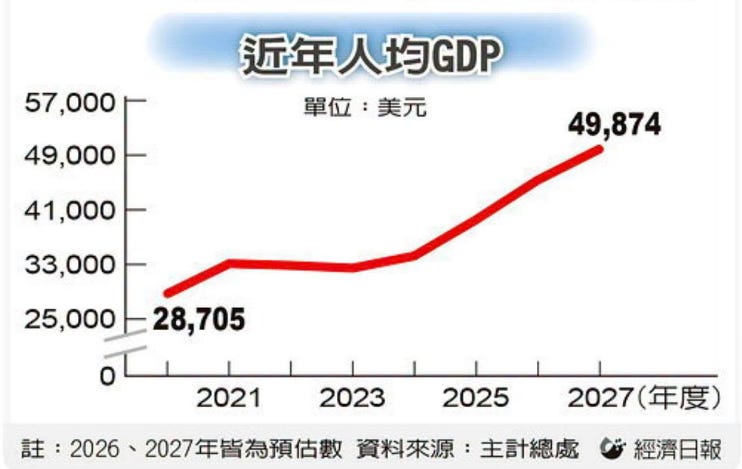
That creates a growing gap between headline economic performance and household perception.
這導致整體經濟表現與民眾感受之間的落差日益擴大。
The NT$10,000 payment is designed partly to bridge that gap.
新台幣 10,000 元的發放,部分目的在於彌合此差距。
For a middle-class household the amount is unlikely to transform household finances. But collectively, the payments could support consumption, particularly among lower-income households with a higher propensity to spend.
對中產家庭而言,這筆金額不太可能徹底改變其財務狀況。但整體而言,這些款項有助於支撐消費,特別是對於傾向較高消費的低收入家庭。
The broader political objective is equally important: making the AI boom visible outside Taiwan’s technology clusters.
更廣泛的政治目標同樣重要:讓人工智慧繁榮的成果,在台灣科技聚落之外也能被看見。
But Taiwan Is Not Simply Spending the Windfall
但台灣並非單純將這筆意外之財花掉
The cash payment has attracted attention, but it represents only one part of the government’s fiscal expansion.
現金發放引發關注,但這僅是政府財政擴張的一部分。
The more consequential spending may be directed toward long-term structural priorities.
更具影響力的支出可能導向長期結構性優先事項。
Five areas stand out.有五個領域尤為突出。
First is demographics.首先是人口結構。
Taiwan plans around NT$373 billion of family-support measures, including childcare, parental leave, education assistance and programmes intended to reduce the financial burden of raising children.
台灣規劃約新台幣 3,730 億元的家庭支持措施,涵蓋托育、育嬰假、教育補助,以及旨在減輕養育子女財務負擔的各項計畫。
Like Japan, South Korea and China, Taiwan faces an extremely challenging demographic outlook. Subsidies alone will not reverse the trend, but demographic policy is increasingly becoming part of Taiwan’s long-term economic strategy.
與日本、南韓和中國一樣,台灣面臨極為嚴峻的人口前景。僅靠補貼無法扭轉此趨勢,但人口政策正日益成為台灣長期經濟戰略的一部分。
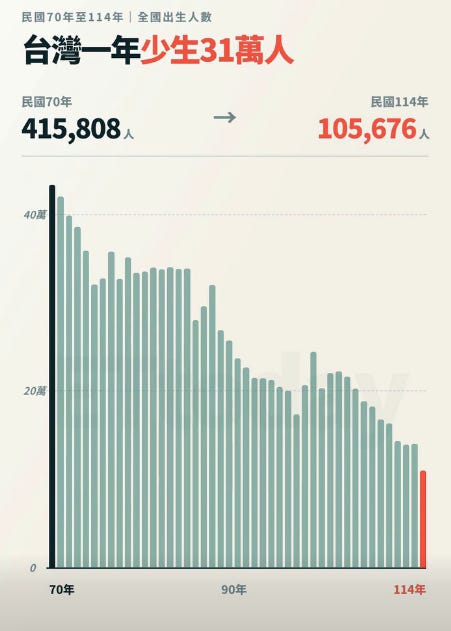
Taiwan’s demographic decline is accelerating. Annual births fell from 415,808 in 1981 to just 105,676 in 2025, a drop of roughly 75%. The long-term trend shows a steadily shrinking birth population, highlighting the growing challenges of an aging society, labor shortages, and future pressure on economic growth.
台灣的人口衰退正在加速。年出生人數從 1981 年的 415,808 人降至 2025 年的僅 105,676 人,跌幅約達 75%。長期趨勢顯示出生人口持續縮減,凸顯高齡社會、勞動力短缺以及未來經濟成長壓力等日益嚴峻的挑戰。
Second is defence.第二是國防。
Total defence spending, including regular and special budgets, is expected to exceed NT$1.12 trillion and remain above 3% of GDP.
包含經常預算與特別預算在內的國防總支出,預計將超過新台幣 1.12 兆元,並維持在國內生產總值(GDP)的 3% 以上。
Taiwan’s economic strength is therefore increasingly being converted into defence capacity — another example of how the semiconductor and AI boom is influencing policy well beyond the technology industry itself.
因此,台灣的經濟實力正日益轉化為國防戰力——這再次彰顯半導體與人工智慧(AI)的繁榮如何影響科技產業以外的政策領域。
Third is technology.第三是科技。
Government technology programmes will receive NT$229.2 billion, an increase of 12.7%, including NT$40.6 billion for the so-called “AI Ten Major Infrastructure Projects.”
政府科技計畫將獲得新台幣 2,292 億元,增幅達 12.7%,其中包括用於所謂「AI 十大基礎建設專案」的新台幣 406 億元。
The focus includes computing infrastructure, scientific research, talent development and critical technologies.
重點涵蓋運算基礎設施、科學研究、人才培育與關鍵技術。
The objective is clear: Taiwan does not want merely to manufacture AI hardware for foreign technology companies. It wants the domestic economy to absorb more of the productivity gains generated by AI.
目標明確:台灣不只想為外國科技公司製造 AI 硬體,更希望國內經濟能吸收更多由 AI 所創造的生產力增益。
Fourth is infrastructure.
第四是基礎建設。
Public-infrastructure spending will reach NT$728.8 billion, including transportation, water management, wastewater systems, regional development and infrastructure resilience.
公共基礎建設支出將達新台幣 7,288 億元,涵蓋交通、水資源管理、污水系統、區域發展及基礎設施韌性。
Finally, central-government transfers to local governments will increase to NT$1.36 trillion.
最後,中央政府對地方政府的補助將增加至新台幣 1.36 兆元。
Taken together, these programmes show that Taipei is attempting to convert a cyclical export boom into longer-term economic capacity.
總體而言,這些計畫顯示台北正試圖將週期性的出口榮景轉化為更長期的經濟產能。
The Bigger Question: How Durable Is the AI Dividend?
更大的問題:AI 紅利能持續多久?
This is where the policy becomes more interesting.
這正是該政策變得更加引人入勝之處。
Taiwan currently occupies one of the most valuable positions in the global economy. AI investment requires enormous amounts of advanced semiconductors, packaging, servers, networking equipment and power infrastructure — exactly the areas in which Taiwan has accumulated decades of expertise.
台灣目前佔據全球經濟中最具價值的地位之一。人工智慧投資需要大量先進半導體、封裝技術、伺服器、網路設備及電力基礎設施——這些領域恰恰是台灣累積數十年專業知識的所在。
But AI capital expenditure will not necessarily expand at today’s pace indefinitely.
但人工智慧資本支出未必會無限期地以目前的增速擴張。
Taiwan therefore faces an unusual window of opportunity.
因此,台灣正面臨一個罕見的契機。
If the current boom merely produces higher corporate profits, asset prices and temporary tax revenue, its economic legacy could eventually prove narrower than the headline GDP numbers suggest.
若當前的繁榮僅帶來更高的企業獲利、資產價格與暫時的稅收,其經濟遺產最終可能比國內生產總值(GDP) headline 數字所顯示的更為狹隘。
If the windfall is instead converted into infrastructure, technology, energy resilience, defence capacity, demographic support and productivity improvements across smaller businesses, the consequences could be much more durable.
反之,若能將這筆意外之財轉化為基礎建設、科技發展、能源韌性、國防能力、人口結構支援,以及提升中小企業生產力,其所帶來的影響將更為持久。
That makes the NT$10,000 payment symbolically significant but economically secondary.
這使得新台幣一萬元的現金發放具有象徵意義,但在經濟層面上則屬次要。
The real test of Taiwan’s AI dividend is not whether households receive a cheque.
台灣人工智慧紅利的真正考驗,不在於家戶是否收到支票。
It is whether the extraordinary profits generated by the current AI investment cycle can finance the foundations of Taiwan’s next growth cycle.
而在於當前人工智慧投資週期所產生的豐厚利潤,能否為台灣下一波成長週期奠定基礎。
For decades, Taiwan’s semiconductor industry accumulated capabilities before the rest of the world fully understood their strategic value.
數十年來,台灣的半導體產業在全球充分認知其戰略價值之前,便已累積深厚實力。
AI is now monetising that investment on an unprecedented scale.
如今,人工智慧正以前所未有的規模,將這項投資變現。
The challenge for Taiwan is to make sure that the country does the same thing again: use today’s windfall to build assets whose value will only become obvious years from now.
台灣面臨的挑戰在於確保能再次把握良機:運用當前的意外之財,打造那些價值需待數年後方能顯現的資產。
SEMIVISION @_@ 是一份由讀者支持的出版物。若要接收最新文章並支持我的工作,歡迎考慮成為免費或付費訂閱者。
7月4日7 月 4 日


Share分享
Previous上一頁