The Kumamoto Earthquake Is a Stress Test for the Global Semiconductor Supply Chain
The Kumamoto Earthquake Is a Stress Test for the Global Semiconductor Supply Chain
- Source: SemiVision
- Author: SEMIVISION
- Published: 2026-08-04T09:26:54+08:00
- URL: https://tspasemiconductor.substack.com/p/the-kumamoto-earthquake-is-a-stress
中文翻譯與英文原文(雙語)
熊本大地震是對全球半導體供應鏈的壓力測試 --- The Kumamoto Earthquake Is a Stress Test for the Global Semiconductor Supply Chain


The Kumamoto Earthquake Is a Stress Test for the Global Semiconductor Supply Chain
熊本大地震是對全球半導體供應鏈的壓力測試
Original Article By SemiVision Research [Readingi time: 7 mins]
原文作者:SemiVision Research [閱讀時間:7 分鐘]

Aug 04, 2026
∙ Paid∙ 付費
Share分享
The Kumamoto Earthquake Is a Stress Test for the Global Semiconductor Supply Chain
熊本地震是對全球半導體供應鏈的壓力測試
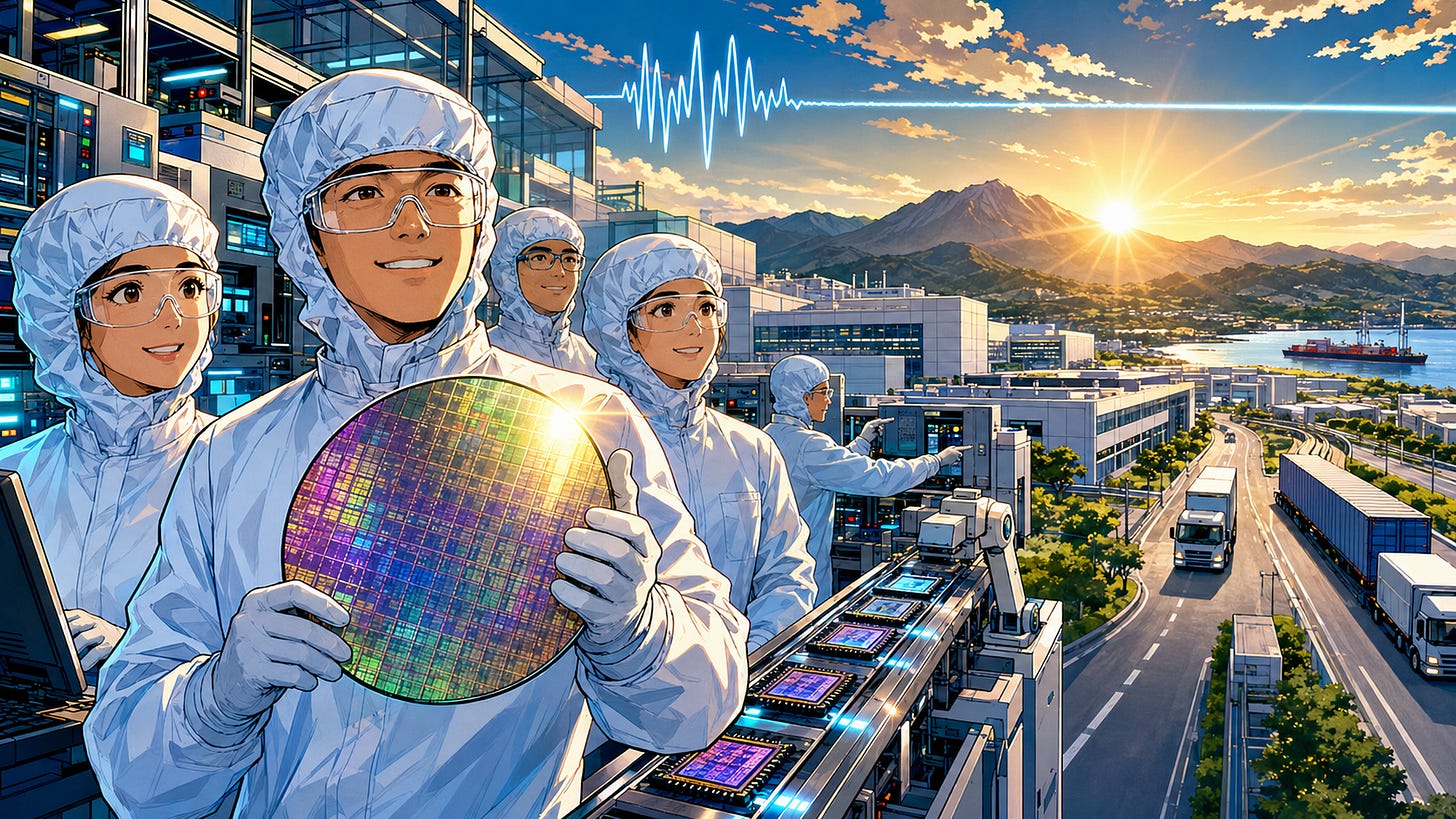
If the semiconductor industry’s defining theme in 2026 could be reduced to one sentence, it would be this:
若要用一句話概括 2026 年半導體產業的主軸,那就是:
Demand is no longer the main problem. Maintaining a stable and predictable supply is.
需求已不再是主要問題,維持穩定且可預測的供應才是關鍵。
That is why the magnitude 7.1 earthquake that struck Kumamoto Prefecture on July 28 quickly became a closely watched semiconductor supply-chain event.
正因如此,7 月 28 日襲擊熊本縣的芮氏規模 7.1 地震,迅速成為備受矚目的半導體供應鏈事件。

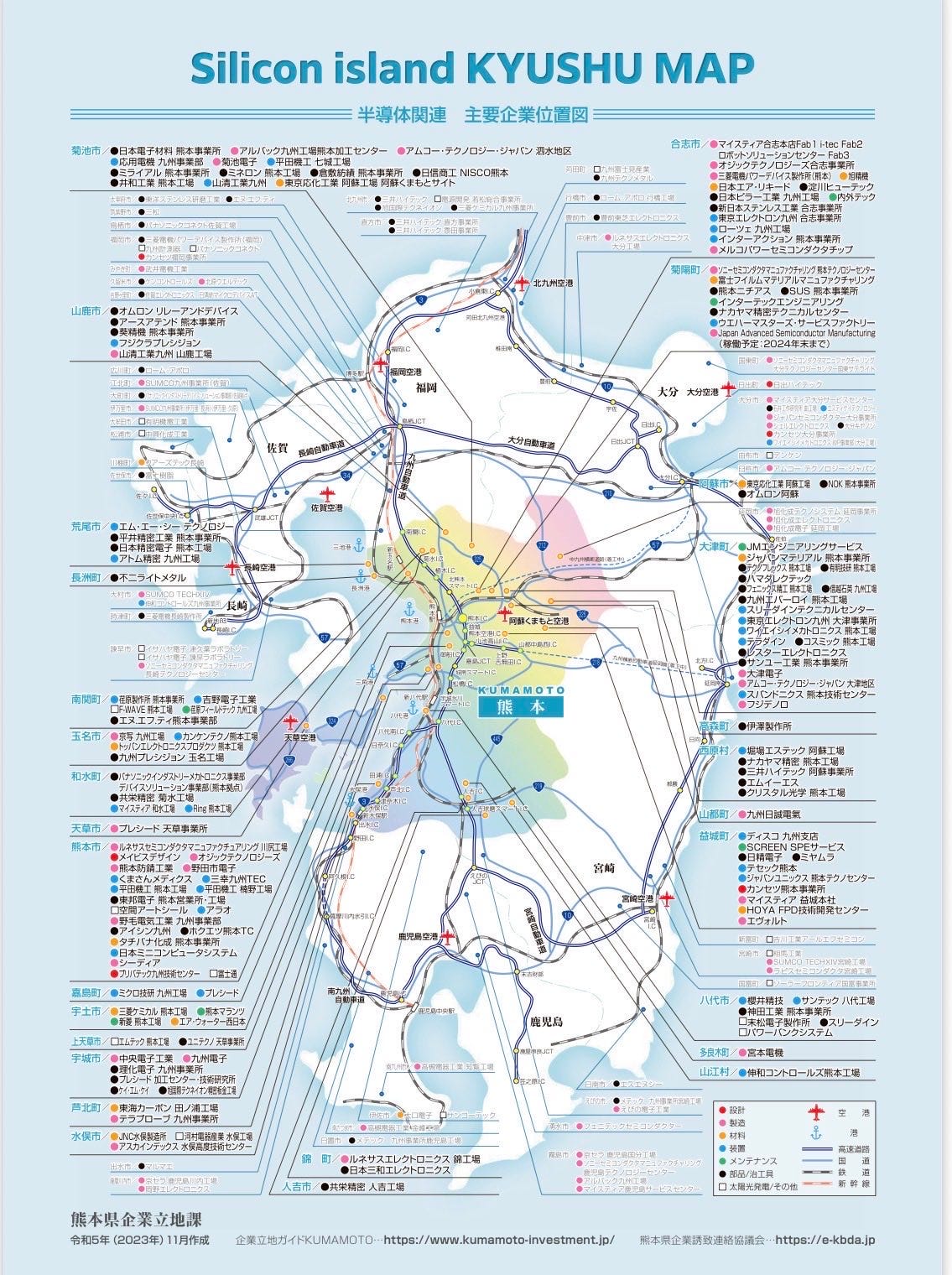
The earthquake was not limited to industrial areas. It caused casualties, damaged infrastructure, disrupted transportation and forced the temporary suspension of manufacturing operations across parts of Kyushu. But its semiconductor implications were especially significant because Kumamoto is no longer simply a regional manufacturing center. It is becoming one of the most strategically important semiconductor clusters outside Taiwan and South Korea.
此次地震的影響不僅限於工業區,更造成人員傷亡、基礎設施損毀、交通中斷,並迫使九州部分地區的製造作業暫時停擺。然而,其對半導體產業的影響尤為重大,因為熊本已不再只是區域性的製造中心,正逐漸發展成為台灣與韓國之外最具戰略重要性的半導體聚落之一。
TSMC’s Japanese subsidiary, Japan Advanced Semiconductor Manufacturing, or JASM, operates in Kumamoto. Sony also has one of its most important image-sensor manufacturing sites in the region. Meanwhile, semiconductor equipment, materials, automotive electronics and precision-component suppliers are increasingly concentrated across Kyushu.
台積電的日本子公司日本先進半導體製造(JASM)營運據點位於熊本。索尼在該地區也設有最重要的影像感測器製造基地之一。與此同時,半導體設備、材料、汽車電子及精密零組件供應商日益集中於九州地區。
When the semiconductor cycle is weak and customers carry substantial inventory, a temporary disruption may be absorbed. But the situation in 2026 is very different. AI demand is pushing advanced computing, memory, networking and power semiconductor shipments higher, while mature and specialty processes continue to support automotive chips, sensors, industrial electronics and data-center infrastructure.
當半導體景氣疲弱且客戶持有大量庫存時,短暫的中斷或許能被吸收。然而,2026 年的情況截然不同。人工智慧(AI)需求正推動先進運算、記憶體、網路及功率半導體的出貨量攀升,而成熟製程與特殊製程則持續支援汽車晶片、感測器、工業電子及資料中心基礎設施。
Under these conditions, a regional interruption can quickly develop into a cross-industry supply-chain problem.
在此情況下,區域性的中斷可能迅速演變為跨產業的供應鏈問題。
6月16日6 月 16 日

6月23日6 月 23 日

4月17日4 月 17 日
Below we will share:以下我們將分享:
Restarting Equipment Is Not the Same as Restoring Production
重啟設備不等於恢復生產
Kumamoto’s Strategic Role Has Changed
熊本的戰略角色已發生轉變
Four Supply-Chain Implications
對供應鏈的四項影響
Supply Chain Observation供應鏈觀察
Restarting Equipment Is Not the Same as Restoring Production
重啟設備不等於恢復生產
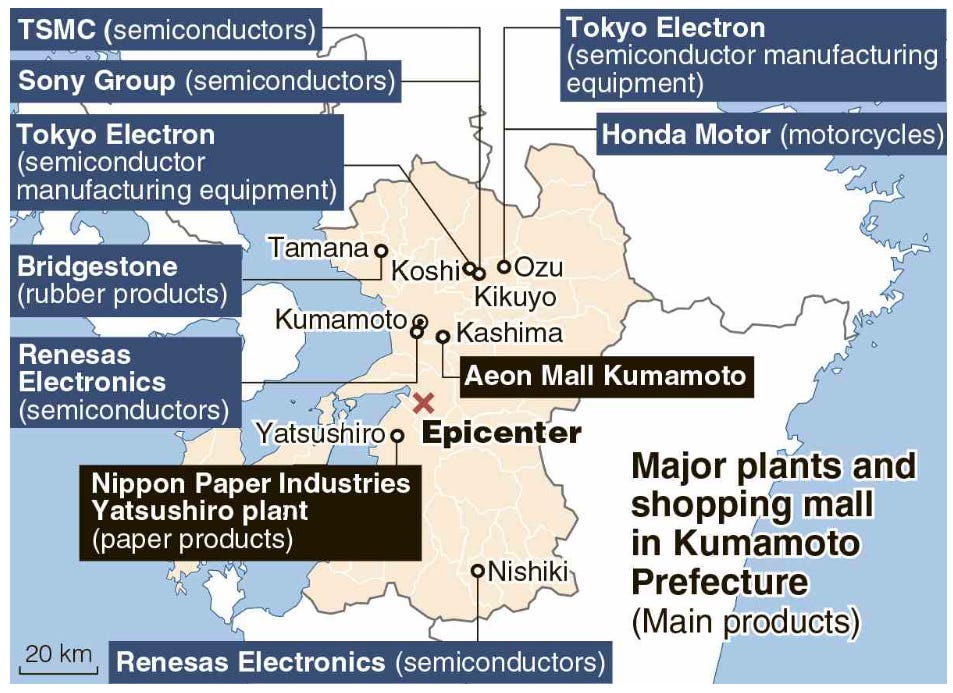
Based on currently available information, the most important question is not whether production has restarted. It is whether production can return quickly to a stable, predictable and scalable operating level.
根據目前掌握的資訊,最關鍵的問題並非生產是否已重新啟動,而在於產能能否迅速回復至穩定、可預測且具擴充性的運作水準。
TSMC said JASM was gradually resuming operations following building safety inspections, while detailed equipment inspections and impact assessments continued. Construction activities were also temporarily suspended as a precaution against aftershocks.
台積電表示,JASM 在完成建築物安全檢查後正逐步恢復營運,同時持續進行詳細的設備檢查與影響評估。為防範餘震,施工活動也已暫時暫停。
Sony Semiconductor Manufacturing said its Kumamoto Technology Center would resume operations in stages beginning August 4, with the goal of returning to pre-earthquake operating levels by mid-August.
索尼半導體製造公司表示,其熊本技術中心將自 8 月 4 日起分階段恢復營運,目標於 8 月中旬重返震前營運水準。
受 2026 年熊本地震影響之索尼半導體解決方案集團製造營運狀態(第二次更新)
These announcements suggest that the most dangerous initial stage has passed. However, the second stage is where semiconductor supply chains become especially sensitive.
這些公告顯示,最危險的初期階段已過。然而,第二階段才是半導體供應鏈變得特別敏感的關鍵時刻。
A wafer fab is not a conventional assembly plant. Restoring electricity does not automatically restore yield. Confirming structural safety does not mean capacity can immediately return to full utilization.
晶圓廠並非傳統的組裝工廠。恢復供電並不代表良率能自動恢復;確認結構安全也不意味著產能可立即回到滿載運作。
Following a major earthquake, manufacturers must inspect and recalibrate precision equipment, validate process parameters, evaluate work-in-process wafers, restore cleanroom conditions and reconnect material and logistics flows. Even small changes in vibration, equipment alignment, temperature, pressure or chemical delivery can affect process stability.
發生重大地震後,製造商必須檢查並重新校準精密設備、驗證製程參數、評估在製品晶圓、恢復無塵室環境,並重新串接物料與物流流程。即使是震動、設備對準、溫度、壓力或化學品輸送等方面的微小變化,都可能影響製程穩定性。
The most important recovery indicators are therefore not simply whether the lights are back on, but whether:
因此,最重要的復原指標不僅是電力是否恢復供電,更在於:
Equipment calibration has been completed.
設備校準已完成。
Production yields have returned to normal.
產能良率已恢復正常。
Work-in-process losses are manageable.
在製品損耗處於可控範圍。
Material deliveries have resumed consistently.
物料交付已穩定恢復。
Customer shipment schedules remain unchanged.
客戶出貨時程維持不變。
A factory can technically be operating while still producing below its normal commercial capacity.
工廠在技術上可以持續運作,但產量仍可能低於其正常的商業產能。
Kumamoto’s Strategic Role Has Changed
熊本的戰略角色已發生轉變
Kumamoto is no longer merely a Japanese regional manufacturing cluster. It has become a test case for the global redistribution of semiconductor capacity.
熊本不再僅僅是日本的區域性製造聚落,它已成為全球半導體產能重新分配的測試案例。
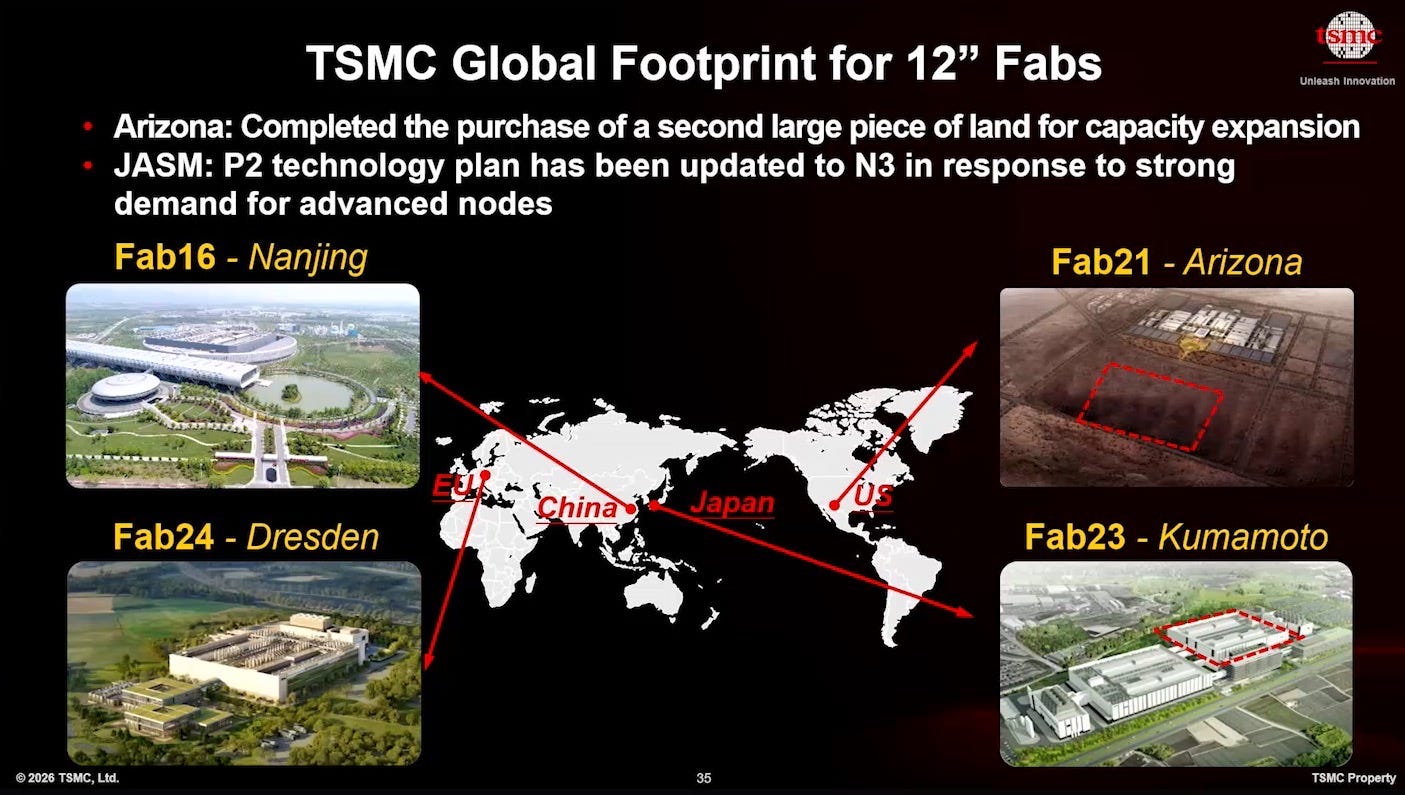
JASM represents the expansion of Taiwan’s foundry manufacturing model into Japan. Its initial technology portfolio supports strategically important applications such as automotive electronics, industrial products and image-sensor-related chips. Sony, meanwhile, remains highly influential in CMOS image sensors used in smartphones, cameras, automobiles, industrial vision systems and other high-value applications.
JASM 代表台灣晶圓代工製造模式向日本的擴展。其初期的技術組合支援汽車電子、工業產品及影像感測器相關晶片等策略性重要應用。與此同時,Sony 在用於智慧型手機、相機、汽車、工業視覺系統及其他高價值應用的 CMOS 影像感測器領域,仍具高度影響力。
The concentration of these operations in Kumamoto reflects the region’s advantages: access to water, an established semiconductor workforce, strong government incentives, proximity to suppliers and decades of manufacturing experience.
這些營運集中於熊本,反映了該地區的優勢:水源充足、擁有成熟的半導體人才庫、強力的政府獎勵措施、鄰近供應商,以及數十年的製造經驗。
However, the earthquake also reveals an important limitation in the industry’s diversification strategy.
然而,這次地震也揭示了產業多元化策略的一項重要限制。
Geographic diversification does not eliminate risk. It changes the structure of risk.
地理多元化並不能消除風險,而是改變了風險的結構。
Instead of concentrating production in a single country, companies now must manage a network of international manufacturing nodes—each with its own exposure to natural disasters, infrastructure constraints, labor shortages, logistics disruptions and geopolitical uncertainty.
企業不再將生產集中於單一國家,現在必須管理一個跨國製造節點網絡——每個節點各自面臨天然災害、基礎設施限制、勞動力短缺、物流中斷以及地緣政治不確定性等風險。
Four Supply-Chain Implications
供應鏈的四大影響
The first implication concerns foundry customers.
第一項影響涉及晶圓代工客戶。
Operational resilience will increasingly influence capacity-allocation decisions. In previous cycles, customers mainly evaluated process technology, cost, yield, product qualification and delivery time. In a high-utilization environment, they will also pay closer attention to power and water stability, earthquake protection, emergency restart procedures and the responsiveness of local suppliers.
營運韌性將日益影響產能配置決策。在過往的週期中,客戶主要評估製程技術、成本、良率、產品認證與交貨時間。在高利用率環境下,他們也將更密切關注電力與供水穩定性、抗震防護、緊急重啟程序以及本地供應商的應變能力。
This does not necessarily weaken confidence in JASM. On the contrary, a fast and transparent recovery could strengthen the site’s credibility. But customers are likely to request more detailed contingency plans and place greater value on multi-site production qualification.
這未必會削弱對 JASM 的信心。相反地,快速且透明的復原過程反而能強化該廠區的信譽。但客戶可能會要求更詳盡的應變計畫,並更加重視多據點生產認證。
The second implication concerns image sensors and automotive electronics.
第二項影響則關乎影像感測器與汽車電子領域。
Sony’s recovery schedule is an important short-term indicator. If the Kumamoto Technology Center returns to pre-earthquake production levels by mid-August, customers may treat the event as a manageable interruption. If equipment calibration takes longer or certain product shipments resume more slowly, the effects could spread into smartphones, cameras, advanced driver-assistance systems and industrial vision equipment.
索尼的復原時程是重要的短期指標。若熊本技術中心能在 8 月中旬前恢復至震前產能水準,客戶可能將此次事件視為可管控的中斷;反之,若設備校準耗時更長,或部分產品出貨復甦較慢,其影響恐將擴及智慧型手機、相機、先進駕駛輔助系統(ADAS)及工業視覺設備。
High-end image sensors are not as easily interchangeable as standardized memory products. Product-specific designs, qualifications and performance requirements can limit customers’ ability to move orders quickly between suppliers. That makes the recovery of individual production lines more important than the recovery of the site as a whole.
高階影像感測器不像標準化記憶體產品那樣容易互換。產品專屬的設計、認證與效能需求,可能會限制客戶在不同供應商之間快速轉移訂單的能力。這使得個別產線的復原,比整個廠區的整體復原更為重要。
The third implication concerns equipment, materials, facilities engineering and inspection providers.
第三項影響涉及設備、材料、廠務工程與檢測服務供應商。
Post-disaster recovery capability is becoming a competitive advantage. Suppliers that can rapidly inspect equipment, restore precision, requalify cleanrooms and reconnect chemical, gas and logistics systems become critical partners during disruptions.
災後復原能力正逐漸成為競爭優勢。能夠迅速檢查設備、恢復精度、重新認證無塵室,並重新連結化學品、氣體與物流系統的供應商,在供應鏈中斷期間將成為關鍵夥伴。
This creates opportunities for Japanese equipment and materials companies, Taiwanese service teams operating in Japan, precision metrology providers and international certification specialists. The value of these suppliers is no longer measured only by installation and routine maintenance. It is increasingly measured by how quickly they can restore commercial production after an extreme event.
這為日本設備與材料廠商、在台於日本營運的服務團隊、精密量測供應商以及國際認證專家創造了機會。這些供應商的價值不再僅以安裝與例行維護來衡量,而是越來越取決於他們在極端事件後,能多快恢復商業量產。
The fourth implication concerns government policy and capital allocation.
第四項影響涉及政府政策與資本配置。
Building a semiconductor cluster requires more than construction subsidies. Japan has successfully used incentives to attract TSMC and revive Kyushu’s position as “Silicon Island.” But long-term competitiveness will depend on infrastructure resilience, including water systems, backup power, transportation recovery, disaster-resistant buildings and the ability to mobilize specialized workers.
建立半導體聚落所需的,不僅是建廠補貼。日本已成功運用獎勵措施吸引台積電,並重振九州作為「矽島」的地位。然而,長期的競爭力將取決於基礎設施的韌性,包括供水系統、備用電力、交通復原能力、耐災建築,以及動員專業技術人員的能力。
The key question for future semiconductor clusters will not simply be whether they have a fab. It will be how quickly that fab can return to stable, qualified production following a major disruption.
對於未來的半導體聚落而言,關鍵問題不在於是否擁有晶圓廠,而在於當重大中斷發生後,該晶圓廠能多快恢復穩定且符合資格的生產。
A Supply Chain With Less Room for Error
容錯空間更小的供應鏈
The earthquake becomes even more important when viewed against the broader 2026 semiconductor cycle.
若將此次地震置於更廣泛的 2026 年半導體週期背景下審視,其重要性更為凸顯。
According to the Semiconductor Industry Association, global semiconductor sales reached a record US$120.6 billion in May 2026, increasing 9.2% from April and 104.1% from a year earlier. The figure is based on a three-month moving average, but it still demonstrates the extraordinary pace of market expansion.
根據半導體產業協會(Semiconductor Industry Association)數據,2026 年 5 月全球半導體銷售額創下 1,206 億美元的歷史新高,較 4 月成長 9.2%,較去年同期大幅攀升 104.1%。此數據雖基於三個月移動平均計算,但仍充分展現市場擴張的驚人速度。
Meanwhile, memory manufacturers are using long-term agreements, equipment investments and capacity expansion to secure several years of AI-related demand. The industry’s operating model has shifted from inventory reduction to protecting every link in the supply chain.
與此同時,記憶體製造商正透過長期合約、設備投資及產能擴充,以確保未來數年的人工智慧(AI)相關需求。產業營運模式已從去庫存轉向保護供應鏈中的每一個環節。
This means there is less room for unexpected production losses.
這意味著應對意外產能損失的緩衝空間更為有限。
The Kumamoto earthquake should therefore be viewed as a supply-chain stress test. It is testing whether the semiconductor industry’s newly diversified manufacturing network can remain resilient during a period of high utilization, heavy capital expenditure and strong customer demand.
因此,熊本地震應被視為對供應鏈的一次壓力測試。它正在檢驗半導體產業新近多元化的製造網絡,能否在高利用率、高額資本支出以及強勁客戶需求的時期保持韌性。
What the Market Should Watch Next
市場接下來應關注的重點
Four indicators deserve close attention over the coming weeks.
未來幾週有四项指標值得密切關注。
First, watch the pace of equipment calibration at JASM and any signs of customer delivery adjustments. If updates remain limited to “gradual recovery” without a clearer production timeline, some uncertainty will remain.
首先,留意 JASM 的設備校準進度以及客戶交期調整的任何跡象。若更新內容仍僅限於「逐步復原」而缺乏更明確的生產時程,不確定性將持續存在。
Second, monitor whether Sony’s Kumamoto facility returns to pre-earthquake operating levels by mid-August. Any revised schedule or customer reports of longer lead times would indicate that the disruption is moving from the production side to the shipment side.
其次,觀察 Sony 熊本廠區是否能在八月中旬前恢復至震前營運水準。任何修訂後的時程表或客戶回報交期延長,都顯示中斷影響正從生產端轉向出貨端。
Third, track the recovery of water, power, transportation and materials logistics across Kyushu. Semiconductor manufacturing is often disrupted not by one catastrophic bottleneck, but by several smaller constraints occurring simultaneously.
第三,追蹤九州地區水電、交通及物料物流的復原狀況。半導體製造往往並非因單一災難性瓶頸而受挫,而是由於多項較小的限制同時發生所致。
Finally, watch for new Japanese government or corporate investments in infrastructure, insurance, backup systems and disaster resilience. Such announcements would indicate that the earthquake is beginning to influence the design of Japan’s next semiconductor expansion cycle.
最後,請留意日本政府或企業在基礎設施、保險、備援系統及災害韌性方面的新投資。此類公告將顯示地震正開始影響日本下一輪半導體擴張計畫的規劃方向。
Supply Chain Observation
供應鏈觀察
The earthquake exposes three structural realities.
此次地震揭示了三項結構性現實。
First, the semiconductor industry has diversified manufacturing faster than it has diversified supporting infrastructure. A new fab may be geographically separated from Taiwan or South Korea, but it can still depend on concentrated equipment-service teams, specialty chemicals and logistics routes.
首先,半導體產業的製造多元化速度快於其支援基礎設施的多元化速度。新建晶圓廠或許在地理位置上已與台灣或南韓分離,但仍可能依賴集中的設備服務團隊、特殊化學品及物流路線。
Second, resilience must be evaluated at the ecosystem level. A factory’s own backup systems are insufficient if roads, water networks, utilities or upstream suppliers remain unavailable.
其次,韌性必須在生態系層級進行評估。若道路、水網、公用事業或上游供應商仍無法運作,僅靠工廠自身的備援系統並不足夠。
Third, recovery time is becoming an investable competitive metric. Companies and regions that disclose credible business-continuity plans, qualify production across multiple sites and maintain redundant utilities will deserve a lower operational risk premium.
第三,復原時間正成為一項可投資的競爭指標。能夠揭露可信的業務持續計畫、透過多個據點認證產能,並維持備援公用設施的企業與區域,將有資格獲得較低的營運風險溢價。
The real significance of the Kumamoto earthquake is not whether it caused a prolonged industrywide shutdown. It is that it forced the market to recognize a new competitive dimension.
熊本地震的真正意義,不在於它是否導致產業全面停擺,而在於它迫使市場正視一個全新的競爭維度。
As AI pushes semiconductor demand to historic levels, the industry is no longer competing only on process technology, HBM capacity or capital expenditure. It is also competing on the ability to maintain stable shipments through natural disasters, infrastructure failures and geopolitical shocks.
隨著人工智慧將半導體需求推升至歷史新高,產業競爭已不再僅限於製程技術、HBM 產能或資本支出,更延伸至在天然災害、基礎設施故障及地緣政治衝擊下維持穩定出貨的能力。
The next supply-chain leader may not simply be the company with the best technology. It may be the company—or manufacturing region—with the most complete resilience architecture.
下一個供應鏈領導者,未必是擁有最先進技術的企業;反而可能是具備最完整韌性架構的企業或製造區域。

2月6日2 月 6 日


Share分享
Previous上一頁Next下一則