Make China Great Again? CXMT’s 466% IPO Surge Signals a New DRAM Power
Make China Great Again? CXMT’s 466% IPO Surge Signals a New DRAM Power
- Source: SemiVision
- Author: SEMIVISION
- Published: 2026-07-28T19:15:16+08:00
- URL: https://tspasemiconductor.substack.com/p/make-china-great-again-cxmts-466 (1) Make China Great Again? CXMT’s 466% IPO Surge Signals a New DRAM Power


Make China Great Again? CXMT’s 466% IPO Surge Signals a New DRAM Power
Original Article By SemiVision Research [Reading time: 12 mins]

Jul 28, 2026
∙ Paid
Make China Great Again? CXMT’s 466% IPO Surge Signals a New DRAM Power
If one semiconductor event from late July 2026 captures the collision between artificial intelligence, capital markets and technological nationalism, it is the Shanghai listing of CXMT.
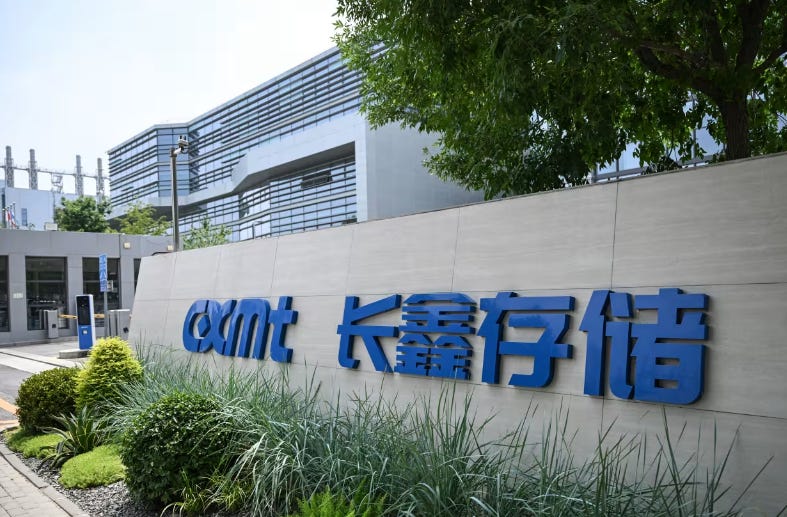
Shares of China’s largest DRAM manufacturer closed at RMB 49 on July 27, compared with an IPO price of RMB 8.66, delivering a first-day gain of 466%. The offering raised RMB 57.92 billion, or approximately US$8.6 billion, making it the largest mainland Chinese semiconductor IPO on record. By the close, CXMT’s market capitalization had reached roughly RMB 3.3 trillion, briefly making it the most valuable company listed in mainland China.
At first glance, this looks like an extraordinary vote of confidence in China’s AI and semiconductor self-sufficiency narrative. But the more important implication lies beyond the stock price.
The global memory industry—particularly DRAM—is beginning to move away from the relatively stable oligopoly that has long been controlled by Samsung Electronics, SK hynix and Micron.A new competitive phase is emerging, shaped not only by process technology and manufacturing economics, but also by geopolitics, domestic substitution, AI infrastructure investment, equipment restrictions and advanced packaging.
CXMT’s IPO was therefore more than the listing of another memory-chip company. It was China’s attempt to place what might be called “memory sovereignty for the AI era” at the center of its capital market.
Why CXMT’s IPO Matters
For decades, DRAM has been one of the semiconductor industry’s most difficult markets to enter.
The sector is highly cyclical, extremely capital-intensive and technologically unforgiving. A new supplier must do more than develop a functional DRAM cell. It must achieve competitive yields, continuously shrink its process technology, qualify with major customers, secure manufacturing equipment, control costs and survive repeated pricing downturns.

Artificial intelligence, however, is changing the strategic meaning of memory.
In the PC and smartphone eras, standard DRAM was often treated primarily as a commodity. Suppliers competed through bit-cost reductions, capacity discipline, product qualification and cycle management.
In the AI era, memory has become part of the system-performance bottleneck.
Training and inference workloads require enormous quantities of high-speed memory. AI servers need not only HBM, but also large volumes of DDR5, server modules, storage and memory attached to CPUs, accelerators and increasingly disaggregated architectures. Memory availability now affects system deployment schedules, accelerator utilization, data-center economics and even national computing capacity.
This does not eliminate the memory cycle. It makes the cycle more strategically important.
For China, which continues to face restrictions on advanced AI accelerators and semiconductor manufacturing technology, developing domestic DRAM capacity is no longer simply an industrial-policy objective. It is becoming a practical requirement for building AI servers, cloud infrastructure, telecommunications systems, automobiles and government computing platforms without relying entirely on foreign suppliers.

7月23日
More Than an IPO: The Capitalization of China’s Memory Strategy

- Greater capacity-expansion capability
DRAM manufacturing requires continuous investment. A supplier cannot build one successful fab and then pause. Every process transition demands new equipment, process integration, design changes, yield improvement and customer qualification.
During a memory upcycle, the ability to secure capital quickly can determine whether a manufacturer gains market share or loses technological relevance.
Reuters reported that CXMT is constructing additional facilities in Shanghai and Hefei and has discussed a possible third expansion with local authorities. If completed as planned, those projects could more than double the company’s monthly wafer capacity to above 600,000 wafers. Such expansion would materially increase CXMT’s influence over the global DRAM market, although execution, equipment access and yield remain critical uncertainties.
- Stronger supply-chain gravity
A strategically important public company can attract more than investors.
Equipment manufacturers, material suppliers, component vendors, packaging companies, module makers, cloud customers and local governments become more willing to align their road maps with a company that has both political support and long-term financing.
CXMT’s prospectus explicitly describes the company as a platform capable of pulling together memory design companies, EDA suppliers, materials producers, equipment and component vendors, module manufacturers and downstream customers. This is an important distinction: China is not only trying to build a DRAM manufacturer; it is trying to form a domestic DRAM industrial system around that manufacturer.
- A different valuation framework
Traditional memory companies are usually valued according to pricing cycles, average selling prices, bit shipments, capital expenditure and inventory discipline.
CXMT, however, is increasingly being valued as a strategic infrastructure asset tied to China’s AI ambitions.
That does not mean its first-day valuation was economically justified. Only 6.73% of CXMT’s enlarged share capital was freely tradable at listing, while the IPO was priced at a significant discount to some estimates of peer valuation multiples. The combination of limited float, strong retail demand and constrained access to comparable Chinese semiconductor assets amplified the price movement.
The 466% increase should therefore not be interpreted as a 466% overnight improvement in CXMT’s technology or earnings power.
The better interpretation is that the market abruptly repriced CXMT from a memory-cycle participant into a national AI asset—and did so through a very small tradable share base.
The Real Change Is Not CXMT’s Market Value, but Its Supply-Chain Direction
It is reasonable to describe CXMT’s first-day valuation as speculative. But focusing only on whether the stock represents a bubble risks missing the structural signal.
Three changes deserve closer attention.
- China’s DRAM Strategy Is Moving from Filling Gaps to Building a Complete System
The earlier view of China’s memory strategy was relatively simple: domestic suppliers would replace a portion of imported memory in Chinese smartphones, PCs and consumer electronics.
That is no longer sufficient.
The more important question is whether China can build an integrated ecosystem covering equipment, materials, wafer manufacturing, packaging, testing, modules, servers and end applications.
CXMT’s disclosed product portfolio already includes DDR5 and LPDDR5/5X, in addition to earlier-generation products, with applications across servers, mobile devices, personal computers and automobiles. Its prospectus also lists major domestic customers including Alibaba Cloud, ByteDance, Tencent, Lenovo, Xiaomi, Honor, OPPO, Vivo and Transsion.


This customer base gives CXMT something that previous DRAM challengers often lacked: a large domestic market capable of supporting product qualification and manufacturing scale before the company achieves full competitiveness in international markets.
Reuters has also reported that Chinese authorities have encouraged domestic memory manufacturers to prioritize local customers. At the same time, CXMT’s supply has become sufficiently important that it has gained greater pricing power with some Chinese buyers. In recent transactions, comparable CXMT server-memory modules were reportedly priced above Samsung products as shortages allowed domestic suppliers to negotiate more aggressively.
This is a major shift. Chinese memory is no longer automatically the low-price alternative. In a constrained market, supply security itself has value.
- HBM Remains the Dividing Line—but Basic DRAM Capability Is Already Strategically Valuable
HBM is currently the most valuable segment of the memory market.
It combines advanced DRAM dies, through-silicon vias, wafer thinning, stacking, thermal management, sophisticated testing and close integration with logic chips and advanced packaging. Success requires much more than producing standard DRAM.
CXMT is not yet an HBM leader. Reuters reported that the company has produced HBM, but remains approximately two generations—or several years—behind the leading suppliers. It also lacks access to EUV lithography, while Samsung, SK hynix and Micron increasingly use EUV for advanced DRAM manufacturing. CXMT continues to rely on DUV lithography, including equipment from ASML, while attempting to increase the use of Chinese tools in other parts of production.
This gap should not be underestimated.
HBM requires high-performance DRAM dies, stable yields, thermal control, TSV integration, known-good-die screening and close co-design with AI-accelerator and packaging customers. A company can manufacture conventional DRAM at scale and still struggle to qualify competitive HBM.
Nevertheless, basic DRAM capability remains the admission ticket to the HBM race.
Without a large DRAM manufacturing base, process-learning infrastructure, product engineers, test capability and customer relationships, there is no credible path toward advanced HBM. CXMT does not need to surpass SK hynix immediately to alter the industry. It only needs to improve consistently enough to support China’s domestic AI ecosystem and force global competitors to adjust their product and investment strategies.
- Memory Competition Is Moving from Individual Products to System-Level Supply Agreements
The recently announced cooperation between Samsung and Broadcom illustrates where the global market is heading.
Their memorandum of understanding covers HBM, Samsung’s 2-nanometer-and-below foundry technologies, and advanced 2.3D and 2.5D packaging for future AI and networking products. The companies estimate that their expanded cooperation across memory and foundry could exceed US$200 billion through 2030.
This is not a conventional memory supply contract.
It is a system-level relationship connecting:
Logic design + leading-edge manufacturing + HBM + advanced packaging + long-term capacity planning.
Future AI customers will not evaluate a memory supplier only on price per gigabyte. They will evaluate whether the broader platform can achieve the required bandwidth, power consumption, yield, thermal performance, packaging capacity and delivery schedule.
This creates both an opportunity and a challenge for CXMT.
The opportunity is that China can embed domestic DRAM into its own AI accelerators, servers, cloud platforms and government procurement systems.
The challenge is that without competitive HBM, advanced packaging, testing and customer co-design capability, CXMT may remain concentrated in standard DRAM and domestic substitution rather than entering the highest-value global AI platforms.
Where the Global Supply-Chain Impact Will Appear First
Memory pricing and bargaining power
CXMT’s capacity expansion is unlikely to collapse global DRAM prices immediately. AI demand remains strong, memory inventories are tight in several categories and advanced products remain supply-constrained.
However, CXMT will gradually change expectations about the industry’s supply ceiling.
Its influence will likely appear first in standard DRAM, DDR5 server modules and products procured by Chinese cloud, telecommunications and enterprise customers. Samsung, SK hynix and Micron will have a stronger incentive to shift production toward HBM and other high-value products rather than compete directly with expanding Chinese capacity in every commodity segment.
This may produce a bifurcated market: increasing Chinese supply in standard DRAM, alongside continued concentration and scarcity in advanced HBM.
Equipment and materials localization
Export controls remain one of CXMT’s largest constraints.
China cannot import EUV systems, while future restrictions could affect access to additional lithography equipment, process tools, spare parts, software or technical support. At the same time, CXMT cannot eliminate its dependence on foreign equipment overnight.
The likely outcome is a hybrid production strategy: continued use of available foreign tools where necessary, combined with accelerated qualification of Chinese deposition, etching, cleaning, metrology, testing, materials and component suppliers.
This creates a two-sided risk for international equipment companies.
China remains one of the world’s largest sources of semiconductor demand, but the same restrictions that limit near-term sales may also accelerate long-term domestic substitution. Every successful qualification of a Chinese tool reduces future dependence on imported equipment.

7月20日
Advanced packaging and testing
The AI memory race will increasingly be decided after the wafer is fabricated.
TSMC raised its 2026 capital budget to US$60 billion–US$64 billion and said approximately 10%–20% would be allocated to advanced packaging, testing, mask making and other functions. Management also acknowledged that some customers require unexpectedly large amounts of testing capacity, forcing TSMC to shift investment toward back-end bottlenecks.

7月13日
ASE has separately announced an automated 310 mm × 310 mm panel-level packaging line designed for AI and high-performance computing applications. The platform is scheduled to enter production in the first half of 2027 and is intended to support the integration of chiplets, ASICs and HBM at greater scale.
ASE Launches Automated 310mm Panel-Level Packaging to Accelerate AI Innovation

Source: ASE
Together with the Samsung–Broadcom agreement, these developments show that memory competition is no longer determined by bit output alone.
The decisive question is whether memory can be integrated with logic into a package that is manufacturable, testable, thermally manageable and deliverable at scale.
For CXMT, wafer output is therefore only one metric. Investors should also monitor whether its expansion stimulates the development of China’s domestic packaging, testing, substrate and module ecosystem.
Four Indicators to Watch Over the Next Year
- Global DRAM shipments and ASPs
If CXMT continues increasing shipments without causing a sharp decline in pricing, the implication would be that AI demand remains strong enough to absorb additional supply.
If standard DRAM prices weaken while HBM pricing remains resilient, the market may be entering a more segmented structure in which Chinese capacity pressures commodity products but has less influence over advanced memory.
- Concrete HBM progress
HBM is the clearest test of whether CXMT can evolve from the world’s fourth-largest DRAM supplier into a strategic global competitor.
The most relevant milestones will include product generation, stack height, bandwidth, customer sampling, thermal performance, packaging partnerships, qualification progress and evidence of stable volume yields.
Announcements alone will not be sufficient. The industry must distinguish between engineering samples, limited production and genuinely qualified high-volume supply.
- The localization rate of equipment and materials
The sustainability of CXMT’s expansion depends on whether Chinese suppliers can support increasingly advanced production with acceptable throughput, defect density, process control and maintenance reliability.
Localization percentages are less informative than actual production performance. The key indicators will be tool availability, utilization, yield, process repeatability and the ability to support successive DRAM generations.
- Further US restrictions
US lawmakers have proposed tighter controls covering CXMT facilities and have called for restrictions on purchases of Chinese memory products. At the same time, the US administration has so far avoided placing CXMT on the Entity List, reflecting the tension between national-security concerns, trade negotiations and the interests of technology companies that want access to Chinese memory supply.
Restrictions extending from manufacturing equipment to procurement, intellectual property, design software or customer qualification would materially lower CXMT’s international ceiling.
Conversely, if controls remain fragmented, CXMT may have enough time to expand domestic scale, improve its technology and reduce critical dependencies.
SemiVision View: The Real Test Is Whether Memory Self-Reliance Becomes Deliverable Capacity
CXMT’s first-day surge clearly contained a strong speculative element. The limited free float, discounted IPO price and intense demand for Chinese AI assets all magnified the rally.
But that does not make the underlying event insignificant.
The market is attempting to price a structural possibility: China is turning memory from a component purchased on the global market into an element of national AI capability.
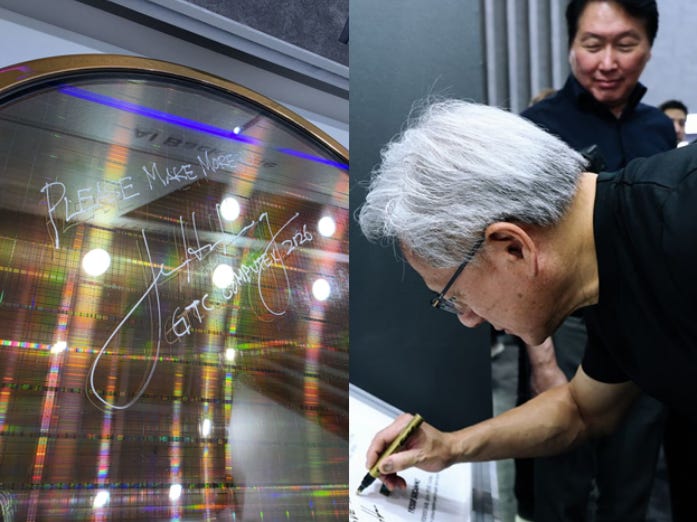
Please make more / Computex 2026
The central question is not whether CXMT can overtake Samsung, SK hynix or Micron within the next few years. That remains unlikely without major advances in process technology, HBM, packaging, equipment and yield.
The more important question is whether CXMT can establish sufficient scale, customer depth, domestic equipment support and process-learning capability inside China to alter the behavior of every other participant in the DRAM market.
If it can, the consequences will extend beyond CXMT.

Global memory manufacturers will change their product allocation. Equipment companies will reassess their China strategies. Chinese suppliers will receive more qualification opportunities. Cloud companies will diversify procurement. Governments will expand memory-related controls. Advanced packaging and testing capacity will become even more strategically important.
In that scenario, July 27, 2026 will not be remembered merely as the day a Chinese semiconductor stock rose 466%.
It will be remembered as one of the moments when the global DRAM industry began moving from a commercially managed three-company oligopoly toward a more fragmented—and increasingly geopolitical—competition for memory capacity, technology and supply-chain control.

6月30日

7月10日


PreviousNext