Zirconia Beads and the Hidden Bottleneck in Advanced Semiconductor Materials
Zirconia Beads and the Hidden Bottleneck in Advanced Semiconductor Materials
- Source: SemiVision
- Author: SEMIVISION
- Published: 2026-07-17T23:36:08+08:00
- URL: https://tspasemiconductor.substack.com/p/zirconia-beads-and-the-hidden-bottleneck Zirconia Beads and the Hidden Bottleneck in Advanced Semiconductor Materials


Zirconia Beads and the Hidden Bottleneck in Advanced Semiconductor Materials
Origianal Article By SemiVision Research [Reading time: 15 mins]

Jul 17, 2026
∙ Paid
Zirconia Beads and the Hidden Bottleneck in Advanced Semiconductor Materials
When the semiconductor industry discusses materials, attention usually focuses on photoresists, electronic gases, CMP slurries, advanced packaging materials, and high-purity silicon wafers. Yet behind many nanopowders, ceramic slurries, polishing liquids, and functional materials lies another critical consumable that never remains inside the finished chip but can directly affect particle size, purity, dispersion stability, and production yield:zirconia grinding beads.
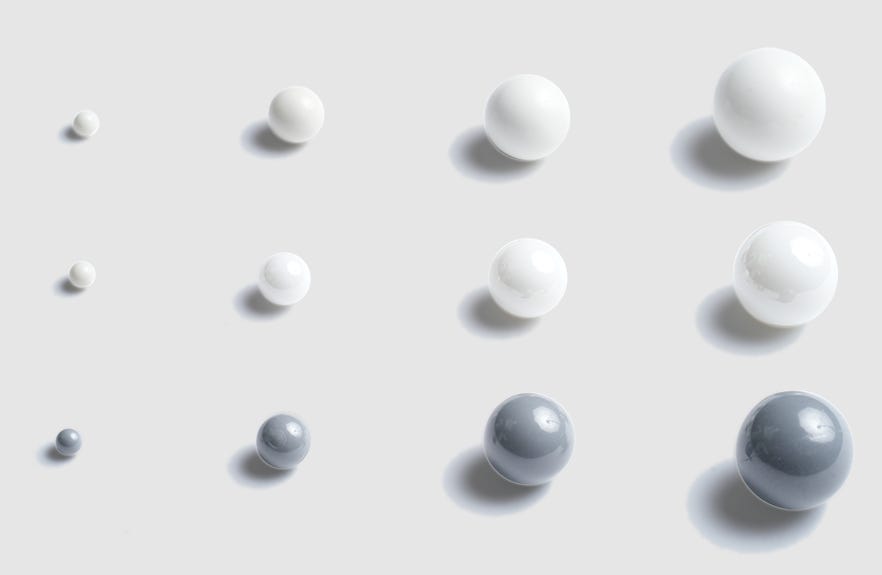
At first glance, zirconia beads are simply small white ceramic spheres ranging from tens of micrometers to several millimeters in diameter. Their real value, however, is not merely their ability to grind materials. The real challenge is whether they can continuously and efficiently grind and disperse nanoscale materials while minimizing metal-ion contamination, ceramic debris, abnormal particles, and wear-generated impurities.
As AI chips, HBM, advanced packaging, high-end multilayer ceramic capacitors, and power electronics continue to expand, material particle sizes are becoming smaller, while requirements for purity and batch-to-batch consistency are becoming stricter.
Zirconia beads are therefore evolving from conventional industrial grinding media into a typical example of asmall material with an outsized impacton the semiconductor and electronics supply chain.
Zirconia Beads Are Not Zircon Sand—and They Are Not the Abrasive Particles Used Directly on Wafers
The primary material used in zirconia beads is zirconium dioxide, or ZrO₂. Natural zirconia may originate from baddeleyite or be chemically converted from zirconium silicate contained in zircon sand.
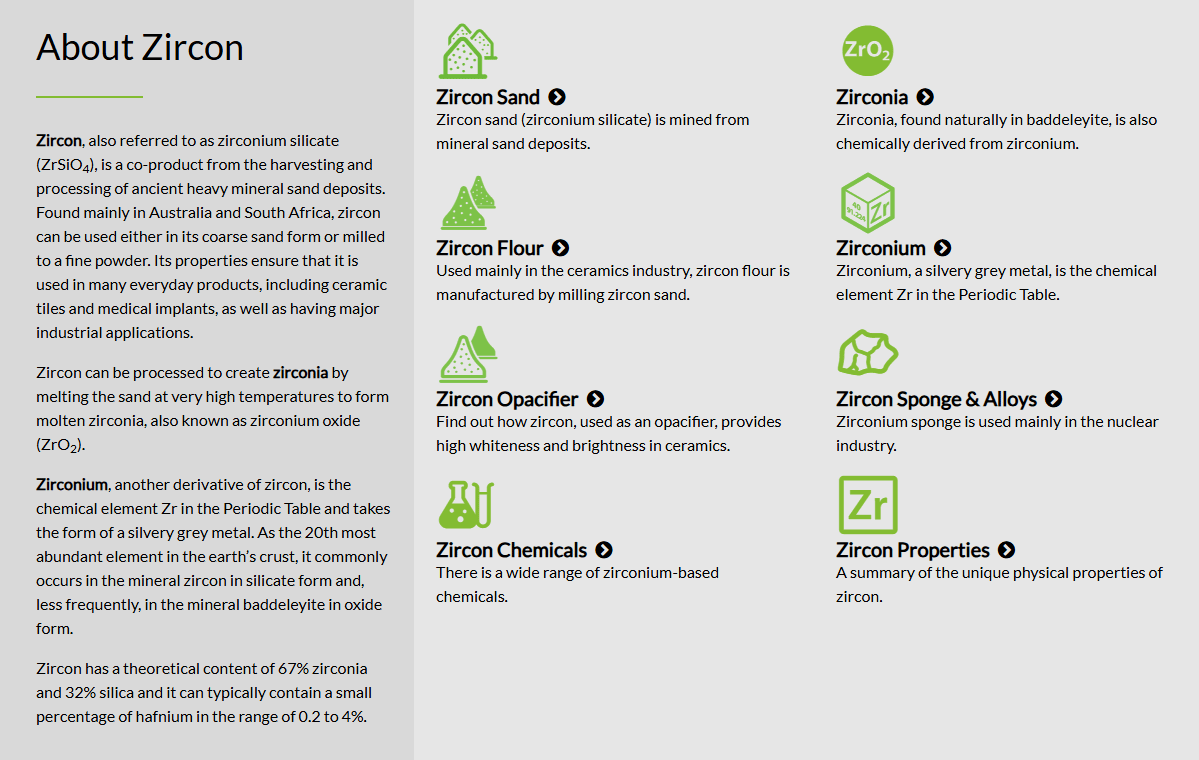
Pure zirconia undergoes phase transformations at different temperatures, accompanied by significant changes in volume. Industrial zirconia products therefore typically incorporate stabilizers such as yttrium oxide, cerium oxide, magnesium oxide, or calcium oxide to improve mechanical strength and structural stability.
The most common material used in high-end grinding beads is yttria-stabilized zirconia, generally abbreviated as YSZ, Y-TZP, or YTZ.
Yttria suppresses structural instability and cracking during use, allowing zirconia to achieve a combination of high density, high hardness, fracture toughness, corrosion resistance, and low wear.
Two different concepts must be clearly distinguished.
First, silicon dioxide, aluminum oxide, or cerium oxide particles in CMP slurry are generally the abrasive particles that physically interact with the wafer surface.
Second, zirconia beads are normally used inside bead mills during slurry manufacturing as the grinding and dispersion medium. Through high-speed collisions, shear forces, and friction, the beads break apart powder agglomerates and reduce particle size. They are subsequently separated from the slurry by screens or media separators.
In other words, zirconia beads are generally not designed to remain as a component of the final CMP slurry. Nevertheless, bead wear, breakage, or abnormal bead size can introduce contamination into the final material.
CMP-related technical literature has described the use of zirconia beads with diameters of approximately 0.05 to 0.1 millimeters to disperse ceria slurry, illustrating the role of zirconia beads as a process medium in CMP material manufacturing.
Below we will share:
Why Do Electronic Materials Require High-End Zirconia Beads?
Nikkato: From Industrial Ceramics to High-End Electronic-Material Processing
The Real Position of Zirconia Beads in the Semiconductor Supply Chain
From Zircon Sand to Japanese Precision Ceramics: The Complete Zirconia-Bead Supply Chain
Three Industry Trends to Watch
Global Competition: Japan, Europe, and China Occupy Different Market Segments

6月16日

Source: ashizawa
Dry processing is optimal for micro-size particles and wet processing is suitable for nano-size particles.As beads with a relatively large diameter are employed in dry bead mills, large and coarse particles can be readily ground by vigorous agitation. As wet bead mills employ minute beads, finer particles can be produced with strong shear and friction force caused by agitating beads at high speed.

Source: ashizawa
Why Do Electronic Materials Require High-End Zirconia Beads?
For conventional powders, the primary objective may simply be to make the material finer. In semiconductor and electronic material production, however, the requirement is more demanding:
The material must be finely ground without being contaminated.
Inside a wet-grinding system, a motor drives a rotor that moves large quantities of grinding beads at high speed. Powder particles are trapped between the beads and gradually reduced in size through repeated impact and shear forces.
Higher bead density generally produces greater kinetic energy per collision, while smaller bead diameters increase the number of contact points per unit volume. Smaller beads are therefore especially suitable for breaking down agglomerates into submicron or nanoscale distributions.
Semiconductor material suppliers, however, do not focus only on average particle size. They are also concerned with the tail of the particle-size distribution and whether a small number of abnormally large particles remain.
Even when the average particle size meets specifications, a limited number of oversized particles can increase the risk of wafer scratches, localized defects, or abnormal material-removal rates during CMP.
High-end zirconia beads must therefore control several parameters simultaneously:
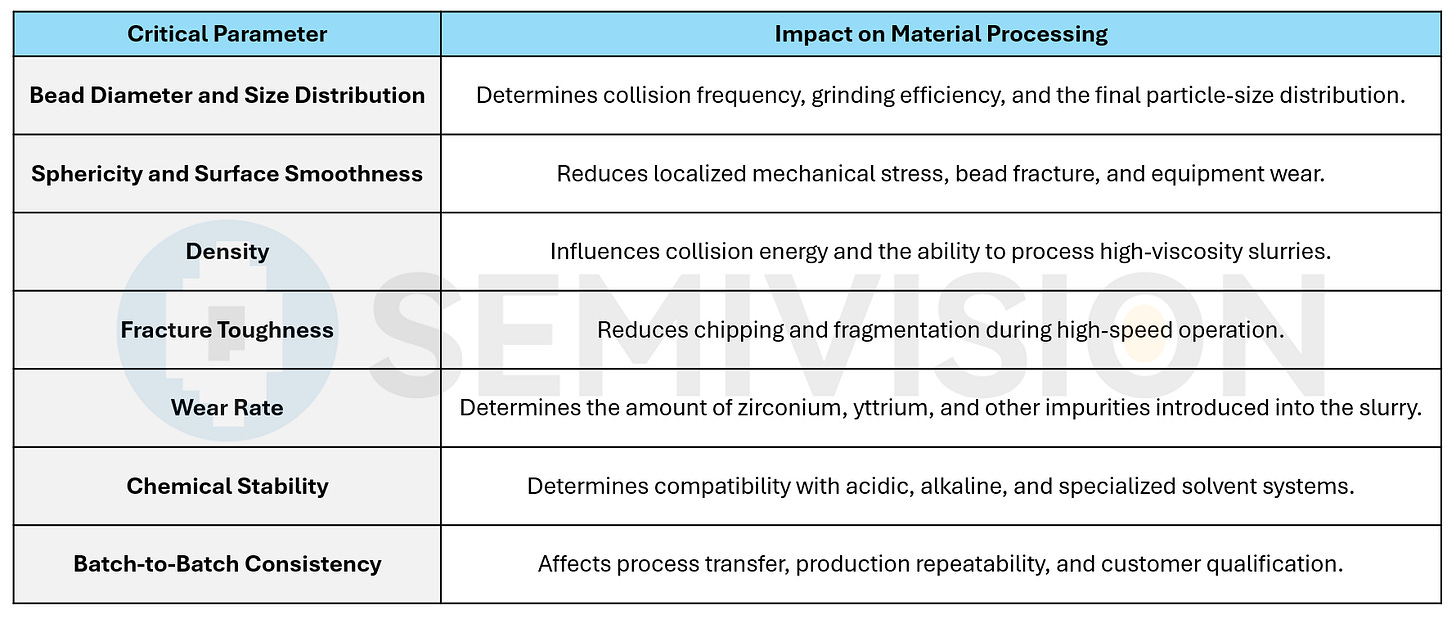
This is why high-end zirconia beads cannot be evaluated solely by price per kilogram.
For a material manufacturer, the more meaningful calculation is the amount of grinding media consumed per ton of qualified slurry, together with equipment productivity, cleaning frequency, contamination-related losses, and scrapped material.
A lower-priced bead with a higher wear rate may ultimately increase total manufacturing costs.
Nikkato: From Industrial Ceramics to High-End Electronic-Material Processing

Nikkato Corporation was founded in 1913 and is headquartered in Sakai, Osaka, Japan. Its businesses include industrial ceramics, laboratory ceramics, measurement and control equipment, and electric furnaces.

As of March 2025, the company employed 288 people. Nikkato is not a particularly large corporation, but it has accumulated extensive expertise in wear-resistant ceramics, grinding media, and applications associated with electronic materials.
Nikkato’s primary zirconia-bead product families are YTZ and YTZ-S. Its product range covers bead diameters from approximately 0.03 millimeters to 25 millimeters, and the company also supplies cylindrical grinding media.
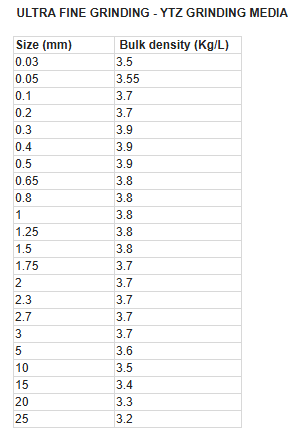
Nikkato positions these products for the grinding and dispersion of dielectric materials, piezoelectric materials, magnetic materials, pigments, and other advanced materials. It emphasizes their high strength, high toughness, wear resistance, and grinding efficiency.
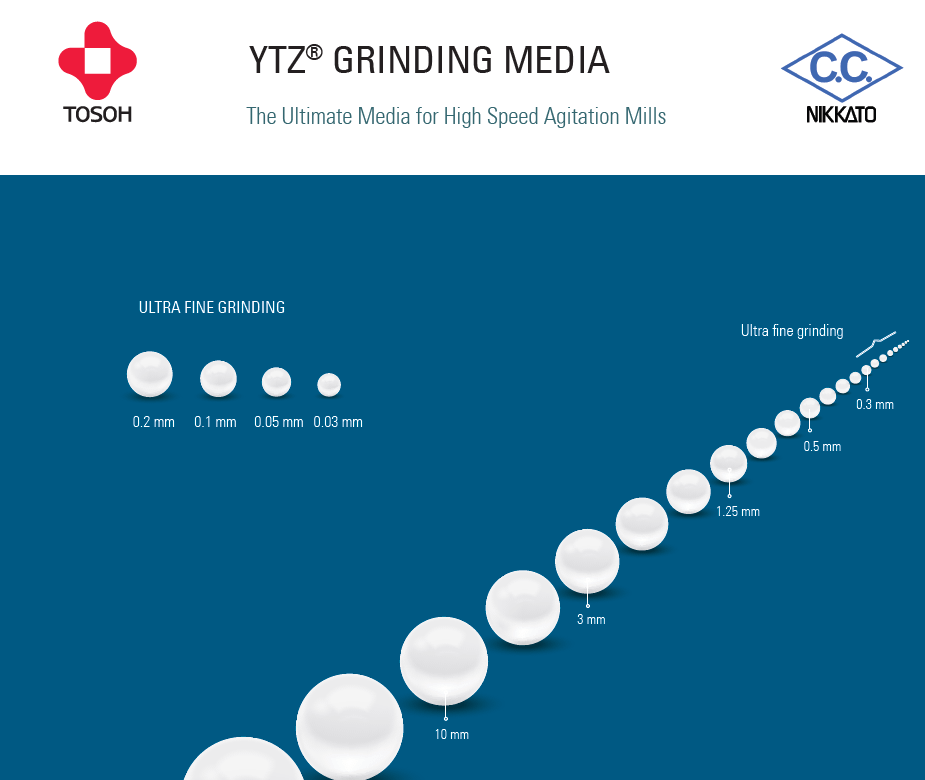
The global supply model for YTZ products also reflects a common division of labor within Japan’s materials industry.
Tosoh markets YTZ internationally as an yttria-stabilized zirconia grinding and dispersion medium, while its overseas product information states that the product is manufactured by Nikkato.

This indicates that the YTZ business is not necessarily based on a fully integrated, single-company supply chain. Instead, it may involve separate participants responsible for high-purity zirconia powder, ceramic processing, branding, overseas distribution, and customer support.
The advantage of this structure is that powder and materials companies can focus on global sales channels, customer relationships, and technical support, while specialized ceramic manufacturers concentrate on formulation, forming, sintering, polishing, classification, and quality control.
The Real Position of Zirconia Beads in the Semiconductor Supply Chain
Strictly speaking, zirconia beads are not direct semiconductor chemicals in the same category as photoresists or CMP slurries supplied to wafer fabs.
They are more accurately classified ashigh-end process consumables used in material manufacturing.
Their downstream applications can be divided into four major areas.
- CMP Slurries and Nanoscale Oxides
CMP abrasive particles such as cerium oxide, silicon dioxide, and aluminum oxide undergo synthesis, crushing, deagglomeration, dispersion, filtration, and surface modification.
Bead-milling equipment may be used to reduce agglomerate size and improve dispersion stability. CMP-related patents have explicitly described the use of zirconia beads to process ceria-based slurries.
However, stronger grinding is not always better.
Excessive grinding may change particle morphology, surface defects, specific surface area, and chemical activity. These changes can ultimately affect material-removal rates, selectivity, and defect performance during CMP.
Zirconia beads, mill speed, flow rate, circulation cycles, and dispersant formulations must therefore be optimized as an integrated system.
- Dielectric, Piezoelectric, and Magnetic Ceramic Materials
Nikkato directly identifies dielectric, piezoelectric, and magnetic materials as major applications for YTZ products.
These materials are used in MLCCs, sensors, filters, actuators, magnetic components, and other electronic devices. Although not all of these markets fall within the narrow definition of semiconductors, they are indispensable parts of AI servers, networking equipment, power modules, and advanced electronic systems.

7月7日
In MLCC production, for example, the particle size, agglomeration, and slurry uniformity of dielectric ceramic powders directly affect thin-layer printing, sintering shrinkage, electrode co-firing, and final electrical performance.
As dielectric layers become thinner, tolerance for abnormal particles and contamination declines.
- Advanced Packaging Fillers, Adhesives, and Conductive Pastes
Advanced packaging materials use large quantities of aluminum oxide, silica, aluminum nitride, boron nitride, and other functional fillers.
Some formulations require wet grinding and dispersion to control filler size, rheological behavior, and distribution within polymer resins.
Zirconia beads are not suitable for every packaging material. However, when customers require higher purity, lower metal contamination, or more precise particle-size control, the choice of grinding medium becomes an important part of formulation development.
These applications are usually highly customized. The most suitable grinding medium depends on powder hardness, solvent chemistry, viscosity, and acceptable contamination limits.
- Next-Generation Batteries and Electronic Chemical Materials
Zirconia beads are also widely used in cathode materials, anode materials, solid electrolytes, conductive additives, pigments, and functional coatings.
These markets are not identical to the semiconductor industry, but they share many technologies related to powder engineering, nanoscale dispersion, and high-purity manufacturing.
This allows zirconia-bead suppliers to diversify their exposure across multiple end markets.

7月9日
From Zircon Sand to Japanese Precision Ceramics: The Complete Zirconia-Bead Supply Chain
The zirconia-bead supply chain can be divided into several major stages:
Heavy-mineral-sand mining → Zircon separation → Chemical conversion into zirconia → Stabilized ceramic powder production → Bead forming and sintering → Material-supplier and end-customer qualification
The First Upstream Layer: Zircon Supply Is Concentrated in Heavy-Mineral-Sand-Producing Regions
The primary economic source of zirconium is zircon, or zirconium silicate, with the chemical formula ZrSiO₄.
Zircon sand is generally not mined as a standalone mineral. It is often produced as a by-product or co-product of heavy-mineral-sand operations that also extract ilmenite and rutile.
Zircon supply is therefore influenced not only by demand for zircon itself, but also by titanium-mineral investment cycles, ore grades, and the economics of broader heavy-mineral-sand projects.
According to the US Geological Survey, global zirconium mineral concentrate production was approximately 1.2 million metric tons in 2025.

Australia and South Africa remained the leading producers and exporters. Global output declined by approximately 12% from the previous year, while China remained the largest market for imported zircon concentrate.
This means that although zirconia beads may be processed in Japan, Europe, or China, their original mineral supply remains highly dependent on heavy-mineral-sand regions such as Australia, South Africa, Mozambique, and Senegal.
The Second Upstream Layer: Yttria May Be the More Sensitive Material
High-end YTZ beads require not only zirconia but also yttria as a stabilizing additive.
Yttrium oxide is categorized as a rare-earth material, and the refining and separation supply chain for high-purity yttria is heavily concentrated in China.
The US Geological Survey has reported that China produces most of the world’s yttrium supply. Approximately 70% of US yttrium-material imports came directly from China, while nearly all imported yttrium metals and compounds were derived from mineral concentrates processed in China.

In 2025, China placed yttrium metals, oxides, alloys, and compounds under stricter export controls. During the same year, the average price of high-purity yttrium oxide increased by approximately 42%.
This represents an easily overlooked risk for the zirconia-bead industry.
The market often assumes that the main raw-material risk for zirconia beads lies in zircon sand. In reality, high-end yttria-stabilized zirconia beads are also exposed to the rare-earth supply chain.
Although yttria represents a much smaller percentage of the product than zirconia, changes in export licensing, lead times, or high-purity supply could still affect powder formulations, inventory levels, and manufacturing costs.
The Midstream Manufacturing Barrier Is Not Simply Sintering—It Is Microstructure Control
Producing zirconia grinding beads from ceramic powder requires powder blending, granulation, forming, binder removal, high-temperature sintering, grinding, polishing, classification, and inspection.
At first glance, this appears to be a mature ceramic-manufacturing process. Yet producing beads that are round, dense, defect-free, and consistent—especially at diameters of only several tens of micrometers—is considerably more difficult than manufacturing conventional ceramic components.
The critical process know-how includes:
Uniform distribution of yttria throughout the ceramic powder
Powder purity, particle size, and sintering activity
Grain-growth and porosity control
Consistency of sintering shrinkage
Suppression of surface defects and microcracks
Bead-size classification and removal of oversized particles
Wear and fracture testing for every production batch
When sintering is insufficient, the beads may retain excessive porosity, reducing strength and wear resistance.
When sintering is excessive, abnormal grain growth may occur, weakening fracture toughness.
Even when chemical compositions are identical, products from different suppliers may exhibit substantial differences in microstructure, sphericity, and long-term wear performance.
This is the core competitive barrier in the high-end zirconia-bead market.
Customers are not simply purchasing a chemical combination of ZrO₂ and Y₂O₃. They are purchasing the ability of the grinding media to maintain process stability after thousands of hours of operation.
Global Competition: Japan, Europe, and China Occupy Different Market Segments
Major participants in the high-end zirconia-bead market include the Nikkato–Tosoh supply system and Toray in Japan and Saint-Gobain’s ZirPro business.

ZirPro is active in zirconia powders, stabilized zirconia, and ceramic grinding media, with applications covering electronics, advanced ceramics, battery materials, and technical fillers.
China has also established a large zirconia-bead industry, supported by advantages in price, production capacity, domestic equipment integration, and rapid delivery.
Competition is especially intense in medium- and lower-end applications such as coatings, inks, minerals, and general battery materials.
However, the dividing line in semiconductor and high-end electronic materials is not whether a supplier can manufacture zirconia beads.
The real questions are whether the supplier can:
Control wear-related contamination within customer specifications
Maintain consistency across production batches
Provide complete material traceability
Pass long-duration equipment and formulation qualifications
Conduct rapid and credible failure analysis when abnormalities occur
Supplier substitution is therefore often slow in high-end markets.
Changing grinding media may alter grinding efficiency, slurry viscosity, particle-size distribution, and contamination profiles. Customers may need to repeat design-of-experiment studies, reliability testing, and downstream process qualification.
Zirconia beads are a classic example of a product with a low share of total material cost but a high switching cost.
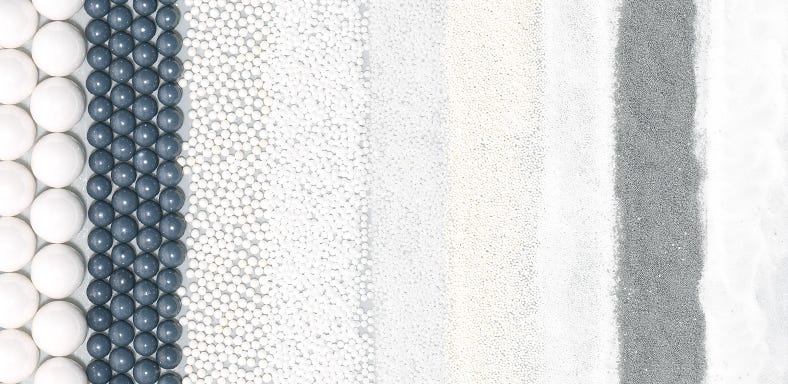
TORAYCERAM™ beads are a ceramic media for crushing/dispersing. It is used in powder atomization processes using a crusher. The main ingredient is tetragonal zirconia; zirconium oxide with added yttrium oxide. There is a wide selection of sizes, and we can support nano-order level crushing/dispersion.
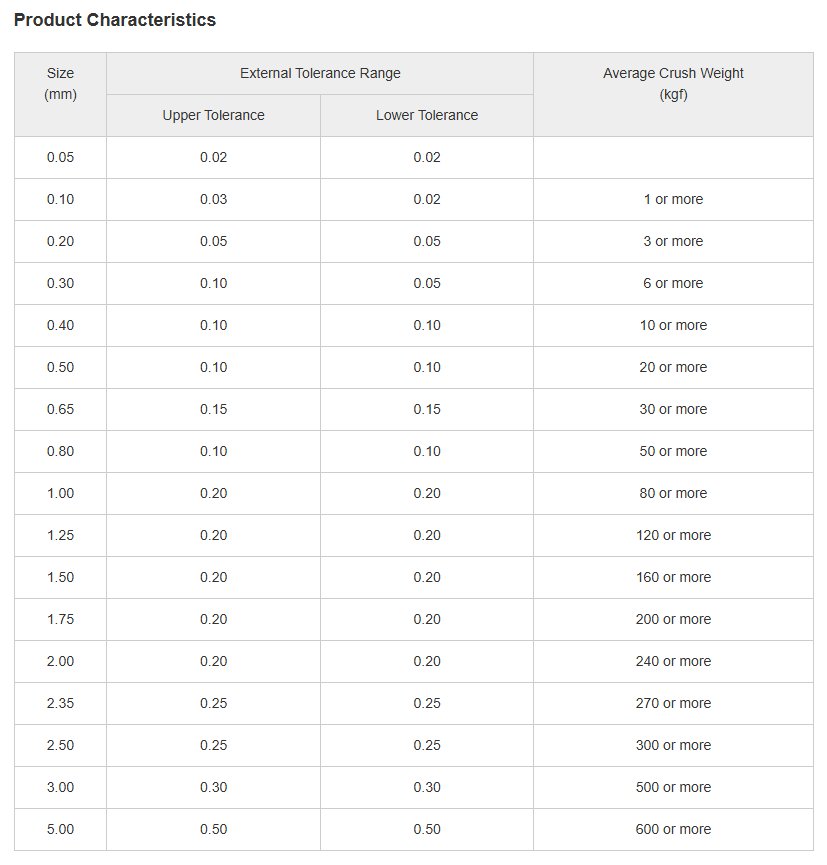

The quality of the grinding media significantly influences the performance and durability of a bead mill. Selecting the right grinding media is therefore decisive for the product quality and your system production costs. Thanks to many years of experience and extensive testing, Bühler has adjusted the optimal grinding media qualities for its machine systems.

What Do Nikkato’s Financial Results Tell Us?
For the fiscal year ended March 2026, Nikkato reported revenue of ¥11.341 billion, representing year-on-year growth of 12.5%.
Operating profit reached ¥1.071 billion, increasing 67.9%.
Revenue from the ceramic business amounted to ¥8.215 billion, up 10.9%. The company attributed the improvement primarily to a recovery in its core electronic-component markets and higher factory utilization.

However, Nikkato does not disclose revenue, shipment volume, or semiconductor-customer exposure specifically for zirconia beads.
It would therefore be inappropriate to interpret all ceramic-business growth as evidence of rising zirconia-bead demand.
A more reasonable conclusion is that Nikkato’s ceramic products are highly connected to electronic-material markets. When utilization rates improve in electronic components, nanopowders, and advanced ceramics, demand for grinding media, wear-resistant ceramics, and related process consumables generally benefits as well.
Three Industry Trends to Watch
- Zirconia Beads Will Continue Moving Toward Smaller Diameters
As target particle sizes enter the nanoscale, grinding-bead diameters also need to decrease.
Smaller beads increase collision frequency while reducing the energy of each individual impact, making them suitable for fine dispersion.
However, as bead size decreases, manufacturing, classification, equipment separation, and operating control become more difficult.
- Purity Specifications Will Shift from Total Metal Content to Element-Specific Control
In the future, customers will not only ask about total wear rates.
They will increasingly focus on the release or particle contamination of specific elements such as zirconium, yttrium, aluminum, silicon, iron, and sodium.
Different impurities do not have the same impact on CMP, advanced packaging, or high-reliability electronic materials.
Suppliers will therefore need to move beyond conventional mechanical-performance management and develop stronger capabilities in ICP-MS analysis, particle characterization, surface-defect inspection, and application-level failure analysis.
- Regional Inventory and Dual-Sourcing Qualification Will Become More Important
The zirconia-bead supply chain may involve zircon sand from Australia and South Africa, yttria refined in China, precision ceramic manufacturing in Japan or Europe, and electronic-material customers across Asia.
Disruption at any stage—whether from export controls, shipping constraints, energy prices, or geopolitical tensions—could extend delivery times.
Major material companies are therefore likely to place greater emphasis on regional inventory, safety stocks, and second-source qualification.
This does not necessarily mean that the industry will eliminate Chinese raw materials entirely. The more realistic objective will be to reduce dependence on a single refining source, a single factory, or a single logistics route.

6月23日
Conclusion: In the AI Materials Race, the Decisive Factors Often Lie in the Least Visible Process Details
Zirconia beads are not among the semiconductor materials that attract the greatest investor attention.
They do not appear directly in a chip’s bill of materials in the same way as photoresists, silicon wafers, or CMP slurry.
Yet zirconia beads illustrate an important characteristic of the semiconductor-material supply chain:
Many products that determine quality and yield do not remain inside the final product. Their value lies in the manufacturing process itself.
For companies such as Nikkato, the competitive advantage is not the zirconium element itself.
It is the ability to convert zirconia and yttria into precision ceramic media with consistent dimensions, low wear, low contamination, and the ability to operate stably for thousands of hours.
Continued growth in AI chips, HBM, advanced packaging, and high-end electronic components will drive increasing demand for nanopowders, functional ceramics, CMP materials, and high-purity slurries.
However, the zirconia-bead suppliers that benefit the most may not necessarily be those with the largest capacity or the lowest prices.
The strongest suppliers will be those capable of entering customer formulations, passing long-term qualification, and integrating raw-material control, microstructure engineering, wear performance, and contamination management.
The semiconductor-material industry is moving from a question of whether a material is available to a more difficult question:
Can the material be manufactured consistently, cleanly, and at scale?
Zirconia beads are one of the clearest—and most underestimated—examples of this transformation.
Thanks for reading SEMIVISION @_@! This post is public so feel free to share it.

5月12日

6月22日


PreviousNext