Volkswagen’s Crisis Is a Warning About Germany’s Industrial Model
Volkswagen’s Crisis Is a Warning About Germany’s Industrial Model
- Source: SemiVision
- Author: SEMIVISION
- Published: 2026-07-17T13:51:11+08:00
- URL: https://tspasemiconductor.substack.com/p/volkswagens-crisis-is-a-warning-about Volkswagen’s Crisis Is a Warning About Germany’s Industrial Model


Volkswagen’s Crisis Is a Warning About Germany’s Industrial Model
Original Article By SemiVision Research [Reading time: 12 mins]

Jul 17, 2026
Volkswagen’s Crisis Is a Warning About Germany’s Industrial Model
The carmaker’s restructuring reflects a broader erosion of the economic assumptions that sustained Europe’s manufacturing powerhouse
Volkswagen is preparing for the most consequential restructuring in its 89-year history.
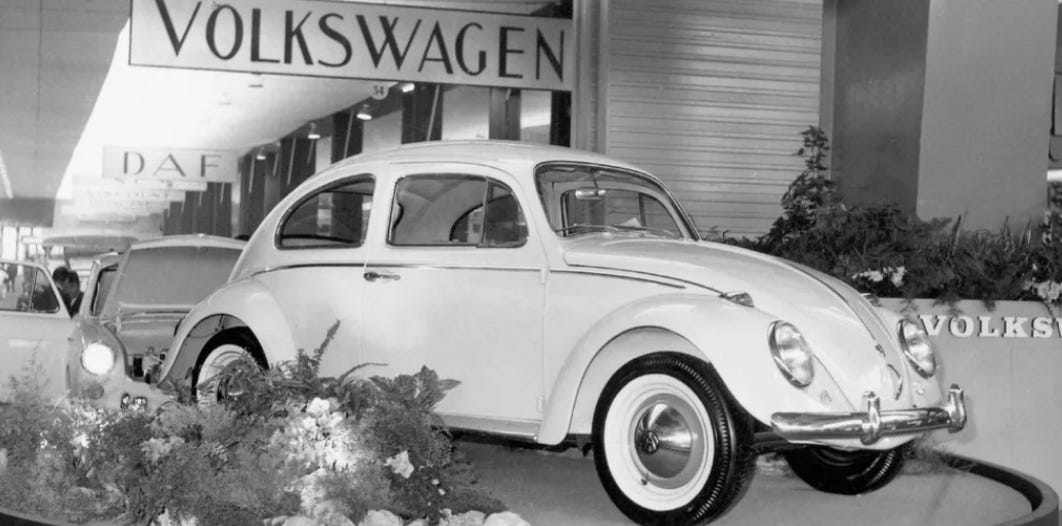
The group has outlined plans to reduce production capacity, simplify its model portfolio and cut costs across its sprawling global operations. More radical measures—including the possible elimination of tens of thousands of jobs and the closure or repurposing of several German factories—remain politically contested.
The final numbers may change. The direction of travel is less ambiguous.
Volkswagen is no longer dealing with a temporary downturn that can be managed through incremental efficiency measures. It is confronting a more fundamental question: whether a manufacturing structure designed for the economics of the internal-combustion era can remain viable in a world of electric vehicles, software-defined products, Chinese competition and persistently high European costs.
The implications extend well beyond one carmaker.
Volkswagen is one of Germany’s largest employers, one of its most important exporters and an anchor customer for thousands of suppliers. Its difficulties therefore offer a useful lens through which to examine the weakening foundations of Germany’s post-Cold War industrial model.
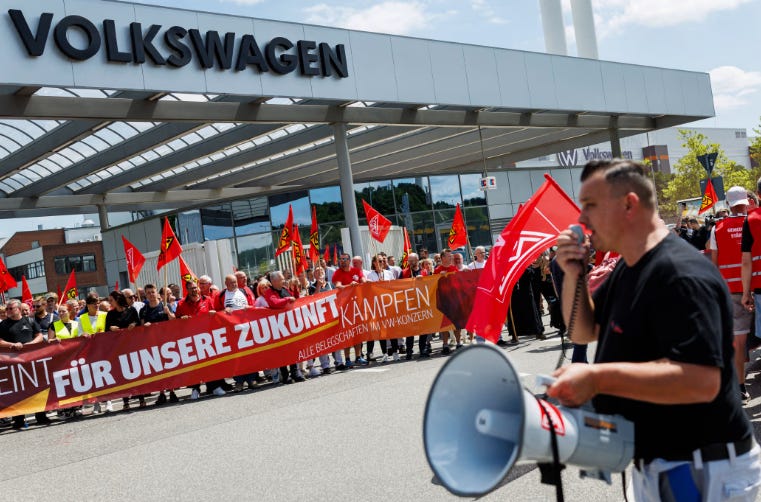
Workers protest against Volkswagen’s restructuring plans at a plant in Zwickau, Germany, on Thursday. Jens Schluter/AFP/Getty Images
For three decades, that model rested on a remarkably favourable combination of external conditions.
German manufacturers had access to relatively inexpensive Russian pipeline gas. They benefited from strong demand in China for premium cars, machinery and industrial equipment. They also operated within a US-backed security and trading system that allowed Europe to devote comparatively limited resources to defence.
Each of those assumptions has now been disrupted.
Russian gas supplies have largely disappeared. China has evolved from a customer into a formidable industrial competitor. The US is pressing Europe to spend more on defence while pursuing its own increasingly interventionist industrial policy.
Volkswagen’s crisis sits at the intersection of all three shifts.
The end of the old German bargain
Germany’s economic success was never based on cheap labour. Its advantage came from productivity, engineering expertise, supplier depth and the ability to convert imported energy into high-value manufactured exports.
This worked particularly well in industries such as chemicals, steel, glass, machinery and automobiles. These sectors benefited from dense industrial clusters, long-established apprenticeship systems and close relationships between manufacturers and specialised suppliers.
But the competitiveness of such clusters depends on more than engineering quality.
Energy costs matter. So do the speed of investment approvals, access to capital, availability of skilled workers and proximity to expanding markets.
On each of these measures, Germany’s position has become more difficult.
The loss of Russian gas exposed the vulnerability of an industrial system that had become dependent on a politically risky source of energy. LNG imports and government support prevented the worst-case scenarios feared in 2022, but they did not restore the previous cost structure.
Electricity and gas prices have eased from the peaks of the energy crisis. Yet many energy-intensive manufacturers still face a structural disadvantage relative to competitors in the US, China and the Middle East.
For a household, a temporary subsidy may provide meaningful relief. For a chemical company considering a multibillion-euro plant, the relevant question is whether energy will be affordable and predictable for the next 15 or 20 years.
That distinction is central to understanding Germany’s industrial slowdown.
The most consequential form of deindustrialisation is not necessarily the immediate closure of existing plants. It is the gradual diversion of new investment elsewhere.
A factory may continue operating in Germany for years while its next production line is built in the US, its newest process is installed in China and its research budget is allocated to a lower-cost location.
Over time, the centre of gravity shifts.
The nuclear debate obscures a wider policy failure
Germany’s decision to close its remaining nuclear plants in April 2023 remains one of the most contentious elements of its energy policy.
CNN: ‘A new era’: Germany quits nuclear power, closing its final three plants

Critics argue that retiring low-carbon, dispatchable generation during an energy crisis was strategically incoherent. Supporters note that the nuclear exit was the culmination of a policy adopted under Angela Merkel following the Fukushima disaster, rather than a sudden decision by Olaf Scholz’s coalition.
Both arguments contain some truth.
The nuclear phaseout was not the sole cause of Germany’s industrial problems. Nuclear power had already declined substantially as a share of the energy mix, and reopening plants would not have restored cheap Russian gas.
But the closure reduced Germany’s margin for error at precisely the moment when the energy system was under exceptional strain.
The larger failure was one of sequencing.
Germany attempted to phase out nuclear power, reduce coal use, expand renewable generation and sever its dependence on Russian gas without building grid infrastructure, storage capacity and flexible backup generation quickly enough.
The difficulty was not the ambition to decarbonise. It was the assumption that each part of the transition could proceed independently.
Industrial policy, climate policy and energy security were treated as overlapping but separate agendas. In practice, they are inseparable.
The result has been a policy environment in which manufacturers are asked to electrify production and reduce emissions while facing electricity prices that can weaken the business case for doing so in Germany.
A slow industrial contraction
The deterioration is visible in industrial output.
Germany’s energy-intensive sectors have experienced a marked decline in production since 2021. Chemicals, metals, glass, ceramics, cement and paper have been among the most exposed.
Some of this reflects cyclical weakness. European demand has been subdued, interest rates rose sharply and global trade slowed.
But the persistence of the decline points to structural pressures as well.
The number of corporate insolvencies has also increased. The causes extend beyond energy prices: pandemic support has expired, financing costs have risen, labour shortages have intensified and domestic demand remains weak.
Germany is therefore not suffering from a single shock. It is absorbing several at once.
The combination resembles a balance-sheet adjustment across the industrial economy.
Companies that once tolerated low-margin German production because of strong exports and cheap energy are re-evaluating those assumptions. Mittelstand suppliers that depended on stable automotive volumes face declining orders. Capital-intensive manufacturers must decide whether to modernise expensive domestic assets or redirect investment abroad.
This process is unlikely to produce a dramatic collapse. Germany still has deep industrial capabilities and highly competitive companies.
But gradual erosion can be more difficult to reverse than an acute crisis. It attracts less political attention while steadily weakening the investment base.
Volkswagen and the limits of cost-cutting
Volkswagen’s difficulties are often framed as a simple contest between German engineering and Chinese electric-vehicle manufacturing.
That understates the challenge.
Chinese automakers have not merely built cheaper cars. They have developed an integrated industrial ecosystem spanning battery materials, cells, power electronics, electric motors, thermal systems, software, digital cockpits and consumer electronics.
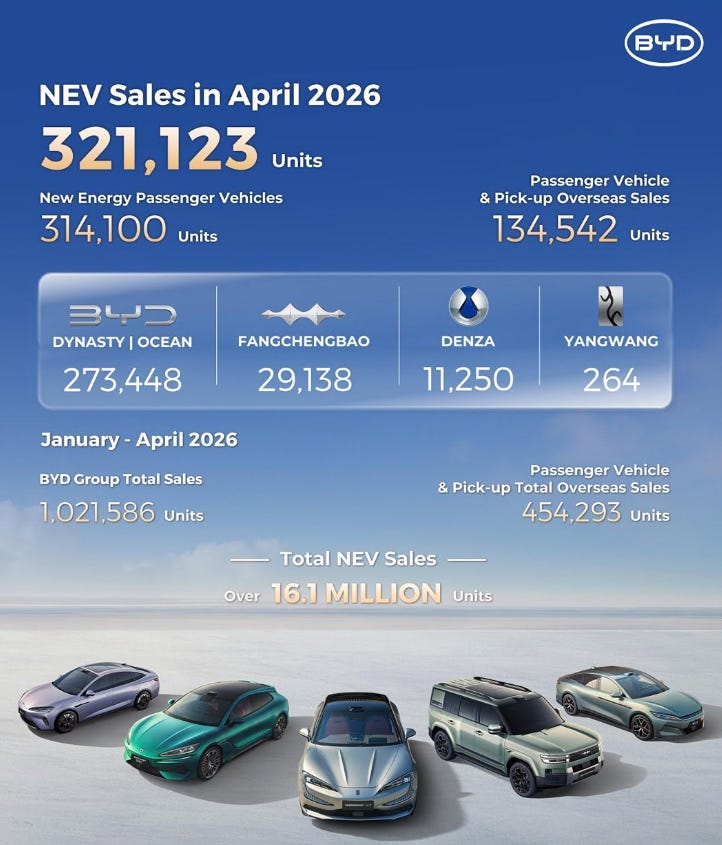
They also operate in a domestic market where price competition is intense and product cycles are short. Vehicles are updated at a pace more familiar to the technology industry than to traditional European automotive manufacturing.
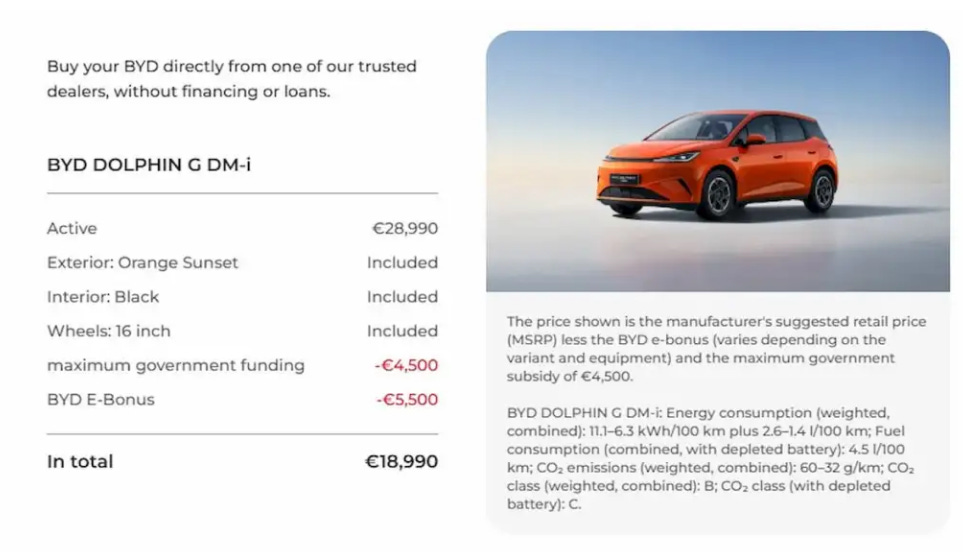
BYD launches the Dolphin G plug-in hatch with 65 miles of EV range for $32,000
Volkswagen retains formidable strengths.
Its brands, safety engineering, manufacturing standards, global distribution network and ability to industrialise complex products remain valuable. But these advantages are less decisive in electric vehicles than they were in the combustion-engine era.
The engine and transmission once represented a major source of proprietary value for German carmakers. In an electric vehicle, the basis of competition shifts towards batteries, power electronics, software architecture, data and cost-efficient manufacturing.
Volkswagen has invested heavily in all of these areas. Yet its software efforts have been expensive and uneven, while its vehicle-development cycles remain longer than those of many Chinese rivals.
This makes the group’s restructuring more than a conventional cost-reduction programme.
Reducing headcount or closing a plant can improve utilisation rates. It cannot by itself solve weaknesses in software, battery economics or product speed.
The deeper challenge is organisational.
Volkswagen must simplify a group that includes multiple brands, overlapping platforms, complex governance and strong regional power centres. It must do so while preserving the engineering capabilities that distinguish it from lower-cost competitors.
That is a more difficult task than merely cutting expenses.
China is both the problem and part of the solution
No market illustrates Volkswagen’s dilemma more clearly than China.
For years, China was a major source of profit for German carmakers. Local joint ventures generated strong margins and helped finance global operations.
That relationship has changed.
Chinese manufacturers now lead the domestic electric-vehicle market and are expanding internationally. They compete not only on price but increasingly on design, technology and customer experience.
Volkswagen cannot simply abandon China. The market remains too large, and the country’s automotive supply chain is too important.
China is also one of the fastest environments in which to develop and validate electric-vehicle technology. Carmakers that retreat entirely risk losing access not only to customers but to the industry’s most dynamic innovation ecosystem.
Volkswagen’s response has therefore been to deepen local development through an “In China, for China” strategy.
This includes more local sourcing, faster product development and closer collaboration with Chinese technology companies.
The approach is commercially rational. It also carries strategic consequences.
As engineering and product decisions become more localised, the German headquarters may have less influence over technologies developed for the Chinese market.Over time, knowledge flows could become more bilateral, rather than simply moving from Germany to China.
This is a significant reversal from the early era of German industrial expansion into China.
The challenge for Volkswagen is to benefit from China’s technology ecosystem without becoming dependent on it for the capabilities that will define the future of the car industry.

History Background: in 1978, a Chinese delegation arrived in Wolfsburg, Germany, and sat down with Volkswagen representatives for the first round of negotiations. Those talks would continue for six years.
China mobilized at least seven government ministries and agencies. The principal contracts included a joint-venture agreement, a technology-transfer agreement, a supply agreement, and a planning agreement. Every document was negotiated in painstaking detail over a prolonged period.
The agreements were finally signed in October 1984, marking the establishment of Shanghai Volkswagen—China’s first automotive joint venture with foreign investment following the launch of its reform and opening-up policy.
The deal was valued at $66 million and had a 25-year term. Its underlying condition was straightforward: market access in exchange for technology transfer, with foreign ownership strictly capped at 50%.
Fiscal policy cannot avoid trade-offs
Germany’s industrial debate is increasingly entangled with arguments over public spending.
Since Russia’s invasion of Ukraine, Berlin has increased military and civilian support for Kyiv, raised defence expenditure and committed more resources to energy security.
At the same time, the country faces large funding needs in infrastructure, railways, digital networks, social welfare and the transition to a lower-carbon economy.
These demands collide with Germany’s constitutional debt brake and a political culture that has traditionally been cautious about sustained deficit spending.
The collapse of Scholz’s coalition in late 2024 demonstrated how difficult these trade-offs had become.
It would be misleading, however, to reduce the debate to a choice between supporting Ukraine and subsidising German factories.
Industrial competitiveness cannot be restored simply by redirecting a portion of military spending towards energy subsidies.
Subsidies may prevent some plant closures. They do not address slow approvals, fragmented regulation, weak digital infrastructure or a shortage of skilled labour.
Nor can the state permanently compensate companies for structural cost disadvantages.
The more important question is whether public spending can improve the productive capacity of the economy.
Investment in grids, transport, digital infrastructure and research can lower costs over time. Indefinite support for uncompetitive production risks preserving the existing structure without preparing it for the future.
Germany must therefore distinguish between industrial policy and industrial preservation.
The first creates conditions for future investment. The second delays adjustment.
A stress test for the German economic system
Volkswagen’s governance makes restructuring particularly difficult.
The state of Lower Saxony holds a significant stake. Labour representatives occupy half the seats on the supervisory board. German co-determination gives employees substantial influence over major decisions.
These arrangements have helped sustain social stability and long-term employment. They can also slow the closure of underused plants and complicate rapid reallocation of capital.
The likely outcome is therefore a negotiated restructuring rather than a sudden shutdown of large parts of the German production network.
Volkswagen may rely on early retirement, reduced shifts, lower model complexity and gradual capacity reductions. Some plants could be repurposed or opened to external partners.
Such compromises may be politically necessary. They will not remove the economic pressure.
Keeping a factory open is not the same as making it competitive.
If utilisation remains low and new products are allocated elsewhere, a plant can survive formally while losing strategic relevance.
This is why Volkswagen represents a broader stress test for Germany’s social-market economy.
The system must demonstrate that it can protect workers without preventing adjustment, maintain industrial capacity without subsidising inefficiency, and pursue climate goals without undermining investment.
Germany is not finished
It would be premature to conclude that Germany is destined for permanent industrial decline.
The country still possesses strengths that are difficult to replicate: skilled technicians, world-class research institutions, specialised machinery producers and dense networks of suppliers.
German companies remain leaders in automation, industrial software, optics, chemicals, semiconductors, precision engineering and advanced manufacturing equipment.

2025年6月26日
The issue is not whether Germany has industrial capabilities. It is whether it can attract the next generation of industrial investment.
Capital is becoming more selective and more geopolitical.
Companies now assess not only costs and productivity, but also government subsidies, trade restrictions, supply-chain resilience and access to strategic markets.
The US offers generous incentives and relatively abundant energy. China offers scale, manufacturing speed and integrated supply chains. Eastern Europe offers lower costs within the EU. The Gulf states offer energy and increasingly ambitious industrial policies.
Germany can no longer assume that existing industrial clusters will automatically attract future investment.
It must compete for it.
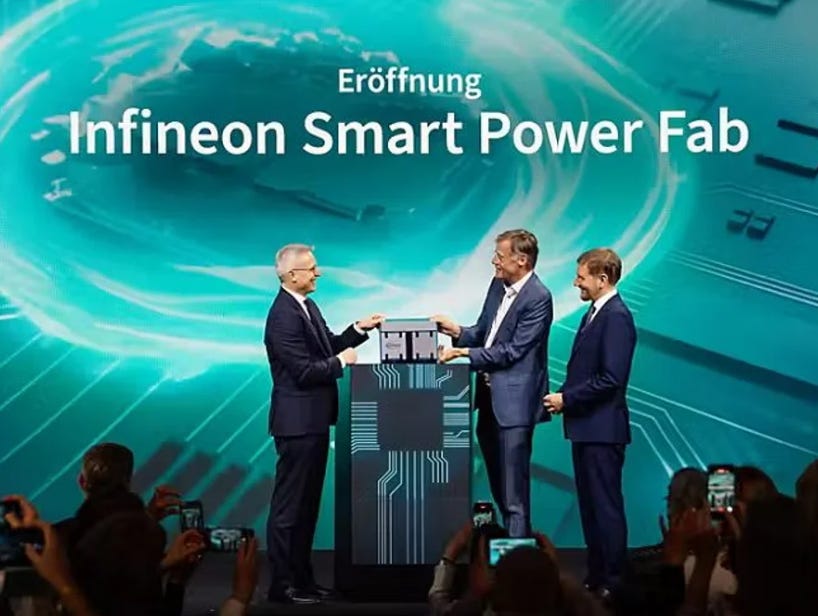
Infineon Technologies has officially opened its new Smart Power Fab in Dresden, Germany, marking the company’s largest-ever investment and boosting production of chips that help power AI data centres. Backed by a €5bn (US$5.69bn) investment, the facility doubles manufacturing capacity at Infineon’s Dresden campus, reinforcing the city’s status as Europe’s leading semiconductor hub.
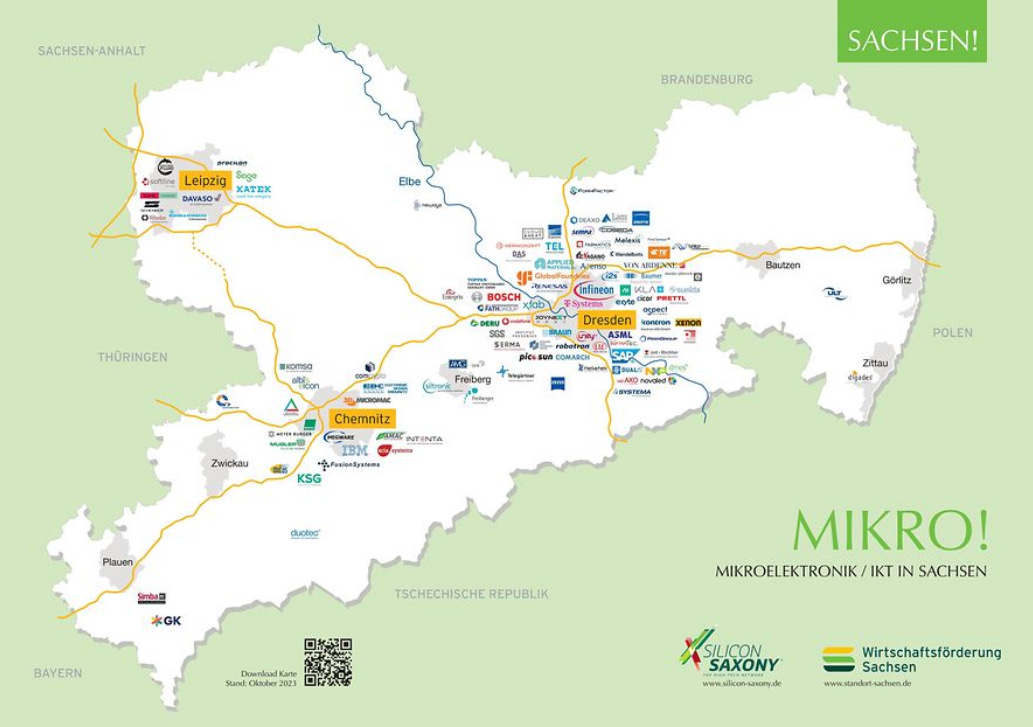
Silicon Saxony region continues strong growth trajectory and attracts international companies
The lesson from Volkswagen
Volkswagen’s proposed restructuring is not evidence that German manufacturing is about to disappear. It is evidence that the old model can no longer be taken for granted.
Germany’s industrial success was built on a combination of cheap energy, globalisation and technological leadership. Each element has weakened.
The policy response cannot be limited to emergency subsidies or defensive tariffs.
Germany needs a credible long-term energy strategy, faster infrastructure development, simpler regulation and a more effective framework for commercialising technology.
Its manufacturers must also adapt.
Engineering excellence remains necessary, but it is no longer sufficient. Software, batteries, artificial intelligence and product-development speed must become core industrial capabilities rather than secondary additions to mechanical engineering.
Volkswagen may ultimately close fewer factories and cut fewer jobs than its most aggressive proposals suggest.
But the precise restructuring numbers are not the main issue.
The more important question is where Volkswagen—and German industry more broadly—will place its next euro of investment.
Factories can remain open long after they have ceased to be central to a company’s future.
Global capital does not wait for political consensus. It moves towards markets that offer scale, predictability, talent and competitive returns.
Germany still has the resources to renew its industrial model.
What it lacks is time.


PreviousNext