MLCCs: The “Rice of Electronics” Becomes a Power Bottleneck in the AI Era
MLCCs: The “Rice of Electronics” Becomes a Power Bottleneck in the AI Era
- Source: SemiVision
- Author: SEMIVISION
- Published: 2026-06-15T09:41:01+08:00
- URL: https://tspasemiconductor.substack.com/p/mlccs-the-rice-of-electronics-becomes (1) MLCCs: The “Rice of Electronics” Becomes a Power Bottleneck in the AI Era


MLCCs: The “Rice of Electronics” Becomes a Power Bottleneck in the AI Era
Original Article By SemiVision Research [Reading time: 22 mins]

Jun 15, 2026
∙ Paid
MLCCs: The “Rice of Electronics” Becomes a Power Bottleneck in the AI Era
When the market talks about AI servers, the focus usually goes to GPUs, HBM, CoWoS, PCBs, CCLs, optical modules, and liquid cooling. But as AI systems evolve from single servers into rack-scale, and eventually data-center-scale architectures, another long-overlooked component is moving back to the center of the industry’s attention: MLCCs, or multilayer ceramic capacitors.

MLCCs have long been called the “rice of the electronics industry.” The analogy is accurate. Their unit price may seem insignificant, but they exist in almost every electronic system. They handle decoupling, filtering, bypassing, energy storage, voltage stabilization, and noise suppression. They are not as glamorous as GPUs, but they directly determine whether a circuit can operate stably.
According to market report, the global MLCC market was about US$14.8 billion in 2025 and is expected to grow to US$28.6 billion by 2034, representing a CAGR of about 7.6%. Asia-Pacific accounts for roughly 48.6% of the global market, reflecting the core position of Japan, South Korea, mainland China, and Taiwan in MLCC manufacturing and electronics assembly.
But the key point is not merely that the MLCC market is growing steadily. The real change is in demand structure.
In the past, MLCCs were largely viewed as consumer electronics cycle products, moving up and down with smartphones, PCs, and home appliances. Now, they are becoming hard-tech growth components driven by AI servers, electric vehicles, advanced driver assistance systems, 800V high-voltage platforms, and high-speed communications.
This means the investment logic for MLCCs is no longer just about inventory cycles. It now depends on three things: high-end capacity, reliability validation, and access to AI and automotive supply chains.
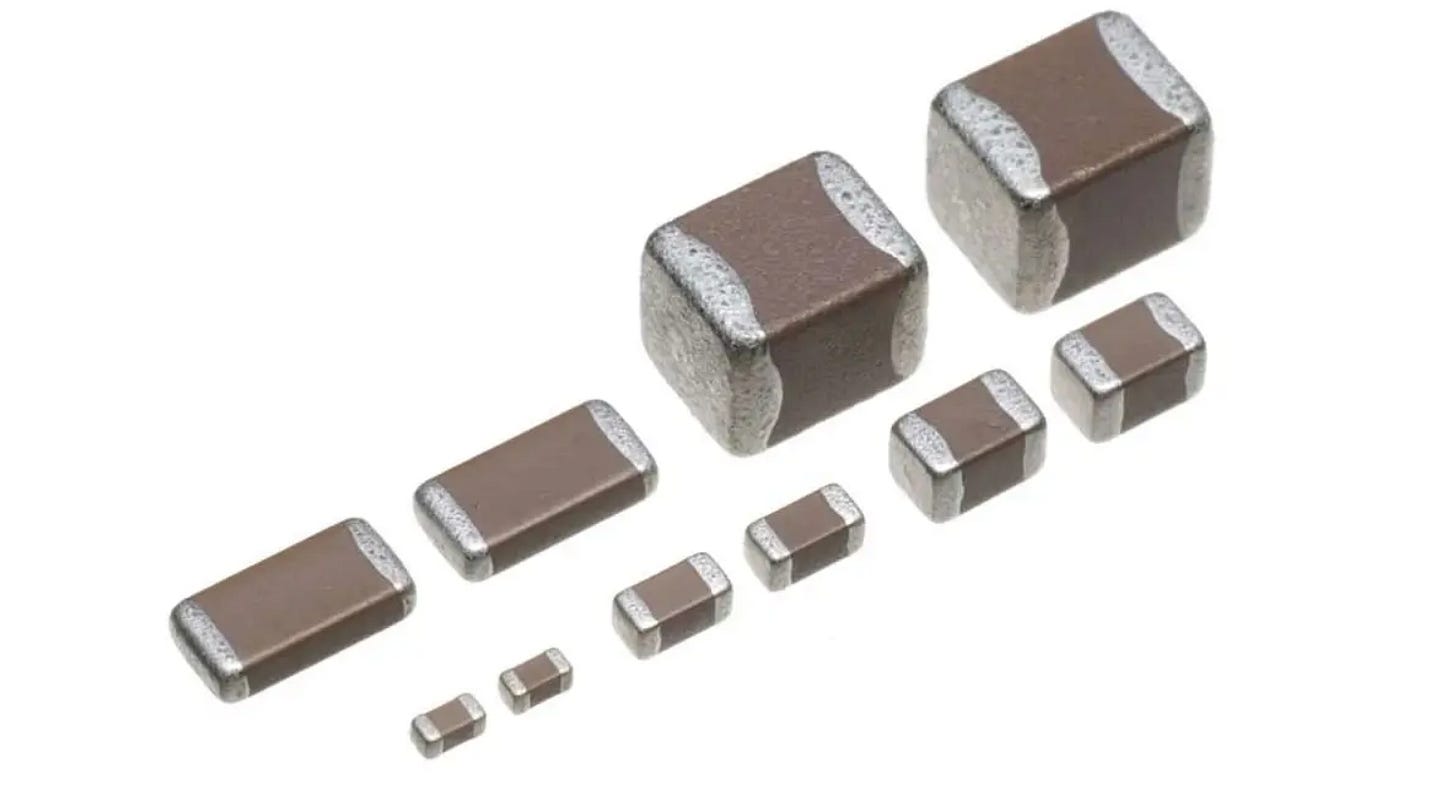
From the perspective of product type, different MLCCs play different roles.
General-purpose MLCCs mainly provide basic decoupling, filtering, and bypass functions. They are the foundational category used in consumer electronics, home appliances, and general industrial control applications.
High-capacitance MLCCs achieve higher capacitance within a limited package size by increasing the dielectric constant, thinning the dielectric layer, and increasing the number of stacked layers. They are mainly used in applications that are highly sensitive to large-current transient response, such as AI servers and automotive electronics.
Low-inductance MLCCs reduce equivalent series inductance through designs such as reverse terminals and three-terminal structures, maintaining low impedance at high frequencies. They are commonly used in RF front ends and high-speed communication circuits, and are therefore also referred to as low equivalent series inductance, or Low ESL, MLCCs.
Low-ESR MLCCs can reduce losses and heat generation under high ripple current conditions, making them suitable for high-power-density scenarios such as data center power delivery networks.
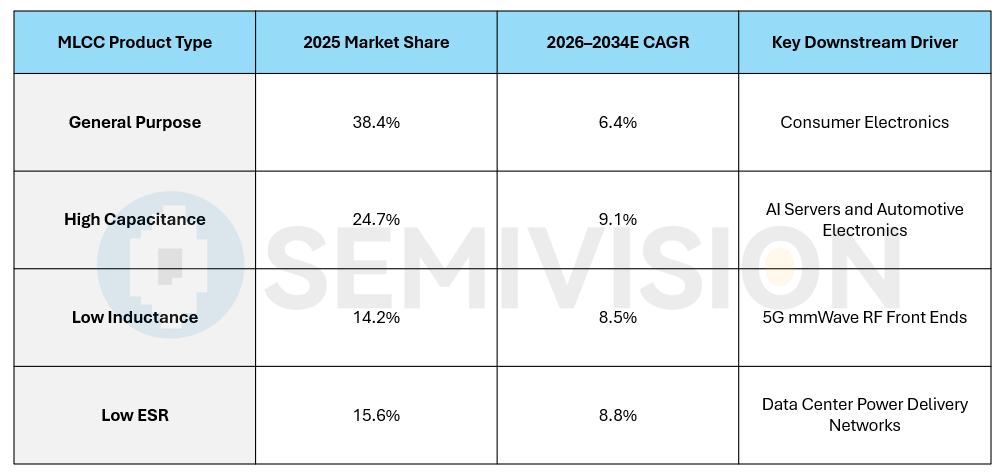
According to industry report, general-purpose products accounted for 38.4% of the market in 2025, ranking first, mainly supported by the large scale of consumer electronics demand. Their CAGR from 2026 to 2034 is expected to be 6.4%.
High-capacitance products accounted for 24.7%, becoming the second-largest category, with an expected CAGR of 9.1%, higher than that of general-purpose products. This reflects rising demand for high-capacitance and high-reliability MLCCs in AI servers, automotive electronics, and related applications.
Low-inductance and low-ESR products accounted for 14.2% and 15.6% of the market, respectively, with expected CAGRs of 8.8% and 8.5%. Their main application areas include 5G millimeter-wave RF front ends and data center power delivery networks.
Overall, high-capacitance, low-inductance, and low-ESR MLCCs are expected to contribute to market growth at a faster pace.
Below we will share:
AI Servers Are Pushing MLCCs from the “Thousands” to the “Tens of Thousands” Era
Compute Board: Semiconductor Integration and the Rise of High-Capacitance MLCCs
Electric Vehicles Are Moving MLCCs from a “Consumer Product Logic” to a “Reliability Logic”
Where Are the Technical Bottlenecks in MLCCs?
The Real Question Is Not Whether MLCC Prices Rise — It Is Who Can Capture the High-End Premium

6月3日
AI Servers Are Pushing MLCCs from the “Thousands” to the “Tens of Thousands” Era
Take NVIDIA’s GB200 NVL72 as an example. The system integrates 36 Grace CPUs and 72 Blackwell GPUs inside a single liquid-cooled rack. Through a 72-GPU NVLink domain, it effectively forms a “single giant GPU.” The NVLink Switch System provides about 130 TB/s of low-latency GPU communication bandwidth.
This shows that AI servers are no longer traditional single-machine servers. They have become rack-scale computing platforms with high density, high interconnect bandwidth, and extremely high power requirements.
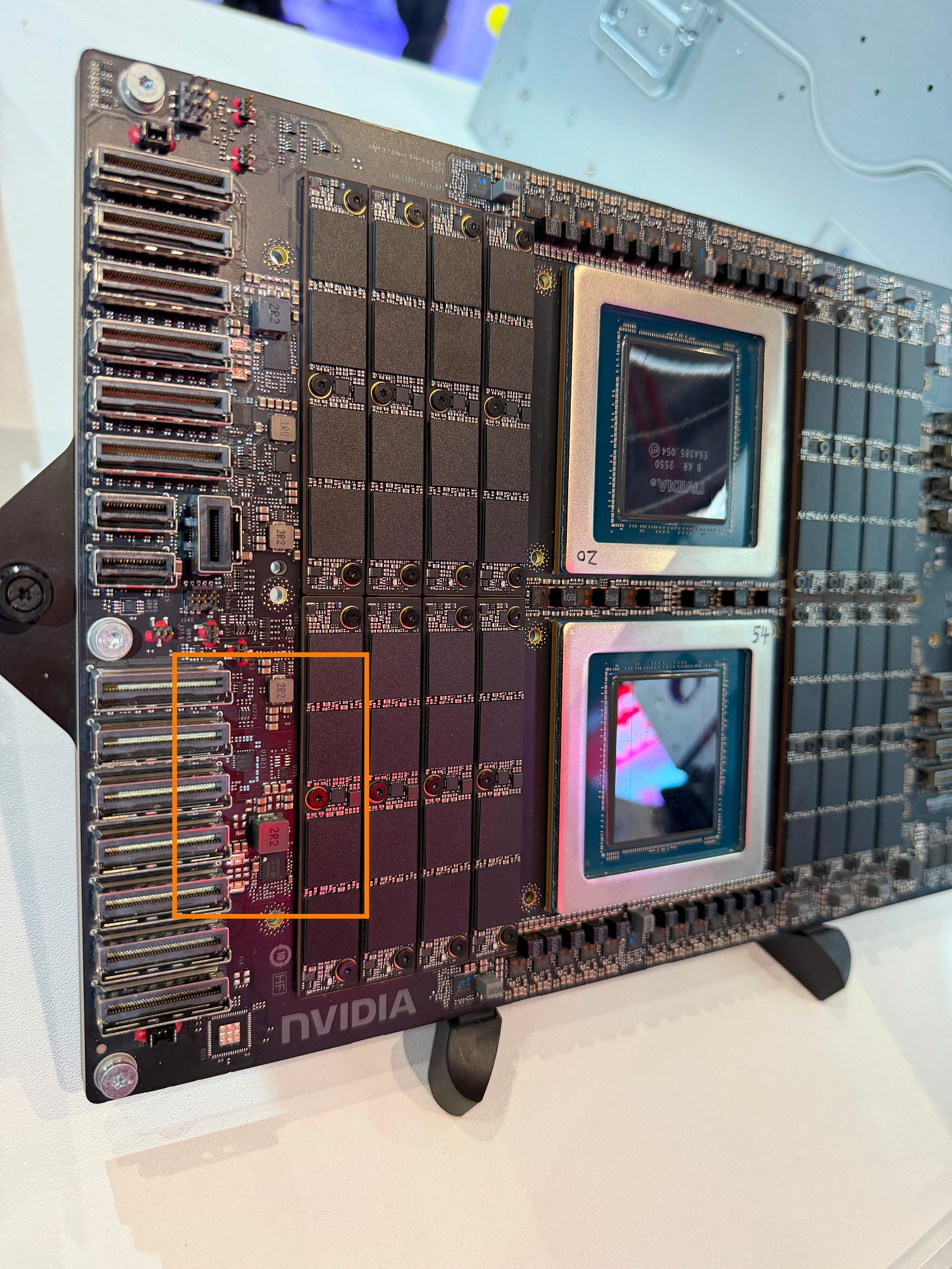
This architectural shift directly increases MLCC usage. According to industry report, a typical AI server uses about eight times more MLCCs than a traditional server, while Samsung Electro-Mechanics has stated that advanced AI servers use more than ten times the MLCC count of general-purpose servers.
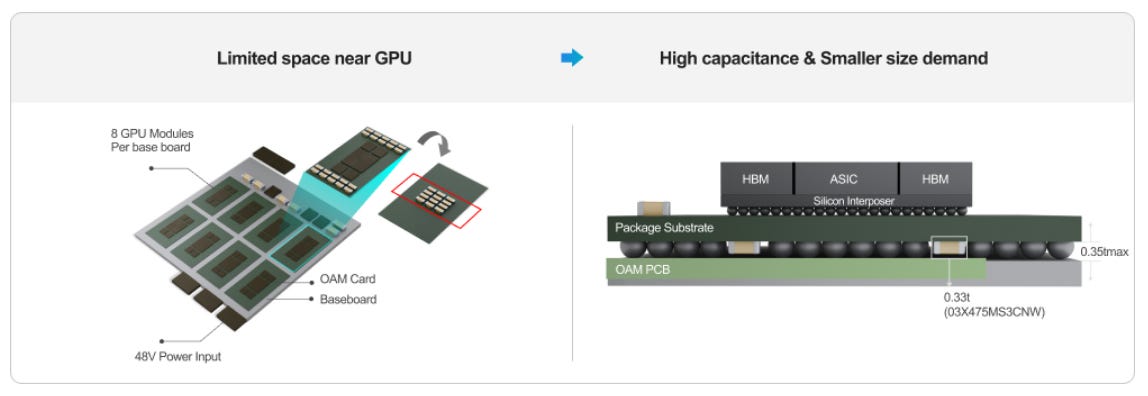
Source: Samsung
Compute Board: Semiconductor Integration and the Rise of High-Capacitance MLCCs
GPUs and CPUs, the computational core of AI systems, operate at low voltages of around 0.8V while drawing currents that can reach thousands of amperes. To stabilize power delivery under these extreme transient load conditions, the total capacitance provided by MLCCs must continue to increase.
Technology Shift
MLCCs placed close to GPUs and CPUs on high-performance compute boards serve a critical decoupling function, helping suppress rapid current fluctuations and voltage droop.
As chip performance continues to advance, available mounting area becomes increasingly limited, while required capacitance keeps rising. This makes ultra-small, high-capacitance MLCC technology a key battleground.
Direction of Growth
The capacitance of SMT-mounted MLCCs placed near GPU solder balls will continue to increase rapidly.
At the same time, embedded MLCCs and land-side MLCCs, which are mounted inside the semiconductor package or directly underneath it, will continue to advance. These solutions can significantly reduce loop inductance while increasing capacitance density, making them increasingly important for next-generation AI accelerators and high-performance compute platforms.
From the compute board perspective, Murata estimates that the average number of capacitors on an AI server compute board will increase from 10,000–20,000 units to 15,000–25,000 units. If expanded to the platform and rack level, a single AI rack may use as many as 440,000 MLCCs.
This is one of the most easily overlooked parts of the AI hardware supply chain: as GPU power consumption rises and transient current fluctuations become more violent, the system needs not only stronger power supplies, but also more high-performance MLCCs placed closer to the GPU and CPU for transient voltage stabilization.
An AI GPU is not a light bulb with stable power consumption. It is a monster that consumes and releases power in sharp bursts. Every inference task, training workload, and data exchange can cause rapid current fluctuations. If voltage droop occurs, the system may face signal errors, unstable computation, or reduced reliability.
The role of MLCCs is to provide short-term energy buffering and noise suppression as close as possible to the core chips.
More importantly, AI server power systems are moving from 12V toward 54V, and eventually toward ±400V or 800V front-end voltage architectures. These systems will rely on multi-stage DC-DC conversion and Vertical Power Delivery located closer to the xPU to reduce voltage drop and wiring loss.
Power Supply and VPD: Moving Toward 48V Server Power and Vertical GPU Core Delivery
Power efficiency has become one of the most critical factors in determining the operating cost of AI data centers.

Source: Samsung
For 120kW-class AI racks, stable and efficient power delivery depends on two key elements: high-efficiency power supply units and high-specification passive components. In conventional server architectures, AC power is typically stepped down directly to 12V or 48V. However, future high-power AI racks are expected to rectify AC power into 800V high-voltage DC to reduce transmission losses within the rack and improve overall power efficiency.
As 48V server power architectures become more widely adopted, demand for 100V-rated MLCCs is expected to increase to support stable intermediate-voltage power delivery. At the same time, demand for larger-size 1kV–2kV MLCCs may also grow as higher-voltage power distribution becomes more common in next-generation AI infrastructure.
In response to the extreme load-current dynamics of GPUs, large core supply currents must be delivered with minimal loss and fast transient response. This is where Vertical Power Delivery, or VPD, becomes increasingly important.
VPD is a power module architecture designed to shorten the power delivery path as much as possible while increasing power density. By delivering power vertically and closer to the GPU core, VPD helps reduce parasitic resistance and inductance, improving transient response and overall power integrity.
As power density per unit area increases, capacitance density must rise in parallel. High-capacitance MLCCs devices are already under active evaluation for these advanced power delivery architectures.

Source: Samsung
The Technological Evolution of AI Networks from electric to photon
As AI models continue to scale, the speed and efficiency of data synchronization between GPUs are becoming increasingly critical. Network trays that connect AI racks are no longer just passive data pathways. They are evolving into core infrastructure that determines overall system performance and helps resolve rack-scale and cluster-scale bottlenecks.
Today’s mainstream 800G networks are rapidly moving toward the 1.6T era. In this transition, CPO, or Co-Packaged Optics, is becoming an important technology direction.
Traditional pluggable optical modules consume significant power during high-speed data transmission, and signal loss becomes more challenging as bandwidth increases. CPO addresses these limitations by placing optical engines in the same package, or in close proximity, with the switch ASIC. By shortening the electrical transmission path, CPO can reduce power loss, improve signal integrity, and support higher bandwidth density.
As a result, CPO is emerging as a key architecture for next-generation network trays.
At the same time, network switch chipsets are now consuming more than 500W, making power delivery and thermal management critical design challenges. This is driving greater demand for high-temperature MLCCs, with specifications to support more stable operation under high-power, high-temperature AI networking environments.
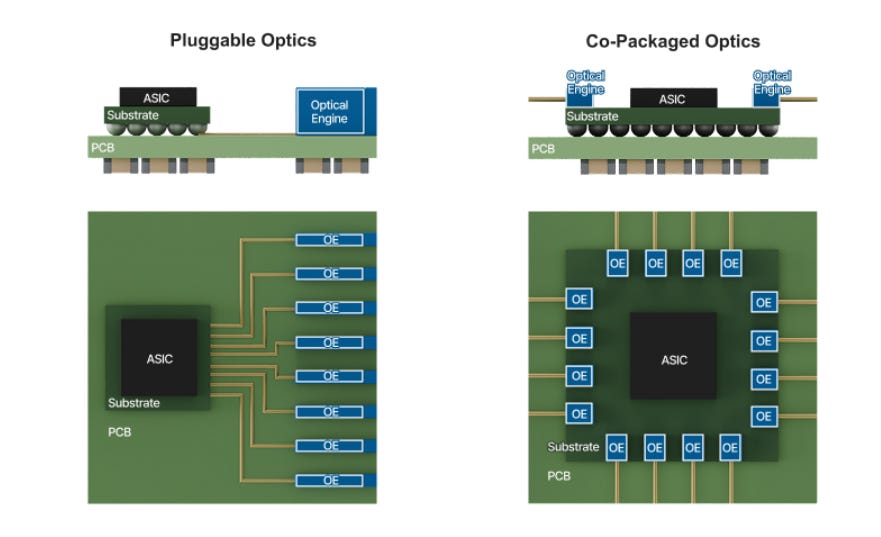
Source: Samsung
This means MLCCs must evolve toward higher capacitance, smaller size, lower ESR/ESL, and better temperature stability.
In other words, AI servers are not only increasing the quantity of MLCCs. They are pushing MLCCs into higher-end specifications.
6月3日
Electric Vehicles Are Moving MLCCs from a “Consumer Product Logic” to a “Reliability Logic”
If AI servers are the high-speed growth driver for MLCCs, electric vehicles are another long-term pillar for high-reliability demand.
A traditional internal combustion engine vehicle uses around 3,000 MLCCs on average. A hybrid or plug-in hybrid vehicle uses about 12,000. A pure EV uses around 18,000. In other words, a pure electric vehicle uses roughly six times as many MLCCs as a traditional gasoline car.
The reason is simple: an EV is not just a car with a battery. It is a high-voltage power electronics system.

High-Voltage Applications in Electric Vehicles
The basic configuration of an EV propulsion system consists of a high-voltage battery, an inverter, and an electric motor. EV propulsion systems operate at high voltage, and the efficiency of an electric vehicle is closely related to the efficiency of its DC/DC converters.
Electric vehicles involve various power conversion applications, such as low-voltage DC/DC converters, on-board chargers, and inverters. Today, different DC/DC conversion topologies are being applied to integrate similar functions. For example, on-board chargers (OBCs) and low-voltage DC/DC converters (LDCs) are being developed for system-level integration, with the advantages of reducing component count and saving space.
High-Voltage MLCC Structures Ensure Reliability
How is the structure of a high-voltage MLCC different from that of a standard MLCC? In high-voltage environments, reliability must be ensured.

MLCCs installed in high-voltage applications face the risk of internal arcing or short circuits. When the voltage is high, a strong electric field forms around the MLCC, ionizing the surrounding air. More specifically, the strong electric field is concentrated at the two terminals of the MLCC. If the activation voltage of the ionized air is exceeded, arcing may occur, potentially causing an internal short circuit inside the MLCC.
The structure used to prevent this phenomenon is internal shielding within the MLCC.
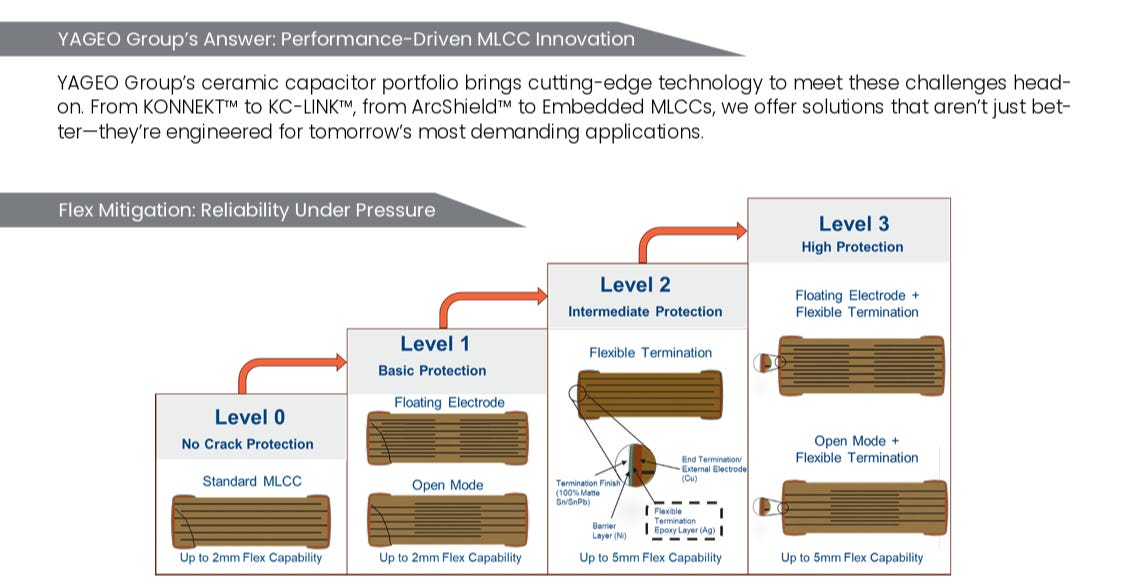
A floating design can reduce the risk of short circuits when cracks occur in an MLCC, making it especially useful for high-voltage products.

The floating structure distributes voltage in such a way that the voltage inside the MLCC is only half of the voltage applied across the terminals. For example, when 1000V is applied across the two terminals of an MLCC, a floating design applies only 500V, or half of the total voltage, to the dielectric layers inside the MLCC.
From a reliability perspective, this is clearly advantageous because it reduces the electric field applied between dielectric layers. Voltage and temperature are key factors that determine the lifetime of an MLCC.
BMS, OBC, DC-DC converters, electric drive units, inverters, regenerative braking, and high-voltage safety control all require large numbers of capacitors to stabilize power, suppress noise, withstand high voltage, and handle temperature changes.
As vehicles become more intelligent, MLCC demand rises again. In an EV equipped with L2+ autonomous driving functions, MLCC usage is distributed across the body control domain, power and high-voltage electrical domain, smart cockpit domain, and autonomous driving domain.

Source: murata
Electrification drives demand in high-voltage power systems. Intelligence drives demand in cockpit systems, ADAS, sensors, and high-speed communication modules.
As 800V high-voltage platforms become more widely adopted, the technical threshold for MLCCs will rise further. OBC, DC-DC, and BMS systems all need to be designed around high-voltage battery platforms. As power density increases, capacitors need higher voltage resistance, lower loss, and more stable temperature characteristics.
At the same time, AEC-Q200 certification is an important reliability barrier for automotive-grade MLCCs entering vehicle supply chains.
Therefore, the real barrier for automotive MLCCs is not just whether a supplier can produce them. It is whether the product can remain stable over long operating lifetimes.
If a consumer electronic device fails, the user may simply replace it. If a capacitor inside a vehicle fails, it may involve safety responsibility. This is why automotive certification, Tier 1 validation, and long qualification cycles create strong supply-chain stickiness.
The Difficulty of High-End MLCCs Is Not Just Being Small — It Is Being Small, Thin, Layered, and Stable at the Same Time
Many people assume MLCCs are simply small components made by stacking ceramic and metal electrodes. But high-end MLCCs are actually a comprehensive engineering challenge involving materials, powder technology, tape casting, printing, stacking, co-firing, plating, and testing.
The manufacturing process includes powder milling, tape casting, internal electrode printing, stacking, lamination, cutting, binder burnout, sintering, chamfering, external electrode coating, plating, testing, inspection, and taping.
From the material side, the core of MLCCs is dielectric ceramic material. Based on the capacitance formula C = εS/d, capacitance is proportional to dielectric constant and effective electrode area, and inversely proportional to dielectric layer thickness.
Therefore, to achieve higher capacitance in a smaller package, suppliers must increase dielectric constant, increase the number of stacked layers, and reduce dielectric layer thickness.
Barium titanate is the basic dielectric material for MLCCs. High-end powder must be fine and uniform. Hydrothermal synthesis can be used for higher-end MLCC production, but the reaction conditions are demanding and the technical threshold is high.
From the process side, ultra-thin dielectric tape casting is critical. Murata has reduced MLCC dielectric layer thickness from about 3 μm in earlier generations to about 0.5 μm today. A 0402-size 26 μF product may use a dielectric layer around 0.5 μm thick and roughly 560 layers. A 1210-size 470 μF product may use a dielectric layer around 1 μm thick and about 1,500 layers.
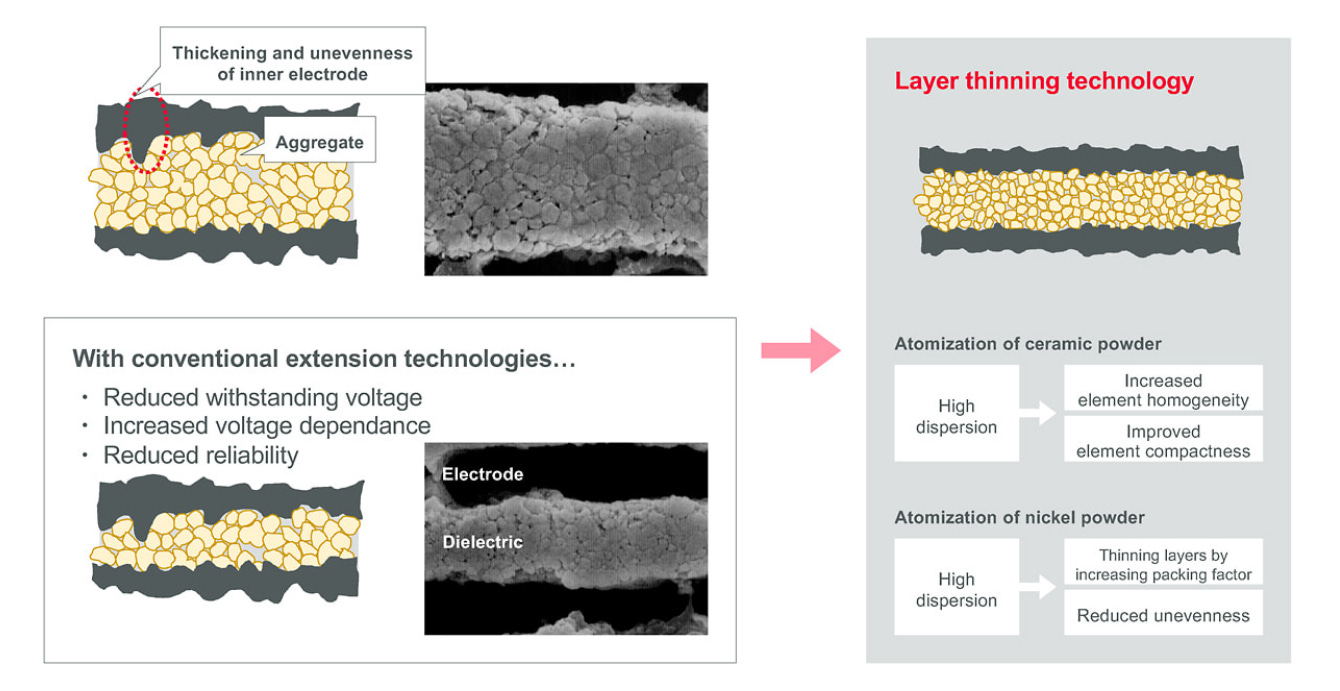
Multilayer Ceramic Capacitor Materials Technology Capability (Thinning of Dielectric and Internal Electrodes)
Murata Production Technology Capability: Murata possesses industry-leading high-precision multilayer fabrication technology, allowing stable formation of ultra-thin dielectric layers and fine electrode patterns. This enables simultaneous miniaturization and increased capacitance. Murata has established Murata's unique integrated production system, covering raw material formulation, component design, production equipment development, manufacturing, measurement, and inspection entirely in-house. This structure ensures exceptional quality stability and reliable supply capability.

At this scale, any tiny particle agglomeration, bubble, or foreign dust can create pinholes and cause high-voltage breakdown during testing.
From the sintering side, MLCCs must also solve the consistency problem of co-firing ceramic layers and metal electrodes. Thermal expansion mismatch between ceramic and nickel internal electrodes may create microcracks. Incomplete binder burnout or insufficient interlayer bonding may lead to delamination. Improper control of the reducing atmosphere may cause ceramic semiconducting behavior and insulation failure.
This is why high-end MLCC shortages cannot be solved by simply adding capacity. The industry is fundamentally built on materials science, precision process control, and large-scale yield management.
Where Are the Technical Bottlenecks in MLCCs?
Capacitors mainly include ceramic capacitors, aluminum electrolytic capacitors, tantalum electrolytic capacitors, and film capacitors. Among them, ceramic capacitors account for around 43% of the overall capacitor market.
Based on structure, ceramic capacitors can be divided into single-layer ceramic capacitors, leaded multilayer ceramic capacitors, and chip multilayer ceramic capacitors, commonly known as MLCCs.
Because MLCCs offer a wide capacitance range, excellent frequency characteristics, high-temperature and high-voltage resistance, compact size, long service life, and low cost, they account for the majority of the ceramic capacitor market. They are also one of the most widely used passive components today, often referred to as the “rice of the electronics industry.”
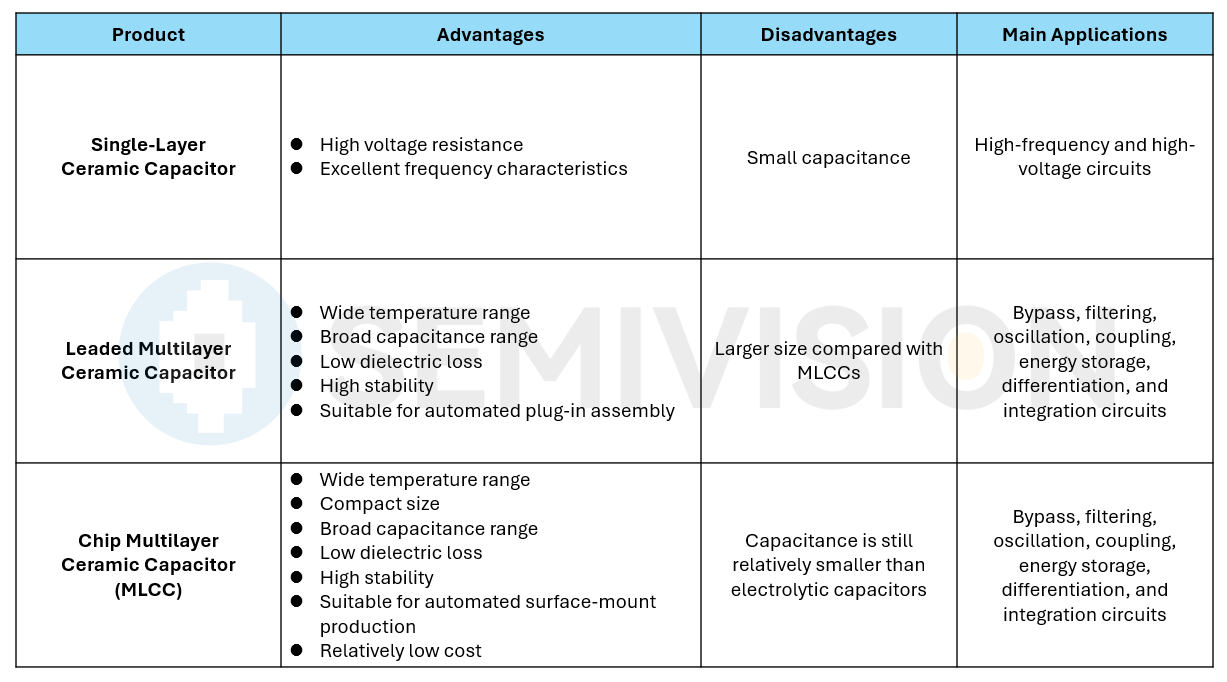
MLCCs are mainly used in oscillation, coupling, filtering, and bypass circuits across various electronic systems. Their application fields include automated instruments, digital home appliances, automotive electronics, communications, computers, and many other industries.
MLCCs are essentially formed by alternately stacking multiple layers of conductive electrodes and ceramic dielectric materials. Their structure consists of three main parts: the internal electrodes, the ceramic dielectric layers, and the terminal electrodes.
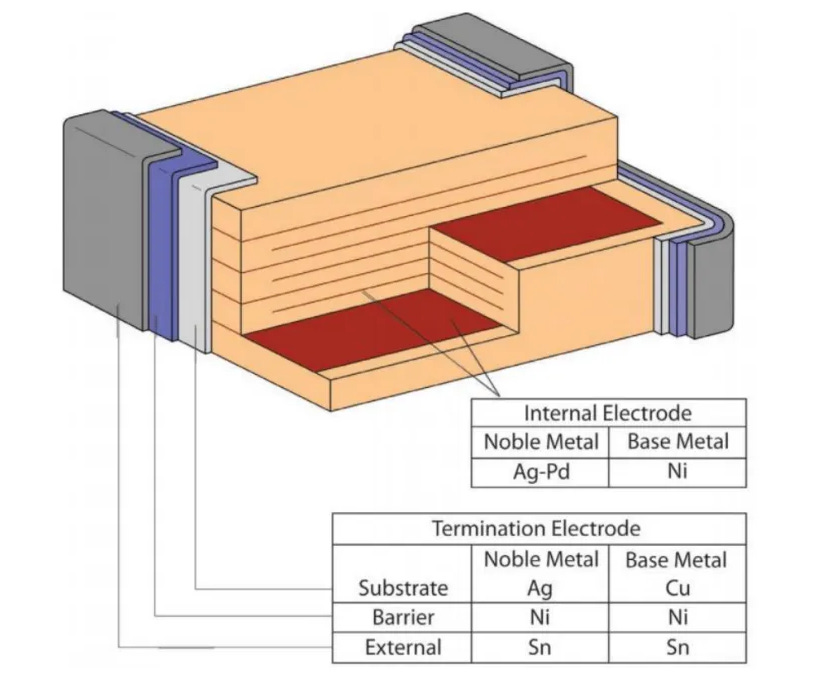
MLCCs operate based on the principle of a parallel-plate capacitor. Ceramic powder is pressed and sintered into individual sheets, and electrode layers are applied beneath the sheets to form capacitor plates. The dielectric material and internal electrodes are stacked in an offset arrangement, then sintered at high temperature. Finally, metal layers are applied to both ends of the chip, forming a monolithic structure.

The manufacturing process generally includes: preparing ceramic slurry, tape casting into thin films, printing internal electrodes, lamination and stacking, cutting, binder burnout, sintering, and terminal electrode processing.
The key industry barriers for MLCCs include the quality and formulation of ceramic powders, thin-layer and multilayer stacking technology, and the co-firing technology between ceramic powders and metal electrodes.
Over the past several decades, MLCCs have undergone multiple important changes in materials and manufacturing processes. One of the most representative shifts was the transition of internal electrodes from precious metal electrodes, mainly silver/palladium-based PME, to base metal electrodes, mainly nickel-based BME.
Today, the MLCC industry is facing challenges similar to those encountered by the semiconductor industry during the era of Moore’s Law: achieving higher performance and lower cost within increasingly smaller dimensions.
In other words, MLCC technology is far from simple. High-end MLCCs are even more difficult to manufacture.
Global Landscape: Japan and South Korea Still Dominate, Mainland China Is Catching Up, but the Window Is Opening
The global MLCC market remains highly concentrated.
In 2024, by revenue share, Murata, Samsung Electro-Mechanics, Taiyo Yuden, TDK, and Kyocera accounted for 31.8%, 22.9%, 11.2%, 5.9%, and 5.5% of the global MLCC market, respectively. The top five suppliers together accounted for 77.3%.

This means pricing power and technological leadership in high-end MLCCs remain largely in the hands of Japanese and Korean companies.
Murata leads in ultra-small, high-capacitance, and high-reliability products. Samsung Electro-Mechanics is rapidly expanding in AI server MLCCs and has disclosed that it holds about 40% of the global AI server MLCC market.

Mainland Chinese suppliers are still catching up. In 2024, Chaozhou Three-Circle, Fenghua Advanced Technology, and Walsin Microcap had global revenue shares of about 2.5%, 1.9%, and 1.5%, respectively. The gap with Japanese and Korean leaders remains significant.
Chaozhou Three-Circle Group, also known as CCTC, is one of China’s leading electronic components and advanced materials companies. Founded in 1970 and listed on the Shenzhen Stock Exchange in 2014 under stock code 300408, CCTC has built a strong position in ceramic-based electronic components, including MLCCs, ceramic substrates, optical communication components, packaging materials, and electronic materials.

For MLCC products, CCTC offers not only standard MLCCs, but also differentiated product lines such as high-strength MLCCs and M3L materials designed to reduce vibration-induced acoustic noise in Type II dielectric ceramic capacitors such as X7R and X5R. Its customer base spans consumer electronics, home appliances, power supplies, lighting, security systems, and communication equipment, with customers including Huawei, Hikvision, Dahua, TP-Link, Gree, Midea, Skyworth, Haier, Panasonic, Philips, and others shown in its materials.
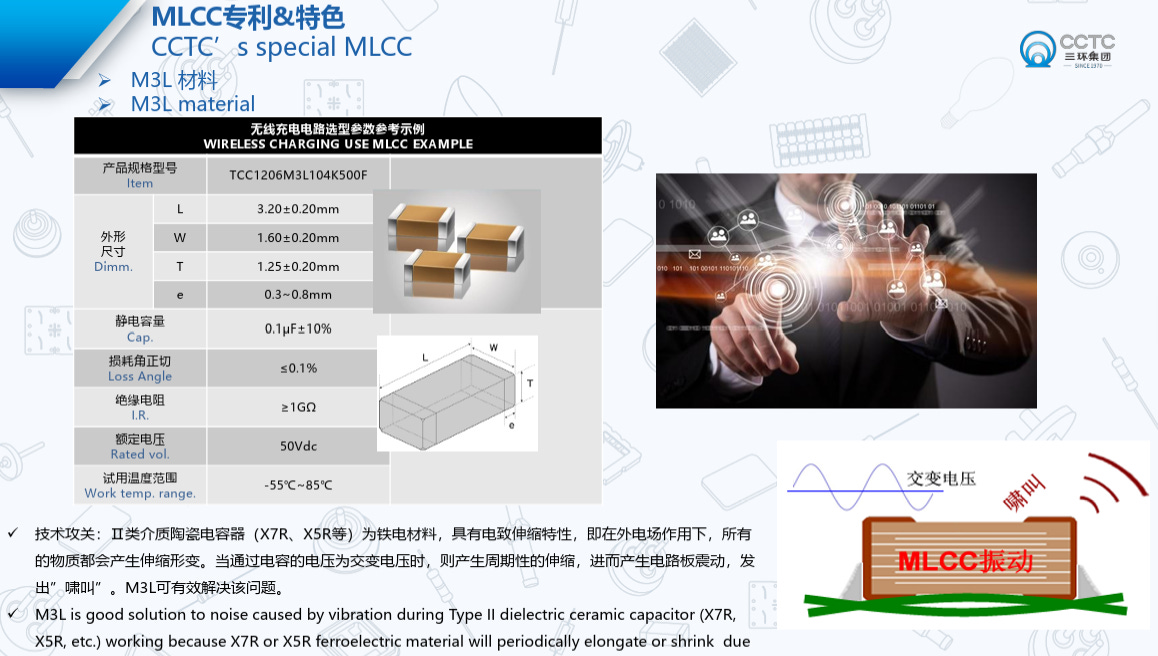
In short, CCTC is not only an MLCC supplier, but a ceramic materials platform company. Its competitive strength comes from vertical integration in ceramic materials, component manufacturing, and application-specific product development.

The technical gap is also clear. Murata has reached 006003-inch MLCCs, while the best domestic level is around 008004. Murata can achieve 47 μF in 0402 size, while domestic suppliers are around 22 μF. Murata’s thinnest dielectric layer is below 0.5 μm, while the best domestic level is around 1 μm. In automotive temperature resistance, overseas leaders can reach 200°C, while domestic suppliers are around 150°C.
But catching up is not impossible. We can divides mainland China’s MLCC localization path into three layers.
The first layer is replacing mature specifications and general-purpose products in consumer electronics.
The second layer is entering domestic automotive supply chains.
The third layer is achieving customer breakthroughs and high-end product adoption in AI servers.
This path is realistic. MLCC localization will not immediately replace Murata or Samsung across the board. It will begin with mature products, stable supply, and cost advantages. Then it will move into specific automotive and AI server categories. Finally, suppliers can expand their share through customer validation and yield improvement.
This Is Not a Broad-Based Recovery — It Is a K-Shaped Recovery
MLCCs have gone through several clear cycles.
From 2020Q4 to 2022H1, the industry saw a rebound cycle driven by work-from-home demand, online education, PCs, peripherals, and pandemic-related supply-chain disruptions.
From 2022H2 to 2025Q3, the industry entered a bottoming phase. Consumer electronics destocking pressured general-purpose MLCC prices, while high-end categories remained relatively stable.
This time is different.
This is not a broad recovery driven by smartphones. It is a K-shaped recovery led by AI server and automotive-grade products.
The price signals are clear. In December 2025, Yageo raised prices by 10%–20% for medium- and high-voltage, high-capacitance, and automotive-grade MLCCs. In March 2026, Murata raised prices by 15%–35% for AI server, automotive, RF MLCCs, and other components. In April 2026, Taiyo Yuden also raised prices for MLCCs, inductors, ferrite beads, RF components, and related products, with some products rising by 6%–13%.
High-Voltage MLCC:Designed to meet stable performance requirements in high-voltage environments.
Automotive MLCC:Developed for automotive electronics to ensure driving safety and system stability.
Safety-Certified Capacitors:Compliant with strict safety standards to protect electrical safety.
Embedded MLCC:Flexible integration into various devices, enabling compact and efficient circuit design.
Why can suppliers raise prices? Because demand, supply, and cost are resonating at the same time.
On the demand side, global AI server shipments are expected to grow by more than 28% year-on-year in 2026, while overall global server shipments are expected to grow by 12.8%. Capex from the five major North American CSPs is expected to grow by 40% year-on-year, and ASIC-based AI servers are expected to gain share.
On the automotive side, China produced 16.626 million new energy vehicles and sold 16.49 million in 2025, up 29% and 28.2% year-on-year, respectively.
On the supply side, high-end MLCC capacity is constrained. In February 2026, high-end MLCC production lines at Murata, Samsung Electro-Mechanics, Taiyo Yuden, and other Japanese and Korean suppliers were running at utilization rates above 80%. Murata’s high-end MLCC orders rose 20%–25% quarter-on-quarter, and its lines remained fully loaded.
By contrast, consumer-grade MLCC suppliers in Taiwan and mainland China were operating at only around 60%–70% utilization, with inventory days still at 60–75 days.
This is the definition of a K-shaped recovery: high-end AI and automotive MLCCs are tight and have pricing power, while general-purpose consumer MLCCs remain constrained by weak end demand and oversupply.
Cost is also providing a justification for price hikes. Rising silver, nickel, and other raw material prices are pushing up production costs. High-end products can pass through these costs, and in some cases even achieve excess price increases. General-purpose products, however, face intense competition, so cost increases may squeeze the margins of smaller suppliers instead.
The Real Question Is Not Whether MLCC Prices Rise — It Is Who Can Capture the High-End Premium
The key question for the MLCC industry is not simply whether prices will rise. The real question is which types of MLCCs are qualified to raise prices.
The price support for high-end AI and automotive MLCCs comes from three factors.
First, AI servers and EVs are still growing.
Second, high-end capacity requires time — from factory completion to equipment installation, process ramp, customer qualification, and mass supply.
Third, Japanese and Korean leaders are prioritizing AI, automotive, RF, and other high-value markets, widening the supply-demand gap between general-purpose and high-end products.

Murata’s new production building in Izumo was completed in April 2026, with a total investment of about ¥43 billion.
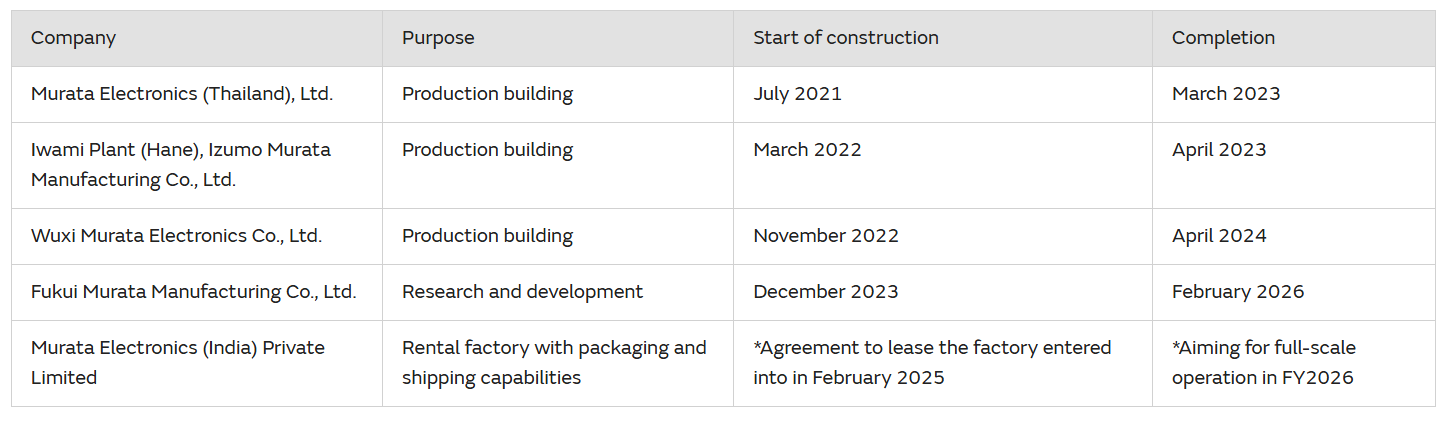
Murata operates production sites and development centers worldwide, allowing rapid response to local market specifications and regulatory standards. Market trends are reflected in product lineups in real time, and globally standardized evaluation facilities enable rapid noise measurement and improvement proposals. Murata provides comprehensive support, including optimal capacitor selection tailored to each application.
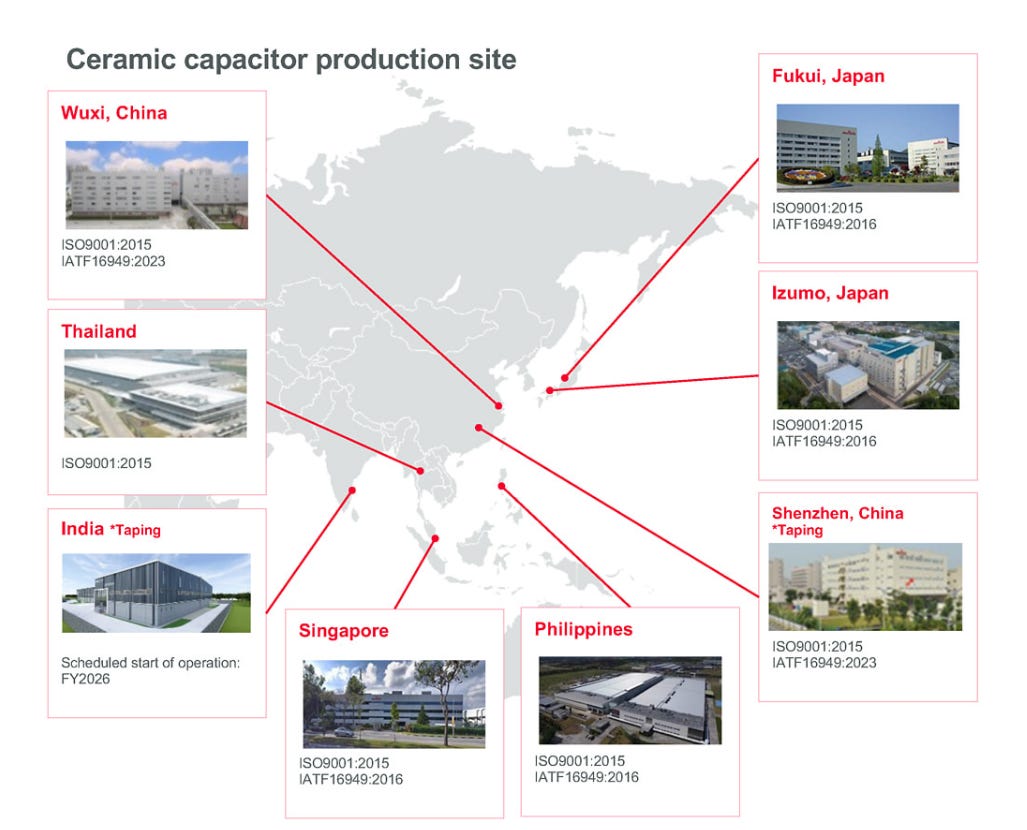
Samsung Electro-Mechanics is investing in an automotive MLCC manufacturing facility in the Philippines, expected to begin commercial operation in July 2027.
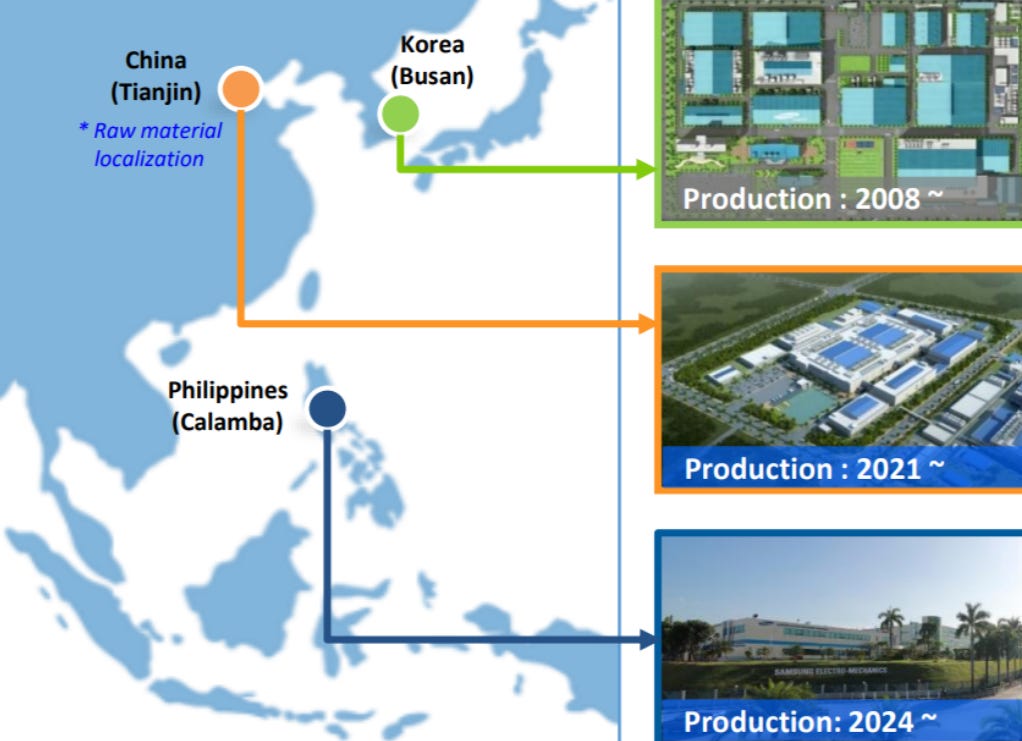
This shows that new capacity is coming. But effective supply still requires equipment installation, process ramp-up, yield improvement, and customer validation. Therefore, the high-end supply gap is unlikely to disappear completely within 2026.
For mainland China’s supply chain, the opportunity lies here.
The goal is not to replace all MLCCs immediately. The real opportunity is to gradually build certification and volume capability in domestic AI servers, domestic EVs, industrial control systems, and high-reliability applications.
In particular, high-capacitance, small-size, low-ESR, and low-ESL MLCCs for AI servers will become one of the most promising battlegrounds for localization.
But the risks should not be ignored. High-end MLCCs require advanced ceramic powder, ultra-thin tape casting, thousand-layer stacking, co-firing consistency, and reliability validation. If domestic suppliers fall short in yield ramp, customer qualification, or mass supply, the pace of high-end localization will be slower than expected.
Conclusion: In the AI Era, the Power War Will Redefine the Value of Passive Components
The competition in AI hardware appears to be about GPU computing power. But behind the scenes, it is really a system-level competition in power, cooling, interconnects, materials, and reliability.

MLCCs matter because they sit at the front line of power stability.
The stronger the GPU, the larger the transient power swing. The denser the rack, the more complex the power architecture. The more widely 800V architectures are adopted, the higher the voltage and reliability requirements. The more intelligent EVs become, the greater the need for automotive-grade capacitors.
Not all MLCCs will benefit equally. The winners will be high-capacitance, low-ESR, low-ESL, high-temperature, high-reliability, automotive-certified, and AI-server-qualified products.
Over the next few years, the market should not only ask who has the largest capacity. It should ask who can simultaneously master materials, process control, yield, qualification, and customer binding.
MLCCs may look like tiny ceramic capacitors. But in the era of AI data centers and electric vehicles, they are becoming critical nodes for system stability.
Real industry shifts often do not begin with the most glamorous chips. They begin when the foundational components that were once overlooked start to be repriced.
MLCCs are entering that moment.
Viewpoint from SemiVision
AI has made everything possible — and disrupted everything at the same time.
From the rush for GPUs, HBM shortages, rising memory prices, CPU shortages and price hikes, to price increases across almost every category of chips, MLCCs have now become another product whose supply chain has been shaken by the AI boom.
However, the hotter the market becomes, the more important it is to stay clear-headed. Market euphoria can easily turn into blind speculation around a concept. MLCCs — the “rice of the electronics industry” — will always be critical, but they cannot support a bubble.


PreviousNext