SpaceX IPO: Building the Space Economy for the AI Era
SpaceX IPO: Building the Space Economy for the AI Era
- Source: SemiVision
- Author: SEMIVISION
- Published: 2026-06-13T11:05:39+08:00
- URL: https://tspasemiconductor.substack.com/p/spacex-ipo-building-the-space-economy (1) SpaceX IPO: Building the Space Economy for the AI Era


SpaceX IPO: Building the Space Economy for the AI Era
Original Article By SemiVision Research [Reading time: 21 mins]

Jun 13, 2026
SpaceX IPO: Building the Space Economy for the AI Era
Introduction: The Vision and Mission of Space Data Centers
In the 21st century, advances in AI models have created unprecedented demand for computing resources. Models centered on training and inference require massive compute power, electricity, and cooling systems. However, traditional terrestrial data centers face constraints in land availability, power supply, and environmental impact, making it increasingly difficult to support long-term expansion.
SpaceX’s concept of “Space Data Centers” aims to leverage its vertically integrated advantages in rocket launches, satellite communications, and AI infrastructure to deploy AI computing nodes in Earth orbit. The objective is to expand compute capacity, reduce energy costs, and ultimately build infrastructure for the Moon and deep space. This concept is rooted not only in the company’s ultimate mission of making humanity a multiplanetary species, but also in response to the current shortage of computing energy.
NVIDIA Launches Space Computing, Rocketing AI Into Orbit
SemiVision provides an in-depth analysis of the background, core technologies, design architecture, operating model, advantages, and challenges of space data centers, while incorporating industry information and SpaceX’s 2026 data and narrative. This article begins with the bottlenecks in terrestrial computing capacity, then explores how SpaceX’s vertical integration and launch capabilities lay the foundation for orbital computing. It then breaks down the composition and operating mechanisms of AI satellites, before finally looking ahead to the future lunar economy, application scenarios, and business models.
Earth’s Computing Demand and Infrastructure Bottlenecks
Surging Global Demand for Computing Power
In the AI era, model scale is growing exponentially. Generative AI, large language models, and scientific computing are rapidly driving demand for compute power. According to roadshow materials, SpaceX had already built and operated the industry’s largest unified supercomputer series, “Colossus,” by 2026, with nominal power consumption reaching the gigawatt (GW) level. The company also deployed a large number of GB200 and GB300 GPUs within a short period of time.

Yet this represents only the tip of the iceberg. As AI models continue to scale, the next generation of training and inference workloads will require even greater computing capacity.

Power Supply and Infrastructure Shortages
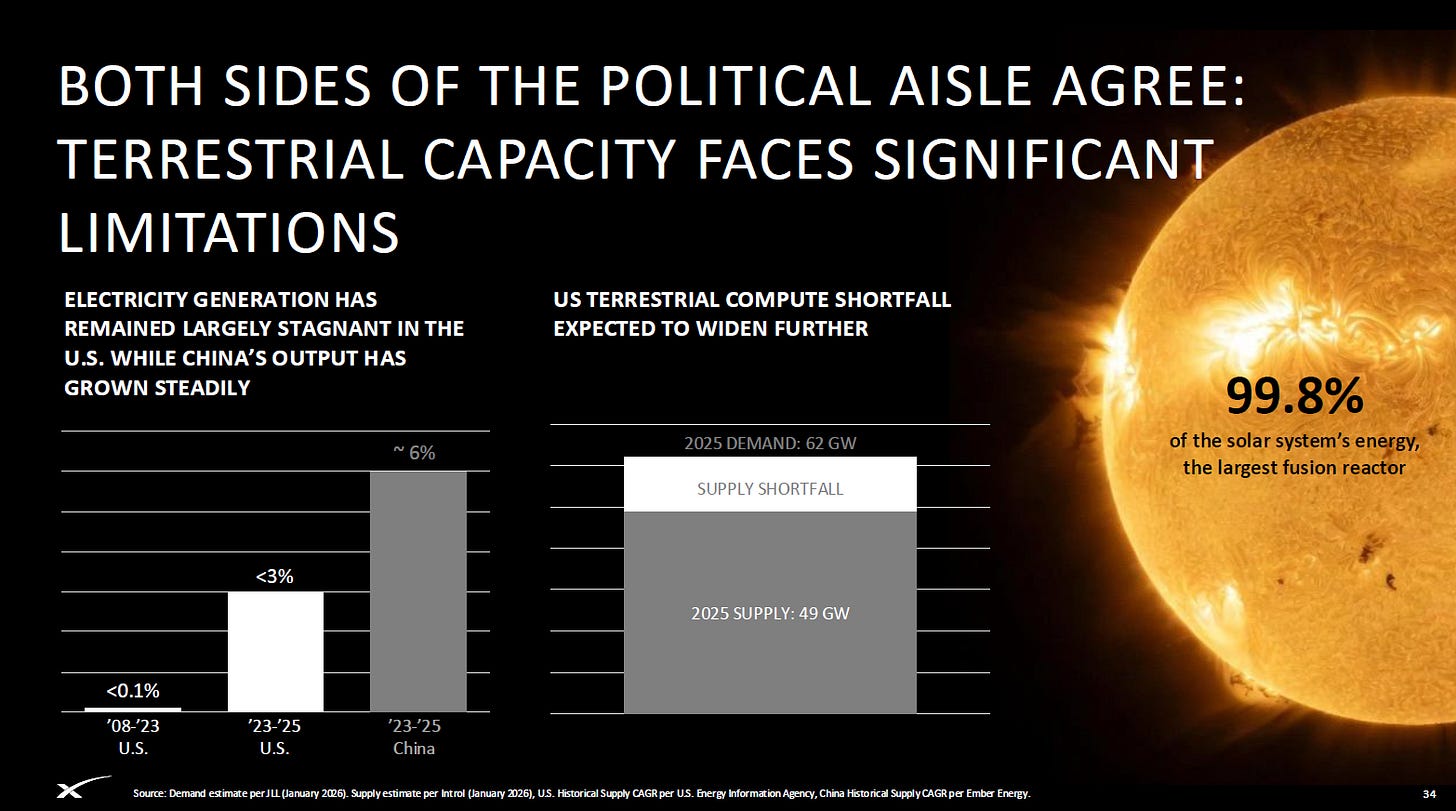
The roadshow materials indicate that electricity supply growth in the United States has stagnated, while power generation in China and other regions has continued to rise. In 2025, U.S. supply was only 49 gigawatts (GW), while estimated demand reached 62 GW, revealing a clear supply-demand gap.
The materials also emphasize that both major political parties recognize significant constraints on terrestrial capacity, while 99.8% of Earth’s energy ultimately comes from the Sun. Beyond insufficient power supply, traditional data centers are also constrained by land, cooling requirements, and environmental regulations, creating bottlenecks for large-scale expansion.
The Imbalance Between Computing Demand and Supply
Against this backdrop, terrestrial infrastructure is struggling to keep pace with the explosive growth in AI computing demand. Research from JLL and Introl shows that U.S. electricity supply grew by less than 0.1% between 2008 and 2023, and only around 3% between 2023 and 2025. China, by contrast, recorded growth of approximately 6%.
This means that unless new sources of supply are developed, the gap between compute demand and available infrastructure will continue to widen.
SpaceX’s Vertical Integration and Launch Advantages

An Integrated Platform for Building Future Infrastructure
SpaceX is the only company building an integrated hardware, software, and operations platform across space launch, satellite communications, and AI. The roadshow materials divide its vertical integration into four layers:
Infrastructure:This includes launch sites, recovery sites, factories, test facilities, and drone ships. In communications, it includes satellite constellations, optical laser networks, ground stations, spectrum licenses, and user terminal production. In AI, it includes turbine power plants, substations, liquid cooling systems, and battery installations.
Hardware:This covers rockets, engines, reusable boosters, second-stage vehicles, and spacecraft manufacturing. Communications hardware includes user terminals, routers, optical space lasers, and ground antennas. AI computing hardware includes processors, RDMA networks, storage, and fiber optics.
Software:This includes end-to-end systems for rocket manufacturing and launch, testing, and flight simulation. For satellite platforms, it covers terminal-to-terminal systems, including satellites, ground systems, and dynamic beam allocation, as well as customer-facing application ecosystems. In AI, it includes data from the X platform, dedicated model tools, the Starfleet scheduling system, and compute cluster management.
Operations:This includes mission control for rocket launches and recoveries, refurbishment operations, constellation management and safety maneuvers, customer support, and AI training and inference deployment.
The seamless integration of these layers enables SpaceX to iterate products rapidly, reduce costs, and horizontally expand its technologies into new markets. The materials emphasize that this “extreme vertical integration” delivers speed and cost efficiency, forming a critical advantage that competitors will find difficult to replicate.
Reusable Rockets and Launch Capability
Since successfully landing a rocket booster vertically for the first time in 2015 and achieving reflight in 2017, SpaceX has continued to drive launch costs sharply lower. According to the roadshow materials, the company has accounted for more than 80% of the total mass launched into orbit globally since 2023.
This dominant position in the launch market lays the foundation for large-scale deployment of Starlink satellites and future AI satellites. Reusability reduces the launch cost per kilogram. Through booster recovery and rapid refurbishment, SpaceX has significantly increased launch frequency, bringing Starship closer to its goal of “airline-like” operations, where the marginal cost of each launch is primarily the cost of fuel.

This makes it possible to launch AI satellites frequently and iterate hardware at a much faster pace.
Starlink Satellite Network
SpaceX has leveraged its launch advantage to build the world’s largest and most advanced low-Earth-orbit broadband network. By the first quarter of 2026, Starlink had more than 9,600 active and maneuverable satellites in orbit, accounting for roughly 75% of all maneuverable satellites worldwide. In 2025 alone, SpaceX deployed more than 3,000 satellites, providing global coverage across 164 countries and regions, with an average daily download speed of 225 Mbps and latency of around 25 milliseconds.

The current V2 satellites are launched 27 at a time, delivering total bandwidth of approximately 2,600 Gbps per launch, or 96 Gbps per satellite. The next-generation V3 satellites, currently under development, are scheduled to begin deployment in the second half of 2026. With Starship, each launch will be able to carry 60 satellites, while per-satellite bandwidth is expected to increase to 1,024 Gbps, representing an overall bandwidth improvement of more than 20 times. Beyond providing high-speed broadband to consumers, the Starlink network also serves enterprises and governments through fixed-site, mobile, maritime, aviation, and dedicated Starshield connectivity services.

- Starlink Mobile: Direct-to-Cell Satellite Connectivity
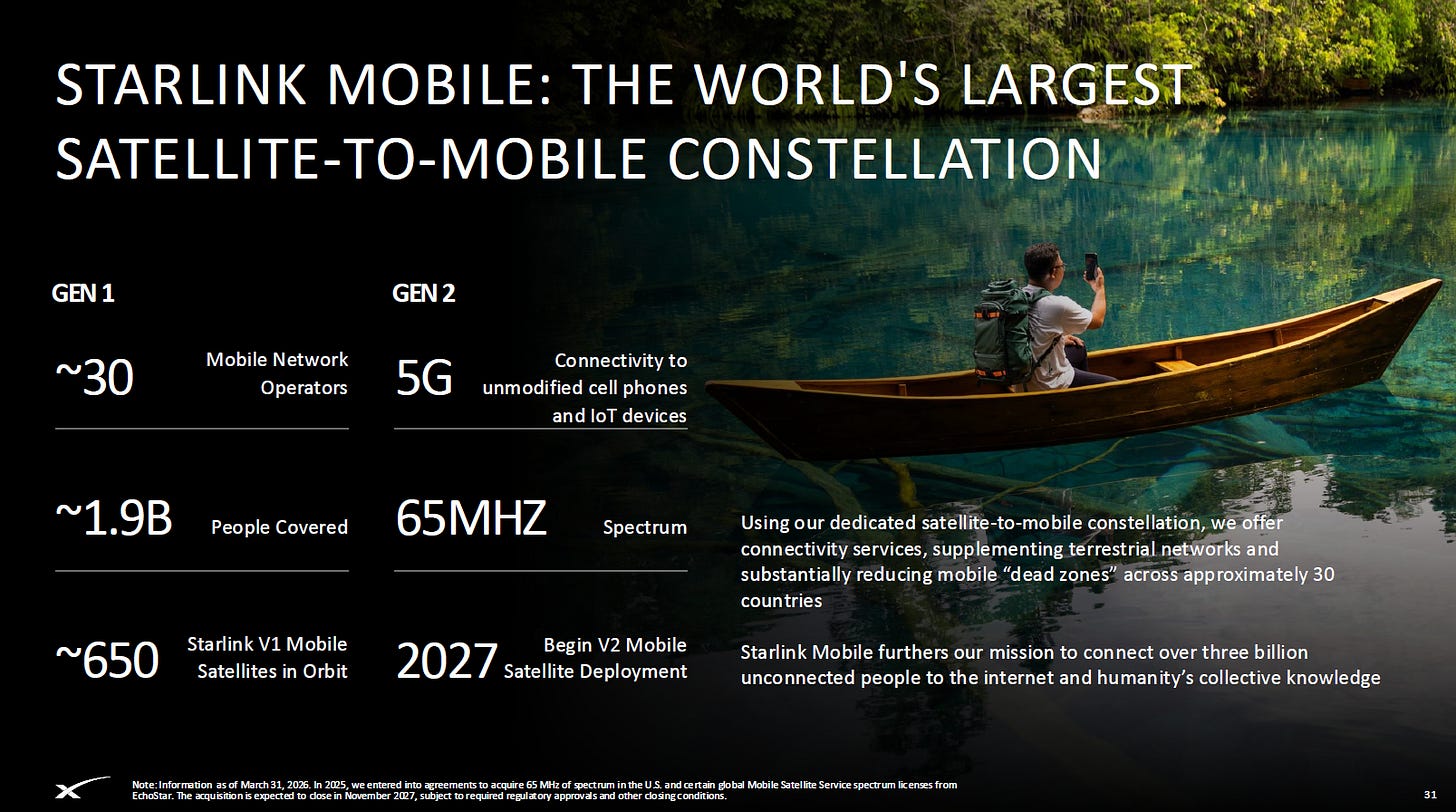
Starlink Mobile is the world’s largest satellite-to-cell constellation, using dedicated mobile satellites to complement terrestrial networks and provide coverage across roughly 30 countries. Its first-generation system has around 650 satellites in orbit, delivering 5G-level speeds as well as voice and data services, covering approximately 1.9 billion people. SpaceX plans to begin deploying its second-generation mobile satellites in 2027.
Through partnerships with mobile network operators around the world, Starlink Mobile helps reduce “connectivity dead zones” and provides stable connections for remote regions and maritime operations.
Together, these technical capabilities provide three key foundations for space-based data centers: coverage, power, and data backhaul. Starship enables low-cost launches and large payload capacity; Starlink provides a global, high-bandwidth, low-latency backhaul network; and SpaceX’s vertically integrated manufacturing and software capabilities ensure rapid iteration and lower costs.

4月16日
Gigawatt-Scale AI Training Clusters and Ground-Based Computing Infrastructure
The Colossus Series Supercomputers
In 2026, SpaceX introduced the Colossus series of AI training clusters, including Colossus I and Colossus II. According to the roadshow materials, the company is the first in the world to build a gigawatt-scale training cluster and deploy large-scale computing based on GB200 and GB300 GPUs. These clusters have a nominal power requirement of up to 1 GW.
Power and Cooling
The Colossus data centers are located in the United States and are equipped with gigawatt-scale battery energy storage systems and advanced liquid-cooling technologies to ensure stable operation of the computing clusters. SpaceX has also pioneered the use of large-scale Megapack batteries combined with renewable energy, making it the first gigawatt-scale Megapack installation. However, the massive electricity demand still remains constrained by local grid supply and power regulations.

xAI is using upwards of $150 million worth of Tesla Megapacks at the company’s Colossus Supercomputer in Tennessee.
Expansion Roadmap
SpaceX plans to expand the next phase of Colossus II by adding more than 400 MW of additional computing power and over 220,000 GB300 GPUs. This would significantly increase the cluster’s capabilities while helping SpaceX accumulate experience for orbital AI computing. However, land-based data centers are constrained by grid supply, land availability, and cooling costs, making unlimited expansion impossible. For this reason, SpaceX has proposed migrating part of its compute capacity into space.
AI Satellites and the Space Data Center Concept
Concept and Origins
The core idea of a space data center is to deploy AI computing payloads—including GPUs, power systems, and thermal management systems—into low-Earth orbit or higher orbits. These systems would be powered by solar energy, cooled through radiative heat dissipation, and connected back to Earth through the Starlink network to return computing results.
This concept is supported by the roadshow materials, which state that orbital AI computing faces “no current regulatory barriers and is environmentally friendly; power comes from solar energy, which is unlimited and cheaper; Starship’s reusable launch capability reduces the cost of access to space; radiative cooling is lower-cost than liquid cooling or air cooling; and the Starlink network enables efficient data flow between orbital clusters and ground users.”
At the same time, next-generation chips can be deployed through frequent launch cycles, greatly improving the efficiency of each hardware refresh cycle.

2月9日
Structural Design and Modification Strategy
According to the roadshow materials, SpaceX plans to rely on the Starship V3 and Starlink V3 platforms to transform traditional communications satellites into AI satellites. In its design framework, the company proposes three categories of changes: “reduce and remove,” “retain,” and “add.”
Reduce and remove:Unnecessary backhaul antennas, large-capacity batteries, data modems, and other traditional communications satellite components would be removed to reduce weight and free up space for computing modules.
Retain:Key attitude-control and communications components would be retained, including ion thrusters, inter-satellite laser communications, flight computers, gyroscopes, reaction wheels, and solar array regulators.
Add:AI computing modules, larger solar arrays, and radiators would be added to support power generation and thermal management.
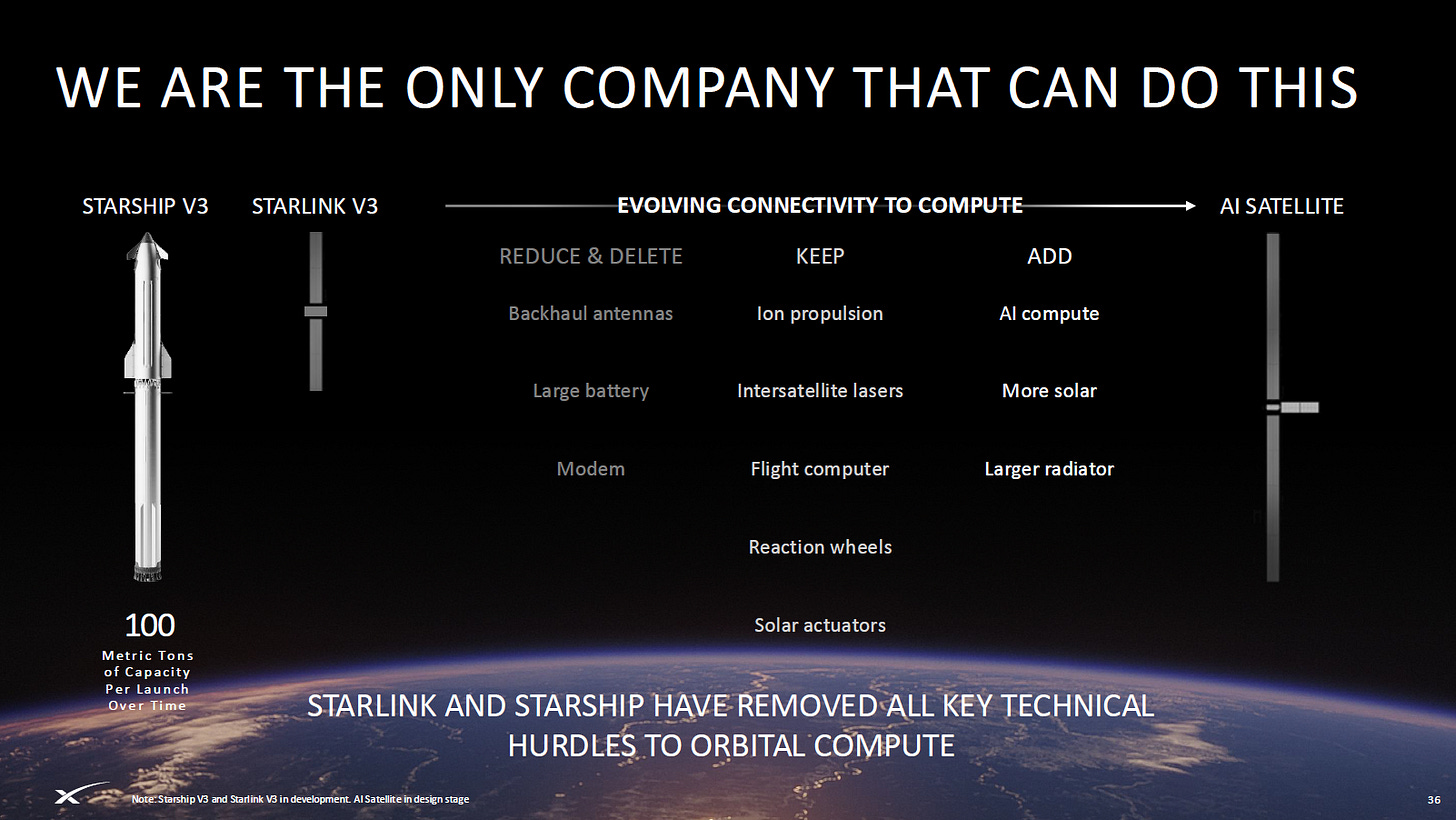
A single Starship launch can carry approximately 100 metric tons of payload, while future versions could reach 200 metric tons, making it possible to deploy hundreds or even thousands of AI satellites. In addition, AI satellite design is already underway, and the combination of Starship and Starlink V3 is viewed as a major milestone in removing the technical bottlenecks of orbital computing.
Core Components of AI Satellites — Based on Industry Reports
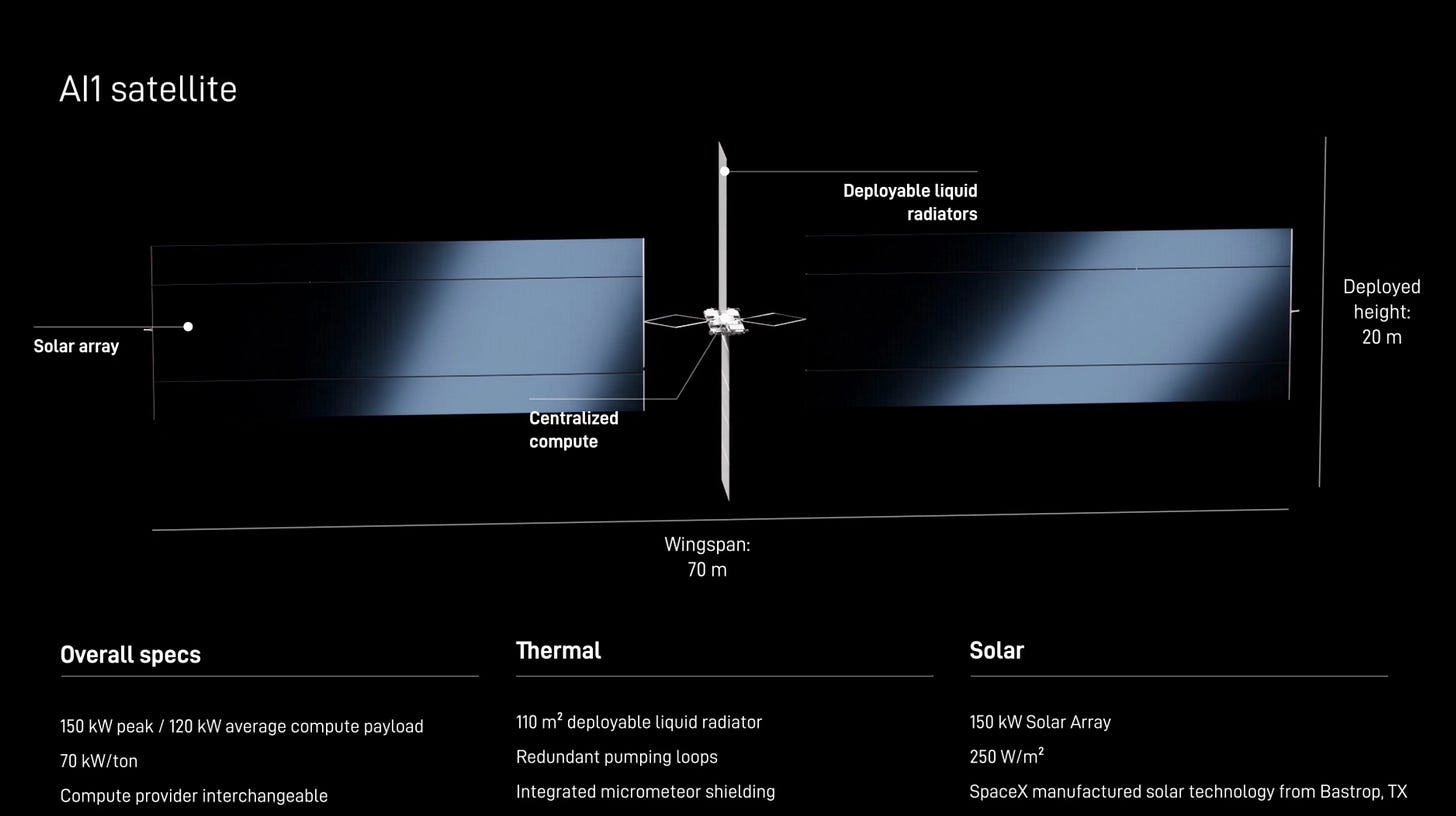
Analyses from TechNews and other media outlets have visualized the components and specifications of AI satellites, or AI1. The following are the key features, based on information that has not been officially verified and should be treated as reference only:
Computing module:The core of the AI satellite is a GB300 computing node composed of 72 GPUs, providing efficient AI training and inference capabilities. Similar to Starlink V3 satellites, the computing module adopts a modular design, making it easier to scale.
Power supply:The satellite uses large solar wings with an output of approximately 250 kW to power the GPUs and auxiliary systems. To ensure continuous power supply during periods without sunlight, the satellite is equipped with a battery pack of around 150 kW and is designed with multi-cycle charge and discharge strategies.
Communications and links:AI satellites connect with other satellites and ground stations through inter-satellite lasers and the Starlink mesh network, enabling data backhaul speeds of 1 Tbps. This allows training or inference outputs to be transmitted back to Earth in real time while also receiving new data uploads.
Size and structure:Media estimates suggest that, after modularization, each AI satellite may measure approximately 3–4 meters in height and 2.5–3.5 meters in width, with a mass of several tons. Starship’s 9-meter-diameter payload bay could carry multiple units in a single launch.
Operating Mechanism and Workflow
The operating workflow of an AI satellite can be summarized as:solar power generation → GPU training/inference → radiative cooling → data backhaul.
Solar power generation:Large solar panels collect sunlight and convert it into electricity, eliminating dependence on terrestrial power grids and enabling energy autonomy.
GPU training/inference:The GB300 modules inside the satellite run AI models and can execute training and inference tasks for xAI’s Grok models. Since orbital compute nodes can complement ground-based systems, users can allocate workloads based on demand.
Radiative cooling:GPU computing generates significant heat. The satellite’s radiative panels dissipate this heat directly into space in the form of infrared radiation, without consuming water or air, thereby reducing ongoing operating costs.
Data backhaul:Computing results are transmitted back to Earth through inter-satellite lasers and the Starlink network. Users can obtain results in real time, while data can also be uploaded for the next training cycle. This supports both cloud deployment and edge computing.
Mass Production Plan and Phased Targets
According to media estimates, SpaceX plans to complete the first batch of space-based compute tests before 2027. The target for this phase is to achieve 1 GW of orbital computing capacity, equivalent to the compute power of tens of thousands of GPUs. SpaceX would then expand to 10 GW within 2.5 years and reach 100 GW within 3.5 years. The ultimate long-term goal is to add 1 terawatt, or TW, of equivalent computing capacity per year, roughly twice the electricity consumption of the United States in 2025.
This scale would significantly exceed existing land-based data centers and form the core capability of a true “space data center.”
Differences from Traditional Satellites
The key differences between AI satellites and traditional communications satellites lie in their use cases, structure, and core components:
Use case:Communications satellites mainly provide broadcasting, communications, or navigation services. AI satellites, by contrast, focus on high-performance computing, AI training, and real-time inference, functioning essentially as “cloud servers in orbit.”
Simplified structure:AI satellites do not require high-power propulsion systems or complex communications payloads. Their main components are computing modules, radiators, and solar panels, with most of the mass concentrated in GPUs and power systems. By contrast, communications satellites require large antennas, transponders, and propulsion systems.
Thermal management:AI satellites use large-area radiative panels and thermal chains to dissipate heat into space in a vacuum environment. Communications satellites generate relatively less heat, so their thermal management systems are simpler.
Advantages and Challenges
Advantages
Unlimited and low-cost energy:Solar power in space can provide continuous supply without being constrained by terrestrial power grids, while also avoiding carbon emissions.
Efficient cooling:A radiative cooling architecture can be lower-cost than liquid or air cooling. The low temperature of deep space also supports more effective heat dissipation.
Low-latency global coverage:Through the Starlink network, AI satellites can provide millisecond-level latency and deliver cloud and edge services to customers worldwide.
Room for cost reduction:With mass production, the unit cost of satellites could decline. Reusable rockets could also push launch costs per kilogram closer to fuel cost.
Challenges
Chip manufacturing still depends on Earth:High-end GPUs and advanced chips still need to be manufactured on Earth and cannot currently be produced in orbit. Frequent launches would be required to maintain hardware refresh cycles.
Radiation and hardware aging:The orbital environment includes cosmic rays and particle radiation, which may degrade GPUs over time. Radiation-hardened designs or regular satellite replacement would be required.
Space debris and collision risk:Increasing orbital density could raise collision risks. Although the Starlink network uses autonomous collision avoidance and propulsion systems, large-scale deployment of computing satellites would require stricter orbital management.
Regulation and spectrum:Although the roadshow materials emphasize that there are currently no major regulatory barriers, large-scale satellite use of spectrum and orbital slots would still require international coordination.
Elon: "The AI satellite is much simpler than a Starlink satellite. The AI satellite is essentially a lot of solar cells, you still need some laser links, but you don't have all of the super complex antennas that you have on a Starlink satellite. The easier one to design for is the AI satellite. It's bigger. A lot of this is technology we've already made with the Starlink V3 satellites."

2月9日
Practical Applications and Business Models
- Consumer and Enterprise AI Services
SpaceX’s AI business primarily provides “truth-seeking” AI services through xAI’s Grok model. According to the roadshow materials, the latest Grok 4.3 model has reached an advanced level in scientific reasoning benchmarks. Through space data centers, Grok could leverage orbital compute capacity to train larger models, improve inference speed, and reduce user latency. The company has already launched the Grok API and enterprise versions, while also partnering with Cursor to accelerate enterprise adoption.

On the consumer side, SpaceX relies on the X platform, which has approximately 550 million monthly active users and 350 million daily posts. X aims to become an “everything app,” integrating information, social networking, media, payments, and banking services. By deepening subscription and advertising monetization, orbital compute could support real-time content analysis, recommendation systems, and augmented reality features.

- Compute Leasing and Cloud Services

- Edge Computing and Low-Latency Applications
Space data centers could provide near-real-time computing services, which would be especially important for applications requiring low latency and wide-area coverage. Examples include:
Direct-to-cell satellite AI assistants:Starlink Mobile users could send voice commands directly to space data centers, where Grok would process them and return results with latency below 50 milliseconds.
Aviation and maritime AI:Aircraft cabins and vessels could use AI satellites for route planning, maintenance inspection, and data analysis without relying on ground stations.
Disaster or battlefield support:When terrestrial infrastructure is damaged or networks are blocked, space-based computing could provide intelligence analysis and communications support.
- Connection to the Lunar Economy and Deep-Space Exploration
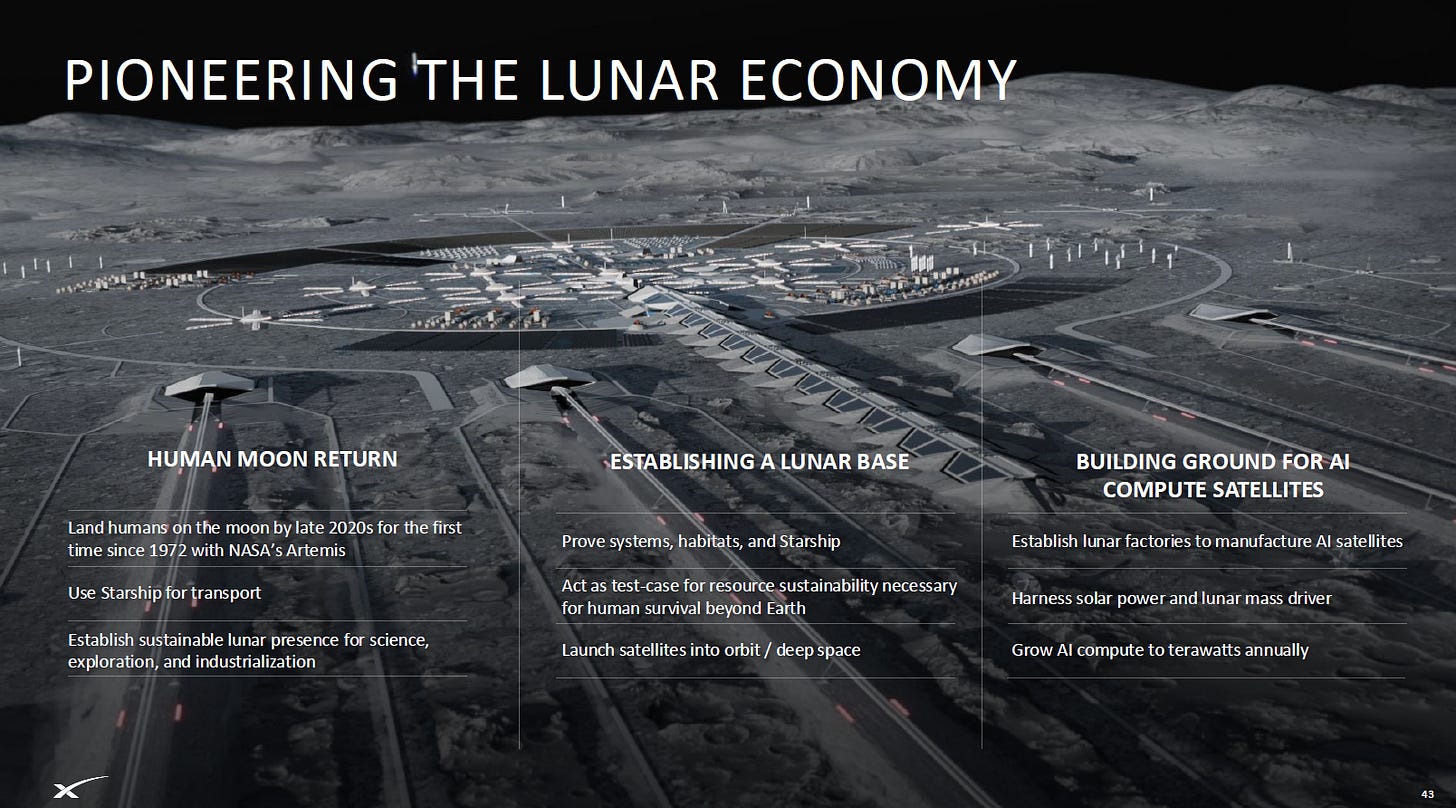
The roadshow’s growth strategy includes “building an economy on the Moon” and “constructing AI satellite factories on the lunar surface.” Starship would transport humans back to the Moon, where local resources and solar energy could be used to build factories that manufacture AI satellites and other equipment. The Moon’s low gravity and lack of atmosphere would reduce launch costs, potentially enabling the use of “mass drivers” to send satellites into orbit.
Over the long term, space data centers could expand from Earth orbit to lunar orbit and beyond, providing computing support for Mars colonization and interstellar travel.
- Supporting the Advertising and Media Ecosystem
The X platform uses AI recommendation and media generation to help advertisers achieve more precise targeting. The roadshow materials mention that the company has launched X Ads Manager and is gradually improving its advertising capabilities. Through space data centers, X could provide low-latency content generation and analytics services worldwide, improving user experience and increasing advertising revenue.
Meanwhile, the Imagine image-generation feature produces billions of images and videos each month, which could be rendered in real time using orbital compute capacity.
- Government and Military Applications
The Starshield program provides secure networking and computing services for governments. Space data centers could be used for military intelligence analysis, satellite imagery processing, and encrypted communications, offering defense agencies a faster-response and more secure cloud platform. In addition, international partners could access compute capacity by leasing computing satellites, supporting cross-border scientific research and security cooperation.

Analysis of Technical and Economic Challenges
Large-Scale Production and Launch
Although SpaceX has reusable rockets and rapid launch capabilities, deploying tens of thousands of AI satellites within just a few years would still require enormous manufacturing capacity and supply chain support. Satellite production would require precision GPUs, batteries, and radiators, all of which must also meet radiation-tolerance standards. Any supply chain bottleneck could affect the entire plan. On the launch side, Starship would need to operate reliably and secure regulatory approvals, as it is still in the testing phase.
Orbital Congestion and Regulation
As Starlink, other private satellite operators, and national satellite constellations continue to expand rapidly, congestion in low-Earth orbit is becoming an increasingly serious issue. SpaceX would need to coordinate with regulators across multiple countries on orbital allocation, collision-avoidance standards, and spectrum resource distribution. Although SpaceX uses automated collision-avoidance systems, the large-scale deployment of AI satellites would still require global coordination.
Radiation Protection and Thermal Management
Cosmic rays can affect electronic components, especially GPUs. Radiation-hardened chips or additional shielding would be required to protect the circuitry. At the same time, radiators would be exposed over long periods to both sunlight and extremely cold environments, so material aging and thermal stress must be considered. Balancing thermal efficiency and weight would be one of the key design challenges for AI satellites.
System Maintenance and Lifespan
After operating for several years, AI satellites may fail due to hardware aging or orbital decay. In-orbit servicing technologies are not yet widely available. In the future, robotic servicing, detachable modules, or automated de-orbiting and disposal could be considered to reduce space debris. SpaceX may adopt a high-speed iteration model, replacing older satellites with newly launched ones. This would require well-managed recovery and retirement procedures.
Economics and Payback Period
In addition, price-sensitive customers may still prefer terrestrial cloud services. Therefore, clearly demonstrating the advantages of space data centers and setting a rational pricing strategy will be a key challenge.
Advanced Packaging
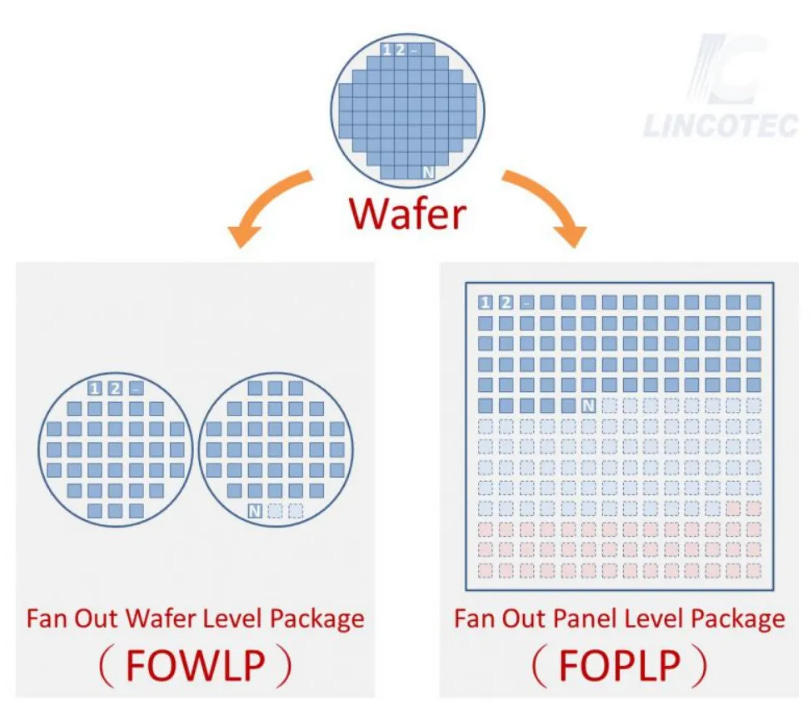
SpaceX’s FOPLP technology has been confirmed to come from PEP’s advanced packaging platform, particularly its panel-level packaging capabilities and key technologies developed for high-reliability interconnects. PEP’s technology covers core capabilities such as electromigration reliability, fine-line redistribution layers, high-density interconnects, and heterogeneous integration, all of which are essential foundations for the continued scaling of AI, high-performance computing, and large-format packaging.

Why SpaceX is Using FOPLP
Cost & Scale:FOPLP reduces the edge waste associated with traditional wafers, allowing SpaceX to mass-produce critical components (like satellite RF chips and power management ICs) much faster.
U.S. Manufacturing:By pushing for domestic and localized packaging lines, Elon Musk is aiming to decouple SpaceX’s production lines from Asian-dominated foundries to meet strict U.S. national security and government contracts.
Current Industry Status
In-House Fab Plans:SpaceX is currently establishing massive, 700mm x 700mm FOPLP lines at a multi-billion dollar facility in Texas, which will be one of the largest substrate dimensions in the industry.
Production Timeline:While facilities are being built, setting up the new FOPLP infrastructure is facing yield rate and talent constraints, with the major in-house scaling operations slated to mature between 2026 and 2027.

3月20日
Future Outlook
Major Opportunities on the Moon and Mars
SpaceX’s long-term goal is to build a lunar economy and establish a Mars colony. According to the roadshow materials, SpaceX aims to use Starship to bring humans back to the Moon by the end of the 2020s, establish lunar bases, and manufacture AI satellites there. The Moon has abundant solar energy resources and lower gravity, making it suitable for manufacturing and launching large satellites. In the future, SpaceX could even develop energy production and manufacturing capabilities on Mars, leverage asteroid mining, and build an interplanetary network, ultimately forming a multi-planet space data center system.
Expansion into New Markets
Once space data centers scale up, they could provide highly competitive computing solutions for artificial intelligence, scientific research, financial services, high-frequency trading, global communications, and entertainment. SpaceX’s business model would span three major domains: launch services, satellite internet, and AI platforms. By integrating digital advertising, subscriptions, and compute leasing revenue, the company could build a moat that is difficult to replicate.
- Technological Evolution and Social Impact
Over the long term, space data centers could fundamentally change how humanity uses resources and computing. By combining solar energy, vacuum-based thermal dissipation, and global communications, they could form a borderless and continuously expanding computing platform. This would not only advance AI research, but also enable new industrial models such as in-orbit manufacturing, space-based healthcare, and navigation for interplanetary travel.
At the same time, their environmental, regulatory, and ethical implications must be carefully assessed to ensure the sustainable use of space.
Conclusion
SpaceX’s space data center plan represents a major leap forward in both computing and space exploration. It is not a single product, but an integrated system combining reusable rockets, a global satellite network, AI models, and orbital manufacturing. Through vertical integration and a “first-principles thinking” engineering philosophy, SpaceX continues to simplify requirements, remove unnecessary processes, optimize designs, accelerate iteration, and implement automation—allowing it to achieve engineering milestones that would be unimaginable to most.
Against the backdrop of global power shortages and surging demand for compute capacity, space data centers offer a forward-looking solution. They convert solar energy into computing power and bring resources beyond Earth into the human economic system.
Although technical and economic challenges remain, this vision opens up vast possibilities for technological and economic development over the coming decades. As Starship, Starlink, and AI platforms continue to mature, space data centers may move from concept to reality, leading a compute revolution in the multi-planet era.
Remark…
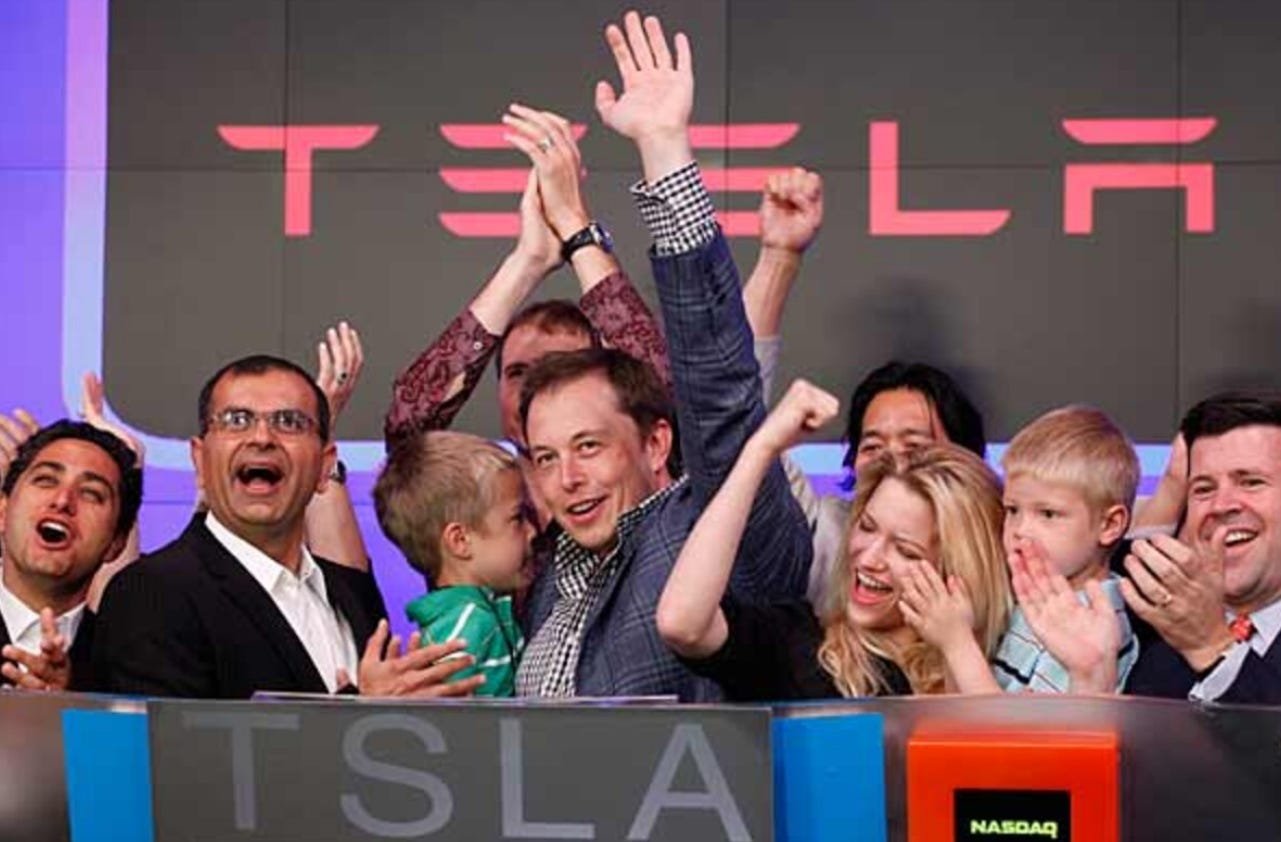
source: internet
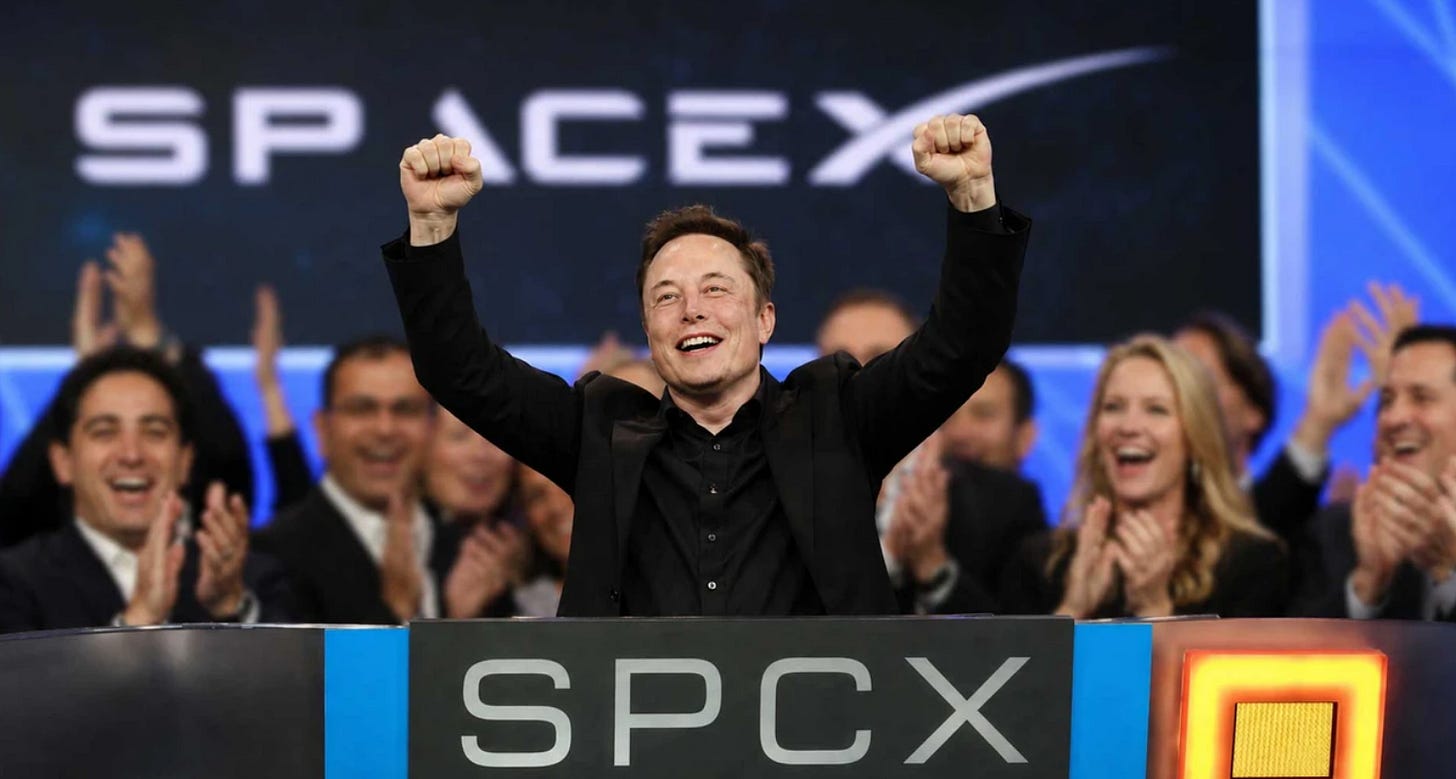
On June 29, 2010, Elon Musk, CEO of Tesla Motors, waved after ringing the opening bell at the NASDAQ Market in New York to celebrate Tesla’s initial public offering. Looking back, that moment was more than just the listing of an electric vehicle company—it marked the beginning of a new industrial era. Elon Musk is a truly great entrepreneur. His courage, persistence, and first-principles thinking are worth learning from.
One of my favorite ideas from him is simple but powerful: no one can stop you except the limits of your own imagination.


PreviousNext