GTC Taipei Perspectives and Taiwan AI Supply Chain Depth Insights from Computex 2026
GTC Taipei Perspectives and Taiwan AI Supply Chain Depth Insights from Computex 2026
- Source: SemiVision
- Author: SEMIVISION
- Published: 2026-06-11T11:00:31+08:00
- URL: https://tspasemiconductor.substack.com/p/from-gtc-taipei-to-computex-2026 (1) GTC Taipei Perspectives and Taiwan AI Supply Chain Depth Insights from Computex 2026


From GTC Taipei to Computex 2026: Taiwan’s Strategic Role in the AI Supply Chain
Original Article By SemiVision Research [Reading time: 41 mins]

Jun 11, 2026
∙ Paid
From GTC Taipei to Computex 2026: Taiwan’s Strategic Role in the AI Supply Chain
Computex 2026, held in Taipei in June 2026, featured a GTC Taipei keynote personally hosted by NVIDIA CEO Jensen Huang, putting Taiwan’s supply chain on the global AI stage. At the opening, Huang emphasized the feeling of “coming home” and thanked Taiwan’s vast ecosystem of partners. This two-hour keynote not only drew global attention to the full-scale development of AI across data centers, consumer electronics, and the physical world, but also provided an in-depth analysis of the Agentic AI era.
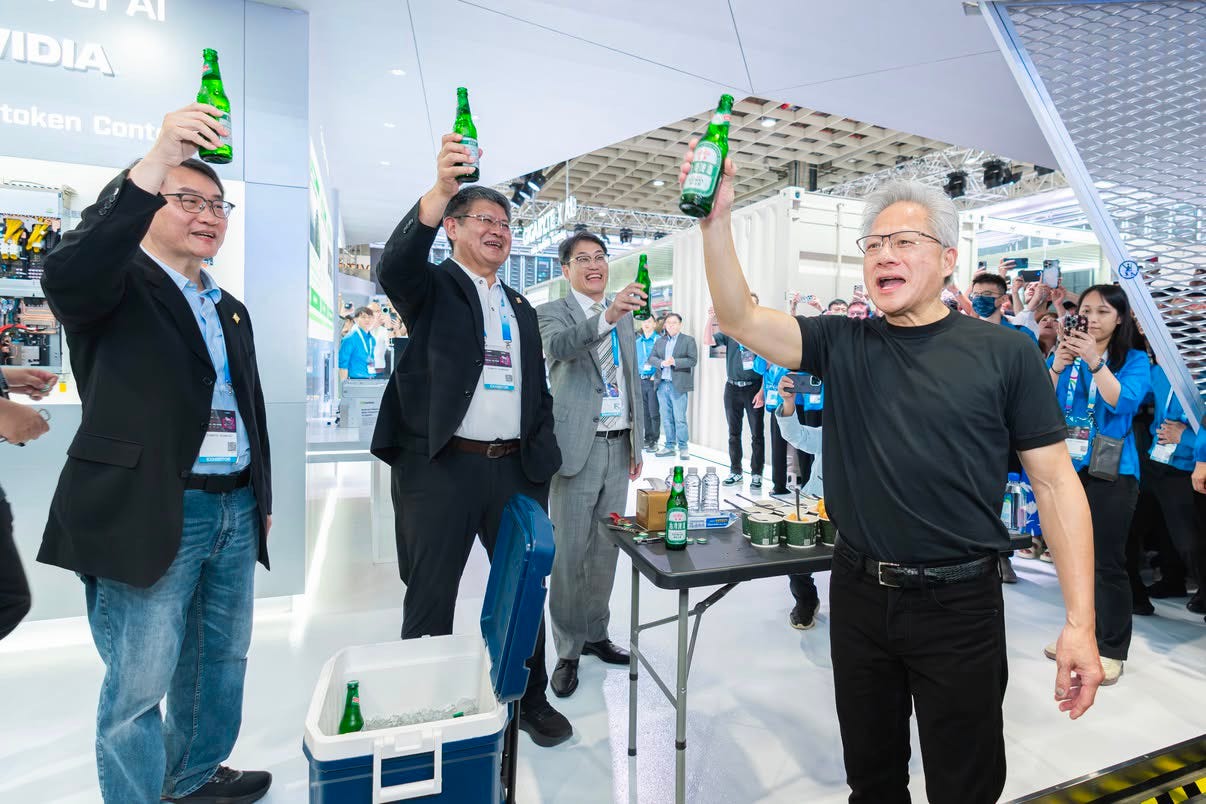
During the keynote, NVIDIA announced several major products and platforms, including the DSX AI Factory, the Vera Rubin platform, Vera CPU, RTX Spark AI PC, Nemotron 3 Ultra model, Cosmos 3 Physical AI model, and Isaac GR00T robotics platform. NVIDIA also emphasized that Taiwan is at the heart of the AI revolution, with a supply chain spanning 150 Taiwanese partners, more than 350 factories, and 30 countries.
Below Paywall, we provide the latest updates on selected Taiwanese companies.
Core Themes of GTC Taipei 2026
- Agentic AI: AI Has Moved from Generation to Execution
During the GTC Taipei keynote, NVIDIA CEO Jensen Huang declared that AI has entered the Agentic era. He pointed out that a standalone large language model can only answer questions, while an agent combines models with a safety framework, or Harness, allowing AI to understand tasks, observe environments, reason, and use tools to complete work. NVIDIA’s Agent Toolkit provides models, runtime, and tool layers to help enterprises build trustworthy agents on their own workloads.
The essence of Agentic AI is a fundamental shift in the computing model. Traditional computing is application-centric: users open an app and enter commands. In the future, users will simply describe their intent, and agents will automatically generate code, call tools, and complete tasks. This intent-to-code model will cause compute, memory, tools, and network resources to switch frequently, requiring data centers to be redesigned at the system level, from chips and racks to power, cooling, and networking.
Huang noted that over the past three years, people have continued to question the practical value of AI, while generative AI has already proven itself in content creation and natural language processing. He further emphasized that Agentic AI is the next computing model: agent = LLM + Harness. A standalone large language model is merely a brain that can chat. To allow AI to truly work for humans, it must be paired with a framework capable of calling tools, managing memory, and executing plans.
This two-layer architecture includes a reasoning/planning model at the bottom and an orchestration engine on top. Users only need to express their needs through voice or text, and AI agents can automatically call software tools to complete tasks.
- DSX AI Factory: From Data Center to AI Factory
NVIDIA introduced the concept of the DSX AI Factory, arguing that modern data centers are transforming into AI factories that generate intelligence. These factories integrate five layers: energy, chips, networking, software models, and applications. DSX includes the DSXSim design and validation platform and the DSXOS operating system. Before an AI factory is built, Omniverse can be used to simulate facility layout, power, cooling, and network topology. During actual operation, DSXOS is responsible for allocation, monitoring, and remediation, turning the AI factory into an operable computing asset.
The economic significance of the AI factory lies in the concept of “compute per watt as revenue.” As agentic workloads rise sharply, token output becomes a source of enterprise revenue. Investors are no longer comparing the price of a single GPU, but rather how many tokens and how much inference throughput can be generated under a fixed power budget. Therefore, the efficiency of power, cooling, networking, and memory will directly determine the return on investment of AI factories.
DSX is NVIDIA’s end-to-end AI factory solution. It integrates energy, chips, networking, software models, and applications into a five-layer architecture, with the goal of building and operating AI factories at the lowest token cost per watt.
The platform provides tools such as DSX OS, Omniverse digital twins, and DSX Sim. These tools can simulate power, cooling, and network layouts before data centers are built, and monitor resource allocation and dynamic power distribution after deployment. This “build it right the first time” capability can significantly reduce the trial-and-error cost of massive AI factories, where each gigawatt-scale facility may require an investment of US$8 billion to US$10 billion.
- Vera Rubin Platform and Vera CPU
Vera Rubin is NVIDIA’s next-generation pod-level supercomputer designed for Agentic AI. It consists of five racks and combines the Vera Rubin GPU, Vera CPU, Groq 3 LPU, BlueField-4 STX storage, and Spectrum 6 SPX Ethernet systems into a fully integrated platform.
The Vera Rubin system features 18 compute trays, 9 hot-swappable NVLink switch trays, high-efficiency liquid-cooling manifolds, and busbars. A single MGX rack contains approximately 1.3 million components.
Vera CPU is a new processor designed specifically for Agentic AI. It features 88 cores, 1.2 TB/s of LPDDR5X memory bandwidth, and an on-chip interconnect fabric reaching 3.6 TB/s. Huang emphasized that the future role of the CPU in AI factories will shift from a simple compute core to a “conductor” that coordinates GPUs, manages memory, and handles tool invocation, supporting agent planning and reasoning with extremely low latency.
Vera Rubin: An AI Factory Built for Agentic AI
Vera Rubin is NVIDIA’s largest pod-level platform to date. It is a massive supercomputer composed of five dedicated racks, including the Vera Rubin NVL72 system, Vera CPU, Groq 3 LPX low-latency processor, Vera BlueField 4 STX storage security system, and Spectrum 6 SPX Ethernet rack.
Each rack adopts a cableless, pipeless, and fanless design. Through the use of PCB midplanes, assembly time per rack has been reduced from two hours to five minutes. Compared with the previous Grace Blackwell generation, Vera Rubin delivers a 10x improvement in agent throughput.
Supply Chain Scale and Partners
The success of Vera Rubin depends on a vast supply chain. NVIDIA stated that the supply chain built for Vera Rubin is twice the scale of Grace Blackwell, involving 150 Taiwanese partners across more than 350 factories in 30 countries.
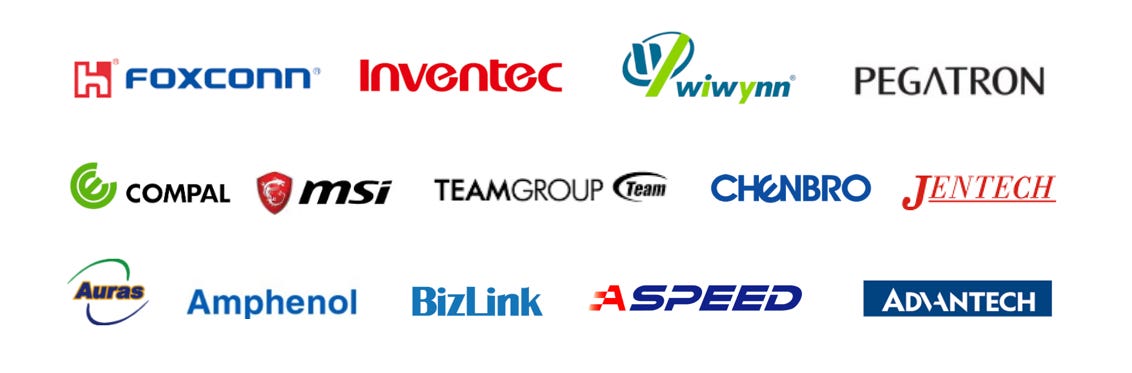
Major system and storage partners include Dell Technologies, HPE, Lenovo, Supermicro, AIC, ASRock Rack, ASUS, Compal, Foxconn, GIGABYTE, Inventec, MiTAC Computing, MSI, Pegatron, Quanta Cloud Technology, Wistron, Wiwynn, and others.
In addition, Quanta Computer founder Barry Lam, TSMC CEO C.C. Wei, and other Taiwanese industry leaders met with Jensen Huang during GTC, highlighting NVIDIA’s deep connection with Taiwan’s manufacturing ecosystem.
Vera CPU: A Processor Built for Agents
Vera CPU is built on the Olympus Core architecture, emphasizing single-thread performance, high bandwidth, and energy efficiency. Its 88 cores provide 1.2 TB/s of LPDDR5X memory bandwidth and a 3.6 TB/s on-chip fabric. The single-die design avoids the latency introduced by traditional chiplet architectures.
NVIDIA emphasized that the number of future agents will far exceed the number of humans. Therefore, CPUs must reduce latency to avoid slowing down expensive GPUs’ token-generation efficiency. For this reason, Vera CPU prioritizes single-core performance and available bandwidth per core, rather than simply increasing core count.
In enterprise application testing, Vera CPU is approximately three times faster than traditional x86 CPUs in SQL workloads, and improves real-time data stream processing speed at the New York Stock Exchange by roughly six times. This demonstrates its advantage in database queries and real-time data analytics.
- RTX Spark: Redefining the Personal Computer
Beyond data centers, NVIDIA also partnered with MediaTek to launch the RTX Spark chip. This personal AI PC platform features a 20-core CPU, 6,144 CUDA cores, and 200 TOPS of local AI compute. The first wave of products is expected to launch in fall 2026, offering ultra-thin 14- to 16-inch laptops with a thickness of around 14 mm.
The core significance of RTX Spark is that it enables PCs to securely run local agents. Agents can use tools locally, connect to cloud or on-premises models, and rely on sandbox mechanisms to prevent data leakage. This not only creates demand for high-performance CPUs/GPUs, cooling, and memory among Taiwan’s notebook ODMs, but also pushes AI PCs beyond the NPU performance race toward CUDA ecosystems and local agent platforms, expanding the value-add of the PC supply chain.
Hardware Characteristics
RTX Spark is an AI PC platform jointly developed by NVIDIA and MediaTek. It uses TSMC’s 3nm process and integrates a Blackwell RTX GPU with 6,144 CUDA cores and FP4 Tensor Cores capable of up to 1 PFLOPS of AI performance, along with a 20-core Grace CPU. It connects through NVLink C2C and supports 128 GB of unified memory.
The platform supports Windows and is fully compatible with CUDA. Its design goal is to create an always-on device built specifically for personal agents.
The New Role of the PC
RTX Spark signals that the future PC will no longer be just a device for running applications. It will become a “home AI server” that runs AI agents, manages personal data, and coordinates tools.
NVIDIA predicts that every person will have multiple AI agents, and every household will need an always-on AI PC. As a result, the PC market will no longer be limited by the number of people, but will expand with the number of agents.
This also means that PCs will become part of NVIDIA’s product roadmap. In the future, every generation of data center GPU architecture will have corresponding versions for desktops, notebooks, and workstations.
- Enterprise AI Toolkit and Enterprise Agents
NVIDIA introduced a complete Enterprise AI Toolkit that enables companies to build their own agent operating systems. The major components include:
Model layer:The Nemotron 3 Ultra model adopts a Mixture-of-Experts architecture and is trained for long-horizon reasoning and tool-calling tasks. It delivers inference speeds five times faster than competing models and reduces cost by 30%.
Harness layer:Agent Harness, such as OpenShell, is responsible for workflow orchestration and security management. It provides sandboxing, permissions, and security policies to ensure that agents can operate safely inside enterprises.
Tools/Skills layer:CUDA X Libraries, Cadence EDA tools, enterprise software, and other resources are made available as tools for agents to call. Through Skills, agents are taught how to use these tools. NVIDIA noted that agents will become the most important users of tools, and the value of software companies will rise as agents use their tools more frequently.
Runtime layer:OpenShell provides a secure execution environment that can run in the cloud, on enterprise servers, or on devices.
Through these components, enterprises can build Super Agents based on their own knowledge. For example, NVIDIA’s collaboration with Cadence on a Chip Design Super Agent automates RTL generation, testbench creation, regression testing, and debugging. Processes that previously took weeks can now be shortened to hours, improving efficiency by more than 40 times.
- Physical AI and Cosmos 3
Agentic AI is also extending into the physical world. At GTC, NVIDIA introduced Cosmos 3, an Omnimodel capable of reasoning, world simulation, and action generation using multimodal data such as vision, motion, and language.
The model comes with an open-source toolkit that simplifies data generation and simulation workflows, helping developers build robots and autonomous systems that can understand, reason about, and simulate the physical world.
The biggest bottleneck for Physical AI is the lack of first-person operational data. NVIDIA addresses this through teleoperation, simulation, and world models that generate physically consistent synthetic data, turning compute into data.
Cosmos 3 uses a hybrid Transformer architecture to process images, actions, audio, and text, generating worlds that conform to physical constraints. NVIDIA also introduced the Isaac GR00T humanoid robotics platform and the Alpamayo autonomous driving reasoning model, extending Agentic AI into robotics and self-driving vehicles.
Physical AI: From Virtual to Physical
Cosmos 3 Omnimodel
NVIDIA introduced Cosmos 3, an Omnimodel that learns from teleoperation, simulation, and third-person video to understand the world. The model has visual reasoning, world simulation, and action-generation capabilities, making it suitable for robotics and autonomous systems.
Cosmos 3 includes an open-source toolkit that simplifies data generation, simulation, training, and validation workflows, helping developers build robots that can understand and simulate the physical world.
Isaac GR00T Robotics Platform
Isaac GR00T is a humanoid robotics development platform that integrates the Jetson Thor computing platform, Isaac Lab simulation environment, Isaac Teleop demonstration learning, Omniverse simulation system, Cosmos World Model, Isaac ROS Runtime, and more.
Together, these components form a complete closed loop from data generation and model training to deployment. The platform also provides reference designs, allowing research institutions and enterprises to begin robotics development without having to build the underlying system from scratch.
Alpamayo 2 Autonomous Driving Platform
In autonomous driving, NVIDIA introduced the Alpamayo 2 open model and the Hyperion vehicle platform. Alpamayo 2 integrates perception, understanding, reasoning, and planning into a single model. Hyperion provides compute resources and sensor integration, while the Halos Operating System handles task scheduling and vehicle control.
Together, these three components form a complete autonomous driving architecture.
Taiwan’s Supply Chain and Industrial Opportunities
Taiwan’s Role in the Global AI Supply Chain
Taiwan is a critical hub in the global AI supply chain. Reuters has noted that Taiwan plays a pivotal role in the global AI supply chains of companies including NVIDIA and Apple, with its position reinforced by companies such as TSMC. NVIDIA plans to invest approximately US$15 billion per year in Taiwan and build a new headquarters in the Beitou-Shilin Technology Park, designed to accommodate 4,000 employees and expected to begin operations in 2030. Jensen Huang has described Taiwan as the “epicentre” of the AI revolution, and this move will further strengthen NVIDIA’s collaboration with manufacturing partners such as TSMC, Quanta, and Foxconn.

Beneficiaries Across the Supply Chain
Semiconductor Manufacturing and Packaging & Testing
Vera Rubin, Vera CPU, and RTX Spark are all manufactured by TSMC using N3 and CoWoS technologies. Testing and packaging are supported by Taiwanese companies such as KYEC and Powertech Technology. The Vera rack design reduces copper wire usage and shortens assembly time, highlighting Taiwan’s advantages in hardware manufacturing and modular system assembly.
Memory and Storage
Agentic AI requires extremely high bandwidth, driving strong demand for LPDDR5X and HBM4. Original manufacturers such as Micron, Kioxia, and SanDisk are expected to benefit, while Taiwan’s NAND module supplier Phison and packaging and testing company Powertech Technology may also see opportunities. The high-speed networking and storage processing required by Vera BlueField 4 STX and Spectrum 6 SPX could further benefit memory suppliers such as Nanya Technology and Elite Semiconductor Microelectronics Technology.
BMC / IPMI Controllers
AI racks require BMC management and remote monitoring. Taiwan’s ASPEED is the world’s largest supplier of BMC controllers, and its product penetration is expected to rise alongside growing demand for AI server racks.
Thermal Management and Power
Vera Rubin and LPU racks adopt liquid-cooling designs, increasing the penetration of both liquid-cooling and air-cooling thermal solutions. Taiwanese thermal solution providers such as Auras, Fujikura, and Jentech have strong competitiveness in cold plates, cold heads, and thermal modules. Power supply companies such as FSP Group and Delta Electronics are also positioned to benefit from rising demand for high-power racks.
Server and PC Assembly
The launch of RTX Spark repositions the PC as a home AI server in the era of agentic AI. Taiwanese PC and notebook makers such as ASUS, MSI, ASRock, Quanta, Compal, Pegatron, and GIGABYTE are expected to launch laptops and desktops equipped with RTX Spark. Major server ODMs including Foxconn, Inventec, Quanta QCT, Wistron, and Wiwynn have already partnered with NVIDIA to produce Vera Rubin systems and MGX servers.
Networking and Communications
The Spectrum 6 SPX Ethernet rack adopts 200G CPO technology, creating potential opportunities for Taiwanese optical communication suppliers such as Coretronic, Lextar, and Lite-On. The storage acceleration functions of BlueField 4 STX require high-speed chips and FPGA-related solutions, areas where Taiwanese companies such as Accton and MiTAC may provide relevant support.

5月28日
Driven by the rise of agentic AI and the concept of AI factories, Taiwan’s supply chain showcased a complete ecosystem at Computex 2026, covering chip manufacturing, advanced packaging, system assembly, racks, thermal management, power infrastructure, and end applications.
Below, we provide the latest updates on selected Taiwanese companies at COMPUTEX 2026

Foxconn: The Leader in AI Servers

Operating Performance and AI Momentum
Leadership in AI Servers
AI server revenue now accounts for more than 50% of Foxconn’s total revenue, driving strong demand for cloud and networking products. The company noted that despite rapid growth in AI servers, it has maintained solid working capital efficiency, with a cash conversion cycle of 44 days. As its AI business expands, working capital requirements and interest expenses have increased, but the company continues to preserve liquidity through optimized accounts receivable and inventory management.
Outlook and Investment
Although the second quarter is traditionally a slow season for ICT, the company expects both revenue and profit to grow sequentially and year-over-year, supported by robust AI demand. The four major North American CSPs continue to raise their capital expenditure plans, with combined spending already exceeding US$700 billion. AI is shifting from a short-term theme into a structural trend.
Foxconn will continue to strengthen its global footprint, vertical integration, and in-house manufacturing ratio, while working to improve ROE. Its near-term ROE target has been raised to 12%. Capital expenditure in 2026 is expected to increase by more than 30% year-over-year, mainly directed toward AI and global capacity deployment.
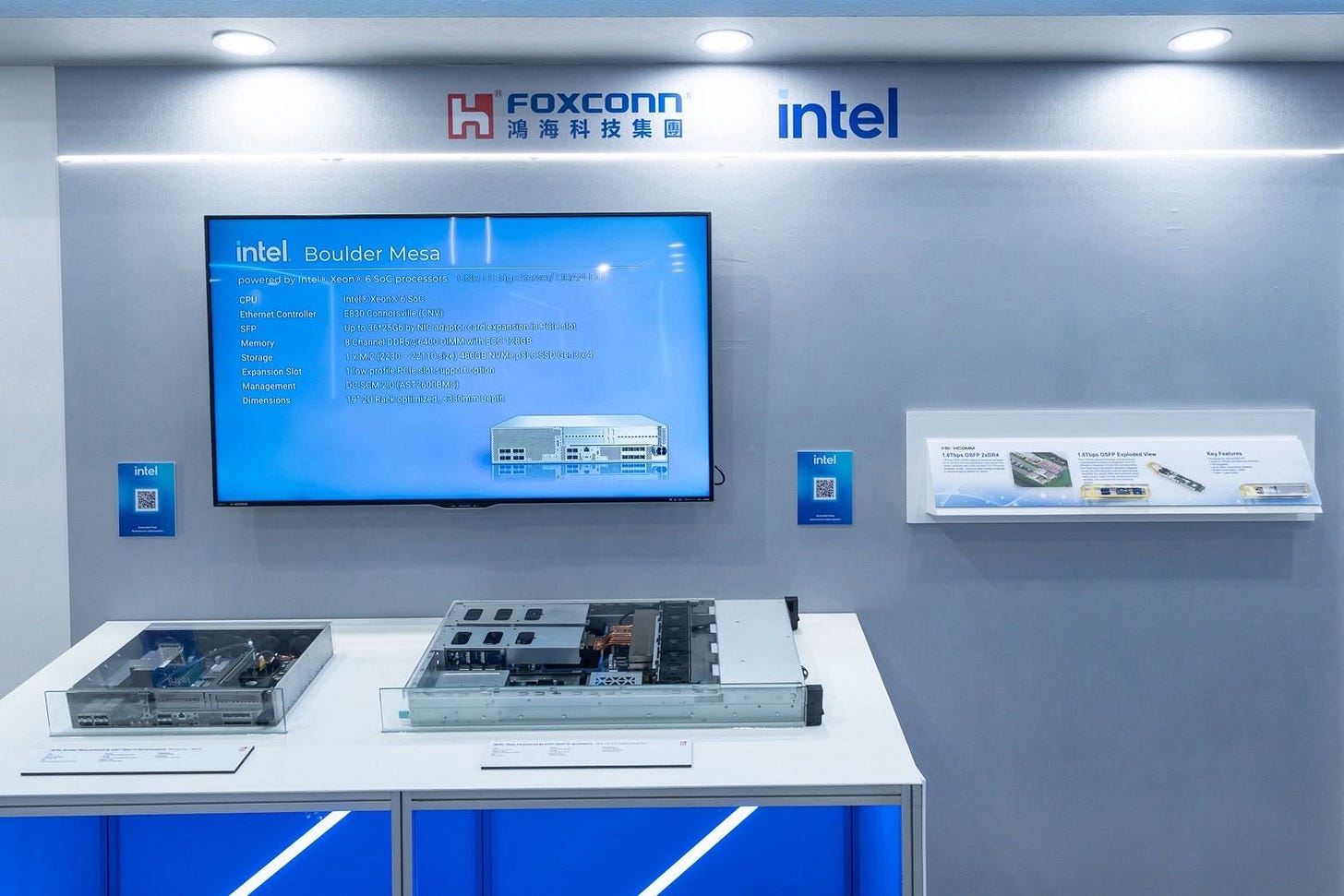
Product and Technology Highlights
AI rack shipments are expected to grow by high double digits quarter-over-quarter in the second quarter, while full-year shipments are expected to double. Demand for high-speed switches and CPO all-optical switches is also ramping, with CPO scheduled to enter mass production in the third quarter.
At GTC, Foxconn showcased its vertical integration capabilities in AI servers and announced cooperation with SAP in smart manufacturing. The company will invest an additional NT$30 billion in Asia Bay Supercomputing to build Taiwan’s largest AI supercomputing center. It is also working with international partners to expand into Africa’s sovereign AI market.
In semiconductors, new products from its 8-inch wafer fab have entered mass production, while its assembly and testing plant in India is under construction. Its AI ASIC tape-out project is scheduled to be completed in the second half of the year. In low-earth-orbit satellites, the second-generation Pearl satellite has already entered orbit.
Business Model Innovation: Buy-and-Sell vs. Consignment
Foxconn noted that because ASIC servers are highly customized and carry better added value, they are often handled under a consignment model. This helps reduce working capital requirements and improve margins.
For GPU servers, as GB200 and GB300 move into the later stages of their product cycle, some customers may also increase the share of consignment arrangements, although the structure will still depend on customer requirements. Looking ahead, growth momentum remains strong for both GPU and ASIC AI racks. With a broader customer base and fewer demand conflicts, the company expects ASIC server revenue to have room to double in 2026.
Jentech : Thermal Innovation from Copper Lid to MCL
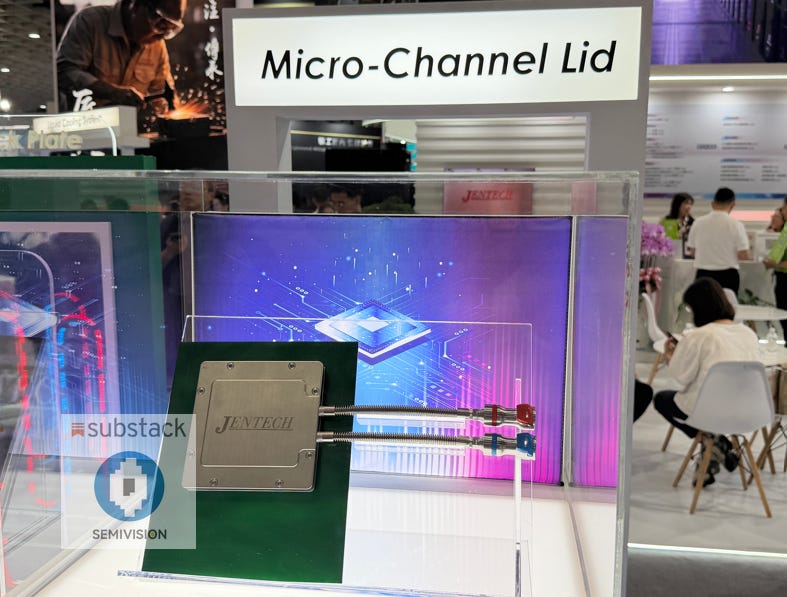
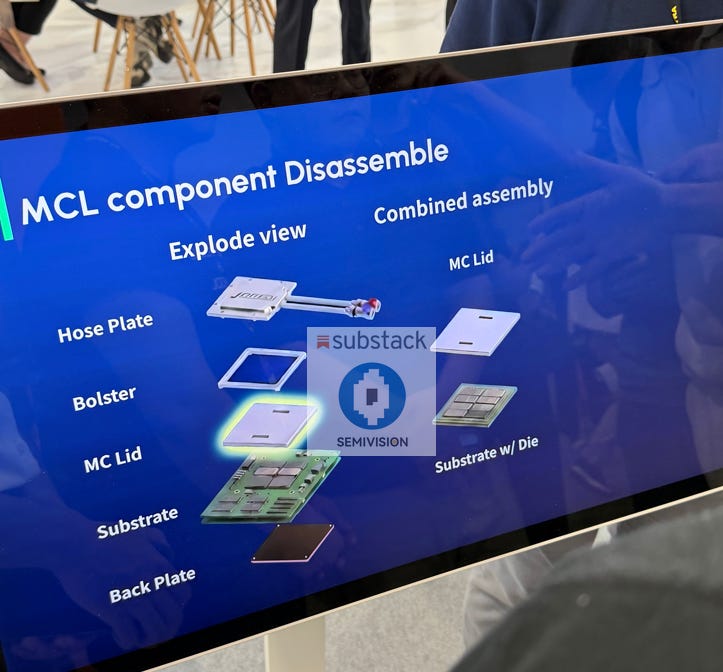
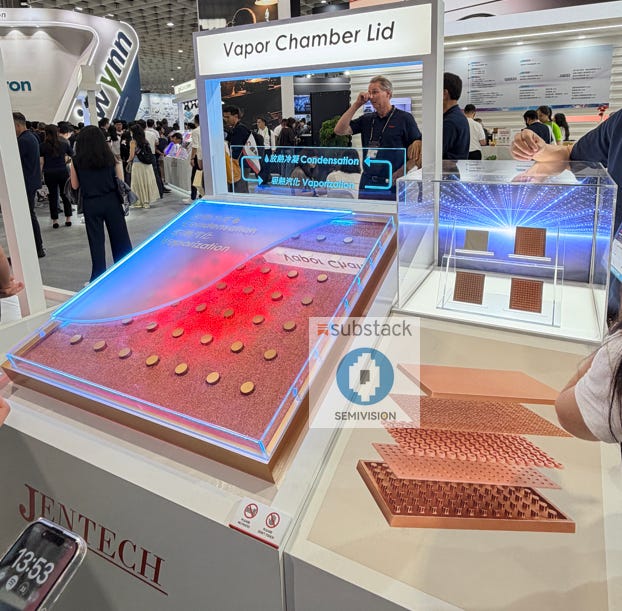
At Computex, Jentech showcased thermal solutions for high-power AI GPU applications, focusing on a comparison among the Micro Channel Lid (MCL), Vapor Chamber Lid (VC Lid), and traditional Copper Lid.
MCL Architecture
The MCL partially moves the cold plate function, originally located at the system level, closer to the package level. In a traditional architecture, the thermal path is: chip → TIM1 → lid → TIM2 → cold plate. By contrast, MCL integrates microchannels directly into the lid, allowing coolant to move much closer to the heat source and significantly reducing thermal resistance.
An MCL structure includes at least two layers: an upper fluid distribution layer that introduces coolant and evenly distributes flow, and a lower microchannel layer responsible for heat exchange. As AI GPU power rapidly rises above 2 kW, TIM2 thermal resistance has become a key bottleneck. MCL can effectively reduce this resistance, but it also changes the package from a dry process into a liquid-integrated package. The testing process therefore needs to include airtightness, water-path, and pressure tests, while also addressing leakage risk.
VC Lid
VC Lid replaces the solid copper lid with a sealed vapor chamber. It uses an internal phase-change cycle — liquid evaporation, vapor movement, condensation, and return flow — to improve heat spreading efficiency. VC Lid can quickly equalize temperature, but it still requires a cold plate and TIM interfaces. Compared with a traditional Copper Lid, VC Lid is more expensive, but it can support power levels above 3 kW.
Relative Advantages of MCL
MCL can directly reduce TIM2 thermal resistance and theoretically offers the highest cooling capability. Its disadvantages are leakage risk, high packaging complexity, and a longer validation cycle. Jentech has vertical integration capabilities across key technologies including lids, MCL, and cold plates, allowing it to provide a complete solution rather than simply supplying lids.
Jentech also noted that the dual-lid solution discussed in the market is mainly designed to solve warpage caused by the mismatch in coefficient of thermal expansion between silicon and the substrate. This belongs to package mechanical structure optimization and is not directly related to high-wattage thermal solutions.
The company emphasized that supporting thermal design power above 3–4 kW in the future will still require the coordinated use of high-efficiency cold plates, optimized TIM materials, and VC Lid technologies.
Auras Technology : Liquid-Cooling Systems and In-Rack CDU
At Computex, Auras showcased a complete portfolio of key liquid-cooling components and modular systems, including a 300 kW in-rack CDU, CDM, cold plates, QD connectors, and power shelves.
Liquid-Cooling Capacity Deployment
A single 2 MW in-row CDU can support 12 AI racks. Auras’ 300 kW in-rack CDU is an 8U unit that can be installed at the bottom of a rack and supports a single-rack VR200 AI server configuration. The product features three built-in small pumps, a hot-swappable design, and BMC-based real-time monitoring of flow rate, pressure, and water quality.
Vertical Integration Capabilities
Auras has completed vertical integration of key liquid-cooling components, covering quick-disconnect connectors, cooling distribution modules, cold plates, and CDUs, all of which are designed and manufactured in-house. The company has also partnered with Chicony to develop power shelves, upgrading from 33 kW air-cooled power systems to 150 kW liquid-cooled solutions.
Racks and Sidecar Solutions
The company showcased a sidecar solution capable of supporting 100 kW of heat dissipation. The system can be stacked and deployed according to customer requirements and supports group-level control management. Auras also introduced its UQD series of OCP-compliant QD products for high-flow-rate systems. For AMD’s MI355 platform, the company designed a dual-sided manifold to improve flow uniformity and reduce hotspots.
Laptop Liquid Cooling and Vapor Chambers
Auras has integrated a closed-loop liquid-cooling system directly into laptops, replacing high-speed fans to reduce noise and improve thermal efficiency. This could become one of the thermal solutions for future AI PCs. Vapor chamber products are expected to enter mass production on new platforms in the second half of the year. As CPU power consumption rises, demand for vapor chambers is expected to gradually expand from consumer products to high-end server platforms.


2月10日
MSI : From Gaming to Edge AI and Agentic AI
At Computex 2026, MSI exhibited three major product categories: servers, industrial PCs, and EV chargers. The company also actively showcased its own agentic AI applications.
Server Solutions
MSI introduced customized servers and workstations for NVIDIA MGX, DGX, AMD, and Intel platforms. For example, a 6U water-cooled configuration supporting eight GPUs is expected to enter mass production in 4Q26. Its DGX workstation brings GB300 GPUs into a liquid-cooled desktop environment, addressing the space constraints of enterprise customers. AMD and Intel solutions adopt modular designs to accelerate the adoption of new CPUs.
Edge and Industrial PCs
MSI showcased Edge AI PCs and industrial PC applications across platforms from Intel, AMD, NVIDIA, and NXP. These products target use cases in healthcare, education, government, and niche enterprise customers. The company emphasized its in-house R&D capabilities, with products manufactured at its Taoyuan plant. MSI’s competitiveness lies in its thermal design and system integration capabilities.
Agentic AI Applications
On the software side, MSI introduced platforms such as Galene AI through AI agents and partner integration. These platforms support enterprise internal database connectivity and help reduce hallucination issues. MSI also presented the Open Claw AI agent concept for real-time bidding analysis and visual applications. In addition, the company has cooperated with Italian partners to develop an agentic AI fortune-telling robot, bringing AI into everyday life.
EV Charging Products
MSI views EV chargers as its second growth pillar beyond gaming. The company operates its own factory in Guishan, Taoyuan, and has obtained certifications in multiple countries. Its slow-charging products, Eco Premium and EV AI, can support settings for five vehicles and different charging connectors. Its fast-charging product reaches the 80 kW class and can fully charge a vehicle in about 30 minutes, making it suitable for commercial applications.
BizLink : High-Speed Transmission and HVDC Power Solutions
At Computex, BizLink showcased high-power and high-speed transmission solutions designed to support next-generation AI infrastructure, emphasizing its irreplaceable role within Taiwan’s AI supply chain.

High-Power Electrical Interconnects— For NVIDIA’s Vera Rubin platform and MGX architecture, BizLink displayed rack-level power interconnect solutions including power whips, busbars, power shelf connectors, and HVDC cables. These solutions can support 800 VDC applications, improving power delivery efficiency while meeting the requirements of high-density deployment.
High-Speed Copper and Optical Interconnects— The company exhibited high-speed solutions supporting 448 Gbps per channel and PCIe Gen6/7, including CPC cable systems and CPO solutions for 1.6T networking. These offerings provide complete interconnect solutions for AI servers, networking platforms, and rack-scale deployments.

Optical Communications Expansion— Through its acquisition of optical communications company Speedy Industrial Supplies, BizLink has gained mass-production capabilities for high-density MTP/MPO fiber-optic connectors. This enables the company to provide a one-stop hybrid interconnect solution combining copper cables and optical fibers, supporting AI factories’ demand for high-speed transmission and optical communications.
AI Robotics Interconnects— The company also introduced dedicated interconnect solutions for AI humanoid devices and robotics, addressing real-time data transmission bottlenecks from sensing endpoints to computing units.

Pegatron : Focused on NVIDIA Rubin and AMD Platforms

Pegatron demonstrated its system integration capabilities for NVIDIA’s Vera Rubin NVL72 and HGX Rubin platforms.
NVL72 Compute Tray— Each compute tray contains two Vera CPUs and four Rubin GPUs, using a fully liquid-cooled design. The system adopts a PCB-to-PCB direct-connect architecture, eliminating cables to reduce signal loss and maintenance risks. The liquid-cooling loop uses a rear-side inlet and outlet design to efficiently remove heat from the CPU and GPU.
HGX Rubin 2U Platform— This platform can be configured with either Vera CPUs or x86 processors and adopts a modular design. Liquid cooling covers the CPU, GPU, storage, and BMC. System integration includes a backplane, busbar, and power shelf, with each power shelf rated at 110 kW, while also supporting quick removal and replacement.
AMD Instinct Series— Pegatron also showcased MI355X and MI350P GPU servers using air-cooled or hybrid liquid-cooling configurations. The GPU and CPU are liquid-cooled, while memory and storage remain air-cooled, balancing thermal efficiency and cost.
Pegatron stated that U.S. brokerage observations suggest that nearly all NVIDIA GPU systems will adopt Vera CPUs and be paired with an 800 V HVDC power architecture. This indicates that server assembly is evolving from simple hardware manufacturing toward full system integration, with power and thermal design becoming increasingly critical.
Wiwynn : Helios Architecture and All-Fiber Rack
Wiwynn introduced its Helios system architecture as a second-source solution benchmarked against NVIDIA’s Vera Rubin platform.
Helios Architecture— A full rack consists of 18 compute nodes and six switch trays, adopting a configuration of one CPU paired with four GPUs. The rack is rated at 240 kW, with computing performance slightly higher than the original reference design. It is positioned for large-scale AI model training. The system adopts a double-width design, providing more space for thermal management and cabling.
ORV3 All-Fiber Rack— Wiwynn showcased an all-fiber ORV3 rack, with fiber-optic transmission used throughout the rack. Traditional copper cables are eliminated, and a patch panel is installed at the top of the rack. In the future, a single rack could accommodate up to 32 nodes.
CPO and 2.5D Packaging— The company is working with GUC and Ayar Labs, using TSMC’s COUPE 2.5D technology to integrate electrical and optical signal layers. Each GPU directly packages eight optical engines. Large-scale mass production is expected in 2028. To address the high temperature sensitivity of external laser sources in ELS architectures, Wiwynn has introduced liquid cooling to ensure that the temperature difference remains below 3°C, maintaining frequency stability.
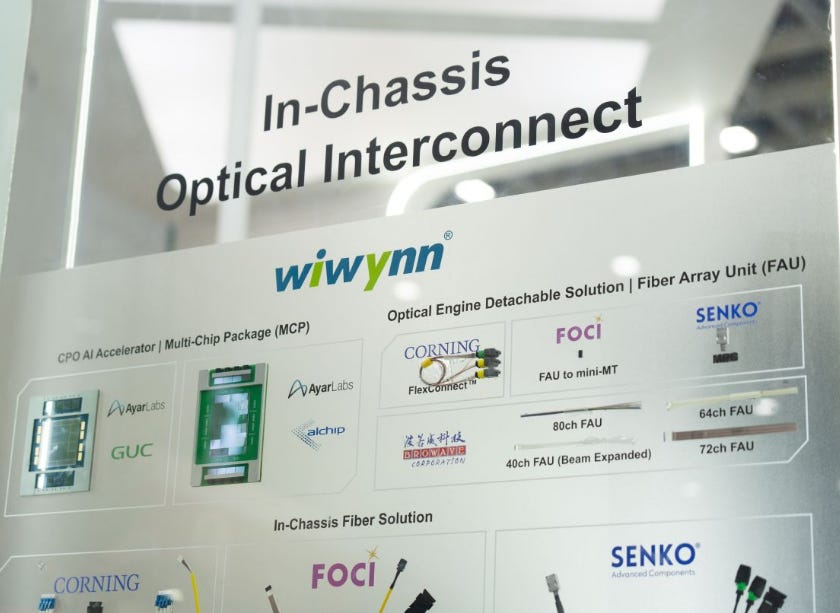

At COMPUTEX, Ayar Labs joined Wiwynn, ASIC partners, and fiber ecosystem partners to bring CPO into a rack-scale AI infrastructure.
"AI infrastructure is shifting toward optical-electrical convergence. Through close collaboration across our ASIC, silicon photonics, and fiber ecosystems, combined with Wiwynn's expertise in rack-level server integration and manufacturing, we are taking CPO technology from silicon-level innovation to system-ready architecture." — William Lin, President and CEO of Wiwynn
Key Focus Areas— Wiwynn believes that replacing copper cables with fiber optics can eliminate heat generation and cable loss, but this must be combined with liquid cooling for precise temperature control. The Helios system is still in the prototype stage, with more concrete developments expected in the fourth quarter of this year. The 2.5D packaging approach serves as a transitional solution, while future development will move toward 3D packaging to further shorten the distance between components.
Chenbro : Transitioning from Rack Components to Full-Rack Systems
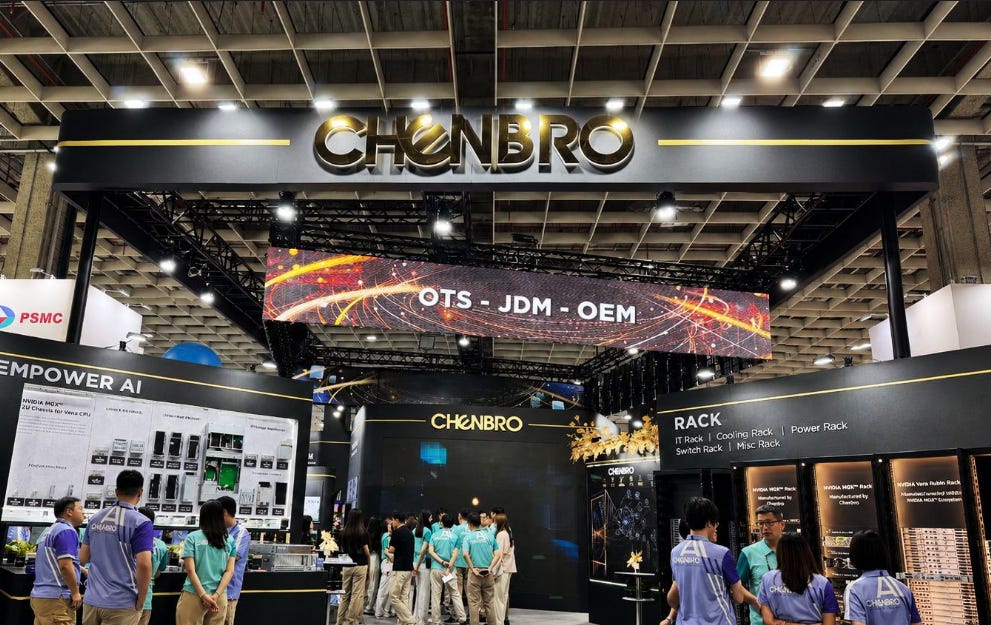
Chenbro has long supplied rack components, but this year the company has begun moving into full-rack solutions while also adopting smart manufacturing.
Full-Rack Design and Manufacturing— In the past, racks were often outsourced by ODMs to metalworking suppliers. Chenbro is now moving up the value chain into full-rack design and manufacturing, particularly for AMD and ASIC platforms. As AI server power consumption continues to rise, servers and racks increasingly need to be designed together, creating new project opportunities for the company.
Process and Quality Improvements— The company has introduced die-casting processes and AIO inspection equipment, combined with robots and AMRs, or autonomous mobile robots. It has also designed semi-finished goods buffer zones to improve production-line flexibility and utilization rates. In addition, Chenbro has adopted the NPDP process to standardize product development and mass-production management.
New Platforms— Chenbro is investing in the development of the MGX modular platform and Vera CPU platform. The company expects CPU-related product shipments in 2026 to outperform 2025, with growth momentum driven by the expansion of AI infrastructure and the rising penetration of MGX.
Amphenol : High-Speed Connectors and Extreme Thermal Testing
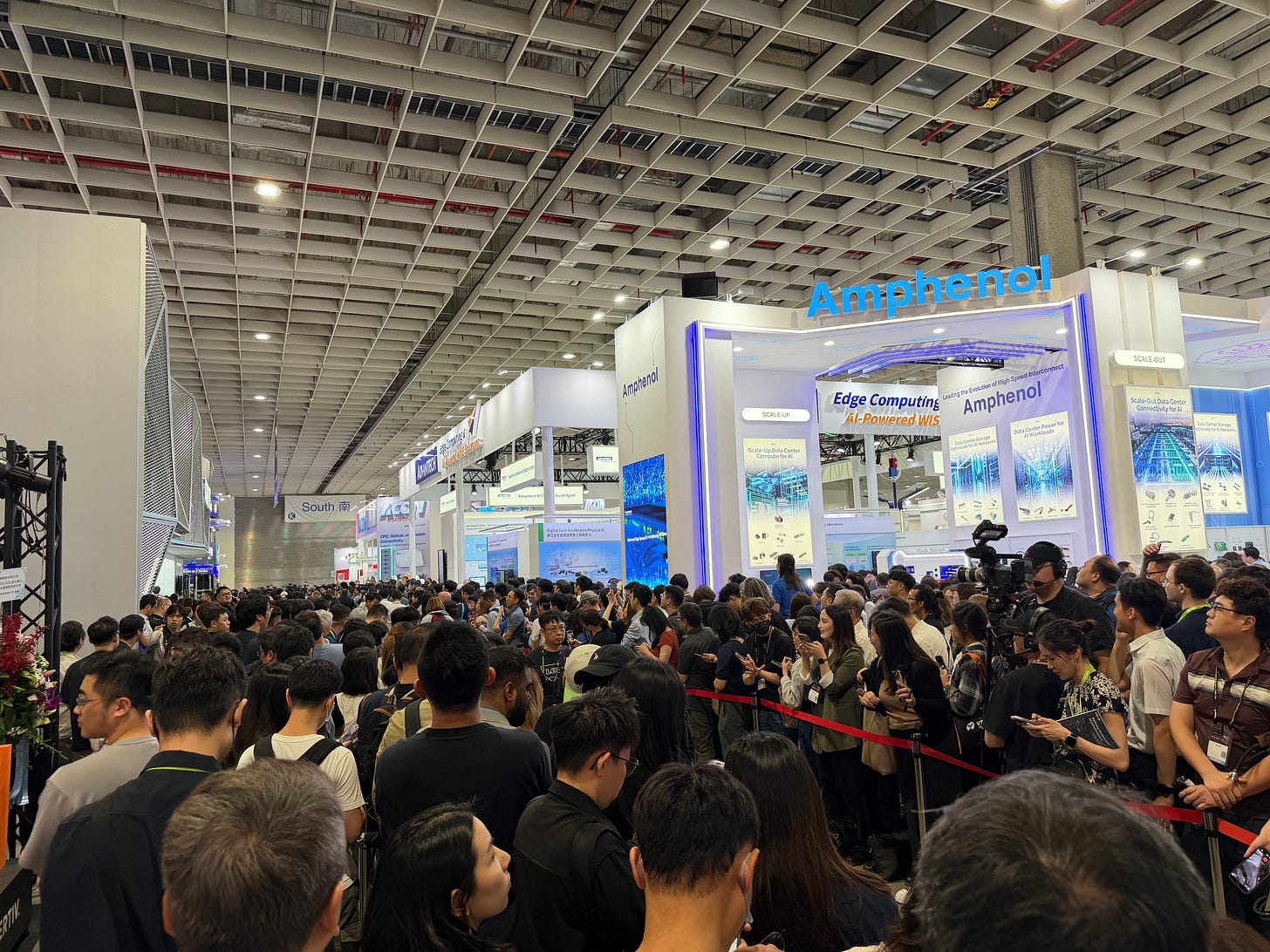
Evolution of High-Speed Transmission— Over the past 20 years, single-channel data rates have doubled from 3G, 6G, and 12G to 112G and 224G, with 448G specifications now under development. Amphenol achieves high-density stacking by reducing connector size and improving connector design, ensuring signal stability under ultra-high-speed operation.
Scale-Up and Scale-Out— Amphenol focuses on PCBA-level interconnects inside the rack for scale-up, as well as rack-to-rack interconnection and long-distance optical fiber communication for scale-out. The company provides optical communication components and also showcased 48 V high-current power harnesses capable of supporting 1 MW racks.
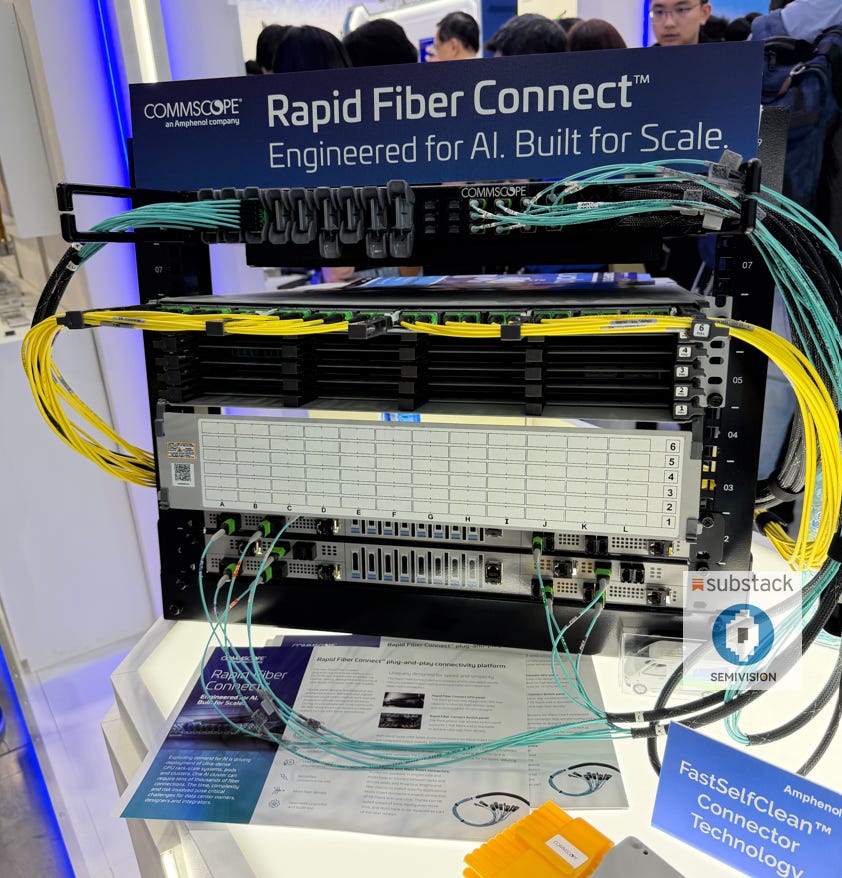
Thermal Management and Extreme Environment Testing— To address high-power thermal requirements, Amphenol has expanded its thermal product line and conducts experiments across extreme temperature ranges from -5°C to 120°C to ensure material heat resistance and durability. Its products must pass rigorous validation for high-altitude, polar, and desert environments.
Supply Chain Collaboration— Amphenol works with major power supply companies such as Delta Electronics and Lite-On. An AI rack may require 30 to 40 high-current power harnesses, making Amphenol deeply embedded in the AI infrastructure supply chain ecosystem.

3月26日
Inventec : Bringing Agentic AI into Smart Manufacturing
At Computex, Inventec showcased a wide range of agentic AI applications spanning smart analytics, smart manufacturing, healthcare, the metaverse, automotive systems, and servers.
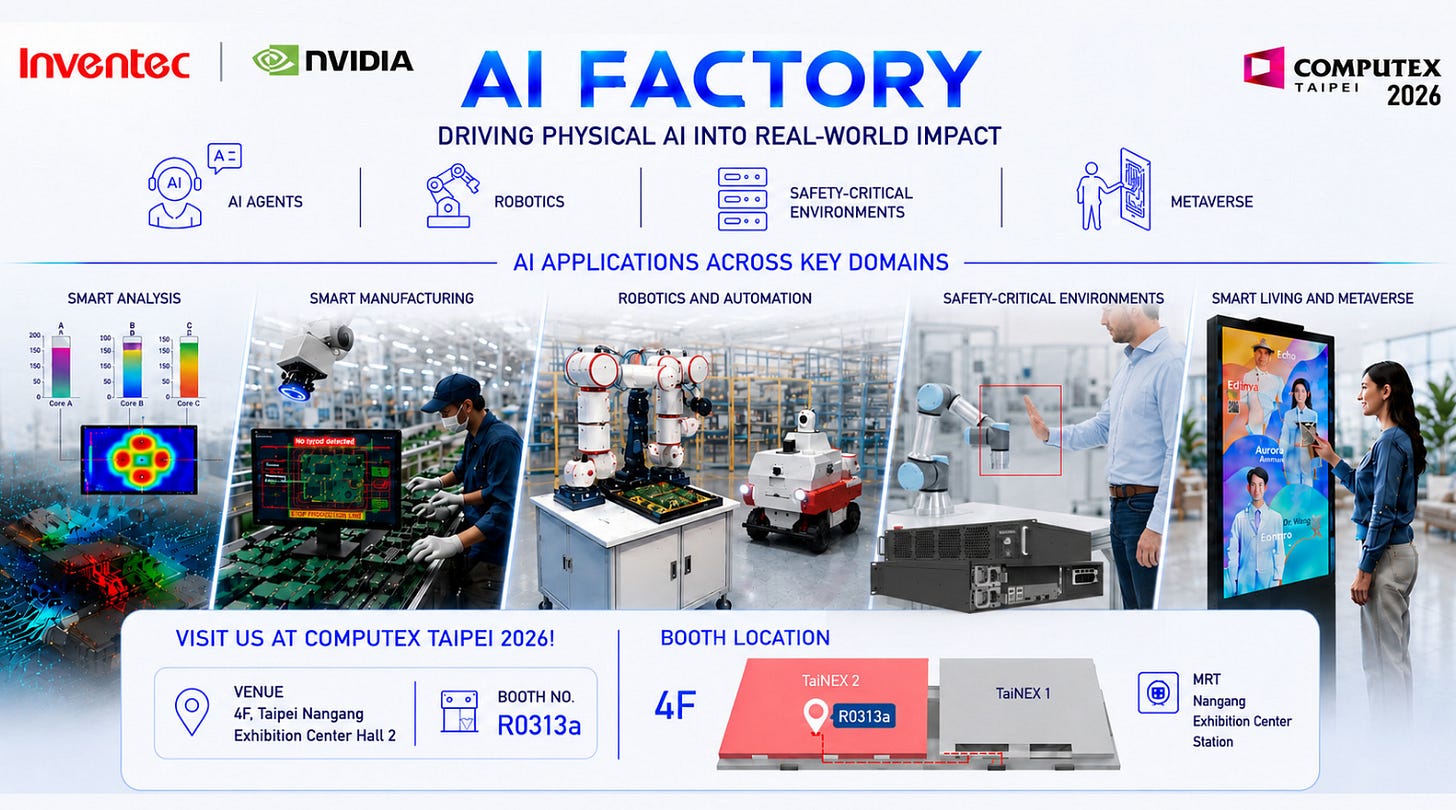
Smart Analytics and Manufacturing— Inventec introduced its Thermal Agent solution, which uses AI to simulate temperature distribution from PCB design through the manufacturing process and provides design recommendations through a conversational interface. In the assembly process, the company uses collaborative robots to improve consistency in force control and precision, supported by a high-accuracy mechanical feedback system. For visual inspection, Inventec introduced a training-free model that can identify defects without requiring large datasets, accelerating root-cause analysis and improvement recommendations.
Healthcare and Metaverse Applications— Together with its partners, Inventec demonstrated the conversion of CT images into digital twins on the Maia TX4000 AI PC. Its skeletal detection and Domain Agent applications can provide posture and exercise recommendations, support virtual clothing try-ons, and deliver medical instructions. The company also showed how AI can be integrated into everyday scenarios, including fortune-telling and product recommendations.
Automotive Products— Inventec provides positioning systems, wireless charging, gateways, and ADAS solutions, bringing AI computing power into vehicles. Some products use liquid-cooling plates connected to the vehicle’s internal water-cooling system and are capable of supporting ADAS products scheduled for mass production in September.
Servers and Racks— Inventec emphasized the concept of the AI Factory, offering reference architectures and customized server solutions that support AMD, Intel, and NVIDIA platforms. Its thermal solutions cover air cooling, water cooling, and full liquid cooling, and the company ranks seventh globally in patents. On the rack side, Inventec showcased the Artemis III NVL72 reference architecture and customized solutions, including configurations with Vera CPUs and Rubin GPUs, as well as AI server building blocks that can meet different power budget requirements.
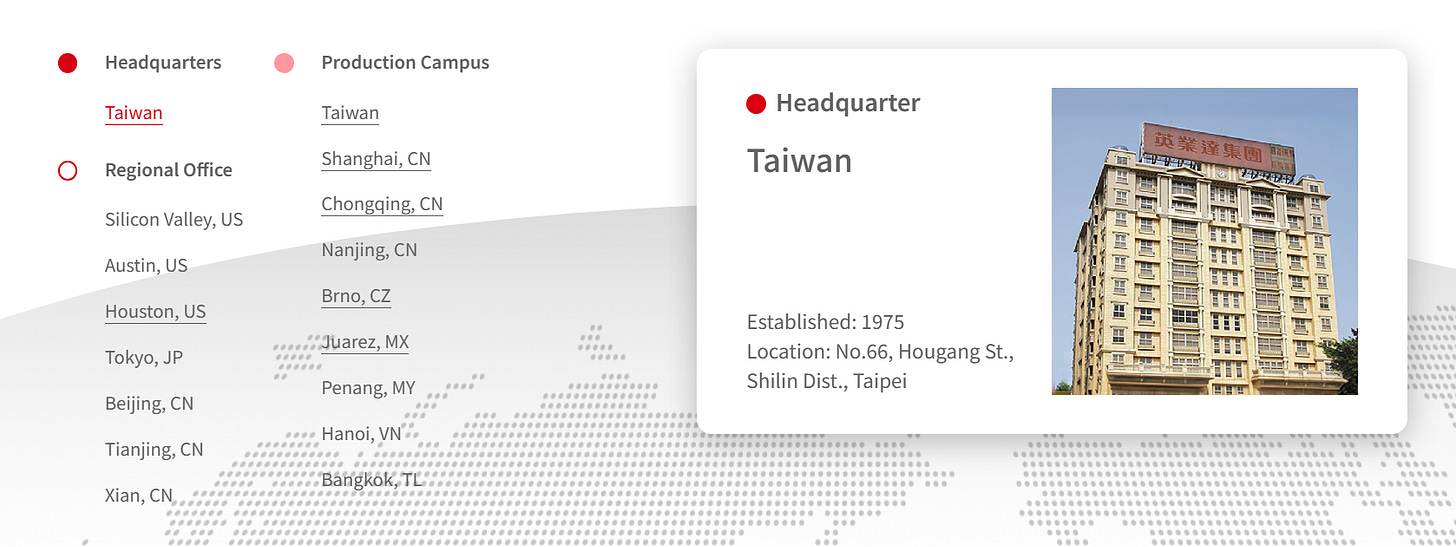
ASPEED Technology : Security Chips and Panoramic Imaging
At Computex, ASPEED introduced three new chips and showcased its Cupola360 panoramic imaging and remote management platform.
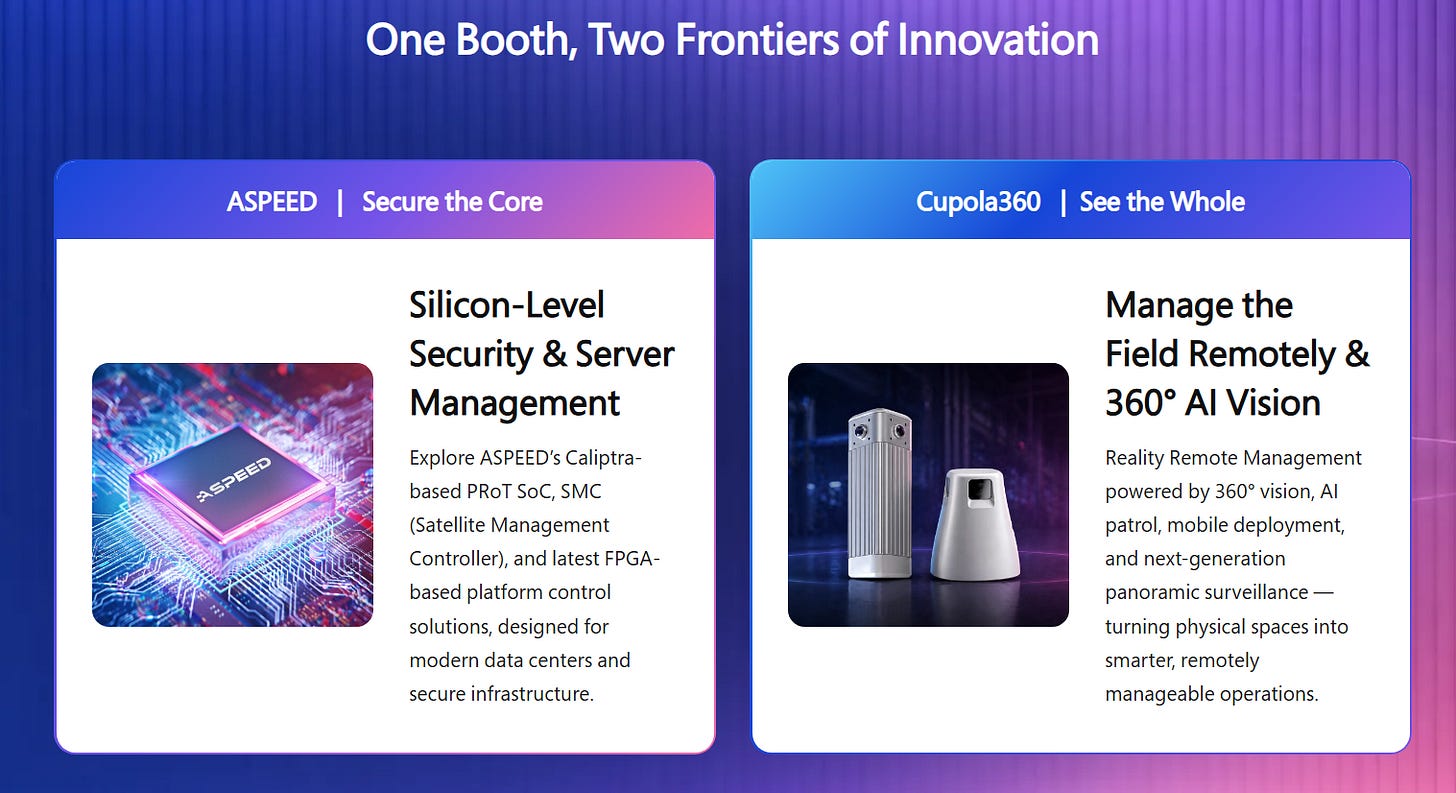
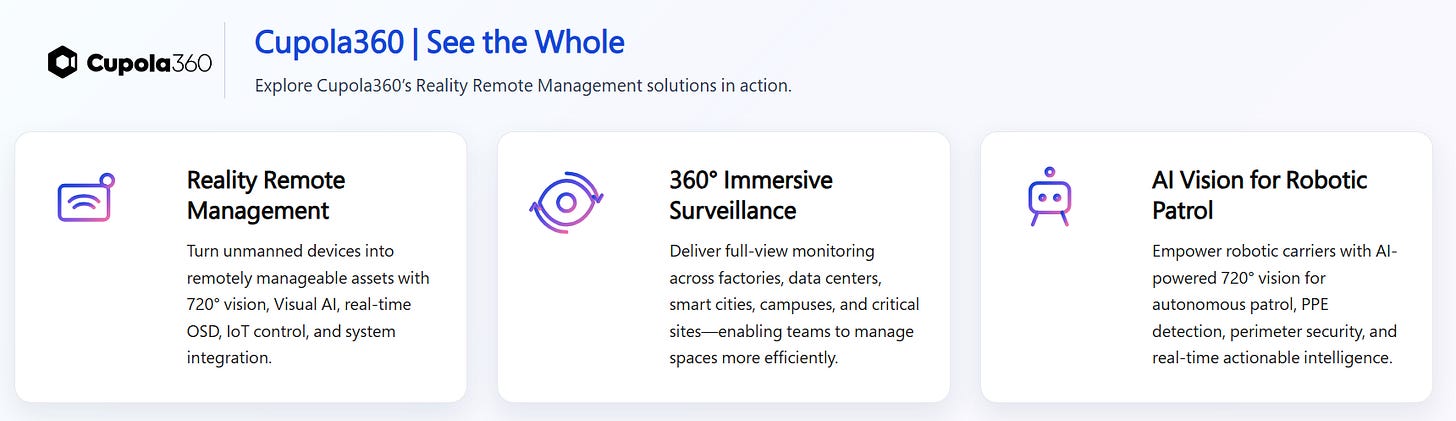
Cupola360 Panoramic Imaging— The new-generation product supports both panoramic and PTZ modes, includes night vision, and addresses the blind-spot issues of traditional PTZ cameras. The system outputs a single panoramic image, allowing users to monitor four different zones. In effect, one dome camera can replace four conventional dome cameras, offering strong cost efficiency.
Remote Management and IoT— The platform integrates artificial intelligence and IoT, enabling managers to remotely control equipment, monitor yield, and assign employees without being physically present on site. It is suitable for integrated factory management, retail, livestock farming, and data center monitoring. In data center applications, when a server overheats, managers can immediately use visual views and thermal imaging to identify the problematic component and take corrective action.
Three Security Chips

AST1840— This chip contains two dies and one processor for use in a security module. During boot-up, it first verifies the legitimacy of the firmware, meeting customer requirements for firmware-level security. The chip integrates dies from a major partner, allowing customers to directly use existing development tools.
AST1040— This chip includes post-quantum cryptography and serves as a platform management controller responsible for processing board-level information and reporting it back to the main controller. It adopts open standards for boot and management architectures and can connect across different architectures.
AST1080— This chip supports external security chip specifications for specific platforms. It periodically sends quantum-encrypted computational verification to authenticate component identity. With an ultra-small package, it can be placed close to CPUs and GPUs.
Ecosystem and Remote Platform— ASPEED is working with major partners on an open platform root-of-trust reference design. The Cupola360 module, end products, and remote system management platform will be applied in smart factories, data centers, and high-density server management.
Team Group : High-Capacity Memory and Secure SSDs
At Computex, Team Group focused on the themes of “AI Creator” and “AI Workstation,” launching a complete portfolio of storage solutions spanning personal AI PCs to enterprise data centers.
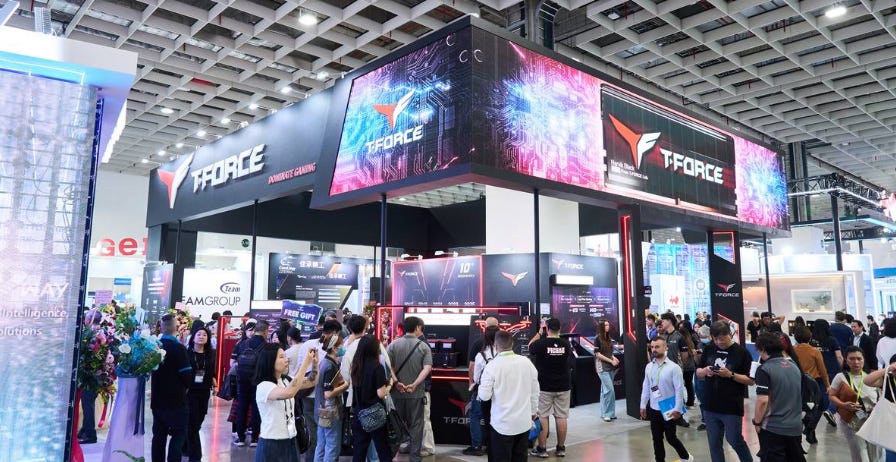
T-CREATE Series— For AI creators, Team Group introduced DDR5-6400 64 GB memory modules, with four modules providing up to 256 GB. It also showcased DDR5-7600 RDIMM 64 GB modules, with eight modules reaching 512 GB, targeting AI workstations, local LLM deployment, and enterprise computing platforms. These modules use graphene heat spreaders. The company also exhibited 128 GB four-rank CUDIMM modules, preparing for future AI computing demand.
LPCAMM2— Featuring a low-profile horizontal design, LPCAMM2 shortens the signal path between the CPU and memory compared with traditional SO-DIMM modules, reducing latency and supporting higher frequencies. With a graphene heat spreader approximately 1 mm thick, it is well suited for AI PCs.
E1.S Enterprise SSDs— Team Group’s E1.S SSDs support the standard adopted by hyperscalers such as Google and Meta. They offer advantages including better thermal performance, higher capacity, and hot-swappability, making them suitable for AI servers, data centers, and HPC platforms.
Security Products— The company introduced a one-click destruction SSD, providing both digital and physical destruction mechanisms. A built-in MCU ensures that even after power loss or removal, the destruction process can still be completed once power is restored. Team Group is also developing remote destruction technology for applications such as wireless communications, drones, and satellite communications.
Advantech : From Industrial PC Maker to AI Platform Supplier
At Computex, Advantech declared its transition from a traditional industrial PC company into an AI platform supplier. Its product portfolio covers edge AI, robot controllers, AI agent platforms, and AI rack servers.
WEDA API and ActiveFactory AI Agent— Advantech’s self-developed WEDA API connects multiple subsystems and integrates container technology to accelerate shipment and deployment. ActiveFactory AI Agent can collect SMT production-line progress and utilization data, connect OEE information to NeMo Cloud, and automatically provide recommended actions when abnormalities occur. The iEnergy architecture also connects to NeMo Cloud through WEDA API for energy management, allowing AI to determine whether factory air-conditioning systems have been left running and recommend energy-saving measures.
Robotics Platform— Advantech focuses on providing modules such as controllers, carrier boards, 2D/3D cameras, LiDAR, IMUs, wireless communications, and motors, rather than building complete humanoid robots. Its SOAR platform supports real-time 3D image recognition and point-cloud mapping. Combined with Robotic Suite software for sensor data integration, it can be applied to AMRs, robot dogs, humanoid robots, and drones.
NemoClaw Cloud and AI Agent— Built around the AI agent concept, the platform allows users to define objectives, while the system helps complete tasks such as app development, factory production, warehouse management, and energy saving. Through Omniverse-based virtual factory simulation before real-world deployment, Advantech aims to improve accuracy and reduce implementation costs.
AI Rack Server— Advantech entered the rack server market last year, focusing on low-volume, high-mix, and highly customized applications. These systems do not necessarily need to be deployed in traditional data centers and can be used in factories or semiconductor facilities. Hardware offerings include SKYRack AI and SEMICON-dedicated racks, supporting 2U systems with four high-power GPUs and 4U systems with eight GPUs for AI training, inference, and simulation. On the software side, Advantech integrates rack-level management, smart manufacturing ISV solutions, and liquid-cooling CDUs.
In-Vehicle Platforms and Rugged Edge AI— Advantech has built deep expertise in vehicle computing over the past 20 to 30 years. Its platforms now extend to autonomous machinery and mining trucks, offering rugged edge AI platforms with vibration resistance, temperature tolerance, and a 15-year support cycle. These systems integrate interfaces such as LiDAR, 2D/3D cameras, GPS, and 4G/5G for human detection, obstacle recognition, and work-quality prediction.
Compal : Integrated AI Infrastructure and Smart Healthcare
At Computex, Compal demonstrated its transition from standalone device manufacturing toward integrated AI infrastructure, emphasizing the co-design of computing, thermal management, and power systems:
•Next-generation integrated AI infrastructure– Compal showcased servers including OG231 2 L1, based on the NVIDIA HGX Rubin NVL8 platform; SGX30 2, supporting the HGX B300 architecture; and OG430 2 L1, supporting the ORv3 4OU specification. The company is working with Exascale Labs to integrate modular data centers (MDCs) with solid-state transformer (SST) HVDC architecture to improve energy efficiency. It is also collaborating with GMI Cloud to accelerate the deployment of infrastructure required for Agentic AI.
•Smart healthcare and physical AI– Compal introduced the POLYMEDX smart hospital platform, covering surgery, clinical training, and automated medical supply centers. Its modular AMR robotics platform features a 4WD/4WS chassis with a maximum payload of 250 kg, using NVIDIA Isaac Sim digital twins for workflow validation and continuous optimization. Its single-arm robot can be paired with 30 kg-class high-precision computing capability and multiple quick-change grippers, meeting the needs of precise operating-room tasks and medical material handling.
•Satellite and automotive expansion– Compal has joined a national-level space program to develop satellite user terminal equipment integrated with 5G modules, with deployment expected aboard satellites in 2028. In automotive applications, Compal established its subsidiary SYLUX, focusing on infrared systems and low-light safety solutions, while building partnerships with global OEMs and Tier 1 suppliers.
Thanks for reading SEMIVISION @_@! This post is public so feel free to share it.
Overall Observations and Trend Outlook
GTC Taipei clearly demonstrated the vision of Agentic AI: from cloud to edge, AI is no longer merely a showcase of model capability, but an agent that can understand tasks, use tools, and complete work. This has several implications for the supply chain:
Hardware design is shifting from components to systems– AI factories must simultaneously consider chips, packaging, networking, power, thermal management, memory, and software. Companies are no longer simply selling GPUs; they are becoming infrastructure providers. Taiwan’s supply chain covers advanced process technology through TSMC, packaging through Jentech, system integration through Foxconn, Pegatron, Wiwynn, and Compal, racks and liquid cooling through Chenbro, Auras, and Chenming, high-speed interconnects through BizLink and Amphenol, memory and storage through Team Group, security chips through ASPEED, and edge applications through ICP DAS, DFI, Inventec, and Advantech. Together, these players form a comprehensive AI factory ecosystem.
Power and thermal management are becoming bottlenecks– AI server power consumption continues to rise, from 300 W per GPU to 2 kW and even 4 kW. Companies such as Auras, Chenming, Foxconn, and Wiwynn are actively expanding into liquid cooling, CDU, CPO, and HVDC technologies, aiming to reduce cooling costs and improve energy efficiency. DSX Max LPS enables more GPUs to be deployed under the same power budget, while 45°C hot liquid cooling can reduce both water and energy consumption.
High-speed transmission and optical communication are becoming critical– Agentic AI requires high-bandwidth network interconnects and low-latency access. Wiwynn and Pegatron showcased CPO and all-fiber rack solutions; BizLink and Amphenol demonstrated 448 Gbps high-speed interconnect and fiber-optic solutions; Foxconn showcased the Spectrum-X Ethernet Switch and SN6600 switch. Taiwan’s supply chain has leading capabilities in copper cables, fiber optics, CPO, and CoWoS packaging.
Memory and storage systems are being redefined– Agentic AI needs to manage working memory, long-term memory, KV cache, and database retrieval. Team Group introduced high-capacity DDR5 and enterprise SSDs, while ASPEED launched security chips supporting post-quantum cryptography. In the future, AI memory systems will redefine storage devices, shifting storage from simple data preservation to a critical layer for knowledge retrieval and reasoning.
Local agents and AI PCs– The launch of RTX Spark and Qualcomm Agent PC suggests that the PC will become a platform for running local agents. Taiwan ODMs, including Foxconn, Compal, MSI, and Inventec, will need to respond to new requirements in CPU/GPU architecture, high-speed memory, thermal management, and security, while collaborating with software platforms to provide agent training environments. The market expects AI PCs to become the next major device innovation cycle after smartphones.
II. Supply Chain Competition, Collaboration, and Potential Beneficiaries
Vertical integration vs. industry specialization– Foxconn, Pegatron, Wiwynn, Compal, and other players possess system integration and manufacturing capabilities, and are gradually extending upstream into AI accelerator cards, full-rack server systems, and rack-level solutions. Jentech, Auras, BizLink, and Chenming, by contrast, focus on critical components such as thermal management, liquid cooling, interconnects, and racks. Taiwan’s supply chain has struck a balance between specialization and vertical integration, enabling it to respond quickly to customer requirements.
Advanced packaging and HBM– As the integration density of AI GPUs and CPUs continues to rise, demand for advanced packaging technologies such as CoWoS-R, CoWoS-L, and HBM4 is surging. TSMC and its suppliers are expected to benefit from the full production ramp of Vera Rubin and the scale-up of DSX AI Factory. Jentech’s technological breakthroughs in MCL and VC Lid carry strategic value for downstream ASIC-based customized servers.
AI server ODMs and CSP collaboration– The four major North American CSPs have raised their capital expenditure to US$700 billion and continue to require ODMs to provide second-source options and higher value-added solutions. Wiwynn has introduced its Helios system to compete with NVIDIA Rubin, while Pegatron and Foxconn have showcased complete NVL72 full-rack solutions. This indicates that ODM competition is shifting from GPU installation volume toward differentiated capabilities in system integration, liquid cooling, power architecture, and optical communication.
Edge and physical AI applications– Beyond data centers, physical AI is accelerating toward real-world deployment. DFI, Advantech, ICP DAS, Inventec, and other companies are focusing on smart factories, smart cities, transportation, and healthcare scenarios, providing edge servers, AI Agent platforms, and robotic controllers. Models and platforms such as Cosmos, Alpamayo, and Isaac GR00T are expected to drive more applications in robotics, autonomous vehicles, and public safety.
Security and manageability– As AI factories continue to scale, security threats and management complexity are increasing. ASPEED has introduced security chips supporting post-quantum cryptography, providing firmware verification, identity authentication, and post-quantum encryption. Inventec, Foxconn, Wiwynn, and other players are collaborating in areas such as remote management, BMCs, and DPUs, with a strong emphasis on data and compute security.

4月12日
III. Key Indicators to Watch
The following indicators are worth tracking closely:
Vera Rubin ramp-up and supply chain efficiency– Vera Rubin has entered full production, with assembly time reduced from two hours to five minutes. Going forward, key areas to monitor include the supply of CoWoS-R/L and HBM4, the deployment progress of CPO and Spectrum-X, and whether Taiwan’s supply chain can keep pace with the ramp-up speed.
Whether Vera CPU becomes a new growth driver– Agentic AI raises the requirements for CPU single-core performance and low latency. If Vera CPU gains adoption among CSPs and enterprise customers, it could drive demand across the related supply chain.
RTX Spark and the Windows agent ecosystem– The launch cadence of AI PCs, the maturity of the Windows agent platform, and whether a full ecosystem can form will affect demand for PC ODMs and related components.
Expansion of physical AI applications– Real-world use cases for models and platforms such as Cosmos 3, Alpamayo, and Isaac GR00T will determine demand for robotics, autonomous vehicles, and edge AI. The physical AI strategies of Taiwanese companies such as Compal, Advantech, DFI, and Inventec are worth continued monitoring.
Energy management and grid collaboration– AI factories consume enormous amounts of power. DSXFlex can enable AI factories to become flexible energy assets capable of collaborating with the grid. Technological breakthroughs by Taiwan’s supply chain in HVDC, solid-state transformers, and energy management systems will determine future competitiveness.

6月1日
GTC Taipei 2026 presented an end-to-end blueprint for the AI factory, built around Agentic AI, DSX AI Factory, the Vera Rubin platform, and RTX Spark AI PCs, while emphasizing the core idea thatcompute = revenue. As the starting point and core supply chain of the NVIDIA ecosystem, Taiwan demonstrated remarkable technological strength at Computex 2026. From advanced packaging, liquid cooling, optical communication, high-power electrical interconnects, system assembly, AI servers, edge applications, and security chips, Taiwanese companies showed breakthroughs across their respective fields.
The Agentic AI era means a deeper fusion of hardware and software. Enterprises will shift from simply stacking GPUs to building complete AI factories. If Taiwan’s supply chain can maintain leadership in power efficiency, thermal management, packaging, optical communication, and system integration, while working with global technology leaders to build secure and reliable AI platforms, it will have the opportunity to gain an early advantage in the global AI infrastructure race. Looking ahead, key milestones such as the Vera Rubin ramp-up, the launch of RTX Spark, the expansion of physical AI, and innovation in energy management will shape the next stage of the industry landscape and investment opportunities.
Implications and Future Outlook
Agents are the new application model– Traditional applications depended on human-computer interaction, while Agentic AI enables AI to proactively complete tasks. Software is evolving from merely executing commands into intelligent entities capable of thinking, planning, and using tools. This will reshape enterprise workflows and redefine the role of end devices such as personal computers and smartphones.
AI factories will become the new infrastructure– As Agentic AI requires computing platforms that can operate continuously with low latency and high reliability, enterprises will increasingly build AI factories similar to Vera Rubin. Tokens per watt will become the core metric for measuring economic efficiency. Taiwan, with its complete supply chain from semiconductors to system assembly, is well positioned to continue benefiting from this trend.
The CPU becomes important again– For years, GPUs have been the core of AI computing. However, agents require CPU single-thread performance and low latency, driving NVIDIA to introduce the Vera CPU. This shows that the CPU market will expand due to new workloads, creating new opportunities for Arm architecture in data centers.
The PC/NB market is poised for a revival– RTX Spark turns the PC into the center of personal AI agents. As models continue to improve, every household may eventually have its own AI server. The PC market could therefore see incremental demand, rather than merely replacement demand.
Physical AI will transform manufacturing and daily life– Cosmos 3 and Isaac GR00T show that NVIDIA is expanding AI into the physical world, from factories and vehicles to robots. This will drive demand for sensors, networking, simulation software, and embedded platforms, further testing the supply chain’s integration capabilities.
Open ecosystems and collaboration– At GTC, NVIDIA announced several open-source models and platforms, including Nemotron, Cosmos, and OpenClaw, while working with nearly 150 partners in Taiwan. This open strategy will encourage startups and system integrators to co-build the ecosystem, supporting faster technology iteration and more customized solutions.

3月25日
Computex 2026 and GTC Taipei marked a turning point for the AI industry: from model training to Agentic AI, and from the virtual world into the physical world. In this process, NVIDIA is repositioning itself as an AI infrastructure company, offering full-stack solutions from chips, systems, and software to integrated platforms. As a major stronghold of the AI revolution, Taiwan will play an indispensable role in the future AI factory and agent era, supported by its complete semiconductor manufacturing, packaging and testing, server assembly, and PC ecosystem.
For enterprises, understanding agent architectures, evaluating Tokens/Watt economics, building AI factories, and securing supply chain partnerships will be key to the next wave of competition. For consumers, AI PCs will gradually become household essentials, while Agentic AI will evolve from language-based interaction into systems that help manage our lives and work, opening a new era of intelligence.
Thanks for reading SEMIVISION @_@! This post is public so feel free to share it.


PreviousNext