From Efficiency to Exhaustion: Rethinking the Limits of Taiwan AI Supply Chains
From Efficiency to Exhaustion: Rethinking the Limits of Taiwan AI Supply Chains
- Source: SemiVision
- Author: SEMIVISION
- Published: 2026-04-19T09:53:06+08:00
- URL: https://tspasemiconductor.substack.com/p/from-efficiency-to-exhaustion-rethinking (1) From Efficiency to Exhaustion: Rethinking the Limits of Taiwan AI Supply Chains


From Efficiency to Exhaustion: Rethinking the Limits of Taiwan AI Supply Chains
Original Article By SemiVision Reserach [Reading time: 12 mins]

Apr 19, 2026
∙ Paid
From Efficiency to Exhaustion: Rethinking the Limits of AI Supply Chains

When high technology pushes a city onto the world stage, it can also push an entire generation to its limits.
The success of Taiwan’s semiconductor industry has long been written as an inspiring story.
We have the world’s most complete supply chain, some of the strongest manufacturing capabilities anywhere, and production systems that run 24 hours a day with almost no room for error. In 2024, Taiwan’s GDP surpassed US$800.5 billion. The combined revenue of the country’s three major science parks reached US$148.3 billion, accounting for 18.5% of total economic output. Of that, Hsinchu Science Park alone generated US$47.0 billion, equal to about 5.87% of Taiwan’s GDP. From national strategy and export competitiveness to the restructuring of the global AI supply chain, Hsinchu is no longer just a local city. It has become the core engine of Taiwan’s high-tech economy.

But if we only look at output, we miss a far more important signal.
When a city runs for years on efficiency, responsibility, and instant response, what it ultimately bears is not just production pressure, but human pressure. In recent years, the use of antidepressants in Hsinchu County and Hsinchu City has increased, psychiatric outpatient density has climbed, and anxiety- and stress-related disorders have become a major reason for seeking treatment. This is not a collection of isolated cases, nor is it simply a matter of individual mental health. It points to something Taiwan needs to confront more seriously: we have become very good at building high-output systems, but we are still not prepared to deal with the long-term human wear and tear those systems create.
In other words, what Hsinchu is showing us is that behind Taiwan’s high-tech miracle, the bottleneck that may truly be approaching is not land, electricity, or even advanced process capacity, but the limits of human endurance.

2月18日
TSMC’s attrition data tells a story that is both reassuring on the surface and revealing underneath.
In recent years, overall employee turnover at Taiwan Semiconductor Manufacturing Company (TSMC) has steadily declined, reaching 3.5% by the end of 2024—well within what is generally considered a healthy range for a company of its scale. At first glance, this suggests a stable workforce supporting the world’s most critical semiconductor manufacturer at a time of unprecedented global demand.
But a closer look exposes a more nuanced reality.
This divergence between low overall turnover and high early-stage attrition highlights a fundamental tension inside one of the world’s most advanced industrial organizations: retaining experienced talent has become more effective, but integrating and sustaining new entrants remains a critical challenge.
Overall attrition rate:declined from 3.7% (2023) to 3.5% (2024), within a healthy range
New hire attrition (within 1 year):~8.9%, implying ~1 in 11–12 employees leave in their first year
Peak new hire attrition:17.6%–15% during 2021–2022, now improved but still elevated
Overseas attrition:>10% in U.S. and Europe fabs, higher than Taiwan
Compensation factor:average annual compensation exceeds NT$4 million (~US$125K), sustaining strong talent inflow despite churn
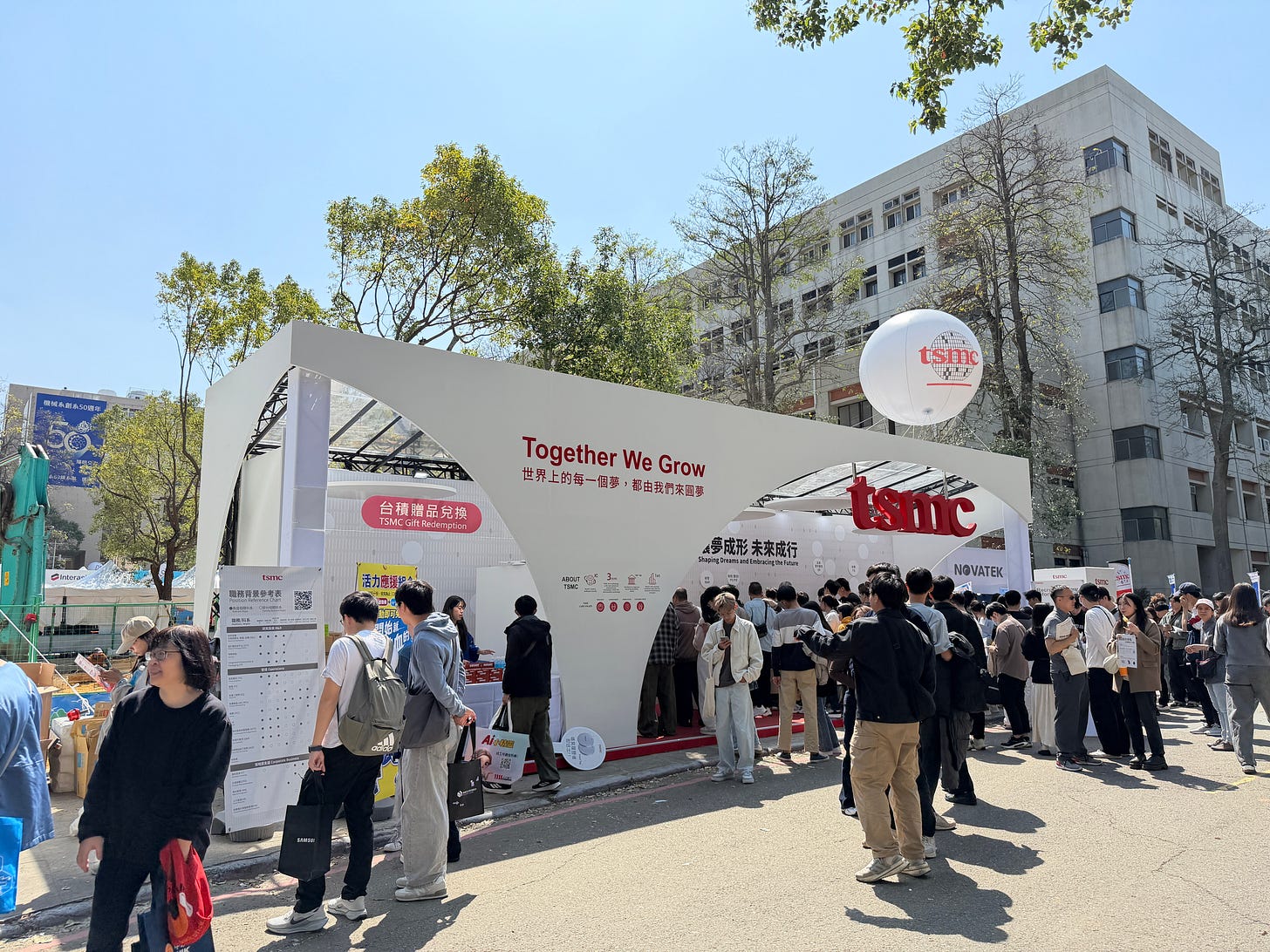
Photo by SemiVision
High-tech output keeps setting records, but the human cost is not written into earnings reports
In recent years, Taiwan’s high-tech industry has entered an unprecedented phase of expansion.
The problem is that output can be replicated quickly. Human recovery capacity cannot.
For a long time, Taiwanese society has held a very typical image of the tech industry: high pay, stability, prestige, even a pathway to upward mobility and a winning life.
That image is not entirely wrong, but it tells only half the story. Because the other side of high pay is often extreme working hours, cross-time-zone standby duty, zero-fault accountability, and a work culture in which “you may take leave, but you can never truly go offline.” Phones are always on. Messages can arrive at any moment. Tools, customers, production lines, yields, schedules, and abnormal-event handling together form a life system that can almost never really shut down.
When a system like this runs for a day, a week, or a month, many people can still endure it. But when it becomes the norm for five years, ten years, or an entire career, the cost begins to surface.
And what Hsinchu is showing now is the first large-scale visibility of that cost.

2月23日
From the traffic jams after earthquakes to minds that cannot clock out
For outsiders, the first real glimpse of Hsinchu’s tension often comes not from press releases or output statistics, but from traffic after an earthquake.
Whenever an earthquake strikes, the main roads leading into the science park quickly fill with cars. In most cities, people’s first instinct after a quake is to check whether their families are safe and whether their homes are damaged. But for many engineers in Hsinchu, the first questions that flash through their minds are often: Did the tools stop? Did the parameters drift? How quickly do I need to get back to the fab?
This is not an exaggeration. It is the city’s real daily life.
Fabs run 24 hours a day without stopping. When an earthquake hits, protection mechanisms may be triggered, and equipment may shift or behave abnormally. Once the process is affected, the result is not only a halt in production on the floor, but also potentially severe yield losses and delivery pressure from customers. So the company has clear SOPs, and people have clear responsibilities. Engineers on leave, support units, equipment teams, and process teams may all be called back within a very short time. You are not deciding whether to return to work. You are calculating how many minutes it will take you to get there.
This kind of reaction mechanism may indeed be part of Taiwan’s semiconductor competitiveness. But at the same time, it keeps the entire city of Hsinchu in a state of chronic tension. Over time, the human nervous system begins to remember that state. Before entering the office, one vibration from a phone is enough to make the heart race. Before a meeting even starts, simply thinking about exception handling and accountability can tighten the chest. Anxiety, palpitations, panic, and sleep disorders gradually stop being the symptoms of a few individuals and become the collective side effects of a high-tech city.
What should most concern outsiders about Hsinchu is not simply that the pressure is high. It is that this pressure has already been normalized.
Engineers are not becoming fragile. The system is using people to the limit.
When we talk about mental health problems in Hsinchu, the easiest mistake is to interpret them as personal failures in emotional management.
But in reality, many cases suggest the exact opposite. Those who walk into psychiatric clinics, begin medication, and seek treatment are often not people who failed to work hard enough. They are people who have been working hard for too long and enduring for too long. They are not lacking resilience. The entire system of work has simply been built on long-term overdraw.
The case of a 42-year-old engineer is a very typical one.
He worked more than 12 hours a day and spent years dealing with technical problems for which there was almost no precedent. To the company, he was a high-value talent. To his family, he was the main breadwinner. To himself, he had never really stopped to ask, “How much longer can I keep going?” Then one day, his body answered the question for him. Within just a few weeks, his weight fell from 80 kilograms to 58 kilograms. He could arrive at the company parking lot, but fear and pressure left him unable to walk into the building.
This is not a single incident. It is a highly representative signal.
Taiwan’s tech industry has long been extremely good at handling process yield, supply chain risk, and capacity bottlenecks. But it has been far less willing to acknowledge another kind of risk: under long-term high pressure, the nervous systems of core talent may break down first. And in the AI era, product cycles are getting faster, customer demands more urgent, cross-functional coordination more intensive, and cross-time-zone response more routine. That pushes an already overstretched work system to an even higher load.
That is the core of the problem.
Over 100,000 annual outpatient visits in Hsinchu related to mood, anxiety, and stress disorders
Antidepressant usage in Hsinchu County increased by 92% over recent years
686 psychiatric outpatient cases per 1,000 people in Hsinchu City, among the highest in Taiwan
Above date from Commonwealth Health Magazine (Taiwan)
What is truly frightening is not long working hours, but the way pressure travels through the entire chain
The pressure in Hsinchu is not simply busyness. It has a very clear structure.
From delivery schedules and quality requirements imposed by major global customers, to internal company performance reviews and accountability systems, down through department managers, frontline engineers, and support staff, pressure is transmitted layer by layer. Customers offer almost no buffer, which means companies can offer almost none either. When companies cannot provide a buffer, managers can only push time and responsibility downward. In the end, those who bear it all are usually the people closest to the front line.
This is, in effect, an invisible “pressure supply chain.”
Taiwan’s semiconductor supply chain is strong not only because its technology is strong and its execution is strong, but because the entire system can rapidly translate upstream pressure into downstream action. But the darker side of that efficiency system is that it leaves very little room for human flexibility. When everything must be immediate, accurate, and traceable, people inside the organization gradually internalize a permanent state of readiness.
And that pressure does not stay at the company.
It enters the home. It enters parent-child relationships. It even enters the logic by which the next generation grows up. The shared characteristic of many Hsinchu science park families is not poor living conditions, but an overly compressed daily rhythm. Parents who are used to high demands, precision management, time slicing, and results-oriented thinking at work can easily carry the same logic into parenting. Children grow up in an environment of intense scheduling and high expectations. Family emotions remain tight over the long term. Intimate relationships become increasingly functional. Care starts to feel more like project management.
As a result, Hsinchu’s anxiety no longer belongs only to engineers. It is gradually becoming a form of city culture.

4月17日
When psychiatric outpatient visits rise, this is no longer a medical issue. It is an industrial issue.
If burnout appears only in a few high-pressure occupations, it can still be seen as an isolated workplace phenomenon. But when antidepressant use, psychiatric outpatient density, and treatment for anxiety and mood disorders all rise across an entire region, the nature of the issue changes.
It is no longer merely a problem for the healthcare system to manage. It is a warning signal being released by the industrial model itself.
This matters especially for Taiwan. Semiconductors and high technology are not ordinary industries. They are integrated pillars of national security, economic growth, capital markets, and international standing. Precisely because of that, we have become too accustomed to telling a story in which success is mandatory and vulnerability is unacceptable. People are willing to discuss talent shortages, factory construction, advanced packaging bottlenecks, overseas expansion, and supply chain resilience. But very few are willing to directly confront a deeper question: if the most critical talent pool is beginning to show signs of systemic depletion, is that not also part of industrial resilience?
Today, Hsinchu is already placing the answer right in front of us.
True industrial resilience is not just the ability to call people back to the factory within minutes after an earthquake. It is not just how quickly production can recover after equipment failure. And it is not only whether capacity can still be expanded when global demand surges. At a deeper level, resilience means whether this system can allow people to work, live, and care for their families sustainably under pressure, instead of slowly exhausting themselves beneath the packaging of high pay and a strong sense of responsibility.
If this issue is not addressed, then the first thing to fail in the future may not be technology. It may be people.

2025年3月11日
What Taiwan must compete on next is not only advanced process technology, but a more advanced civilization of work
From a broader perspective, what Hsinchu is showing right now is not merely local pressure. It is a turning point in Taiwan’s development model.
Over the past several decades, Taiwan’s greatest success has been building a world-leading industrial system defined by efficiency, discipline, and dense coordination. But in the next phase, Taiwan cannot rely only on making the same model faster, larger, and harsher. Because as the AI era arrives, as global manufacturing division of labor is reorganized, and as the cost threshold for advanced processes and advanced packaging keeps rising, what will ultimately determine the ceiling of competitiveness may not be factories at all, but whether people can keep enduring.
That is a question more fundamental than output.
If the most capable people in a city live for years on the edge of insomnia, anxiety, emotional imbalance, and family disorder, then no matter how wealthy that city becomes, it can hardly be called truly healthy. If companies continue to treat psychological support as a welfare benefit rather than part of organizational design; if governments continue to treat rising demand for mental health services as a social trend rather than an issue of industrial governance; if society as a whole continues to assume that high pay should be exchanged for high pressure, and high output should justify high depletion, then today’s Hsinchu will only be a preview of many more tech cities to come.
So the real question this article wants to ask is not simply, “Hsinchu, are you okay?”
It is this: as Taiwan prepares to chase the next trillion in output, the next wave of AI gains, and the next round of global capacity expansion, are we ready to formally include the human cost in the equation of competitiveness?
Because semiconductors may be Taiwan’s sacred mountain, but what allows that mountain to stand is not that machines never fail or fabs never stop. It is that a group of people has been holding the line there year after year.
If even those people are beginning to reach their limit, then perhaps what truly needs to be redesigned is not only the work system, but our entire idea of what success means.
3月19日

4月9日


PreviousNext
TopLatestDiscussions








See all