A Child’s Wish, a Corporate Response, and the Power of Human Warmth
A Child’s Wish, a Corporate Response, and the Power of Human Warmth
- Source: SemiVision
- Author: SEMIVISION
- Published: 2026-04-19T18:42:42+08:00
- URL: https://tspasemiconductor.substack.com/p/a-childs-wish-a-corporate-response (1) A Child’s Wish, a Corporate Response, and the Power of Human Warmth


A Child’s Wish, a Corporate Response, and the Power of Human Warmth
Original Article By SemiVision Research [Reading time: 8 mins]

Apr 19, 2026
∙ Paid
When Companies Pursue More Than Efficiency: What Truly Moves People Is Not PR, but Warmth

A Child’s Wish, a Corporate Response, and the Power of Human Warmth
In this era, every day we see companies talk about growth, efficiency, market share, valuation, technological leadership, supply chain resilience, and global expansion. All of these things matter. In many ways, they have become the basic language of modern business.
But sometimes, what truly makes people remember a company, a business leader, or even a brand is not the next quarter’s earnings, nor a product launch, but a very small and very real moment: when someone is at their most vulnerable, most helpless, and closest to the end of life, is a company still willing to respond in a human way?
Fifteen-year-old Liv Perrotto was battling cancer. Her greatest wish was to speak with Elon Musk. She carefully wrote down eight questions. Like any child still full of curiosity about the world, her questions touched on technology, anime, travel, games, and even a small dog mascot she had designed herself. On the surface, the questions felt light, even innocent. But that is precisely why they are so heartbreaking. Because this was not a media briefing, not a business interview, and not a carefully designed brand collaboration. It was a child, in the limited time she had left, still reaching out to the world.
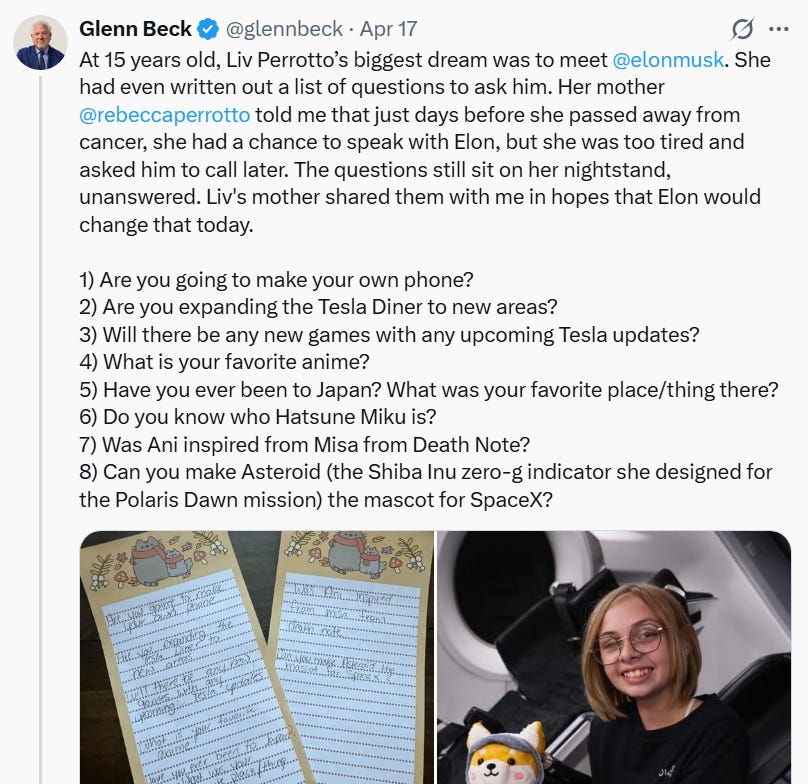
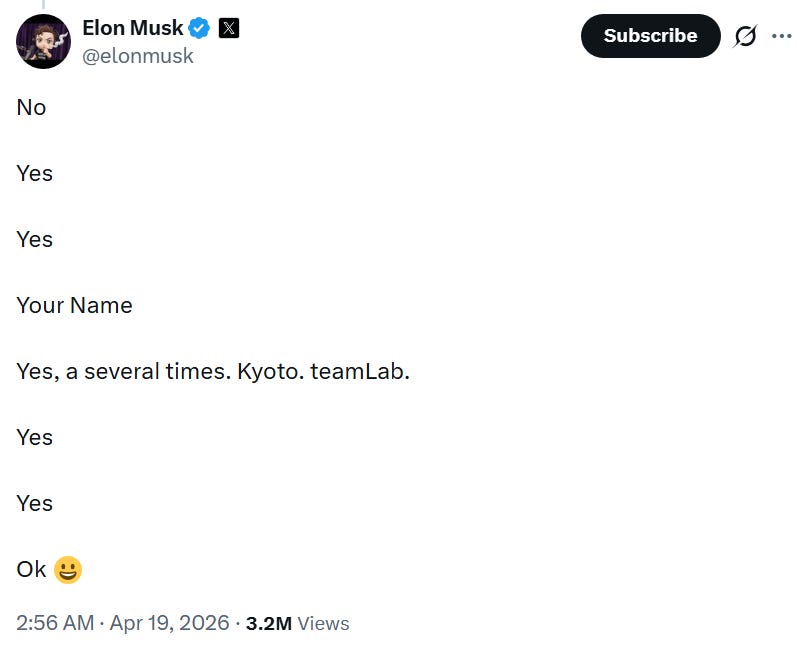
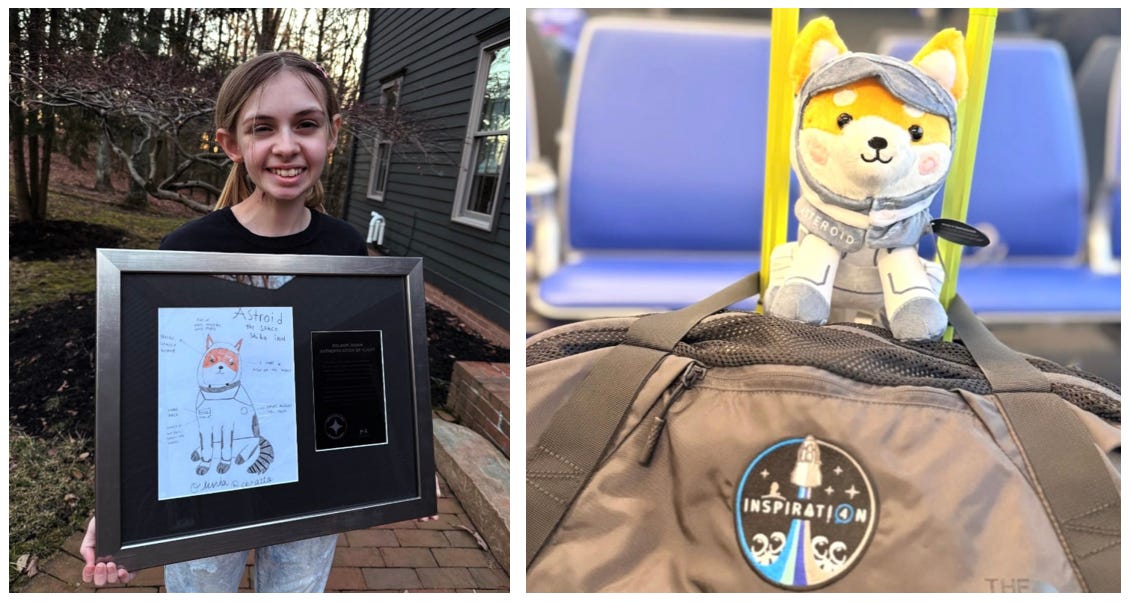
What made the story even more moving was that her wish was not ignored. Musk saw it, and he answered the questions one by one. There was no grand speech, no overproduced statement, no heavy packaging—just direct, real responses. Later, Liv’s final request—that the Shiba Inu dog she designed could become a mascot for SpaceX—was also fulfilled. The dog, namedAstroid, truly appeared in SpaceX imagery and symbolism.
For many people, the first reaction to a story like this is simple emotion. That is natural. But if we look one layer deeper, what makes this worth discussing is not just kindness itself. It is that the story reveals something increasingly rare: corporate warmth.
The Hardest Thing for a Company to Replicate Is Not Technology, but How It Treats People
Competition today is intense. Most companies are trying to make processes faster, costs lower, decisions quicker, and execution more standardized. Over time, we have also become used to using those indicators as the main measure of whether a company is excellent. As a result, whether a company has warmth can begin to seem unimportant, or even somehow “unprofessional.”
But the truth is that truly great companies are never just efficient machines. They are also organizations capable of understanding people, respecting people, and responding to people.
Markets can buy equipment. Competitors can copy strategy. Capital can build capacity. Even business models can be imitated surprisingly quickly. But a company’s internal attitude toward people is far harder to duplicate. That lives in culture. It lives in leadership choices. It lives in the smallest daily responses inside an organization.
When a child writes down eight questions, those questions could easily have been swallowed by the endless flow of information. They could just as easily have been dismissed as having no commercial value. But they were not. What does that tell us? It tells us that even inside a cold and highly scaled system, someone was still willing to put human feeling high on the priority list. It may seem like a small act, but it carries enormous meaning.
Because all companies with real warmth do the same thing at their core: they do not let scale destroy empathy, and they do not let process replace humanity.
Warmth Is Not Performance. It Is the Willingness to Do the Right Thing Where There Is No KPI
Whenever people talk about corporate warmth, some immediately become suspicious. Is this PR? Is this image management? Is this carefully staged branding?
That skepticism is understandable. In the age of social media, too many emotions are quickly commodified, and too many stories are turned into traffic. It is hard not to be cautious.
But genuine warmth has a surprisingly simple test: it often shows up in places that do not directly generate KPI, yet it is still expressed.
A child’s eight questions do not bring in factory orders. They do not immediately raise gross margins. They do not improve operating efficiency. They are not what capital markets care most about, and they are not the most eye-catching page in a board presentation. From a purely commercial perspective, ignoring them would not affect business operations at all.
That is exactly why choosing to respond feels so precious.
Because it shows that a company—or a leader—still retains a certain capability: not just seeing numbers, but seeing people; not just understanding markets, but understanding emotion; not just pursuing victory, but protecting values that are soft, fragile, and deeply important.
That is actually a very advanced form of strength. Not because it is complex, but because in a highly competitive system, people who can preserve that kind of sensitivity are becoming rarer and rarer.
What Society Truly Needs Is Not Just Successful People, but People Who Turn Power Into Kindness
We often encourage young people to succeed, to work hard, to be ambitious, and to be unafraid of competition. None of that is wrong. The problem is that if a society worships success but no longer expects successful people to remain kind, what it leaves behind may simply be stronger systems, not a better civilization.
The reason Liv’s story stays with people is not because it is dramatic. It is because it makes many people believe again that beyond power, fame, wealth, and speed, there can still be a more basic kind of human response.
That kind of response has enormous value. It tells people in pain that they are not invisible. It tells bystanders that the world has not gone completely cold. It tells young people that what makes someone truly admirable is not just how high they stand, but whether, while standing that high, they are still willing to bend down and answer a child.
That is where positive energy gains its real power.
Positive energy is not pretending the world has no suffering. It is not covering grief with a simple “stay strong.” Real positive energy is choosing to do something gentle even after recognizing that life can be cruel, reality can be unfair, and time can be irreversible. Not because it can change every ending, but because it can leave a little less regret and a little more light in the world.
For Companies, Warmth Is Not Optional. It Is the Starting Point of Long-Term Trust
Many companies believe trust comes from product quality, reliable delivery, technological leadership, and service capability. Those things are absolutely foundational. But they are not the whole story.
Long-term trust also comes from a deeper feeling: are you an organization worth trusting? When something is not written into the contract, when a situation falls outside the process, when the person in front of you is not a customer ID but a living, breathing human being—what do you do?
The truest shape of corporate culture is not revealed in annual slogans. It is revealed in moments like these.
A company with warmth is not necessarily perfect. It does not mean it will never make mistakes, nor that it will always be more efficient than others. But it is more likely to make the right choice when it matters. Because its internal standard of judgment is not reduced only to maximizing interests. It still leaves room for understanding people, society, and the emotional consequences of decisions.
Those are often the companies that last longer.
Because eventually, the market realizes that strong brands are not built by exposure alone. They are built through real responses, accumulated over time. Products may make people buy.
Technology may make people admire. But warmth is what makes people remember—and what makes them willing to trust you for much longer.
For Ordinary People, This Story Is Also a Reminder: Kindness Is Never Small
There is another reason this story deserves to be written down. It is not only about companies. It is also a reminder that each of us can become a small source of light in someone else’s life.
Not everyone has vast resources. Not everyone can decide how a company acts. Not everyone has the power to fulfill another person’s dream. But everyone can choose how to respond to others.
You can reply to a message sincerely.
You can remember someone’s wish.
You can offer companionship before offering advice when someone is at their darkest point.
You can preserve a little uncalculated kindness in a world that is getting faster, louder, and more utilitarian.
Do not underestimate these things. Very often, what helps a person keep going is not a grand principle, but the fact that they were once treated with genuine sincerity.
Liv did not get to live a long life. But what she left behind is not only a heartbreaking story. She also reminded many people that a child’s curiosity, sincerity, and imagination can still break through the hardest shell in the world. Her questions seemed light, but they revived things many adults had already lost: passion for the world, imagination about the future, and faith in connection.
And what is most precious is that this faith was not betrayed.
In the End, the True Height of a Company Is Not How Far It Stands Above People, but How Close It Stays to Them
This era does not lack impressive companies, nor does it lack brilliant leaders. What is truly scarce are companies that, even after growing larger, have not forgotten people.
When a company becomes strong enough, it can certainly choose to operate with greater efficiency. But if it is also willing to devote part of that strength to responding to vulnerability, respecting a wish, and honoring kindness, then what it builds is not just business success, but a deeper form of social value.
Corporate warmth is not weakness. On the contrary, it is a higher form of strength. Because only those who are truly strong can afford to be gentle. Only mature organizations understand that beyond speed, there are things more important than speed.
Liv’s story reminds us that the world may be vast, systems may be rigid, and reality may be heavy. But that small, sincere human response between people can still break through so much. And that is the kind of positive energy most worth cherishing today.

Thank you to Elon Musk for this act of kindness. It truly moved me. In an age defined by efficiency, speed, and commercial return, the willingness to pause and sincerely respond to a child’s final wish is itself a rare form of gentleness. This was not just a simple reply, nor merely the closing of a dream. It allowed many people to believe again that even inside the largest, busiest, most machine-like corporate systems, the light of humanity can still exist. And that kind of gesture brings more than emotion—it brings a real force that can illuminate people’s hearts.

4月16日


PreviousNext