Molex’s Teramount Deal Signals a Shift Toward Scalable CPO Infrastructure
Molex’s Teramount Deal Signals a Shift Toward Scalable CPO Infrastructure
- Source: SemiVision
- Author: SEMIVISION
- Published: 2026-04-17T09:25:32+08:00
- URL: https://tspasemiconductor.substack.com/p/molexs-teramount-deal-signals-a-shift (1) Molex’s Teramount Deal Signals a Shift Toward Scalable CPO Infrastructure


Molex’s Teramount Deal Signals a Shift Toward Scalable CPO Infrastructure
Original Article By SemiVision Reserach [Reading time: 7 mins]

Apr 17, 2026
∙ Paid
On April 15, 2026, Molex announced an agreement to acquire Teramount, an Israel-based developer of detachable fiber-to-chip connectivity solutions for silicon photonics and co-packaged optics (CPO).

Teramount’s detachable, passive-alignment fiber-to-chip connectivity solutions for CPO enable faster data transfer rates for AI, cloud computing and 5G workloads
Combined engineering expertise focused on Co-Packaged Optics R&D encompasses Teramount’s Israel-based design center
Acquisition builds on strong commercial relationship following Koch Disruptive Technologies’ lead investment in Teramount’s $50M Series A financing in 2025
At first glance, this may look like a conventional strategic acquisition: a large connectivity company buying a promising photonics startup. But in reality, this deal is far more important than a simple portfolio expansion. It reflects a deeper industry transition now unfolding inside AI infrastructure:
Co-packaged optics is moving from concept validation to manufacturable system deployment.
In that transition, the key bottleneck is no longer just the switch ASIC, the photonic integrated circuit (PIC), or the external laser source. The real challenge is increasingly concentrated at one of the most overlooked but most difficult interfaces in the stack:
How optical fiber is coupled to the photonic chip in a way that is scalable, serviceable, and manufacturable at high volume.
That is exactly why Teramount matters.

The Missing Link in the CPO Stack
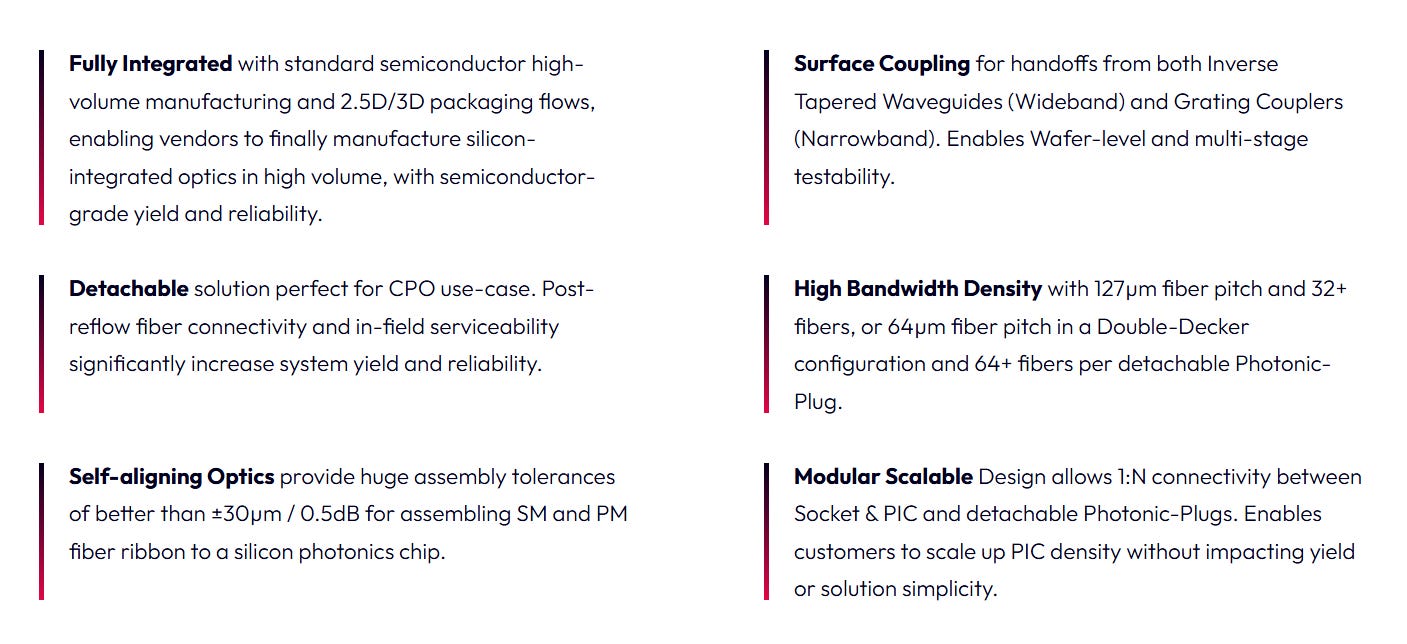
Teramount’s TeraVERSE platform is built around a detachable, passively aligned, wafer-level fiber-to-chip interface. This may sound like a niche packaging detail, but in reality it addresses one of the most fundamental problems in bringing CPO into hyperscale deployment.
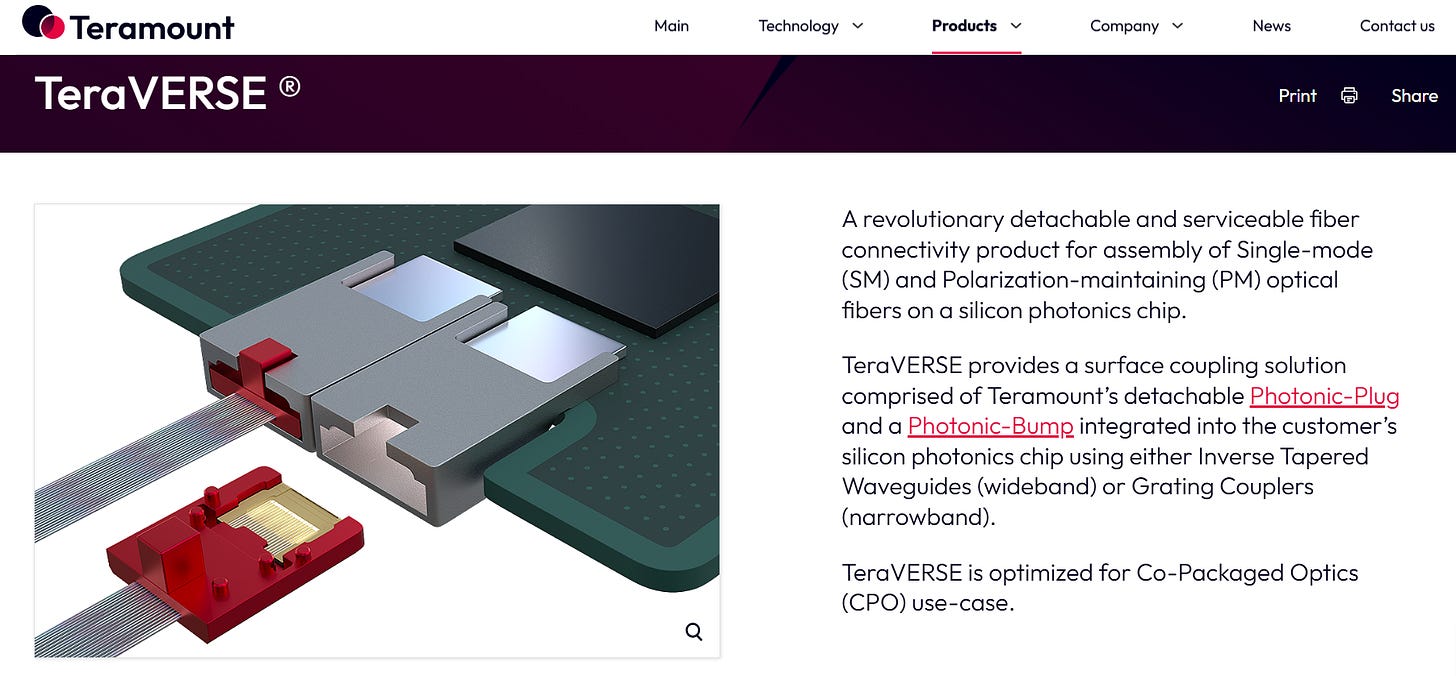
For years, CPO has been promoted as the long-term answer to the bandwidth, power, and reach limitations of electrical interconnects. As AI clusters scale toward higher radix switching, denser accelerator fabrics, and faster per-lane signaling, the industry increasingly needs optics to move closer to the silicon. That part is widely understood.
What is less appreciated is that once optics moves into or near the package, the manufacturing challenge becomes dramatically harder.
Fiber attach is not a trivial step. It is a yield-sensitive, alignment-sensitive, and reliability-sensitive process. Traditional active alignment methods, while precise, are difficult to scale economically. They often require iterative optical tuning during assembly, more complex tooling, longer cycle times, and tighter process control. That may be manageable in low-volume photonics systems, but it becomes a serious constraint when CPO is expected to ship in data-center-scale volumes.
Teramount’s passive alignment approach is strategically valuable because it aims to eliminate much of that complexity.
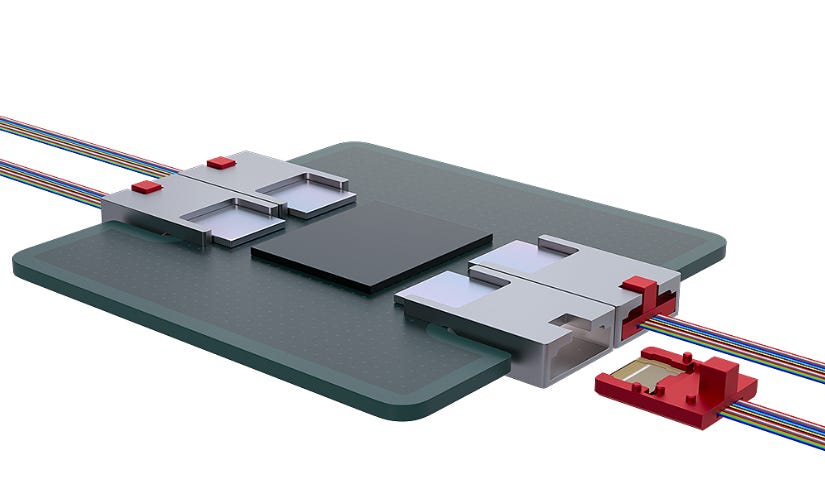
Source: Teramount
Why Passive Alignment Matters
In photonic packaging, the distinction between active alignment and passive alignment is critical.
Active alignment typically involves adjusting the position of a fiber or optical element while monitoring optical power in real time, then fixing the part in place once optimal coupling is achieved. This can deliver strong optical performance, but it is slow, expensive, and difficult to scale across many channels.
Passive alignment, by contrast, relies on precisely defined mechanical alignment features, wafer-level structures, and tighter fabrication uniformity so that components can self-align or align deterministically without iterative optical tuning.
This is a major shift in manufacturing philosophy.
If CPO is ever going to move beyond demonstrations and early customer engagements into repeatable high-volume production, the industry needs semiconductor-like packaging flows rather than lab-style optical assembly. Teramount’s value lies in enabling a more manufacturable path.
Its detachable architecture adds another important advantage:field serviceability.
That point cannot be overstated. One of the most persistent concerns around CPO has been operational practicality. If the optical interface is too permanent, too fragile, or too difficult to replace, hyperscale operators may hesitate to adopt it broadly. A detachable fiber-to-chip interface creates a more pragmatic maintenance model. It improves repairability, facilitates system replacement strategies, and reduces the operational risk of integrating optics much closer to high-value silicon.
In other words, Teramount is not just solving an optical coupling problem. It is solving a deployment problem.

2025年4月3日
This Is Not Just a Technology Acquisition — It Is a Manufacturing Bet
From Molex’s perspective, this acquisition is best understood as a manufacturing and systems integration bet rather than a pure technology purchase.
Molex has long been strong in high-speed interconnects, copper connectivity, optical solutions, and system-level infrastructure. It is not entering CPO from scratch. The company has already been expanding across near-ASIC copper, optical interconnect architecture, and broader AI data-center connectivity platforms.
Molex is not trying to become merely another photonics component vendor. It is positioning itself to become a system-level enabler of next-generation AI interconnect architectures. To do that, it must control not only cables and connectors, but also the critical physical interface between photonic chips and deployable network infrastructure.
Teramount provides that missing piece.
This is especially important because the next phase of AI infrastructure competition will not be won only by who has the best switch silicon or the fastest optical engine. It will be won by who can deliver a complete, reliable, manufacturable, and supportable system architecture.
That includes:
optical coupling
mechanical tolerances
packaging compatibility
thermal stability
fiber management
assembly throughput
yield control
field replacement capability
These are not secondary details. These are the conditions for commercialization.
Why This Investment Makes Strategic Sense
From a strategic point of view, Molex is making this investment for several reasons.
- To secure a key control point in the future CPO architecture
As AI infrastructure scales, the optical interface between chip and fiber becomes more important. Whoever controls that interface gains influence over system design, packaging choices, module architecture, and manufacturing flow. This is not just about owning an IP block. It is about owning a structural chokepoint in the optical data path.
- To shift from component supplier to platform enabler
The market is evolving from discrete component competition toward integrated solution competition. Customers increasingly want fewer integration burdens, faster qualification cycles, and a more complete supply partner. By absorbing Teramount, Molex can strengthen its position as a one-stop provider for future optical interconnect systems.
- To prepare for the scaling phase of AI optical deployment
The timing is important. This acquisition suggests Molex believes the industry is approaching the stage where CPO is no longer just a roadmap discussion. The next question is not whether CPO is technically attractive, but whether it can be built and deployed at volume. That is where Teramount’s passive, detachable, wafer-level approach becomes commercially relevant.
- To build long-term differentiation before the market fully matures
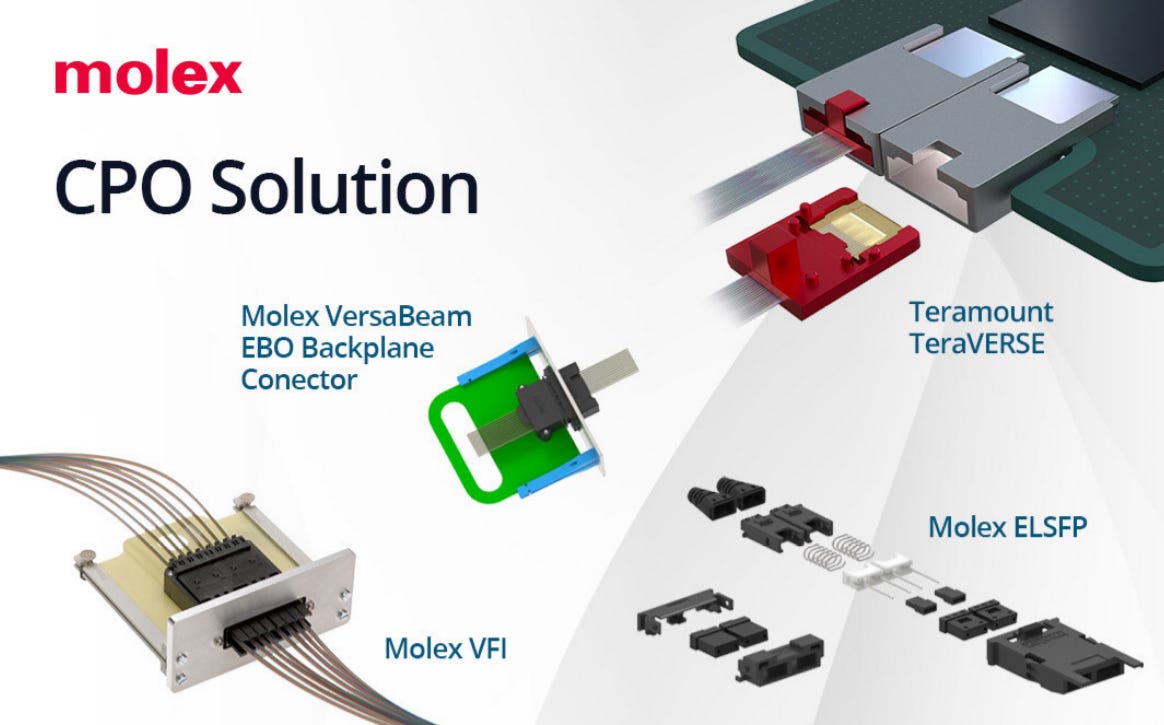
Combination of Molex VersaBeam EBO Backplane Connector and Teramount TeraVERSE detachable fiber connector boosts serviceability and slashes deployment time by 85%
Enhanced CPO toolkit with Versatile Format Interconnect and External Laser Source Small Form Factor Pluggable increase density by 50% and cut system power consumption
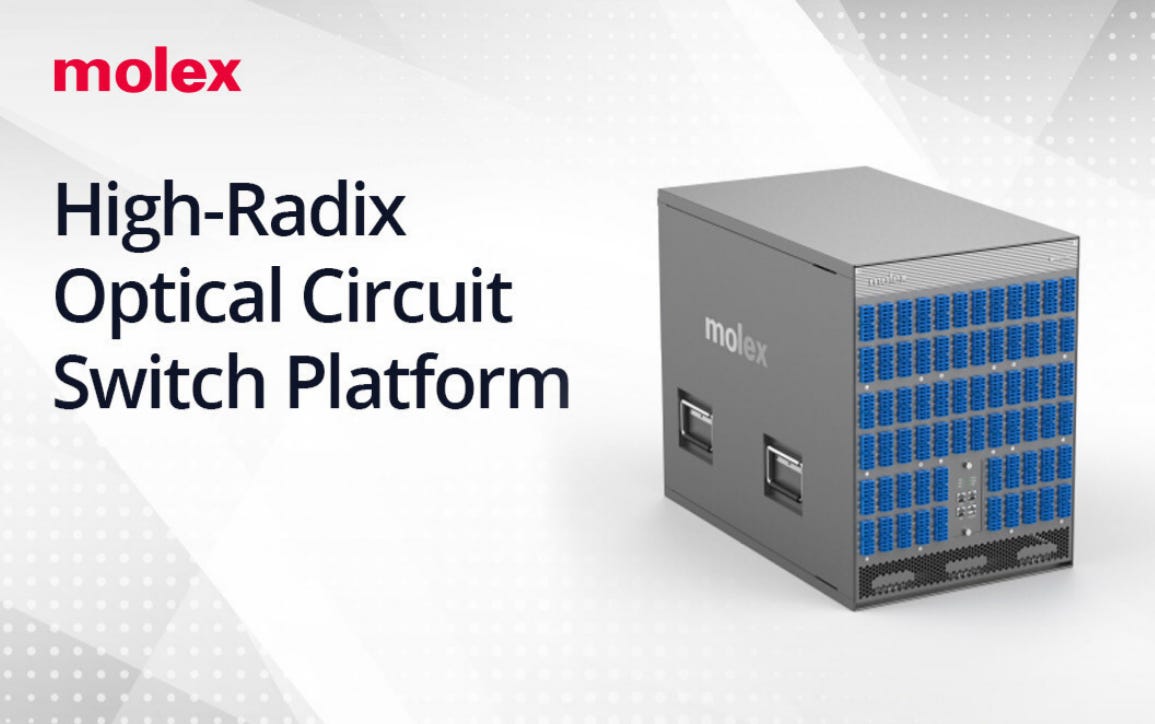
Molex High-Radix Optical Circuit Switch Platform improves GPU cluster scalability and efficiency by enabling largescale, reconfigurable optical connectivity with minimal network overhead
3月26日
The Broader Technical Implication
The deeper meaning of this acquisition is that the CPO debate is evolving.
For years, industry discussions around co-packaged optics focused heavily on performance metrics: bandwidth density, energy efficiency, signal integrity, and reach. Those remain essential, but they are no longer enough. The industry is now entering the phase where manufacturability, assembly architecture, and serviceability are becoming equally decisive.
This is a sign of maturity.
When a technology sector shifts attention from peak performance to packaging flow, installation model, and lifecycle management, it usually means commercialization is getting closer.
In that sense, Molex’s acquisition of Teramount is not just about improving one optical interface. It is a signal that the center of gravity in CPO is moving from laboratory-grade innovation to production-grade infrastructure engineering.

Source: Teramount
SemiVision View
From a SemiVision perspective, the strategic logic is clear:
Molex is not simply buying a photonics startup. It is buying a scalable entry point into the future AI optical interconnect stack.
Teramount’s detachable, passive-alignment fiber attach technology may not be the most visible part of the system, but it could become one of the most indispensable. In the CPO era, the winners will not necessarily be the companies with the most impressive demos. They will be the ones that can turn advanced photonic integration into repeatable manufacturing, operational reliability, and deployable infrastructure.
That is why this deal matters.
The real investment thesis is not about a single product. It is about securing a strategic position in the coming transition from pluggable optics and near-package interconnects toward truly scalable co-packaged optical systems.
If summarized in one sentence:
Molex is acquiring Teramount not just to add another optical technology, but to secure one of the most critical manufacturing and serviceability layers required for mainstream CPO adoption.
This is a forward-looking move aimed at the next stage of AI infrastructure evolution. As optical interconnects move closer to the chip, the companies that control the practical interface between silicon, fiber, and large-scale deployment will hold disproportionate strategic value.
And that is exactly the position Molex is trying to secure.

2025年6月24日


PreviousNext
TopLatestDiscussions








See all