From APA Hotels to TSMC: The Industrialization of Service as Competitive Strategy
From APA Hotels to TSMC: The Industrialization of Service as Competitive Strategy
- Source: SemiVision
- Author: SEMIVISION
- Published: 2026-04-14T11:00:35+08:00
- URL: https://tspasemiconductor.substack.com/p/from-apa-hotels-to-tsmc-the-industrialization (1) From APA Hotels to TSMC: The Industrialization of Service as Competitive Strategy


From APA Hotels to TSMC: The Industrialization of Service as Competitive Strategy
Origianl Article By SemiVision Research [Reading time: 10 mins]

Apr 14, 2026
∙ Paid

This trip to Hiroshima, Japan is for attending this week’sICEP 2026 forum. I’m staying at an APA Hotel, and the moment I walked into the room, I was immediately drawn to a book with a very distinctive cover. So I picked it up and read a bit—only to realize it’s about the management philosophy of APA Hotel’s co-founder, Fumiko Motoya.

Many people’s first impression of APA Hotels is its striking, almost impossible-to-ignore brand identity. But if you look deeper into Fumiko Motoya’s management philosophy, you realize her true strength is not simply in running hotels—it lies in turning “service” into a system that can be replicated, scaled, and even industrialized. In fact, the essence is already laid out clearly on the cover of her book: “The Secret Behind APA Hotel’s Explosive Success,” “Top-Tier Hospitality,” and “Practical Methods to Turn Crisis into Opportunity.” This is not merely a book about hotel management, but a playbook on branding, standardized execution, and counter-cyclical expansion.
One of the most important takeaways from the book is how it redefines the meaning of “service.” In Motoya’s framework, service is not just about politeness or a friendly attitude—it is a strategic tool that creates brand memory, differentiates the business, and ultimately drives revenue growth. From room design and amenity placement to brand visibility and every customer touchpoint, each detail is engineered not just to complete a service, but to ensure guests remember the brand. In other words, service is not a cost—it is a mechanism for competitive differentiation.
More importantly, this philosophy is not built solely on refined hospitality—it carries a strong sense of strategic aggression. Throughout its growth, APA has faced controversies, market fluctuations, and external criticism. Yet instead of pulling back during downturns, Motoya’s approach is to increase visibility, reinforce brand presence, and continue investing and expanding even in low cycles. This ability to convert crisis into growth momentum reflects a clear counter-cyclical strategy. APA’s success, therefore, is not accidental—it is rooted in a deliberate conviction: when the market hesitates, the brand must move forward.
Underlying all of this is an almost extreme level of execution and standardization. The book repeatedly emphasizes that every detail of service must be standardized, and every employee must operate with the same language and rhythm. Fixed greetings, fixed processes, and consistent brand presentation are not about rigidity—they are about ensuring stability and consistency, enabling the brand to scale across locations and maintain quality at scale. This is, in essence, the industrialization of service—transforming what was once dependent on individual performance into a system capability.
From this perspective, the book is not really about hotels—it is about a deeper business question: how to build a scalable, repeatable, and continuously expandable service system through experience design, strong execution, and high visibility. That is precisely why its insights extend far beyond the hospitality industry.
Any sector that depends on consistency, trust, and global scalability can draw from the same logic. And this is also why, when we extend these ideas to TSMC, we begin to see a powerful common thread: the highest form of service is not attitude—it is the ability to make customers place absolute trust in the entire system.
How Fumiko Motoya Turned Personal Branding into Business Opportunity
Fumiko Motoya, President of APA Hotels, has successfully transformed her distinctive personal branding strategy into a powerful commercial engine. At the core of her approach is a tight integration between personal identity and corporate brand—using bold, highly visible tactics to amplify brand awareness and convert attention into tangible business opportunities.
Linking Personal Image with the Brand
One of Motoya’s most recognizable strategies is the pervasive use of her own image across the APA ecosystem. Her portrait—often in a glamorous, highly stylized appearance—can be found everywhere: on large outdoor billboards in city centers, on bottled water provided in hotel rooms, and even on packaged food products offered by the hotel.
While this approach has sparked controversy, Motoya views it as an opportunity rather than a risk. In a crowded and highly competitive hospitality market, standing out is more valuable than blending in. By consistently placing herself at the center of the brand, she ensures that APA Hotels remain highly memorable.
Through this strategy, Motoya has not only strengthened customer recall of APA Hotels but also effectively fused her personal identity with the corporate brand—turning visibility into differentiation, and differentiation into business value.

From APA Hotels to TSMC: When “Hospitality Philosophy” Becomes a Competitive Advantage in Manufacturing
For many people, the first impression of Japan’s APA Hotels is not the price, location, or even room size, but two things: a highly consistent brand identity and a strikingly distinctive service and management style. No matter which APA you walk into, from the lobby atmosphere and front desk procedures to room layout, amenity placement, and spatial flow, everything carries a strong sense of familiarity. This consistency is not accidental—it reflects a deliberate philosophy: turning service into a system that can be replicated, scaled, and quality-controlled.
If we extend this logic to high-tech manufacturing—especially TSMC—we begin to see that, while the two operate in entirely different worlds on the surface, their underlying management philosophies are remarkably aligned.
APA runs hotels; TSMC runs fabs. One serves travelers; the other serves the world’s most advanced IC design companies. Yet both are ultimately solving the same fundamental problem:
As scale increases, how do you ensure that every site, every process, and every delivery maintains the same level of quality, efficiency, and trust?
This is where the true power of standardization lies.
Service Is Not About Smiles—It’s About Reproducible Quality
When people talk about service, they often think of attitude—politeness, friendliness, warmth. But at a higher level, service is not about whether someone smiles; it is about whether customers can consistently receive predictable outcomes.
APA’s success is not simply because its staff are courteous, but because it has decomposed service into standards that can be executed, trained, and audited. The guest experience—from check-in to check-out—does not depend on whether a particular employee is having a good day, nor on whether a specific branch has exceptional management. Instead, it depends on a system designed to minimize variability.
This logic maps almost perfectly onto TSMC.
TSMC’s customers are not merely buying wafers—they are buying something far more critical: stability, predictability, discipline, and trust in yield and delivery. For customers, the real risk is not cost, but uncertainty; not specifications, but inconsistency. True competitiveness in advanced nodes is not just about transistor performance—it is about whether the entire manufacturing system can be trusted.
In this sense, TSMC’s “service” is not traditional hospitality. It is a higher-order form of industrial hospitality:
Giving customers the confidence to entrust you with their most critical products, their most sensitive roadmaps, and their most expensive tape-outs.

3月31日
When Every Fab Looks the Same: Not Boring, but a Management Philosophy
Anyone who has visited TSMC’s fab sites tends to share the same immediate impression: they all look remarkably similar.
From building exteriors and entrance designs to internal workflows, facility planning, cleanroom logic, office environments—even down to overall color tones and spatial order—there is a high degree of consistency. To outsiders, this may feel overly standardized, even “industrialized to the point of lacking personality.” But for TSMC, this is not a drawback—it is a capability.
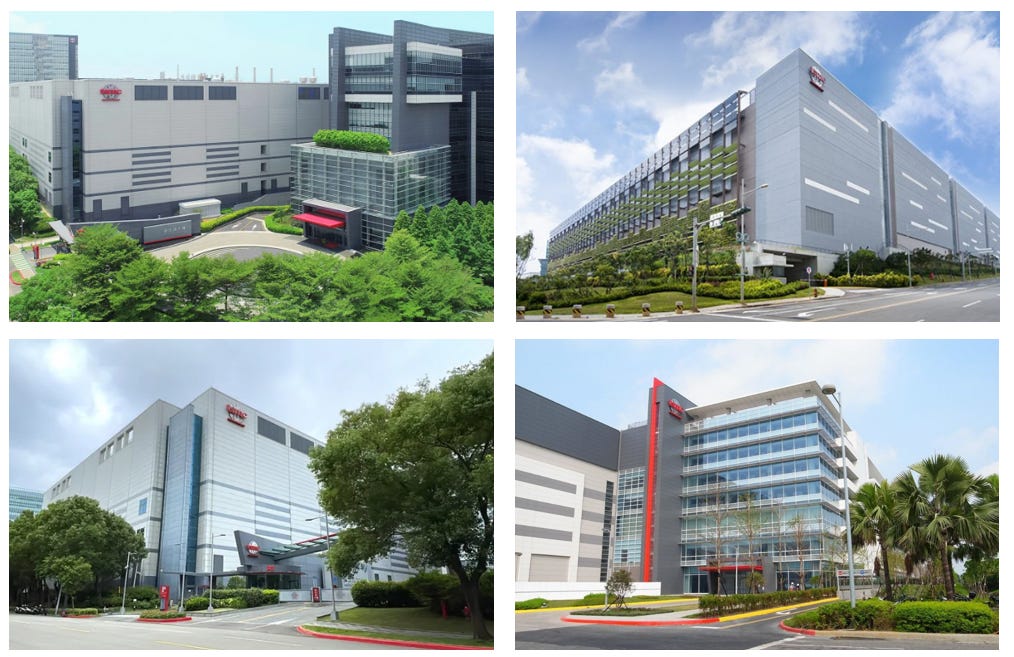
Because when every fab operates with similar design language, structure, and management rhythm, what it creates is not aesthetic repetition, but substantial operational leverage.
First, it reduces the learning curve.
An engineer rotating from Fab A to Fab B does not need to relearn an entirely different management system or operational logic. Equipment, maintenance, process, and facility teams can also integrate much faster across sites. In advanced manufacturing, time equals capacity, and capacity equals revenue. Shortening the adaptation period directly translates into competitive advantage.
Second, it reduces the probability of errors.
What factories fear most is not small mistakes, but systemic deviations caused by excessive variation. When workflows, spaces, and interfaces are consistent across fabs, human behavior becomes easier to calibrate, and operational risks are easier to control. At its core, this consistency serves one purpose: protecting yield.
Third, it strengthens brand trust.
When customers visit Hsinchu, Tainan, or Arizona, they do not feel like they are dealing with three entirely different companies—they experience a single, extended TSMC system. This visual and operational consistency sends a clear signal:
No matter where production takes place, we want you to experience the same discipline and the same level of quality.
This is very similar to APA Hotels. When you see a familiar lobby style and a familiar spatial layout, you know you are entering the same system. For guests, that creates a sense of comfort; for TSMC’s customers, it creates something even more critical—manufacturing trust.
Standardization Is Not Rigidity—It Is What Enables Complex Technologies to Scale
Standardization is often misunderstood. Many assume it implies a lack of flexibility, creativity, or variation. In reality, the more advanced, complex, and precision-driven an industry becomes, the more it depends on strong standardization as its foundation.
The reason is simple: without standardization, complex systems cannot scale.
If APA had not standardized its service processes, it would not have been able to expand rapidly while maintaining consistent brand quality. Likewise, if TSMC had not standardized its fab construction, layout design, equipment deployment, process control, anomaly handling, and quality verification, it would be impossible to replicate leading-edge mass production capabilities across the globe.
Many people focus on TSMC’s most visible strengths—technology nodes like N3, N2, and A16, or advanced packaging platforms such as CoWoS and SoIC. But what truly enables these technologies to move from development to high-volume manufacturing is not the performance curves shown in presentations—it is the underlying standardization system that may appear mundane, yet is absolutely critical.

Advanced nodes are not laboratory science—they are industrialized science.
Achieving a result once does not create value; delivering it consistently ten thousand, a hundred thousand, or millions of times—that is what defines competitiveness.
And this is precisely where TSMC’s real strength lies: it takes some of the most difficult challenges in the world and turns them into highly disciplined, standardized, and continuously optimized manufacturing systems.

2025年5月17日
The Highest Form of Service Is Making Customers Feel No Need to Worry
If we distill the philosophy of APA’s president into a single sentence, it would be this:
The best service is not about surprising customers once—it’s about reassuring them a hundred times.
This idea applies perfectly to TSMC.
TSMC’s customers—companies like Apple, NVIDIA, AMD, Qualcomm, and Broadcom—are not simply looking for a foundry. What they need is a manufacturing partner that can support their product cadence, capital allocation, supply chain strategy, and competitive positioning over the coming years. This is not about booking a room; it is about entrusting an entire product lifecycle.
That is why TSMC’s “service” is not just customer support, nor is it merely a sales response. It is a deeper industrial commitment:
Your process roadmap—I can deliver it.
Your yield targets—I can achieve them.
Your production timeline—I can meet it.
Your global capacity expansion—I can replicate it.
Your quality standards—I will not let them vary by location.
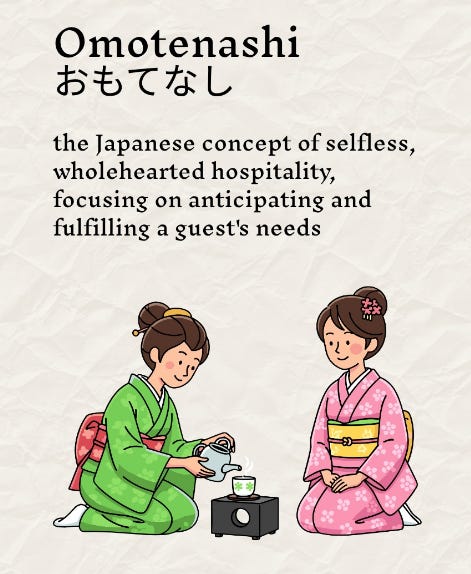
This is the manufacturing equivalent of omotenashi.
It is not about warm towels or polite greetings. It is about using systems, engineering discipline, and consistency to ensure that even in the most critical, costly, and failure-intolerant moments, customers can feel completely at ease.
From Hospitality to Foundry: The End of Brand Is Trust, and the Foundation of Trust Is Standardization
APA builds its brand through a unified style; TSMC builds trust through a unified system.
APA turns service into part of the product; TSMC turns manufacturing discipline into part of the service.
APA ensures that the moment a guest walks in, they know it’s APA; TSMC ensures that the moment a customer steps into any fab, they know it’s TSMC.
The most important insight here is this:
In high-end competition, the strongest companies are often not those that showcase the most impressive innovations, but those that can replicate their capabilities with consistency and reliability at scale.
A brand is not a logo.
A brand is what remains in the customer’s mind after every delivery:
“I know how this company operates—and it will most likely deliver.”
This holds true for hotels—and even more so for semiconductor foundries.

3月25日
Conclusion: As the World Becomes More Complex, Standardization Becomes More Valuable
In the coming years, the semiconductor industry will face increasingly complex challenges: geopolitics, overseas fab expansion, talent replication, scaling advanced packaging, and rising demands from AI customers for delivery certainty and reliability. While much of the external focus remains on equipment, process nodes, and capital expenditure, what truly enables a company to navigate these challenges lies deeper: whether it possesses a standardization system that can operate seamlessly across regions, generations, and teams.
APA Hotels show us that when service is institutionalized, it becomes a scalable advantage.
TSMC takes it further—demonstrating that when standardization is pushed to the extreme, it evolves beyond an efficiency tool into the deepest moat of an enterprise.
So the next time you notice that TSMC’s fabs all look strikingly similar, don’t simply interpret it as repetitive architectural design. It is, in fact, a clear statement:
At TSMC, even visual consistency is part of quality control.
And what it ultimately conveys is something even more fundamental:
No matter which fab you entrust with your most critical chips, we want you to experience the same TSMC.
4月8日
2月6日


PreviousNext
TopLatestDiscussions








See all