Credo + DustPhotonics: Rewiring the Optical Layer of AI Infrastructure
Credo + DustPhotonics: Rewiring the Optical Layer of AI Infrastructure
- Source: SemiVision
- Author: SEMIVISION
- Published: 2026-04-14T21:52:00+08:00
- URL: https://tspasemiconductor.substack.com/p/credo-dustphotonics-rewiring-the (1) Credo + DustPhotonics: Rewiring the Optical Layer of AI Infrastructure


Credo + DustPhotonics: Rewiring the Optical Layer of AI Infrastructure
Original Article By SemiVision Research [Reading time: 7 mins]

Apr 14, 2026
∙ Paid
The Bottleneck Has Moved: From Compute to Interconnect
The center of gravity in the semiconductor industry is shifting.
For years, performance leadership was defined by compute—faster GPUs, denser transistors, more advanced nodes. But as AI models scale toward trillions of parameters and training clusters expand into thousands of interconnected accelerators, a new bottleneck has emerged—one that is less visible, but increasingly decisive:
Interconnect bandwidth.
And within this transition, a seemingly modest acquisition—Credo’s $750 million purchase of DustPhotonics—quietly signals a much deeper shift. On the surface, it looks like a straightforward expansion into optical modules. In reality, it reflects a broader reconfiguration of the AI infrastructure supply chain, one that is increasingly shaped by a single gravitational force: NVIDIA.
To understand why this deal matters, we need to move beyond the headline and into the structure of the stack.
Credo’s Position: From DSP to System Control
Credo has built its position on DSP—digital signal processing—the invisible layer that enables high-speed data transmission across electrical and optical links. In the emerging LPO (Linear Pluggable Optics) architecture, where the goal is to reduce power consumption by removing DSP from the module side and pushing complexity back into the system, Credo has become one of the key enablers.

But LPO is only a transitional step.
The real destination is CPO—Co-Packaged Optics—where optical engines move directly next to the ASIC, collapsing the distance between compute and communication. In that world, the boundaries between chip, package, and interconnect begin to blur. And once that happens, control over individual components is no longer enough.
What matters issystem integration.
Why DustPhotonics Matters: Filling the Optical Gap
This is where DustPhotonics comes in.
Before the acquisition, DustPhotonics operated somewhat under the radar. It was not the most visible name in the optical ecosystem, but it had something more important: deep capability in optical engine design, strong alignment with data center requirements, and a focus on scalable, high-performance optical connectivity. Its technology sits precisely at the layer that becomes critical as the industry moves toward CPO.
By acquiring DustPhotonics, Credo is not just expanding its product portfolio—it is closing a gap in its stack.
DSP alone does not win in a CPO world.
Optical engines alone do not win either.
But together, they begin to form something much more powerful:
A vertically integrated optical interconnect platform.
A Fragmented Battlefield: Competing Paths to Optical Leadership
At the same time, the broader competitive landscape is evolving rapidly.
Companies like Broadcom are pushing aggressively into silicon photonics and switching integration. Coherent maintains strong advantages in laser technology and InP wafer scale. Ayar Labs is advancing optical I/O architectures that could redefine chip-to-chip communication. Lumentum is positioning itself around ultra-high-power lasers and external laser source (ELS) architectures, particularly in anticipation of CPO deployments.
Each of these players is targeting a different layer of the optical stack.
But the direction of travel is clear.
The industry is moving away from discrete components toward tightly integrated systems. The winners will not be those who dominate a single layer, but those who can orchestrate across layers—balancing performance, power, cost, reliability, and manufacturability at scale.

2025年5月10日
Credo’s Strategy: A Reverse Integration Path
Credo’s positioning becomes more interesting.
It starts from DSP—a critical but traditionally “invisible” layer—and is now moving upward into optics. This is the reverse of many competitors, who start from photonics and move toward system integration. Whether this approach succeeds will depend on execution, but strategically, it represents a different path toward the same destination:
Control of the optical interconnect stack.
The Physics of AI: Why Optics Is Inevitable
What ultimately drives all of this is the physics of AI.
As systems move from hundreds of GPUs to thousands, and from terabytes per second to petabytes per second of internal bandwidth, electrical interconnects begin to hit fundamental limits—both in signal integrity and in power consumption. Copper does not scale efficiently beyond a certain point.
Optics does.
But optics introduces its own challenges—alignment, packaging complexity, thermal management, testing, and long-term reliability. Transitioning from pluggable modules to CPO is not simply a matter of swapping components; it is a full-stack redesign of how data moves within a system.

3月4日
The Transition Timeline: From Pluggables to CPO
This is why the shift will not happen overnight.
In the near term, 800G and 1.6T pluggables will continue to dominate. LPO will gain traction as a power-efficient intermediate step. CPO will emerge gradually, first in high-end systems where performance and density justify the complexity.
But over time, the direction is unavoidable.
Optical interconnects will replace copper at scale.

3月10日
Redefining Value: From Components to Systems
Against this backdrop, the Credo–DustPhotonics deal should be understood not as a standalone event, but as part of a broader pattern.
The industry is reorganizing itself around a new constraint: bandwidth per watt.
And within that constraint, the definition of “value” is changing.
It is no longer enough to have the best component.
It is no longer enough to optimize one layer.
What matters is the ability to deliver a complete, scalable, and reliable solution within a tightly coordinated ecosystem.

3月16日
Conclusion: The Next Winner Is the System Builder
In the end, the question is not who has the most advanced technology in isolation.
The real question is:
Who can integrate, scale, and deliver—under the rules of the AI infrastructure stack.
And that is where the next phase of competition will be decided.
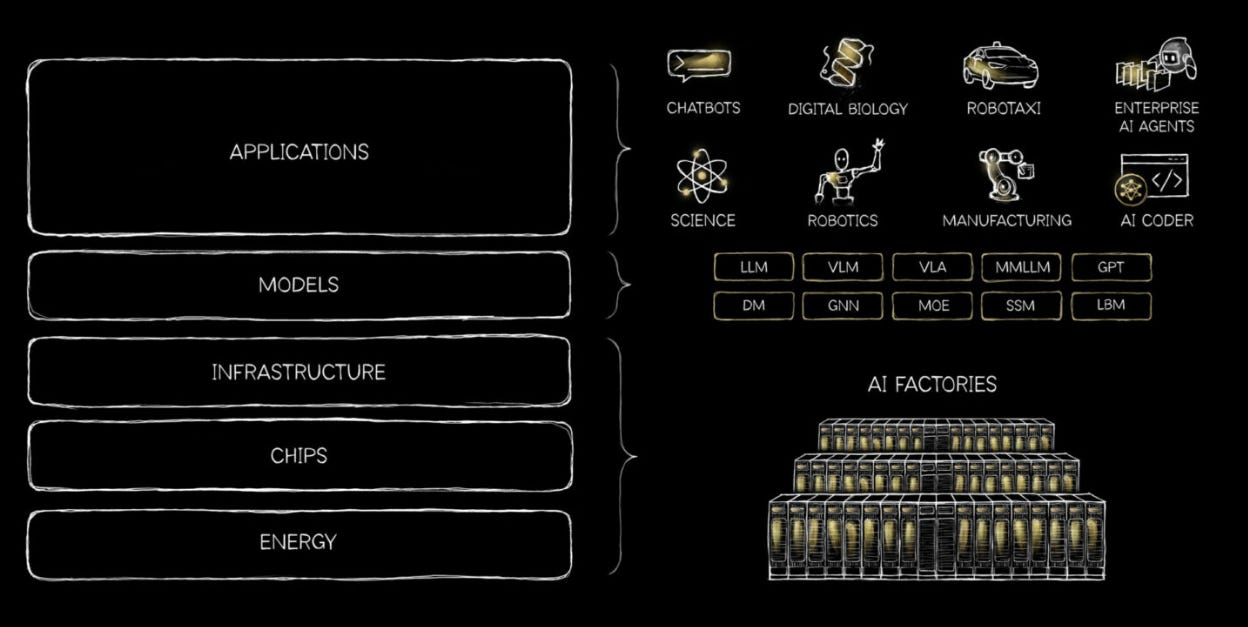
AI is one of the most powerful forces shaping the world today. It is not a clever app or a single model; it is essential infrastructure, like electricity and the internet. AI runs on real hardware, real energy and real economics. It takes raw materials and converts them into intelligence at scale.
Every company will use it. Every country will build it.
To understand why AI is unfolding this way, it helps to reason from first principles and look at what has fundamentally changed in computing.
About DustPhotonics
DustPhotonics is a fabless semiconductor company developing SiPho PICs for high-speed optical transceivers. Founded in 2017 and headquartered in Israel, DustPhotonics has developed a differentiated PIC portfolio spanning 400G, 800G, and 1.6T, with a roadmap that extends to 3.2T, and with integrated and external laser configurations.
DustPhotonics has assembled a team of approximately seventy employees with deep expertise in photonic integration. The company operates a fabless model and has secured design wins with leading hyperscale cloud customers, providing a platform for expansion.
About Credo
Credo’s mission is to transform connectivity at scale through fast, reliable, and energy-efficient system solutions. Our high-speed copper and optical interconnect products deliver industry-leading power and performance at up to 1.6T to meet the ever-expanding data infrastructure demands of AI.
Our product portfolio includes ZeroFlap Active Electrical Cables (AECs), ZF Optical Transceivers, OmniConnect memory solutions, and a suite of retimers and DSPs for optical and copper Ethernet and PCIe, all leveraging the PILOT diagnostic and analytics software platform. Credo innovations enable our customers to connect the systems that connect the world.


PreviousNext
TopLatestDiscussions








See all