No Water, No Chips: Taiwan’s Silent Semiconductor Crisis
No Water, No Chips: Taiwan’s Silent Semiconductor Crisis
- Source: SemiVision
- Author: SEMIVISION
- Published: 2026-04-09T00:28:11+08:00
- URL: https://tspasemiconductor.substack.com/p/no-water-no-chips-taiwans-silent (1) No Water, No Chips: Taiwan’s Silent Semiconductor Crisis


No Water, No Chips: Taiwan’s Silent Semiconductor Crisis
Original Article By SemiVision Research [Reading time: 15 mins]

Apr 09, 2026
∙ Paid
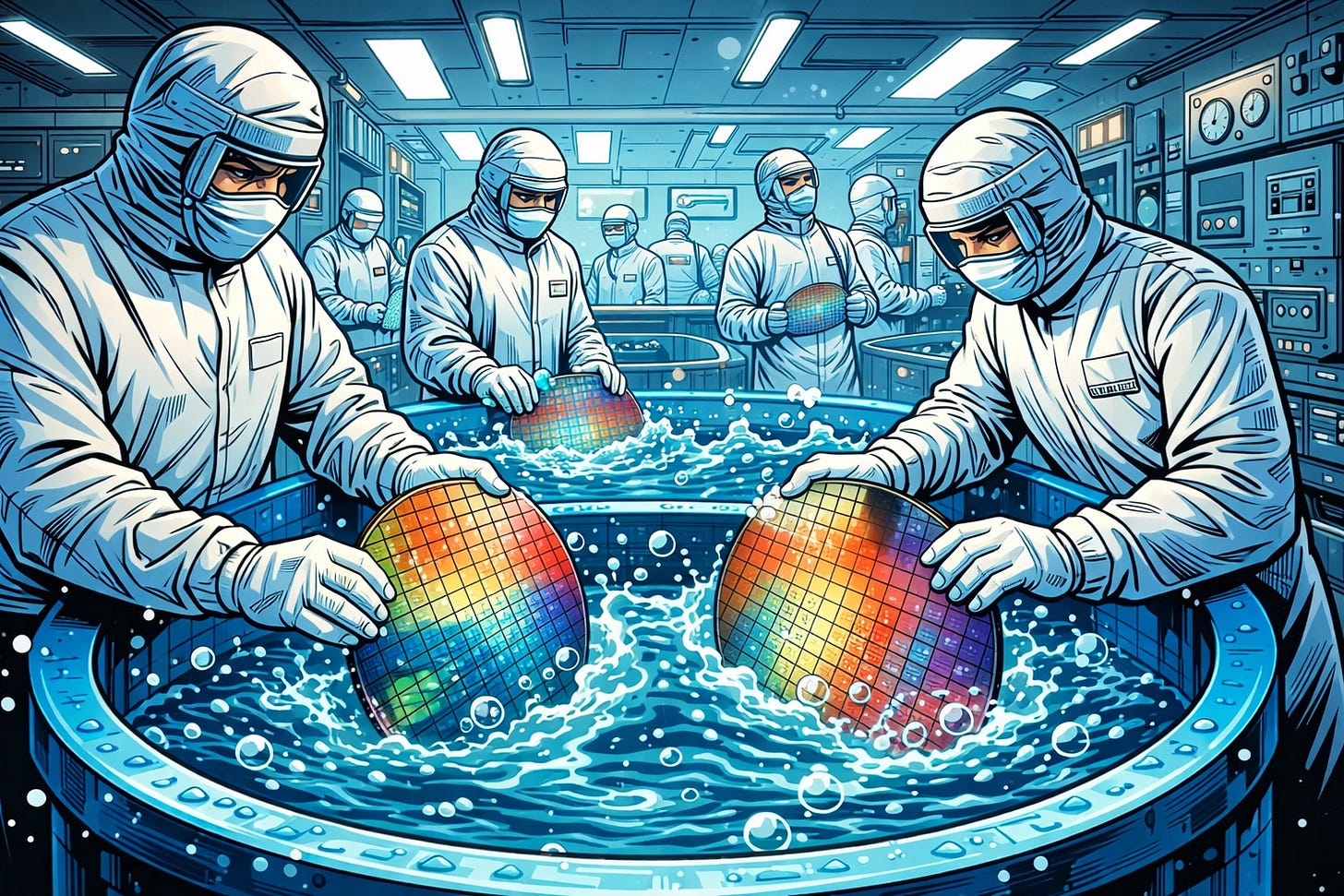
This is just an illustrative image—the actual operations in a cleanroom would not be conducted in this manner.
When Taiwan Faces Water Stress, TSMC Sees More Than Weather — It Sees the Operating Foundation of Advanced Manufacturing
Taiwan is one of the world’s most important semiconductor islands. It is also a place with inherently fragile water conditions.
That may sound contradictory, but it is in fact one of the most fundamental—and most underappreciated—structural realities behind Taiwan’s industrial rise. When the world talks about Taiwan’s semiconductor strength, the focus usually falls on process leadership, supply chain density, engineering talent, and geopolitical importance. But one layer beneath all of that lies something far less glamorous and far more irreplaceable: water, power, land, and infrastructure.
Among them, water is perhaps the most underestimated.
For semiconductor manufacturing, water is not a supporting input. It is part of the process itself. And as the industry moves from 7nm and 5nm into 3nm, 2nm, and beyond, the strategic importance of water is rising, not falling. The reason is straightforward: the more advanced the process, the finer the structures, the lower the contamination tolerance, and the greater the need for ultra-pure water throughout cleaning, etching, deposition, and related steps. On the surface, the competition is about transistor scaling. At a deeper level, it is about who can keep an extraordinarily precise industrial system running without interruption.
That is why Taiwan’s water stress is no longer just a public utility issue. It is a national industrial risk.
Taiwan Does Not Lack Rain. It Lacks the Ability to Keep It
If measured by annual rainfall alone, Taiwan is not a dry place. In fact, its average rainfall is higher than that of many other countries. But Taiwan’s core problem has never been a lack of rain. It is the inability to retain it.
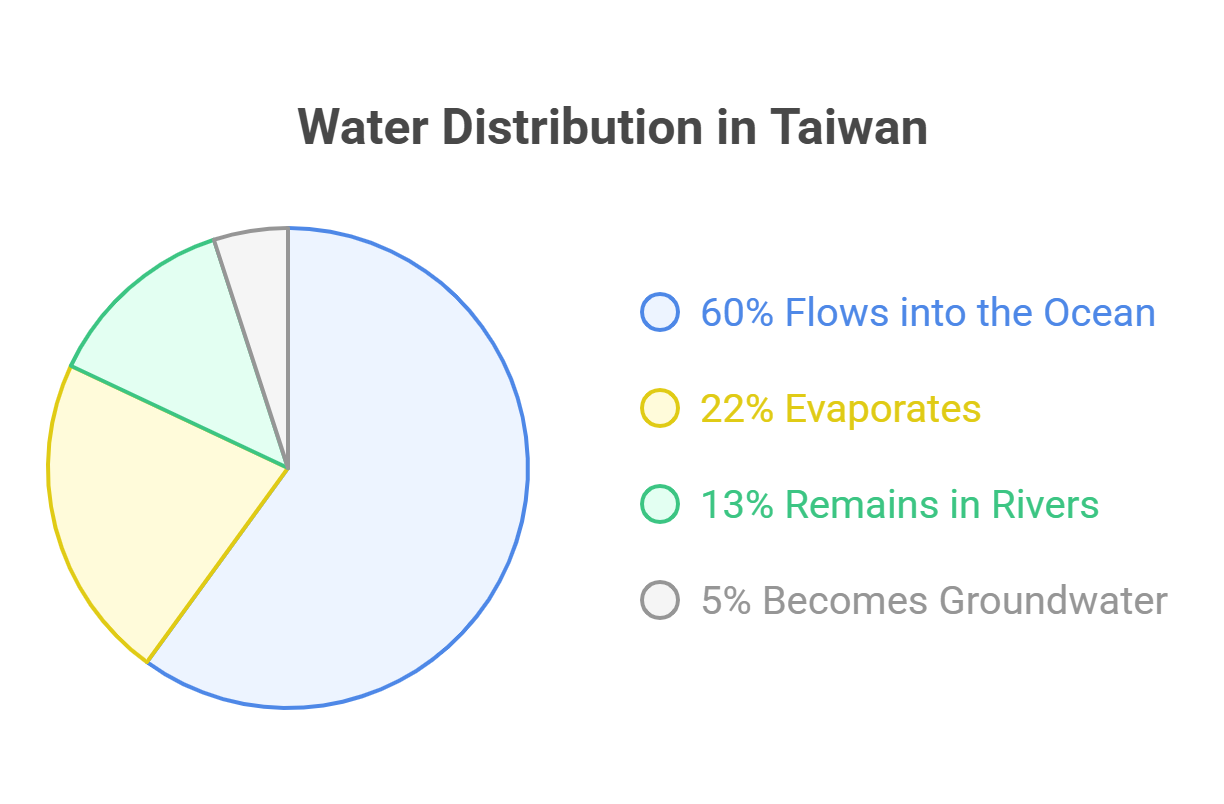
The first structural reason is geography.
Taiwan is mountainous, steep, and crossed by short, fast-flowing rivers. When heavy rain comes, much of it rushes quickly from mountain catchments into the sea. That means Taiwan may receive large amounts of rainfall in a short period of time, but only a limited portion can actually be stored, regulated, and converted into stable freshwater supply. In other words, Taiwan often gets intense rainfall, but not necessarily usable water security.
The second reason is the island’s dependence on seasonal weather systems, especially typhoons.
For Taiwan, typhoons are not only natural disasters. They are often major water replenishment events. In many years, whether reservoirs refill depends less on regular rainfall and more on whether typhoons arrive, whether their paths are favorable, and whether the rain falls in the right catchment zones. If a year brings fewer typhoons, or if their tracks shift, Taiwan can move rapidly into water stress. A supply system so dependent on weather patterns is, by definition, structurally vulnerable.
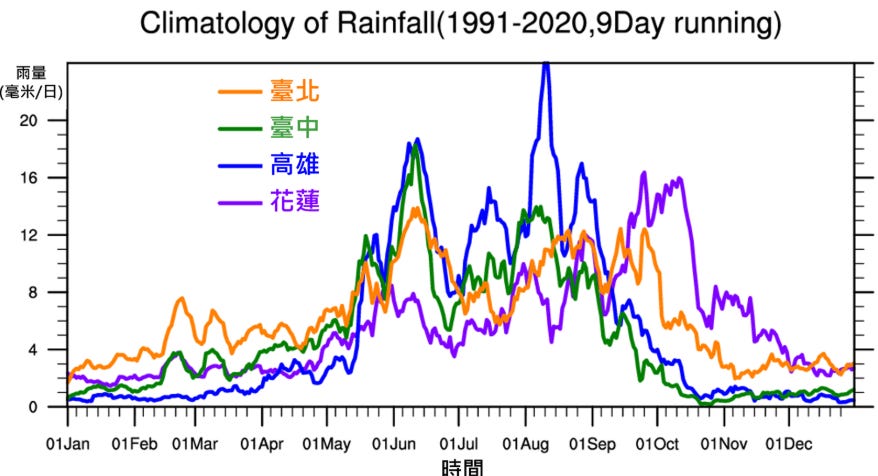
From May to June each year, western Taiwan enters the plum rain (Meiyu) season, with rainfall increasing rapidly by mid-May. From July to September, typhoons and tropical monsoon systems also bring substantial precipitation. These concentrated summer rains constitute the most important source of Taiwan’s water resources.
The third issue is limited effective reservoir capacity and uneven regional allocation.
Taiwan’s reservoirs face long-term sedimentation. Each major storm may bring water, but also mud and debris that gradually reduce usable storage volume. At the same time, population and industry are heavily concentrated along the western technology corridor—especially in Hsinchu, Taichung, and Tainan—where science parks and advanced manufacturing clusters place extraordinary pressure on local water systems.
So Taiwan’s water problem is not an occasional event. It is structural. This is a high-rainfall island with low water-retention efficiency, strong dependence on typhoons, and highly concentrated industrial demand.
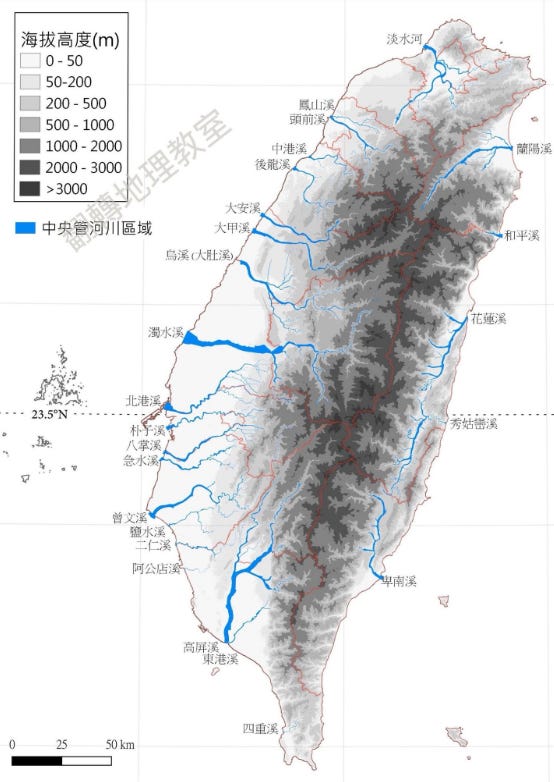
Source: FlipGeo
From this image, it is clear that Taiwan’s terrain is both narrow and highly varied, with steep mountain ranges running along the island and limited flat plains. This complex topography causes rainfall to flow quickly into the ocean rather than being retained or evenly distributed across regions. As a result, water resources are difficult to store and concentrate, leading to challenges in maintaining a stable and reliable water supply.
As Advanced Nodes Progress, TSMC Cannot Treat Water as a Background Variable
Against this backdrop, TSMC’s water issue is not just an ESG narrative about a large corporate user. It is a real-world test of whether advanced manufacturing can continue to scale in Taiwan.
According to public information, TSMC’s total daily water consumption across Taiwan’s three major science parks now exceeds 208,000 metric tons. Southern Taiwan Science Park accounts for roughly 99,000 tons per day, Hsinchu Science Park about 56,000 tons, and Central Taiwan Science Park about 53,000 tons. As further fabs come online and more advanced nodes are introduced, that number is only likely to rise.
What makes this more important is that the water logic of advanced manufacturing often runs against intuition. Many people assume technological progress naturally means less resource intensity. In semiconductors, that is often not the case. More advanced nodes require more cleaning steps, tighter purity standards, and more complex process control. As a result, water use per unit of output may actually increase.
Take Hsinchu’s Baoshan Phase 2 2nm fab as an example. Its environmental review estimated daily water use at as much as 98,000 tons. That is not simply a factory-scale issue. It is a regional infrastructure issue.
Seen from this angle, competition in advanced nodes is no longer just a matter of process technology. It is also a competition in resource-carrying capacity. Whoever can secure water can secure chips. In the AI era, that statement will only become more true.

2025年5月17日
What TSMC Is Really Building Is Not Just Water Saving, but an Industrial-Grade Water Resilience System
From the outside, TSMC is often described as a water-intensive manufacturer. More precisely, it is one of the few companies in the world that has elevated water management to the level of strategic operating capability.
The clearest symbol of this is the idea that one drop of water can be used 3.5 times.
This is not a slogan. It is a process architecture. Through wastewater segregation, treatment, recycling, and reuse, TSMC is able to circulate water through multiple stages of production and utility systems rather than using it once and discharging it. Water is no longer treated as a one-time consumable, but as a managed industrial asset.
The strategic importance of this is enormous.
Because when TSMC raises the utilization efficiency of every drop, it is not merely cutting internal cost. It is reducing dependency on external freshwater systems. That increases resilience during water stress and improves continuity for advanced process operations.
TSMC has also expanded the use of reclaimed industrial water. The reclaimed water systems in southern Taiwan are a major example. This is not primarily about environmental branding. It reflects a deeper reality: if future advanced fabs continue to depend only on conventional municipal supply, expansion will eventually hit a hard ceiling. Reclaimed water becomes not just a supplement, but part of the long-term operating model.
Then there is desalination. TSMC has signed contracts for desalinated water supply equivalent to 45,000 cubic meters per day. Desalinated water is expensive and energy-intensive, but for semiconductor fabs its strategic value lies in predictability. As rainfall patterns become less reliable, desalination offers a less weather-sensitive base source.

So at its core, TSMC’s water strategy is not simply about conservation. It is about restructuring supply—from dependence on traditional tap water toward a diversified mix of recycled water, reclaimed water, and desalinated water. This is not a side ESG initiative. It is advanced-manufacturing-era risk management.
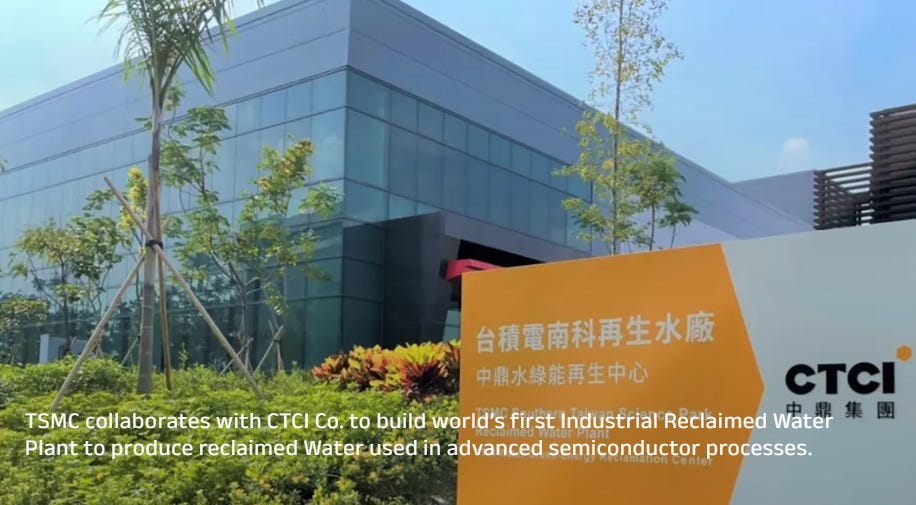
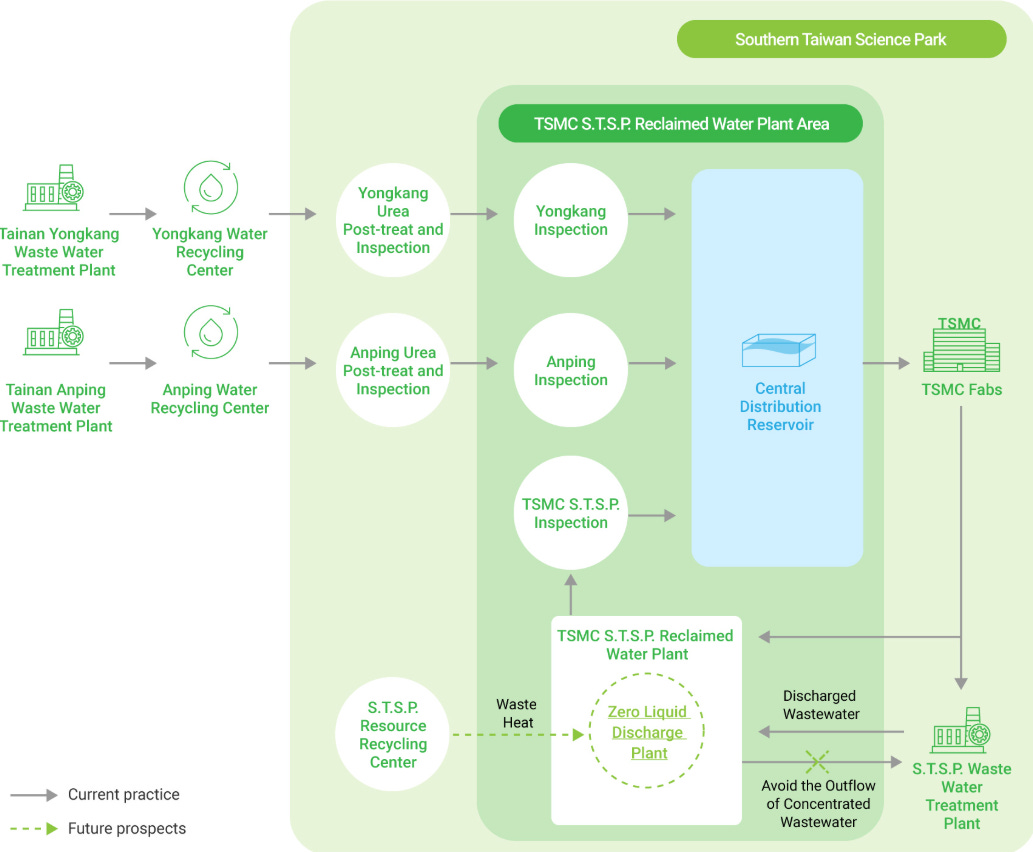
TSMC is committed to promoting sustainable water management and actively practices water conservation, establishing liquid waste classification and distribution systems. Through its efforts, water reclamation in the fabs has effectively achieved the use of each drop of water 3.5 times. To further strengthen water usage efficiency, TSMC has been devoted to developing water recycling technologies, collaborating with government agencies to develop domestic wastewater recycling processes and industrial wastewater recycling technologies in compliance with tap water standards, as well as collaborating with CTCI Co. to build the first in the world, industrial reclaimed water plant dedicated to produce reclaimed water used in advanced semiconductor processes. In September 2022, TSMC S.T.S.P. (Southern Taiwan Science Park) Reclaimed Water Plant commenced operation. It will supply 10,000 metric tons per day of industrial reclaimed water by the end of 2022, moving towards the goal of diversifying water resources and sustainable water recycling.
The Real Challenge Is Not Whether There Is Water Today, but Whether Infrastructure Can Keep Up with Expansion
The fact that TSMC has managed the issue well so far does not mean the pressure is gone.
The next major challenge is the timing gap between industrial expansion and infrastructure development.
Fabs, tools, and production planning move quickly, driven by global demand and competitive pressure. But reclaimed water plants, desalination plants, transmission pipelines, dredging programs, and inter-regional allocation systems require years of planning, permitting, and construction. One operates on industrial timescales. The other operates on public infrastructure timescales. Mismatch is inevitable.
This will be especially visible in Hsinchu.
Hsinchu is already one of Taiwan’s most concentrated technology clusters, with overlapping residential, industrial, and future fab demand. As 2nm, A14, and more advanced nodes arrive, the key question will not simply be whether the technology is ready, but whether the water system is ready first.
There is also the cost issue. Reclaimed water is not “free water.” It is capital-intensive, treatment-intensive, and operations-intensive. The same is true, even more so, for desalinated water. As semiconductor competition becomes more prolonged and structurally global, water cost will increasingly become part of the broader cost and competitiveness equation.
In that sense, TSMC’s water management capability is not only about reliability. It is also about long-term capital efficiency and operating discipline.

In response to the United Nations Sustainable Development Goal No.7, TSMC is committed to optimizing the efficiency of energy and resource efficiency during production, and has cooperated with suppliers to create the first hot DI water circulation system for wafer cleaning tools, which effectively saves DI water usage by 80%. In order to create more energy-saving opportunities, in 2022, the "hot DI water circulation system 2.0" was further developed for wafer cleaning tools in existing fabs, and the modular design was used to overcome space limitations in the cleanroom without affecting energy saving performance. This reduced the circulation system footprint by 60% and improved tool retrofit efficiency by 90.5%, greatly optimizing tool modification flexibility.
As of April 2023, TSMC has successfully implemented the "hot DI water circulation system 2.0" 1st demo tool at Fab 12B, effectively saving 24,000 tons of pure water and 388,000 kWh of electricity. The aim is to save 11.6 million tons of pure water and 450 million kWh of electricity by 2030 after full implementation on existing 12-inch wafer GIGAFAB® facilities, continuing the practice of innovation in green manufacturing.

The Kumamoto Experience Shows That Water Governance Is Now Part of Semiconductor Globalization
This issue is not unique to Taiwan.
In Kumamoto, Japan, TSMC has also had to engage directly with local water resource concerns. The company has supported active groundwater recharge and replenishment efforts, with reported restoration volumes reaching three times its own water use. That reveals something important: in the modern semiconductor industry, building a fab is no longer just about land, equipment, and labor. Water governance has become part of global site strategy.
Taiwan should pay close attention to that lesson.
Because it suggests that future semiconductor competition will not be determined solely by who has the most advanced process roadmap. It will also depend on which region can build the most effective coordination capacity, resource governance capability, and infrastructure integration model. Water is no longer an external condition. It is part of industrial capability itself.

Source: Kumamoto City Water Science Museum
TSMC’s first fab in Kumamoto began mass production at the end of last year, and the company plans to build a second fab in the nearby area, with operations expected to start in December 2027.
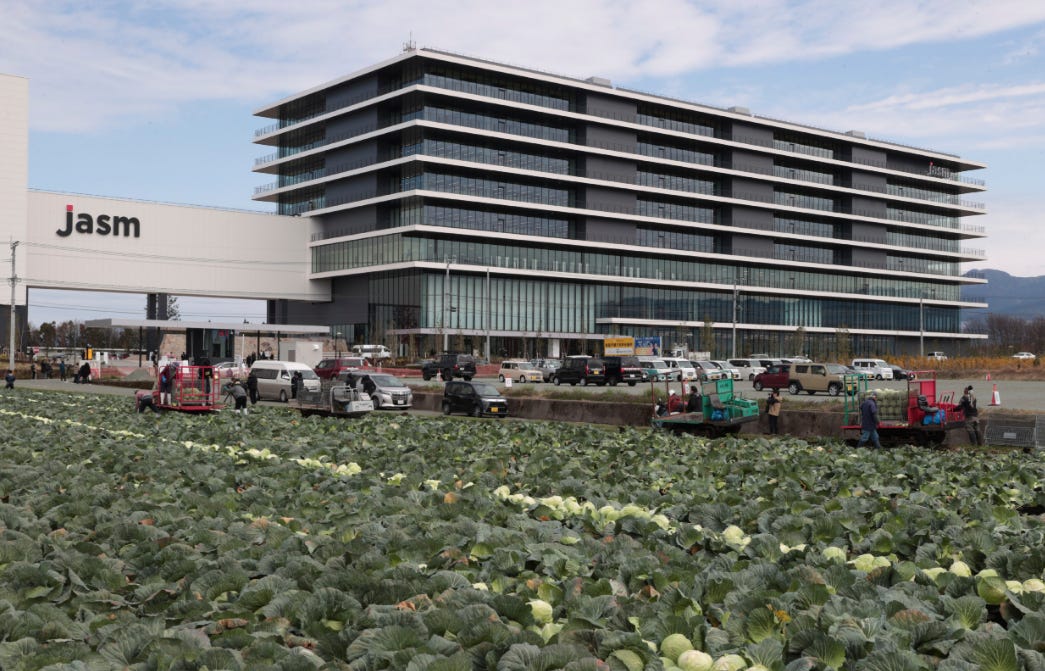
According to a report by The Japan Times, due to the large volumes of water required for wafer and materials cleaning, the first Kumamoto fab extracts up to approximately 7,500 tons of groundwater per day. If both fabs operate at full capacity in the future, annual water consumption could reach around 8 million tons, raising concerns among some local residents about groundwater depletion and potential contamination risks.
In response, TSMC’s Japanese subsidiary, Japan Advanced Semiconductor Manufacturing (JASM), held a press conference in November to explain its approach to sustainable manufacturing and water resource management. JASM stated that of the up to 30,000 tons of water used daily at the first fab, approximately 75% is recycled and reused. Meanwhile, up to about 5,500 tons of wastewater discharged daily is continuously monitored, with standards exceeding current regulatory requirements. If any abnormality is detected, the system will automatically halt operations and reprocess the wastewater.
The Future of Semiconductors Is Not Just a Chip War, but a System-Level Competition in Water, Power, Materials, and Infrastructure
If we step back further, Taiwan’s water stress and TSMC’s large-scale water use should not be viewed separately.
The first is a question of geography and infrastructure limits. The second is a natural consequence of pushing advanced manufacturing to the frontier. When both collide on the same island, the result is a much larger question: can Taiwan remain the world’s semiconductor core while also upgrading the physical systems that support that role?
The answer will not come from TSMC alone, nor from government alone. It will require synchronized upgrading across the entire industrial and public system.
Because future advanced nodes will not be enabled only in clean rooms. They will also be enabled in reclaimed water plants, desalination facilities, pipeline networks, material supply chains, and regional coordination systems. What ultimately supports 2nm, A14, and beyond is not just lithography and etch. It is the infrastructure lattice capable of supplying the resources those technologies require.
Conclusion: In the AI Era, Water Has Become Part of Compute
AI has forced the world to revalue chips. But what may be revalued next is water.
As model scale continues to expand, advanced nodes continue to shrink, and packaging and compute density continue to rise, the semiconductor industry is entering a new reality: compute is no longer determined by transistor count alone. It is increasingly shaped by energy systems, water systems, and infrastructure carrying capacity.
Taiwan’s water issue may look like a weather story on the surface. For TSMC, it is a question of whether advanced processes can be manufactured at scale without disruption. The company’s emphasis on using one drop 3.5 times, expanding reclaimed water, and adding desalinated supply is not merely about conservation. It reflects a world-class manufacturer’s understanding of resilience at the supply chain level.
The next semiconductor war will not be decided only by who reaches volume production first, or who wins the biggest AI customer. At a deeper level, it will also be decided by who can better secure water, power, materials, and infrastructure over the long term.
For Taiwan, this is no longer a topic that can be framed as just another drought headline.
Because in the age of AI and advanced manufacturing, water is no longer a background condition.
Water is now part of competitiveness itself.
When Water Becomes a Bottleneck: Why TSMC Switched to Disposable Tableware
Amid a recent wave of water shortages in Taiwan, even one of the world’s most advanced semiconductor companies has been forced to make an unexpected operational decision.
TSMC has begun replacing reusable dining plates and utensils in its on-site food courts with disposable alternatives—not for convenience, but to conserve water.
At first glance, the move may seem counterintuitive, especially in an era where sustainability and waste reduction are emphasized. But when viewed through the lens of scale and system constraints, the decision reveals something far more fundamental:
At large enough scale, even small operational details become infrastructure-level problems.

3月19日
From Daily Routine to Industrial-Scale Resource Demand
TSMC employs more than 80,000 people in Taiwan.
If each employee consumes just two meals per day on-site, that translates into over 160,000 dining instances daily. This is no longer a typical food service operation—it is closer to managing a small city’s dining infrastructure.
And with that comes a critical question:
How much water does it take to clean that many dishes?
Dishwashers Are Efficient—But Scale Changes the Equation
Under normal circumstances, commercial dishwashers are already considered highly water-efficient.
Typical benchmarks show:
Standard commercial dishwashers: ~15–16 liters per cycle
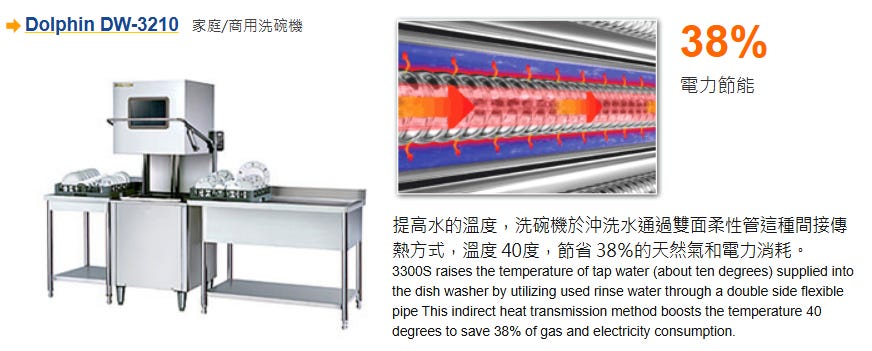
High-efficiency systems: ~10–15 liters for ~10 sets of tableware
Tunnel (continuous) dishwashers: capable of handling hundreds of servings per hour
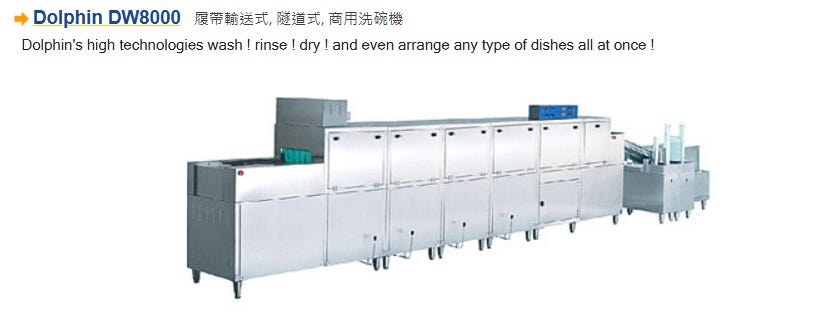
These systems rely on:
Recirculated hot water
High-pressure spray cleaning
High-temperature sterilization
Reduced labor requirements
Compared to manual washing:
Faucets typically consume 8–10 liters per minute
A 5-minute rinse can use 40–50 liters of water
Water usage scales directly with volume
In most food service environments, commercial dishwashers can reduce water consumption by up to 80% compared to hand washing.
But Efficiency Alone Is Not Enough
Even with high-efficiency dishwashing systems, the total water consumption becomes massive when scaled to 160,000 meals per day.
At this level, the problem is no longer about efficiency per unit—it is about total system load.
In times of sufficient water supply, this model is sustainable. But under water constraints, the question shifts:
Is the total consumption still within acceptable limits?
When the answer becomes no, optimization is no longer enough. Reduction becomes necessary.
Disposable Tableware: Not Ideal, But Necessary
This is where TSMC’s decision must be understood.
Switching to disposable tableware is not about improving sustainability—it is about prioritizing water as the most constrained resource in the system.
In other words, this is a case of resource prioritization under constraint:
Under normal conditions: sustainability (less waste) > water savings
Under water scarcity: water savings > waste reduction
This is not a perfect solution. It is a context-driven decision.
And in large-scale operations, such trade-offs are inevitable.
A Broader Signal: Resource Constraints Are Becoming the New Bottleneck
What makes this case important is not the tableware itself, but what it represents.
Across high-tech industries, a similar pattern is emerging:
Power availability is becoming a limiting factor in AI data centers
Cooling and thermal constraints are rising with compute density
Water usage is becoming critical in semiconductor fabs
Infrastructure is increasingly the bottleneck—not just compute
As systems scale, resource constraints begin to define the boundaries of growth.
Technology alone is no longer the limiting factor.
Infrastructure efficiency is.
The Real Problem Is the System, Not the Plates
TSMC’s shift to disposable tableware is not simply an operational adjustment. It is a reflection of how large-scale systems behave under stress.
It shows that:
At massive scale, everyday operations become engineering challenges
Under constraint, optimal solutions must give way to practical trade-offs
The ability to reprioritize resources dynamically is a core capability
In the future, the most competitive organizations will not only be those with the most advanced technology, but those that can manage constraints most effectively across the entire system.
Because in the end, the real challenge is not how to build more.
It is how to operate sustainably—when resources are no longer abundant.
Thanks for reading SEMIVISION @_@! This post is public so feel free to share it.


PreviousNext
TopLatestDiscussions








See all