From a Motorcycle Victory to the Future of Semiconductors: Why Close Collaboration Is Becoming the Industry’s Real Competitive Edge
From a Motorcycle Victory to the Future of Semiconductors: Why Close Collaboration Is Becoming the Industry’s Real Competitive Edge
- Source: SemiVision
- Author: SEMIVISION
- Published: 2026-04-03T21:45:02+08:00
- URL: https://tspasemiconductor.substack.com/p/from-a-motorcycle-victory-to-the (1) From a Motorcycle Victory to the Future of Semiconductors: Why Close Collaboration Is Becoming the Industry’s Real Competitive Edge


From a Motorcycle Victory to the Future of Semiconductors: Why Close Collaboration Is Becoming the Industry’s Real Competitive Edge
Original Article By SemiVision Research [Reading time: 9 mins]

Apr 03, 2026
∙ Paid
From a Motorcycle Victory in Portugal to the Future of Semiconductors: Why Close Collaboration Is Becoming the Industry’s Real Competitive Edge

A race win may appear to belong to the rider, but in reality, victory is never determined by the rider alone.
Behind every winning machine is a long cycle of testing, tuning, validation, and refinement carried out at high speed and under intense pressure. Vehicle settings must be adjusted, components optimized, parameters reworked, and rider feedback translated into engineering changes almost immediately. Every exchange between the rider and the engineering team is part of a larger process of pushing performance closer to its limit.
From Zhang Xue Motorcycle’s victory in Portugal, we can see a logic that is highly relevant to Taiwan’s semiconductor industry today:
The highest level of competitiveness rarely comes from isolated technology alone. It comes from extreme integration enabled by close collaboration.
And that is precisely how today’s semiconductor industry works.
Racing Is Not a Solo Game, and Neither Is Advanced Process Development
A race bike does not win simply because it was designed well on day one. Victory is often the result of countless rounds of pre-race testing, in-race feedback, and post-race adjustment.
The rider is not merely the person operating the machine. The rider is a critical part of the development loop. Only the rider truly feels where the bike loses stability in corners, where acceleration is uneven, where braking becomes too aggressive, or where grip starts to fade. Those insights cannot be captured fully by theory or simulation alone. They must come from real-world use, real-world feedback, and rapid engineering response.
The same is true in semiconductor manufacturing.
Advanced process development does not succeed simply because a tool has been installed or because a material specification looks good on paper. Between R&D and pilot production, and between pilot production and high-volume manufacturing, there are countless details that require repeated refinement: lithography parameters, etch conditions, material consistency, yield fluctuations, defect density, thermal behavior, packaging stress, and test methodologies. Every one of these variables can affect the final result.
That is why foundries, advanced packaging houses, equipment suppliers, and materials vendors are not merely engaged in buyer-seller relationships. They are engaged in a deeply interdependent co-development model.
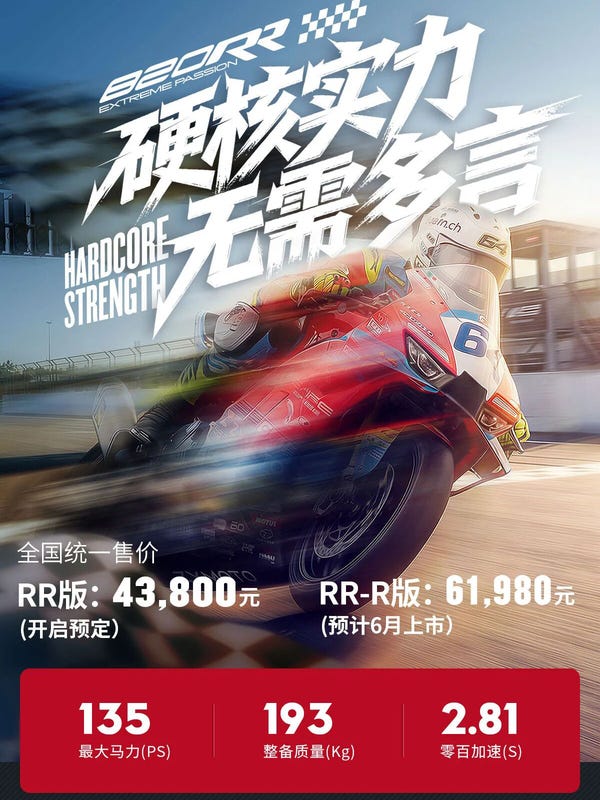
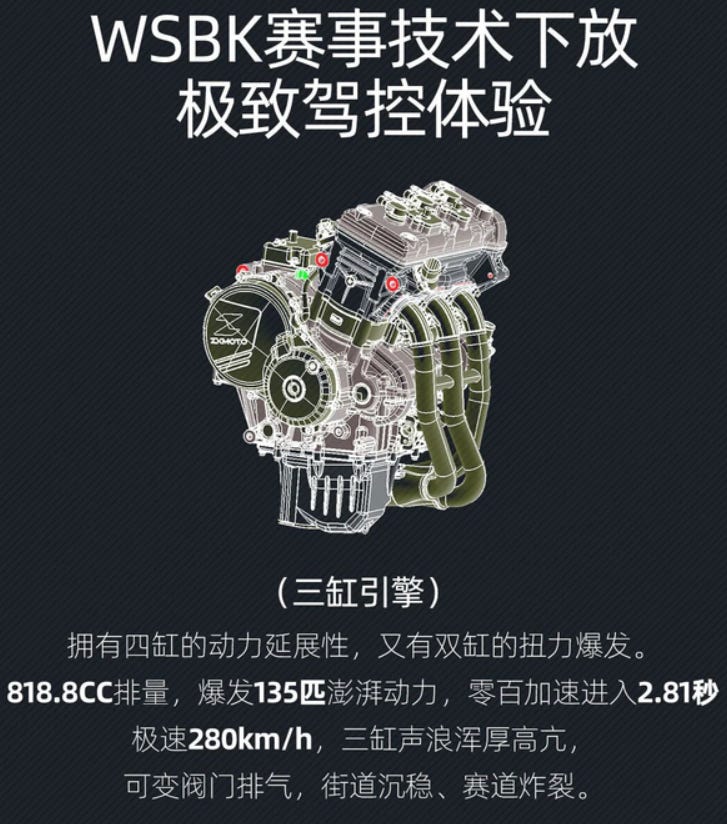
Another important takeaway from Zhang Xue Motorcycle is the strategic value of in-house R&D. At the heart of its success is a fully self-developed 819cc inline three-cylinder liquid-cooled engine, which reportedly delivers 153.6 horsepower in track configuration, a 15,250 rpm redline, and 135 horsepower in the street version, with 0–100 km/h acceleration in just 2.81 seconds. To maximize performance, the team adopted magnesium-alloy pistons and titanium valves, reducing engine weight to only 52 kg.
More importantly, Zhang Xue Motorcycle deeply integrated AI-driven multiphysics simulation into the development process, compressing what traditionally takes two to three years into just a matter of months, while also navigating around patent barriers associated with four-cylinder and twin-cylinder architectures. Its self-developed AI real-time data analysis system reportedly collected more than 100,000 data points per lap, enabling the team to complete hundreds of tuning iterations within just 30 days and precisely solve issues such as power fade under high temperatures and cornering instability.
On the chassis and control side, the 820RR-RS adopted full carbon-fiber bodywork, a forged magnesium swingarm, and a six-axis IMU-based control system integrating cornering ABS, 10-level adjustable traction control, and a bidirectional quick shifter, with response speed said to be 0.3 seconds faster than mainstream international systems.
This story goes beyond motorcycles. It highlights a broader industrial lesson that is highly relevant to semiconductors:
Core technologies matter most when they are built in-house. In the semiconductor sector, this translates directly into the growing importance of equipment localization, materials self-reliance, and process ownership.
Under rising geopolitical tensions, export controls, and supply chain fragmentation, the ability to control key tools, materials, and technical know-how is no longer just a matter of cost or efficiency—it is becoming a matter of long-term industrial security and strategic competitiveness.

2月6日
Time Is Money, and Iteration Speed Is Competitiveness
In racing, the speed of adjustment directly affects the outcome. If a problem is discovered today but cannot be corrected tomorrow, the opportunity may already be gone.
The same is even more true in semiconductors.
At advanced nodes, the cost of delay is enormous. A single lost day can mean major engineering expense, lost capacity opportunity, and even market share risk. For a foundry, if an equipment vendor or materials supplier cannot respond fast enough—if problems cannot be identified quickly and fixes cannot be implemented rapidly—the entire development schedule may slip.
That is why in the era of advanced process technology and advanced packaging, the industry increasingly values rapid test-adjust-feedback cycles.
What matters is not only the technology itself, but the ability to refine it quickly, optimize it in real production conditions, and support it in real time.
In many cases, the real competitive edge is not whether one piece of equipment is 5% better on paper, or whether one material has marginally better performance. What matters more is this: when something goes wrong at the fab, who can arrive first, align fastest, and solve the issue most effectively?
In other words, in today’s semiconductor competition, speed is not an added value. Speed is the value.
Why TSMC Keeps Pushing “Local to Local”
Viewed from this perspective, TSMC’s emphasis onlocal to localbecomes much easier to understand.

2025年9月25日
This is not just about local sourcing. At a deeper level, it reflects a strategic industrial logic:
Bring suppliers closer to the manufacturing site, bring service capability closer to where problems emerge, and reduce the distance between issue detection and problem resolution.
Because in advanced manufacturing, many problems cannot be solved by email, and many process issues cannot be fully addressed over remote meetings. What really matters is whether equipment engineers can enter the fab quickly, whether material suppliers can immediately analyze abnormalities, and whether all teams can work in the same place and at the same time to diagnose, test, fix, and revalidate.
This kind of high-frequency, short-distance, low-latency collaboration will only become more important as nodes move to 3nm, 2nm, and beyond, and as advanced packaging evolves toward CoWoS, SoIC, hybrid bonding, co-packaged optics, and even more integrated system architectures.
The complexity has already gone far beyond what any single company can manage alone. It now requires ecosystem-wide response.
And that is one of Taiwan’s greatest advantages.

Source: TSMC
Why More Semiconductor Equipment Vendors, Materials Suppliers, and Chip Designers Are Moving into Taiwan
In recent years, one trend has become increasingly clear: more global semiconductor equipment companies, materials suppliers, and even chip design firms are establishing offices, technical centers, R&D operations, and factories in Taiwan.
The logic is simple:
They need to be close to the user.
Equipment suppliers come to Taiwan not just to sell tools, but to understand faster what customers need, where they are constrained, and what problems they are trying to solve.
Materials suppliers come not just to deliver product, but to co-optimize chemistry, improve stability, and shorten qualification cycles alongside customers.
Chip design firms come not only to open offices, but because Taiwan offers the most complete ecosystem of manufacturing, packaging, testing, and supply chain resources—allowing design ideas to move into production much faster.
The essence of this trend is not that Taiwan is the biggest end market. It is that Taiwan has become one of the most importantreal-time feedback centersandhigh-efficiency collaboration platformsin the global semiconductor industry.

2025年8月25日
Competition Is No Longer About Isolated Technologies, but About Ecosystem Speed
For many years, people tended to understand semiconductors through isolated technical strengths: who has the best process, the best tools, the best materials, or the best chip design.
That is no longer enough.
Today, competition is increasingly about how fast an entire ecosystem can respond. The companies that win at the high end are often not those with the strongest standalone technology, but those backed by partners who can rapidly iterate, trust each other, and collectively compress development time.
This is exactly like racing.
The true championship machine is not the one with the prettiest blueprint. It is the one continuously tuned—through close interaction between the rider and the engineering team—to fit the real track, the real temperature, and the real competitive environment of that moment.
Advanced semiconductor manufacturing works the same way.
Whether a node succeeds is not just a theoretical question. It depends on whether equipment tuning, materials matching, yield ramp, and production stabilization can all be completed in the shortest possible time. None of that happens through a single supplier alone. It depends on theco-evolutionof the entire ecosystem.

1月31日
Taiwan’s Greatest Strength Is Not Just Manufacturing, but Collaboration Density
When people talk about Taiwan’s semiconductor advantage, they often mention manufacturing capability, engineering efficiency, and supply chain completeness. All of those are true. But there is a deeper truth underneath them.
Taiwan’s real competitive edge lies in itsdensity of collaboration.
In Taiwan, foundries, packaging houses, test houses, equipment suppliers, material vendors, component manufacturers, and design companies are physically close enough, operationally connected enough, and responsive enough to create an unusually fast engineering loop. Geographic proximity becomes engineering efficiency. Engineering efficiency then becomes commercial competitiveness.
That is why many countries trying to replicate TSMC eventually realize that the hardest thing to reproduce is not the fab building itself. It is the surrounding ecosystem and the on-the-ground culture of collaboration.
Advanced nodes are not achieved in isolation. Advanced packaging is not developed through single-point breakthroughs. Both are created through repeated iteration inside a tightly connected industrial network.
And that, ultimately, is Taiwan’s greatest value: the ability to make problems visible quickly, respond to them rapidly, and solve them effectively.

2025年6月20日
Conclusion: What a Racing Victory Reveals About the Real Winning Formula in Semiconductors
From Zhang Xue Motorcycle’s victory in Portugal, what we see is not only speed and glory. We see how a high-performance system is refined to the limit through close collaboration.
The rider participates in design. Engineers respond quickly. The team tests, adjusts, and retests until the machine delivers its maximum performance. That logic is also the clearest reflection of how the semiconductor industry works today.
In the era of advanced process technology and advanced packaging, the winner is not simply the company with the strongest technology. The winner is the one that can integrate customers, equipment vendors, materials suppliers, packaging houses, and design teams into a highly responsive system.
That is why TSMC pushes local to local.
That is why global equipment and materials suppliers continue to move closer to Taiwan.
That is why the future of semiconductor competition will not be defined only by who has the best technology, but by who can collaborate fastest, respond fastest, and serve fastest.
Because in the end, what determines the outcome is not the most perfect blueprint.
It is who can find the answer fastest when the problem appears.
Thanks for reading SEMIVISION @_@! This post is public so feel free to share it.

2月18日


PreviousNext
TopLatestDiscussions








See all