What Illness Does Taiwan Really Have? A Structural Reflection on Dutch Disease, China Disease, and Taiwan Disease
What Illness Does Taiwan Really Have? A Structural Reflection on Dutch Disease, China Disease, and Taiwan Disease
- Source: SemiVision
- Author: SEMIVISION
- Published: 2026-03-19T09:21:36+08:00
- URL: https://tspasemiconductor.substack.com/p/what-illness-does-taiwan-really-have (1) What Illness Does Taiwan Really Have? A Structural Reflection on Dutch Disease, China Disease, and Taiwan Disease


What Illness Does Taiwan Really Have? A Structural Reflection on Dutch Disease, China Disease, and Taiwan Disease
Original Article By SemiVision Research [Reading time: 10 mins]

Mar 19, 2026
∙ Paid
What Illness Does Taiwan Really Have? A Structural Reflection on Dutch Disease, China Disease, and Taiwan Disease

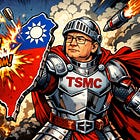
Photo by SemiVision
A nation’s prosperity can sometimes resemble an overly bright light.
From a distance, it looks dazzling, powerful, and admirable. But up close, another reality may emerge: industrial imbalance, stagnant wages, soaring housing prices, generational anxiety, and a growing unease about the future. The economic numbers may look strong, yet society’s lived experience does not necessarily warm in tandem. That is the reality Taiwan must confront seriously today.
In recent years,Taiwan has increasingly debated a question: has it fallen into “Dutch disease”? Others have proposed the idea of a “China disease,” and some have gone further, speaking of a “Taiwan disease.”These labels seem to be competing to define Taiwan’s current condition.

But perhaps what matters is not the label itself, but whether we are truly seeing the structural problems underneath.
As Tolstoy famously suggested, happy families are broadly alike, but each unhappy family is unhappy in its own way. The same is true of economies. Surface prosperity may look similar across nations, but the deeper imbalances of each society have their own causes, history, and costs. Taiwan’s real question is not which label best fits, but rather: what exactly is going wrong, and how should it be addressed?
Why Has Taiwan’s Prosperity Not Become Broad-Based Well-Being?
Let us begin by acknowledging something undeniable: Taiwan’s technology sector has performed extraordinarily well in recent years.
Driven by the global AI boom, Taiwan’s semiconductor and electronics industries have become indispensable to the world’s supply chain. Chips, servers, electronic components, and ICT products continue to rise as a share of exports, while the growth of major firms such as TSMC has acted like a central pillar, lifting Taiwan’s export ceiling higher and higher. GDP and national income have been boosted accordingly, and international media have described Taiwan as one of the few mature economies still displaying strong momentum.
If one looks only at macroeconomic data, Taiwan appears almost exceptional amid a sluggish global backdrop.
Yet another question has become increasingly pressing: why are people on the street not smiling more?
2月2日
This is not an emotional complaint, but a serious social signal. When macroeconomic growth becomes increasingly detached from the subjective experience of ordinary people, it suggests that prosperity may not have been effectively distributed, or may not have penetrated most corners of society at all.
The healthcare system remains understaffed. Service-sector workers still face long-term low wages. Young workers in urban areas confront high housing prices, high rents, and intense living-cost pressures. For many people, daily life does not feel like “Taiwan’s economy is doing great,” but rather, “Taiwan’s economy is doing great, so why does my own life feel harder?” That gap is precisely what makes the situation so dangerous.
It pushes society into a peculiar condition: the more successful the nation appears, the more anxious people become; the stronger the industry grows, the less secure ordinary life may feel; the more impressive exports become, the more visible internal imbalances become.
This cannot be brushed aside as a routine business cycle. It is a structural issue.
Why Has Anxiety Over Dutch Disease Become So Strong in Taiwan?
This concept resonates in Taiwan because many people can already feel that imbalance.

2月3日
Taiwan’s semiconductor and high-tech sectors are absorbing the best talent, the most capital, and the greatest share of policy attention. They are also drawing the strongest students from the higher education system. For top young people, semiconductors and AI-related industries are not merely high-paying careers; they increasingly feel like the only rational path. From university major selection to career planning to entrepreneurial direction, the entire social allocation of resources is tilting toward a small number of highly productive sectors.
This is not the fault of the technology sector. The issue is that when a society is left with only one visible path to success, all other fields gradually become marginalized.
Many small and medium-sized enterprises complain that they cannot recruit or retain workers. Traditional industries are not upgrading quickly enough. The service sector struggles to attract high-quality young talent. Cultural industries, social care, education, and public services continue to lose people amid high housing costs and weak compensation. The result is that resources increasingly concentrate in one direction, creating an M-shaped structure in which the strong grow stronger while the weak grow weaker.
That is why Dutch disease has become such a frequent part of Taiwan’s public debate.
But can Taiwan’s current condition really be explained entirely by Dutch disease? Not necessarily.
If We Talk Only About Dutch Disease, We May Misread Taiwan’s Real Risks
The original logic of Dutch disease is usually tied to currency appreciation and the expansion of one dominant export sector. A powerful export industry drives up the domestic currency, reducing the international competitiveness of other sectors.
Taiwan’s current reality, however, is more complicated.
First,Taiwan’s electronics boom did not come from a short-term commodity windfall or a temporary stroke of luck. It is the product of decades of technological accumulation, engineering culture, supply-chain coordination, and global division of labor. This is not accidental wealth, but industrial capacity built over a long period. To pathologize such success too casually is not only unfair; it may also mislead policy.
Second,the struggles of many non-tech industries in Taiwan are not necessarily caused primarily by currency factors. A much larger pressure comes from dramatic changes in the external competitive environment, especially China’s expansion of capacity and its aggressive pricing in a range of mid- and low-tech manufacturing sectors.
In other words, some Taiwanese industries are declining not because the Taiwan dollar is too strong, but because their competitors are too large, too fast, and too willing to compete on price.
If we interpret Taiwan only through the lens of Dutch disease, we risk internalizing what is in fact an external shock, as though the entire problem were simply Taiwan being “too concentrated” in technology, while ignoring the deeper transformation of global supply chains and trade dynamics.

1月13日
What Must Not Be Ignored Is the So-Called “China Disease”
If Dutch disease refers to internal overconcentration, then China disease refers to the external pressure created by overwhelming industrial capacity from a much larger neighboring economy.
In recent years, many of Taiwan’s non-high-tech manufacturing sectors have faced mounting pressure from Chinese firms in basic metals, petrochemicals, chemicals, plastics, rubber, and general machinery. These sectors are not merely confronting ordinary competition. They are facing a system of competition shaped by scale, policy support, financing advantages, and geopolitical weight. For many Taiwanese firms, it is not simply that they are slightly weaker technologically; it is that they have no realistic way to survive a price war against such rivals.
This pressure has two consequences.
Second,when firms cannot see a realistic path to successful upgrading, they become even more inclined to cling to old models, which in turn makes transformation even harder.
Over time, society may misjudge the situation, concluding that these industries are simply not trying hard enough or innovating enough, while overlooking the deeply asymmetrical competitive environment they operate in. This is not about making excuses for lagging sectors. It is about identifying the problem accurately. If the diagnosis is wrong, the prescription will be dangerous.
Taiwan’s current risk, then, is not just internal concentration of resources, but also the deterioration of the external competitive environment. To talk only about Dutch disease and ignore China disease is to risk policy failure.
Thanks for reading SEMIVISION @_@! This post is public so feel free to share it.
There Is an Even Deeper Problem: Taiwan Disease
But the story does not end there.
Beyond Dutch disease and China disease, Taiwan also faces a more difficult and less easily discussed structural issue: what some have begun calling “Taiwan disease.”
This does not refer to any single sector, but to a broader pattern of dependency and inertia that has accumulated in Taiwan’s institutional environment over many years.
For a long time, certain industries in Taiwan have benefited from multiple forms of policy support and protection: a relatively stable and often weak exchange-rate environment, comparatively cheap electricity, flexible migrant labor arrangements, and various tax and land incentives. These policies were originally intended to stabilize industry and employment. But over time, they may also have produced side effects: some firms became accustomed to surviving within protective arrangements, gradually losing the urgency to invest in R&D, improve business models, or cultivate talent.
In other words, some firms were not left unaided; they may simply have been aided for so long that they lost the pressure to change.
Of course, industry cannot be left entirely to fend for itself, nor can government simply step aside. But excessive protection, just like excessive competition, can obstruct upgrading. Firms without pressure do not improve; firms under unbearable pressure may simply collapse. The real challenge is not whether to protect, but how to design a system in which firms have room to survive, yet still must transform.
This is one of Taiwan’s most persistent policy dilemmas: everyone knows upgrading is necessary, but many support programs stop at presentations, diagnostics, subsidy applications, and short-term performance displays. Cases that truly involve process redesign, digital capability building, AI adoption, and cross-disciplinary talent development remain limited.
As a result, “transformation” becomes a term that everyone talks about, but few firms can genuinely achieve.
That is the most alarming aspect of Taiwan disease. It is not that Taiwan lacks resources, but that institutions often spend those resources preserving the status quo rather than creating new capabilities.
Taiwan Is Not Facing One Illness, but the Overlap of Three Forces
Stepping back, Taiwan’s predicament is not the result of a single pathology, but of three forces unfolding simultaneously:
First, the success of the high-tech sector has concentrated resources.
Second, external competitors—especially China—have squeezed other industries.
Third, Taiwan’s own long-standing policy and institutional structures have produced inertia against upgrading.
These three forces overlap and reinforce one another, creating a society that appears prosperous on the surface, yet increasingly tense underneath.
The technology sector has become so successful that other sectors appear dim by comparison. External competition has become so intense that middle-tier industries struggle to breathe. And if policy does little more than prolong the life of old models, society gradually loses the capacity to generate new momentum.
This is why Taiwan today presents such a contradictory picture:
its semiconductor exports are so strong that the world cannot do without them, yet many young people in Taiwan do not feel more hopeful about their own futures.
Corporate valuations reach new highs, while many SMEs struggle on the margins.
Macroeconomic growth remains impressive, yet society is still permeated by unease, anxiety, and a sense of imbalance.
This is not a problem that any single ministry can solve. It is a development model that must be reexamined as a whole.
Where Should Taiwan Go Next? Start by Facing Three Structural Questions
If Taiwan wants to move beyond this imbalance, it must at least begin by confronting three issues honestly.
First, it must rethink how talent is allocated
The technology sector is unquestionably important, and semiconductors are clearly Taiwan’s most critical strategic industry today. But a healthy society cannot have only one sector capable of attracting its best people. When all the brightest talent is channeled into a small number of fields, other industries suffer long-term depletion, and the overall economic ecosystem loses depth.
Taiwan needs not only more engineers, but also more people skilled in systems integration, service innovation, healthcare management, cultural translation, urban governance, and energy transition. A truly mature country is not one that sends all its talent into the same lane, but one that enables different kinds of people to create high value in different places.

Photo by SemiVision
Second, it must rebuild industrial breadth
Advanced manufacturing is Taiwan’s ace, but it cannot become the only answer.
Services, healthcare, cultural content, tourism experiences, fintech, education technology, new energy, and the circular economy are not secondary options. They are necessary pillars of social stability and domestic resilience. If Taiwan relies forever on exports and a handful of tech giants alone, the economy may remain large, but it will also remain fragile.
A truly resilient economy is not one with a single towering pillar, but one with enough supporting points across the structure. When more industries can raise quality, value-added, and wages, society will genuinely feel the benefits of growth.
Third, it must redesign the logic of policy itself
Policy cannot simply aim to distribute money broadly, nor should it focus only on short-term performance.
Subsidies should catalyze upgrading, not prolong dependency. Tax incentives should be tied to innovation investment, not automatic extensions of old arrangements. Labor, energy, land, and exchange-rate policies should all be rethought within the framework of a broader industrial transformation strategy. The government’s most important role is not to help firms preserve yesterday, but to help society build tomorrow.
In other words, policy should not function merely as a painkiller. It should become a tool for structural renewal.

2月18日
Taiwan Is Standing Between Two Futures
The faster the world changes, the more vulnerable single-pillar economies become.
Taiwan today stands between two futures.
The first future:is one in which the technology sector continues to lead the world and semiconductors remain strong, but other industries and the broader social structure become increasingly unbalanced. This path may not collapse immediately. In fact, it may continue to look brilliant in the short term. But it would also make prosperity more concentrated, anxiety more widespread, and the entire society more dependent on a high-growth but low-sharing model.
The second future:is one in which Taiwan preserves its technological edge while also enabling more industries, more regions, and more occupational groups to share in the fruits of growth. This path is harder, because it does not rely on betting everything on a single star sector. It requires rebuilding the country’s institutional design and social capacity for coordination. But it is also the only path that can truly translate industrial success into broad public well-being.
In the end, Taiwan’s real challenge is not Dutch disease, nor China disease, nor even Taiwan disease alone.
The real challenge is this: when prosperity becomes concentrated in only a few sectors, when policy fails to generate broad-based upgrading, and when most people cannot feel the benefits of growth, a nation gradually loses the social consensus needed to keep moving forward.
And the cost of losing that consensus is often more dangerous than losing a few points of growth.
What Taiwan needs now is not a rush to label itself, but a calmer and more honest confrontation with its own structure. It is not a matter of denying the success of the technology sector, but of asking how that success can be transformed from corporate earnings and export figures into a more balanced industrial ecosystem, a more hopeful future for the young, and a more stable sense of social confidence.
The choice is already in front of Taiwan.
The only question is whether it is willing to make the difficult but necessary changes while it still has the room to do so.
2月6日
3月9日


PreviousNext
TopLatestDiscussions








See all