GTC 2026 Review: How NVIDIA Is Redefining the AI Ecosystem — From Compute Competition to Infrastructure Transformation
GTC 2026 Review: How NVIDIA Is Redefining the AI Ecosystem — From Compute Competition to Infrastructure Transformation
- Source: SemiVision
- Author: SEMIVISION
- Published: 2026-03-17T13:12:36+08:00
- URL: https://tspasemiconductor.substack.com/p/gtc-2026-review-how-nvidia-is-redefining (1) GTC 2026 Review: How NVIDIA Is Redefining the AI Ecosystem — From Compute Competition to Infrastructure Transformation


GTC 2026 Review: How NVIDIA Is Redefining the AI Ecosystem — From Compute Competition to Infrastructure Transformation
Original Article By SemiVision Research [Reading time: 30 mins]

Mar 17, 2026
∙ Paid
A Turning Point in the AI Wave
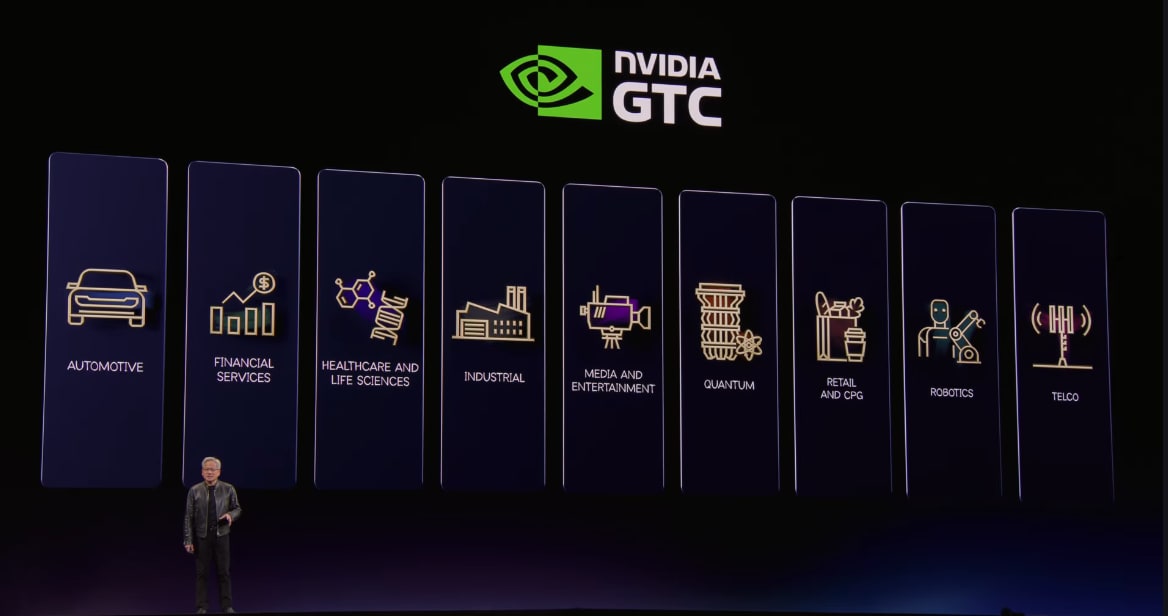
On March 16, 2026, Jensen Huang delivered a two-hour keynote at the annual NVIDIA GTC conference in San Jose, unveiling a series of major announcements including the Vera Rubin platform, Groq-3 LPU, Vera CPU, Space-1 space module, and NemoClaw, while also previewing the next-generation Feynman platform.
The presentation has been described by industry observers as the “Burning Man of AI”, and marks another milestone for NVIDIA—twenty years after the introduction of CUDA—in redefining the future of computing.
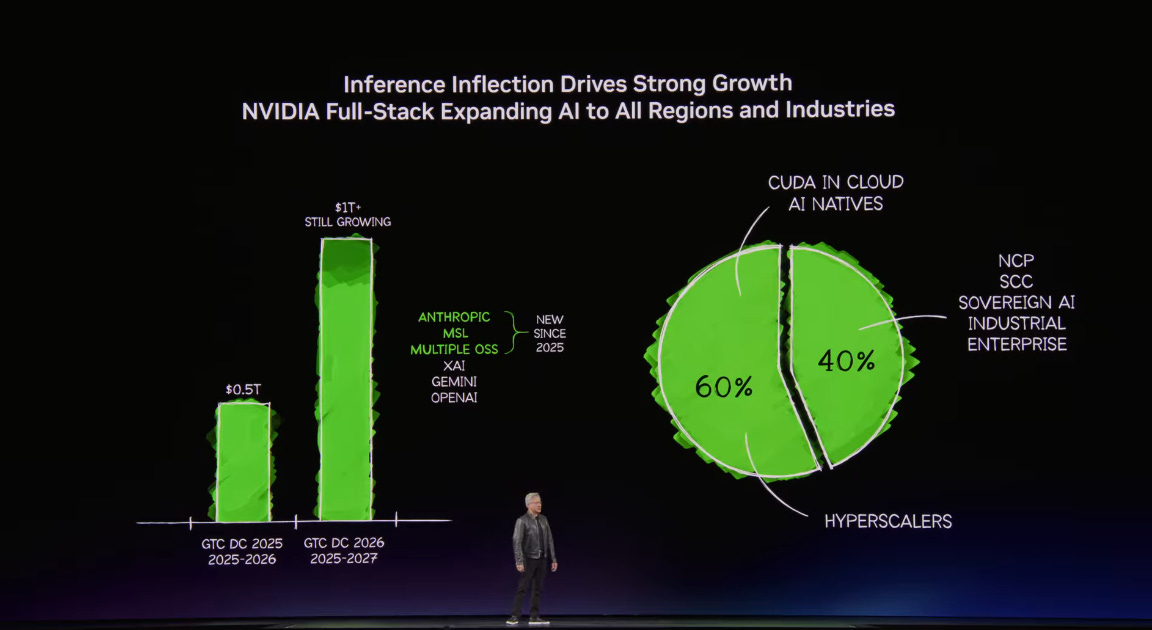
Huang emphasized that the explosive demand for artificial intelligence has increased global computing requirements by a factor of one million within just a few years. He projected that cumulative orders between 2025 and 2027 could reach $1 trillion, reflecting the unprecedented scale of AI infrastructure investment now underway.
This report provides an in-depth technical analysis of the technologies introduced at GTC 2026, covering their architectural design, industry significance, and future development trajectories. The discussion spans hardware architecture, software stacks, industry collaborations, and emerging space-based opportunities, offering a comprehensive view of NVIDIA’s evolving AI ecosystem.
To ensure rigor and balance, this report synthesizes insights from official press releases, technical blogs, media analysis, industry commentary, and scientific publications, with the goal of reconstructing the most accurate technical picture possible. It also includes an in-depth discussion of the so-called “shrimp farming” concept—a metaphor emerging around OpenClaw / NemoClaw—and its broader implications for the AI infrastructure ecosystem.
Overview of the Vera Rubin Platform
Design Philosophy
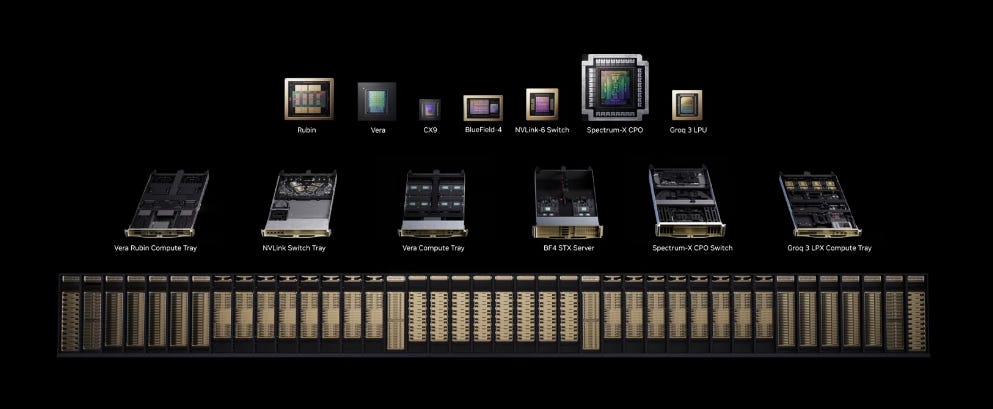
The Vera Rubin platform represents a fully integrated AI factory stack, composed of seven core chips and five rack-scale systems. Its design aims to support the massive inference throughput and ultra-low latency required by next-generation agentic AI systems and Mixture-of-Experts (MoE) models.
During the keynote, Huang described Vera Rubin as a system that is “vertically integrated yet horizontally open.” The platform emphasizes co-design across multiple layers of the computing stack—from silicon chips and networking switches to storage systems and AI software frameworks.
The platform’s name honors the astronomer Vera Rubin, who discovered key evidence for dark matter. Huang noted that just as Rubin’s discoveries expanded our understanding of the universe, the next generation of AI data centers may extend beyond Earth into orbit, a vision symbolized by NVIDIA’s newly introduced space computing modules.
Seven Chips and Five Rack-Scale Systems
The Vera Rubin platform is built around the following seven core chips:
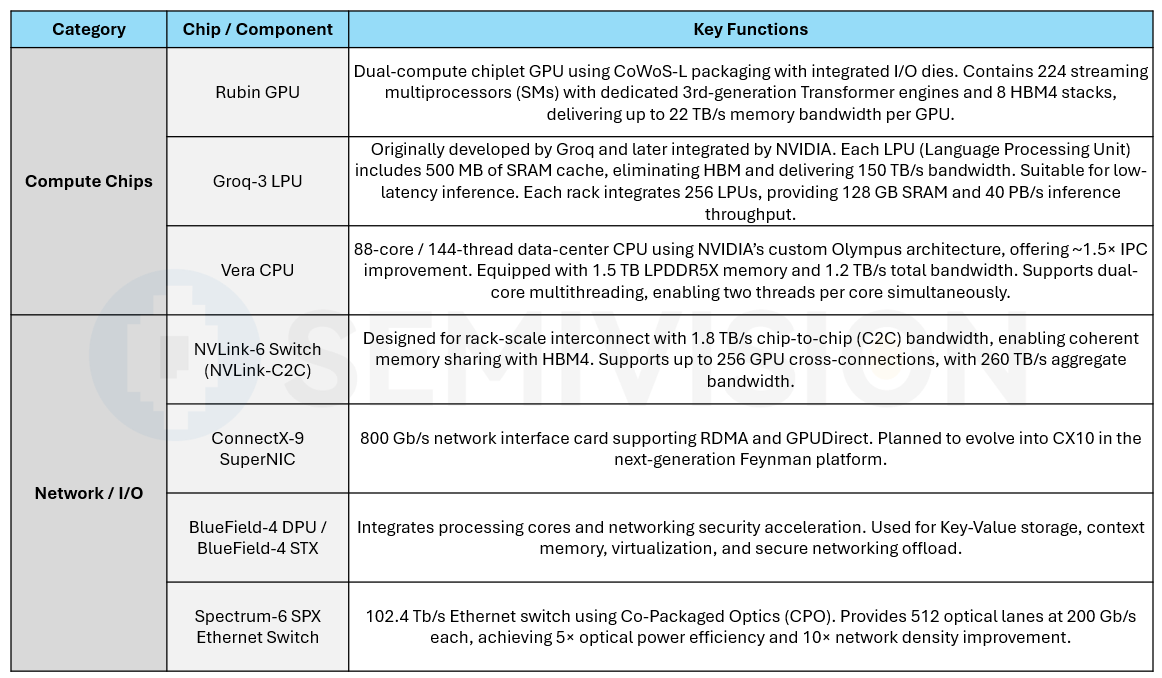
The platform is organized into five rack-scale systems based on functionality:
NVL72 GPU Rack
Contains 72 Rubin GPUs and 36 Vera CPUs, delivering 20.7 TB of HBM4 memory and 1.6 PB/s memory bandwidth. The system is designed to run Mixture-of-Experts (MoE) models and support inference workloads generating tens of millions of tokens per second.
Vera CPU Rack
Integrates 256 liquid-cooled Vera CPUs, capable of maintaining 22,500 parallel CPU sandboxes. It is primarily used for AI agents, reinforcement learning workloads, and development environments.
Groq-3 LPX Rack
Equipped with 256 Groq LPUs, providing 128 GB of SRAM and 40 PB/s of bandwidth, specifically optimized for ultra-low-latency inference.
BlueField-4 STX Storage Rack
Provides massive context memory (key-value cache) to support fast lookups during inference for models with tens of billions of parameters, reducing the memory burden on GPUs and LPUs.
Spectrum-6 SPX Network Rack
Utilizes 102.4 Tb/s co-packaged optical switches and 200 Gb/s optical channels, enabling 800 Gb/s to 1.6 Tb/s ultra-low-latency networking between racks.
Two New System Forms: NVL72 and the DSX Factory
NVL72 Supercomputer
Composed of 18 DGX Rubin NVL72 racks, totaling 1,296 GPUs and 640 TB of HBM4 memory, forming a supercomputer capable of 3.6 EFLOPS inference performance and 700 PFLOPS training performance. Such systems are designed for companies like Anthropic, OpenAI, and Meta to train multi-agent AI models.
DSX AI Factory Reference Design
NVIDIA introduced DSX Air and the Omniverse DSX Blueprint, allowing enterprises to simulate AI factories virtually before building physical infrastructure. This enables customers to optimize data center layout, cooling systems, power distribution, and network architecture prior to deployment.
Below we will share:
Rubin GPU Architecture and Performance
NVL72 System and Mixture-of-Experts Models
Groq-3 LPU — Designed for Inference
Vera CPU — Reshaping General-Purpose Computing in Data Centers
BlueField-4 DPU and Spectrum-6 SPX Networking
NemoClaw and the “Shrimp Farming” Concept
The “Shrimp Farming” Metaphor and Industry Implications
Space-1 Modules and the Emerging Space Economy
The Nemotron Ecosystem and the Nemotron Coalition
Feynman and the Future Roadmap
Ecosystem and Supply Chain Outlook
Technical Challenges and Future Outlook

2月28日

2月26日
Rubin GPU Architecture and Performance
Technical Specifications
The Rubin GPU represents the third generation of NVIDIA data center GPUs, following the Hopper (H100) and Blackwell (B200/B100) architectures. Its packaging adopts a multi-chip module design, integrating two compute dies and two I/O dies using CoWoS-L advanced packaging. Key technical features include:
Process Technology and Chip Scale:
Fabricated using TSMC’s N2 or N2P process, the Rubin GPU contains approximately 33.6 billion transistors.
Memory System:
Equipped with eight stacks of HBM4 memory, each with a maximum capacity of 36 GB, for a total of 288 GB. Each stack delivers 2.75 TB/s bandwidth, resulting in a total memory bandwidth of approximately 22 TB/s.
Compute Units:
The GPU includes 224 Streaming Multiprocessors (SMs). Each SM integrates four FP/INT processing units and one Tensor Core. The architecture introduces a third-generation Transformer Engine, supporting dynamic range QKV ordering, FP4/INT4 mixed precision, and larger vector lengths.
Inference and Training Performance:
Each Rubin GPU can achieve up to 50 PFLOPS of inference performance using the NVFP4 format. For FP8/FP16 training workloads, performance reaches approximately 35 PFLOPS.
Power Efficiency and Consumption:
Each GPU has a TDP of around 600 W. The NVL72 rack system uses an 800 V DC power architecture, reducing electrical losses and simplifying power distribution.
NVLink 6 Interconnect:
GPUs are connected via NVLink 6, with each GPU providing 18 NVLink channels, each delivering 50 GB/s bandwidth, for a total interconnect bandwidth of 900 GB/s per GPU. The NVSwitch 6, a third-generation switching fabric, enables up to 260 TB/s rack-scale interconnect bandwidth.
NVL72 System and Mixture-of-Experts Models
The NVL72 system connects 72 Rubin GPUs and 36 Vera CPUs into a single logical compute device, interconnected through high-bandwidth NVLink 6. The system provides 20.7 TB of HBM4 memory and 1.6 PB/s interconnect bandwidth.
This architecture enables 3.6 EFLOPS of inference throughput for multi-agent AI systems and Mixture-of-Experts (MoE) models, while the eight stacks of HBM4 memory help mitigate memory bottlenecks in large-scale inference workloads.
Software Optimization
With the Rubin GPU generation, CUDA enters its 20th year, and NVIDIA emphasizes the concept of “Extreme Co-Design.” In this approach, hardware and software are developed simultaneously to maximize performance.
The Transformer Engine now supports the NVFP4 format (similar to FP4 precision), enabling lower-bit computation while maintaining accuracy. NVIDIA also introduced a new Trinity Compiler, which reorganizes Tensor Core scheduling and improves computational efficiency by approximately 35%.
Improvements Compared with Blackwell
Compared with the Blackwell architecture introduced in 2025, the Rubin GPU delivers approximately 10× higher inference performance per watt, according to reports from VentureBeat. Additionally, the cost per token is reduced by about 90%, while HBM capacity increases to 288 GB.
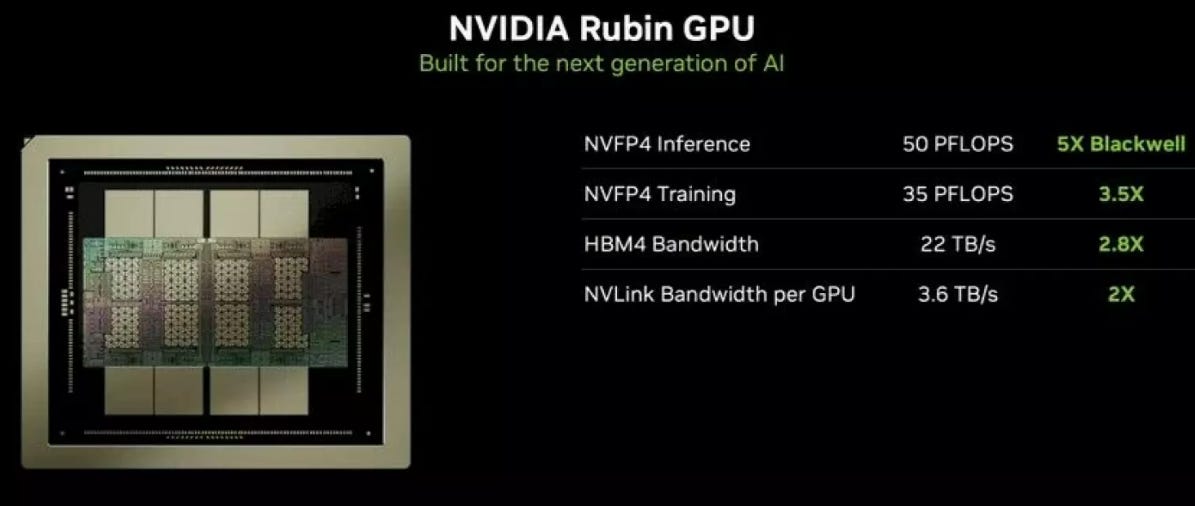
These improvements enable agentic AI systems and large-scale inference platforms to run trillion-parameter models within a single NVL72 rack, significantly reducing costs while improving energy efficiency.
Groq-3 LPU — Designed for Inference
The Technological Origins of Groq
Groq is a startup focused on ultra-low-latency AI inference. Its early products, known as LPUs (Language Processing Units)—originally referred to as Tensor Streaming Processors—gained recognition between 2024 and 2025 for their exceptional speed and low latency.
In 2025, NVIDIA acquired Groq’s intellectual property and key engineering talent, aiming to incorporate its SRAM-only architecture into future platforms. As a result, the Groq-3 LPU has become a critical new component of the Rubin platform.

LPU Architecture Characteristics
The Groq-3 LPU uses 500 MB of on-chip SRAM as its sole memory, delivering an extraordinary 150 TB/s memory bandwidth, far exceeding the 22 TB/s bandwidth of HBM4.
The core design principle is a single-stream pipeline architecture, where functional units are connected in a serialized pipeline that processes token streams continuously. Unlike GPUs, the LPU architecture eliminates complex register files and multi-thread scheduling mechanisms.
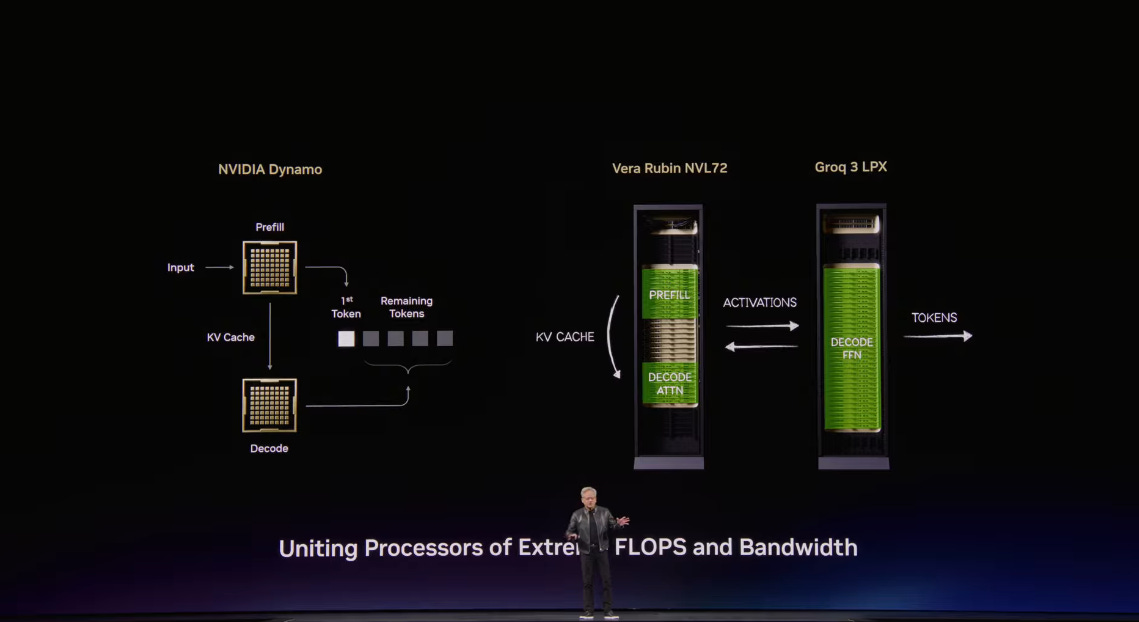
This design is particularly well suited for the decoding stage of inference (token generation). The decoding process is largely bandwidth-bound, meaning each generated token requires rapid access to model parameters and KV cache data. The LPU’s streaming architecture allows tokens to flow through the compute pipeline with minimal latency.
LPX Rack and Ultra-Low-Latency Inference
A single Groq-3 LPX rack contains 256 LPUs, providing 128 GB of SRAM working memory and up to 40 PB/s inference bandwidth.
The LPX rack offers a 640 TB/s scale-up interface, connecting directly to Rubin GPU racks to form a hybrid Rubin + LPU computing platform.
According to Tom’s Hardware, this hybrid architecture can increase token generation speed for multi-agent AI systems from approximately 100 tokens per second to around 1500 tokens per second.
Beyond raw throughput improvements, the LPU’s extremely low latency enables nearly real-time responses. While GPU-based decoding often requires hundreds of milliseconds, LPUs can generate thousands of tokens within tens of milliseconds. This capability is crucial for applications such as robotics, real-time conversational AI, and multi-agent systems.

LPU Replacing Rubin CPX
The Rubin platform originally included a Rubin CPX inference accelerator module, which used GDDR7 memory with approximately 110 GB/s bandwidth. However, the emergence of the Groq-3 LPU has significantly reduced the importance of CPX.
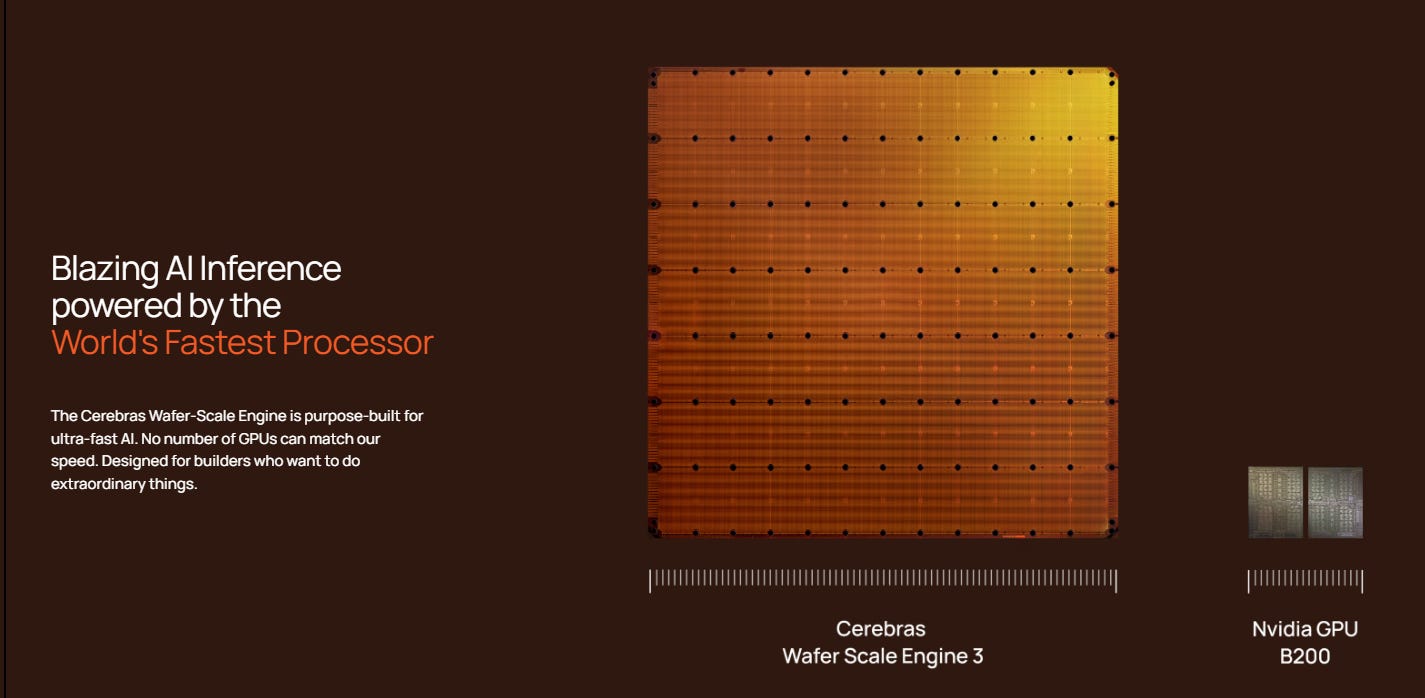
NVIDIA executive Ian Buck indicated that the company’s current focus is on integrating LPUs into the Rubin platform, and CPX may no longer be actively promoted. This shift reflects NVIDIA’s recognition that GPUs are less efficient in pure decoding workloads, and specialized inference accelerators are required to compete with rivals such as Cerebras, whose Wafer-Scale Engine architecture also targets ultra-low-latency inference.
Future Direction of the LPU
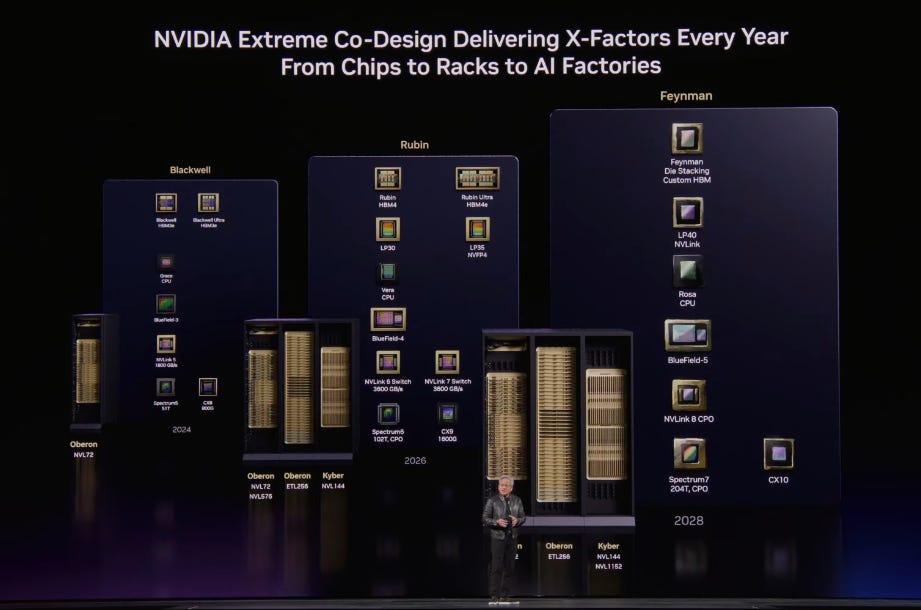
According to NVIDIA’s official announcements, the LPU family will evolve into the LP40 generation alongside the upcoming Feynman platform. These next-generation LPUs are expected to support larger AI models and higher memory bandwidth.
Through the Kyber interconnect, the LP40 will integrate with components such as the Rosa CPU, BlueField-5 DPU, and CX10 SuperNIC, forming a next-generation heterogeneous computing platform designed for large-scale AI inference and agent-based workloads.
Vera CPU — Reshaping General-Purpose Computing in Data Centers
Background and Design Goals
In 2022, NVIDIA introduced the Grace CPU, built on Arm Neoverse cores, primarily designed to provide high-bandwidth memory support for GPU-accelerated systems. Grace was rapidly adopted in systems such as DGX SuperPOD and the successor architecture to Japan’s Fugaku supercomputer.
In 2026, NVIDIA formally entered the standalone CPU market with the Vera CPU, positioning it against the x86 ecosystem led by AMD and Intel, while also competing with custom ARM-based processors developed by major cloud providers.
Olympus Cores and Spatial Multithreading
The Vera CPU integrates 88 Olympus cores, which are custom-designed by NVIDIA rather than using standard Arm Neoverse designs.
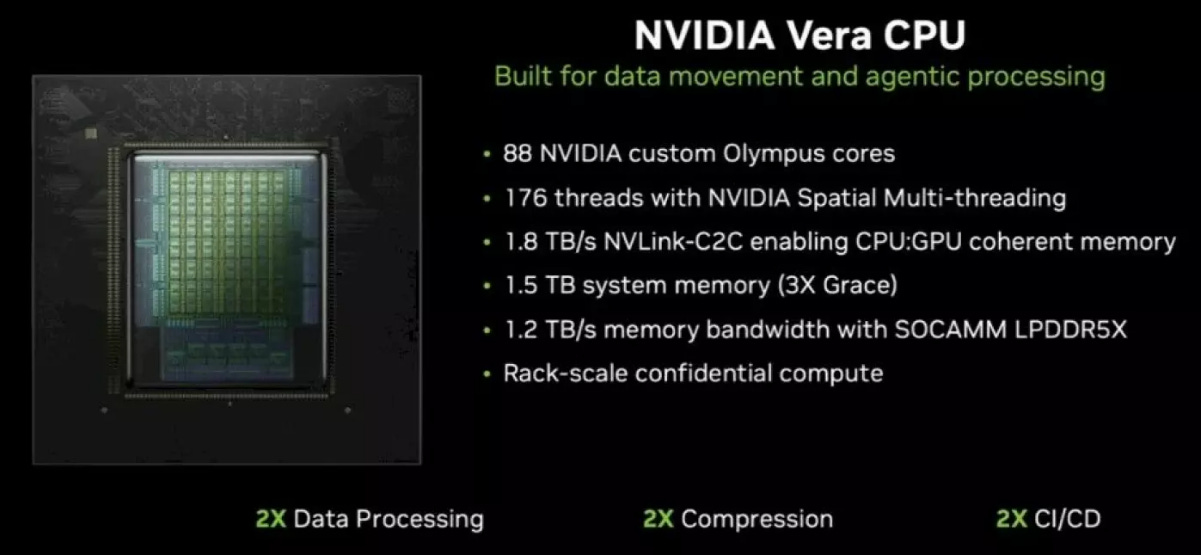
Each core supports dual-path Spatial Multithreading, a technique that differs from conventional Simultaneous Multithreading (SMT). Instead of time-sharing execution units between threads, spatial multithreading assigns two instruction streams simultaneously to different execution units at the hardware level. This allows both threads to run truly in parallel while sharing cache resources, improving instruction-level parallelism and overall throughput.
The cores are interconnected through NVIDIA’s Scalable Coherency Fabric (SCF), an architecture derived from the Arm CMN-700 mesh network. This mesh topology delivers up to 1.2 TB/s of memory throughput, while allowing burst bandwidth up to 80 GB/s per core for bandwidth-intensive workloads. All 88 cores reside within a single coherency domain, minimizing NUMA latency and improving data locality.
Memory and Interconnect
The Vera CPU uses LPDDR5X memory, supporting up to 1.5 TB per system with 1.2 TB/s bandwidth.
The memory is packaged using SOCAMM modules, a design jointly developed by Micron Technology and Samsung Electronics. These modules connect directly to the CPU die through a chip-to-chip (C2C) interface.
Compared with the 546 GB/s memory bandwidth of the first-generation Grace CPU, Vera more than doubles the available bandwidth.
Additionally, Vera integrates an NVLink-C2C controller, enabling direct connection with Rubin GPUs at up to 1.8 TB/s bandwidth, roughly seven times faster than PCIe 6.0.
Vera CPU Racks and Industry Impact
256 Liquid-Cooled Vera CPUs:
NVIDIA states that a full Vera CPU rack delivers six times higher throughput than previous-generation systems, and provides more than 2× performance gains for AI agent workloads.
22,500 Parallel Sandboxes:
A single rack can support 22,500 independently running CPU environments, enabling workloads such as Python execution, SQL queries, code compilation, and reinforcement learning simulations. This makes it feasible to train large numbers of AI agents or simulation environments simultaneously.
Industry Adoption:
NVIDIA announced that Meta plans to deploy multiple generations of these CPU systems. Other cloud providers—including Oracle, CoreWeave, Nebius, and Alibaba Group—are also expected to adopt Vera CPU racks.
Market Expansion:
This move marks NVIDIA’s transition from an accelerator supplier into a full-scale CPU competitor, directly challenging AMD’s EPYC processors, Intel’s Xeon CPUs, and custom ARM processors developed by hyperscale cloud providers. Vera’s high single-thread performance and power-efficient design make it particularly suitable for inference backend services, financial computing, and web servers, potentially placing pressure on the traditional x86 server market.
Grace Hopper vs. Vera Rubin
Within hybrid CPU–GPU architectures, the Vera Rubin platform fully replaces the earlier Grace Hopper design.
Grace Hopper connected the CPU and GPU through NVLink-C2C, but the CPU primarily served as a memory bridge for the GPU. In contrast, Vera uses the high-IPC Olympus cores to provide significantly stronger general-purpose computing capability, allowing the CPU to function as a standalone data center processor rather than merely a supporting component.

This shift is reflected in deployments such as Meta’s pure CPU rack configurations, suggesting that not all inference workloads require GPUs. As inference demand grows, the traditional “Ferrari-style accelerator model” may gradually evolve toward a more balanced “Prius-style efficiency model”, where CPUs and specialized accelerators work together to optimize performance and energy efficiency in AI data centers.
BlueField-4 DPU and Spectrum-6 SPX Networking
The Evolving Role of the DPU
The BlueField series has now entered its fourth generation, expanding its role from storage acceleration and data-plane offloading to managing context memory for AI systems. As agentic AI architectures require massive context caches (KV cache), the DPU is responsible for moving key–value pairs from CPU/GPU memory into STX storage racks, enabling low-latency retrieval.
Specifically, the BlueField-4 STX provides high-bandwidth NVMe storage and Ethernet connectivity, functioning as an internal token memory warehouse. This architecture offloads memory pressure from GPUs and LPUs, allowing them to focus on compute-intensive tasks.
Spectrum-6 SPX and Co-Packaged Optics (CPO)
The Spectrum-6 SPX is a 102.4 Tb/s Ethernet switch that adopts Co-Packaged Optics (CPO). Traditional switches rely on pluggable optical transceivers, which are constrained by power consumption and port density. In contrast, CPO integrates lasers and optical components directly within the switch package, delivering significant improvements in efficiency and reliability.
Compared with conventional pluggable designs, CPO can provide:
5× optical power efficiency
10× network reliability
Higher port density, enabling rack-to-rack connections using 200 Gb/s or 400 Gb/s optical links
The Spectrum-6 architecture can also integrate with NVLink-6 switching fabrics to provide scale-out networking across large AI clusters. Meanwhile, the third-generation MGX rack platform introduces features such as dynamic power scheduling and energy buffering, allowing data centers to store energy during off-peak periods or adjust power consumption during grid peaks, thereby improving overall energy efficiency.

NemoClaw and the “Shrimp Farming” Concept
The OpenClaw Phenomenon
In late 2025, Austrian developer Peter Steinberger released an open-source project called OpenClaw (nicknamed “shrimp farming” or “lobster farming” in Chinese online communities). The platform allows users to rapidly deploy AI agents locally and connect them to browsers, file systems, and various APIs.

OpenClaw uses a layered architecture—
message layer → gateway layer → agent layer → skill layer—
to integrate large language models such as Claude, GPT-4, and Kimi. Through this structure, AI systems can move beyond understanding information to actively controlling tools and performing tasks.
Within just four months, OpenClaw gained over 250,000 stars on GitHub, surpassing the long-standing popularity of projects like React and even the Linux kernel.

The platform has been described as an “app killer,” because users can simply express an intention and let AI automatically orchestrate backend software to complete the task. However, this powerful automation also introduces significant risks: poorly governed agents could delete emails or perform malicious actions. As a result, companies such as Meta have restricted the use of OpenClaw on employee workstations.

2月1日
The Token Economy and Infrastructure Profits
The popularity of OpenClaw has dramatically increased token consumption. Completing complex tasks requires frequent calls to LLM APIs, meaning users are effectively “raising shrimp”—constantly consuming compute power and tokens.
Infrastructure providers—such as cloud server operators and AI model API vendors—are often described as the ones “selling aquariums and shrimp feed.” In other words, regardless of whether users ultimately profit from their AI agents, the infrastructure layer benefits first.
Major cloud providers such as Alibaba Cloud, Tencent Cloud, and ByteDance Volcano Engine have launched one-click OpenClaw deployment services, while companies like Xiaomi and Tencent are developing similar tools to capture market share.
NemoClaw: Enterprise-Grade Safety Guardrails
To address OpenClaw’s security concerns in enterprise environments, NVIDIA officially introduced NemoClaw at GTC.

According to reports from INSIDE, NemoClaw breaks hardware lock-in, allowing enterprises to deploy the platform even without NVIDIA hardware, thanks to its open-source architecture.
Key enterprise features include:
Hardware Decoupling:
Supports all GPU and CPU environments, enabling deployment on cloud infrastructure or local systems such as RTX PCs, DGX Station, and DGX Spark.
Policy Engine and Governance:
The Agent Toolkit defines behavioral policies to prevent agent overreach, while OpenShell creates a secure sandbox environment that protects confidential data.
Private Models + Frontier Models:
Extensible Intelligence:
Companies can install various integrations—such as Salesforce plugins or ERP connectors—allowing AI agents to automate daily business tasks. NVIDIA is actively promoting this platform to enterprise software vendors including Salesforce, Cisco, Google, Adobe, and CrowdStrike.
The launch of NemoClaw symbolizes NVIDIA’s transition from selling hardware to delivering software platforms, positioning the company as a potential operating system layer for the agentic AI era. Jensen Huang described OpenClaw as the “operating system for personal AI,” suggesting that every organization will eventually require an OpenClaw strategy.

The “Shrimp Farming” Metaphor and Industry Implications
In Chinese tech communities, the term “shrimp farming” has become a metaphor for OpenClaw usage, with three main interpretations:
Resource Consumption
Raising shrimp requires aquariums, filters, and feed. Similarly, OpenClaw consumes large amounts of cloud computing power and LLM API tokens, requiring GPUs and infrastructure. The metaphor reflects the idea that “even if shrimp farmers do not make money, those selling aquariums and feed will.”
Cultivation and Training
Users nurture their own AI agents much like raising shrimp, continuously refining skills and feeding them data until they become valuable in the marketplace. This represents the evolution and training of autonomous agents.
Ecosystem Balance
Shrimp ecosystems require careful environmental management. Likewise, OpenClaw agents require security governance and resource management. NemoClaw acts as the “aquarium”—a controlled environment ensuring that AI agents remain safe, stable, and productive rather than chaotic.

In 2026, humanity will no longer be divided by gender, but by creators and spectators. Mastering OpenClaw is the entry ticket to the Web 4.0 era.
Space-1 Modules and the Emerging Space Economy
Overview of the Space-1 Module
At NVIDIA GTC, NVIDIA introduced the Space-1 Vera Rubin module, which reportedly delivers 25× more AI compute performance than the H100 for space-based inference workloads.

The module integrates a tightly coupled CPU–GPU architecture with high-bandwidth interconnects, designed specifically for orbital data centers. With this architecture, satellites can directly run large language models (LLMs) or Earth-observation models in orbit, enabling real-time processing of massive data streams generated by onboard sensors and instruments.

2月9日
IGX Thor, Jetson Orin, and Server-Class RTX PRO
NVIDIA also announced three additional platforms designed for space and edge environments:
IGX Thor
An industrial-grade edge platform supporting real-time AI processing, functional safety, and secure boot, designed for mission-critical applications such as manufacturing, healthcare, and transportation.
Jetson Orin
Designed for satellites and edge devices with strict constraints on size, weight, and power consumption (SWaP). It is suitable for onboard imaging, navigation, and sensor data processing.
Kepler Communications has already deployed Jetson Orin in its satellite constellation for intelligent data management and routing.
RTX PRO 6000 Blackwell Server Edition
Targeted at geospatial intelligence workloads, NVIDIA claims this GPU can deliver 100× higher performance than traditional CPU batch-processing systems when analyzing massive image datasets.
Industry Partners and Use Cases
According to official announcements at least six commercial space companies have already adopted NVIDIA’s space computing platform:
Aetherflux
Axiom Space
Kepler Communications
Planet Labs
Sophia Space
Starcloud
The CEO of Aetherflux noted that the Space-1 module delivers high-performance and energy-efficient AI computing, enabling constellation-scale cloud computing in orbit.
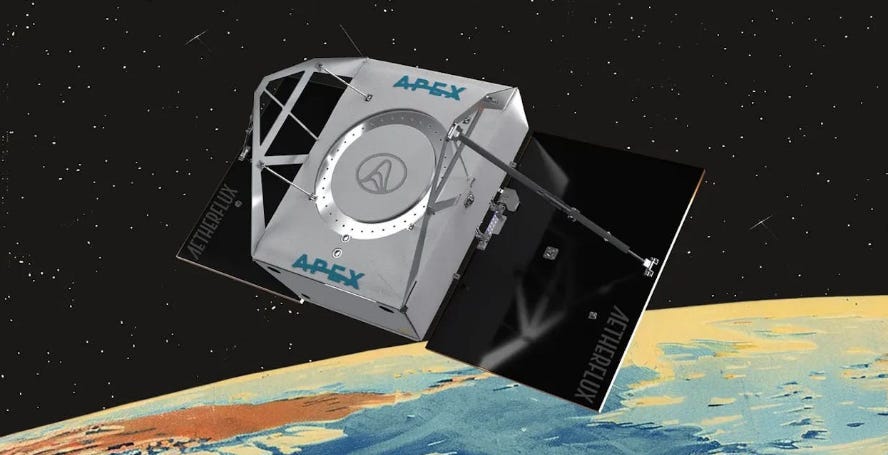
U.S. startup Aetherflux is developing space-based solar power, aiming to generate electricity using constellations of low-Earth-orbit satellites and transmit it back to Earth via infrared lasers. The technology is expected to prioritize defense applications. Although the project has attracted substantial investment, its high cost remains the primary challenge to large-scale deployment.
Meanwhile, Starcloud is developing an orbital data center infrastructure, where Space-1 modules will perform in-orbit AI training and inference. These deployments demonstrate that space-based computing is transitioning from concept to reality.

2月9日
Opportunities and Long-Term Impact
Data localization in space
Satellite constellations generate enormous volumes of data. Transmitting all raw data back to Earth is both slow and expensive. Performing in-orbit processing allows systems to filter critical events and compress data before transmission, saving bandwidth and improving response times.
Jensen Huang described this frontier as “the final frontier of computing,” where AI systems can achieve real-time sensing, decision-making, and autonomy across both space and ground infrastructure.
Energy and cooling advantages
Jeff Bezos has predicted that orbital data centers may take 10–20 years to fully mature, but space offers two major advantages: abundant solar energy and naturally efficient thermal dissipation.
NVIDIA’s early partnerships suggest that a new market for space-based cloud services could emerge.
Opportunities for regional supply chains
The growing space-AI ecosystem could also stimulate new industrial supply chains. Semiconductor and aerospace companies—particularly in regions with strong hardware capabilities—can contribute technologies such as advanced packaging, thermal management, and AI modules.
For example, Starcloud is reportedly collaborating with multiple Taiwanese partners to manufacture computing modules and satellite platforms for its orbital infrastructure initiatives.
The Nemotron Ecosystem and the Nemotron Coalition
The Nemotron Model Family

NVIDIA provides an open model suite called Nemotron to support agent-based systems. At GTC, NVIDIA introduced Nemotron-3 Super, a 12-billion-parameter Mixture-of-Experts (MoE) model designed to significantly enhance inference performance.
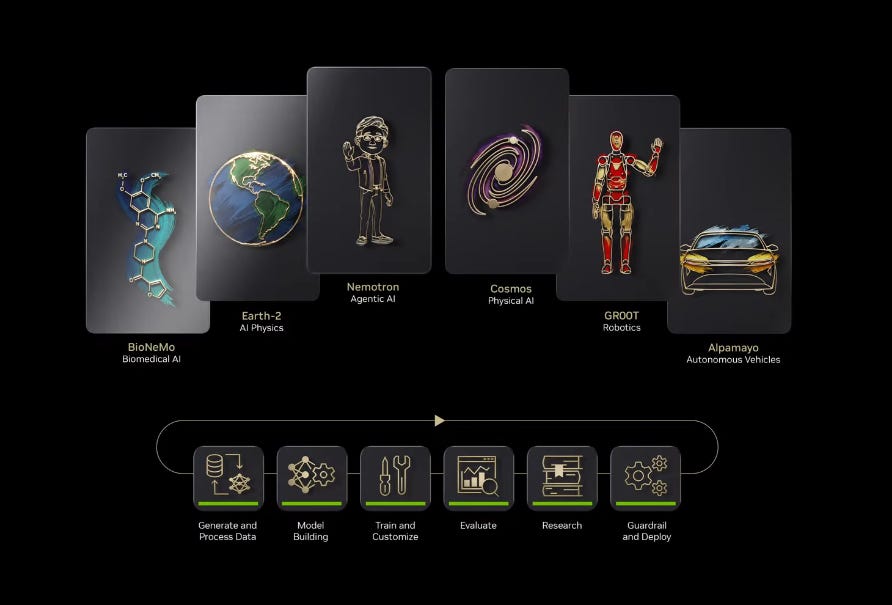
Nemotron-3 Super delivers 5× higher inference throughput and 2× improvement in accuracy. The model architecture incorporates Mamba layers and a Latent MoE design, enabling support for context windows of up to one million tokens. Running in the NVFP4 precision format on the Blackwell platform, the model achieves four times faster inference compared with FP8 execution on the Hopper architecture.

The Nemotron family extends beyond language models. It includes a broader ecosystem of AI models covering multiple domains:
Nemotron– Large language models
Cosmos– Vision models
Isaac GR00T– Robotics models
Alpaymayo– Autonomous driving models
BioNeMo– Biological and life sciences models
Earth-2– Climate and environmental simulation models
Together, these models enable enterprises to develop and train AI agents across a wide range of industries and applications.
The Nemotron Coalition
To accelerate collaborative development of open AI models, NVIDIA has established the Nemotron Coalition, partnering with eight leading AI research organizations:
Black Forest Labs
Cursor
LangChain
Mistral AI
Perplexity
Reflection AI
Sarvam AI
Thinking Machines Lab
Each organization contributes expertise from different domains. For example:
LangChain focuses on tool integration and long-horizon reasoning.
Perplexity specializes in search and retrieval technologies.
Mistral AI contributes multilingual model capabilities.
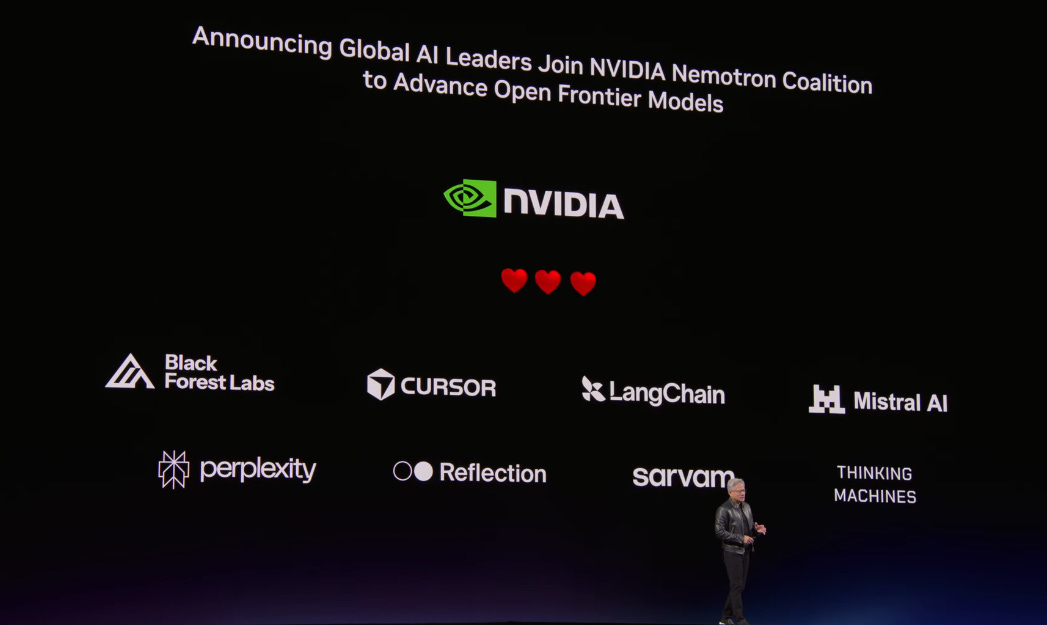
NVIDIA stated that the coalition will use DGX Cloud as a shared training platform, with the goal of developing Nemotron-4 and future Nemotron-5 model generations to power the NemoClaw platform and the broader agentic AI ecosystem.
This collaborative framework is expected to accelerate the iteration of open AI models and promote industry standardization, strengthening the foundation for next-generation AI agent platforms.
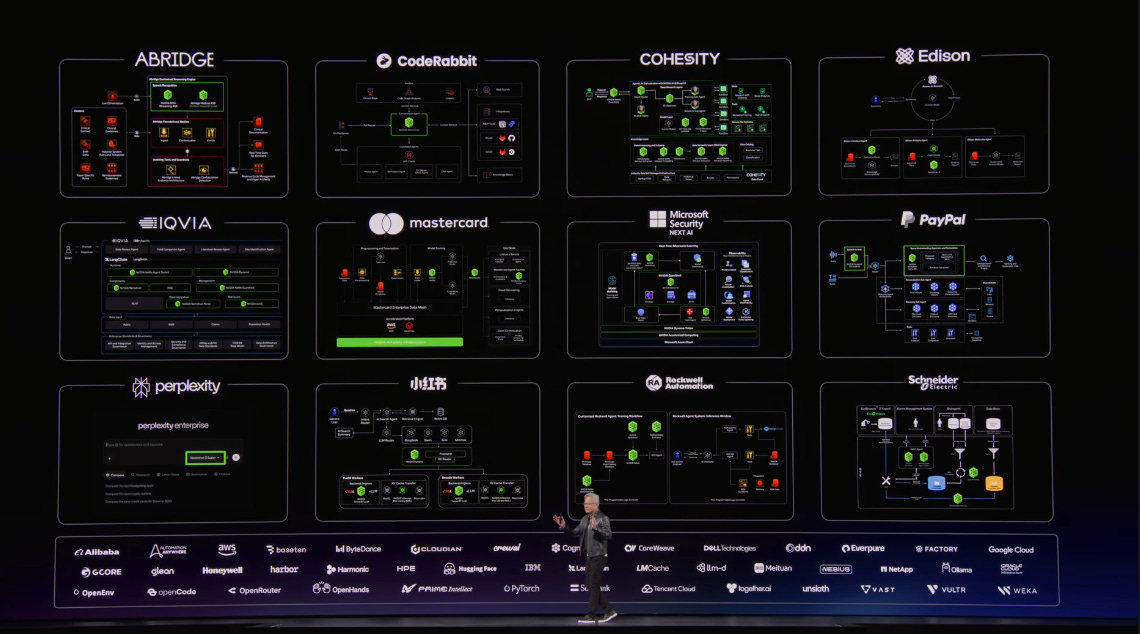
Feynman and the Future Roadmap
Overview of the Feynman Platform
During his GTC keynote, Jensen Huang previewed Feynman, which he described as the successor to the Vera Rubin platform, expected to launch around 2028.
The Feynman platform will integrate several next-generation components, including:
Rosa CPU
LP40 LPU
BlueField-5 DPU
CX10 SuperNIC
All of these elements will be connected through a new interconnect architecture called Kyber, alongside Spectrum-class optical scale-out networking. The design aims to unify compute, networking, and memory systems into a highly integrated AI infrastructure platform.
Rosa CPU
The Rosa CPU, named after British DNA researcherRosalind Franklin, is designed as an engine optimized for efficiently moving data, tools, and tokens across AI systems.
Although the internal architecture has not yet been fully disclosed, Rosa is expected to:
Support the Arm v9.3 or v10 instruction set
Use LPDDR6 or DDR6 memory
Connect directly to LP40 LPUs via the Kyber interconnect
Kyber Architecture
Kyber will replace NVLink 6 as NVIDIA’s next-generation rack-level interconnect architecture.
Industry reports suggest Kyber will support:
Dual-mode connectivity (copper and optical fiber)
More than 4 TB/s chip-to-chip bandwidth
Co-Packaged Optics (CPO)support
The introduction of Kyber suggests that future AI systems will adopt denser interconnect topologies. One potential configuration discussed in industry speculation is an NVL576 Kyber rack, possibly built around a 144-GPU × 4-die architecture.
Feynman GPU and LP40
According to industry analysis, the Feynman GPU may adopt TSMC’s A16 (1.6-nm) process node, paired with next-generation HBM5 memory and new precision formats such as NVFP3 / FP3.
The multi-chip module design may integrate Groq LPU units directly within the GPU package, reducing latency and improving inference efficiency.
The LP40 LPU, the next evolution of the Groq architecture, is expected to feature:
Up to 2 GB of SRAM
Bandwidth exceeding 300 TB/s
Support for larger token prediction workloads
This would significantly expand the role of dedicated inference accelerators in future AI systems.

NVL144 and NVL576 (“Kyber”)
Reports from Tom’s Hardware suggest the following roadmap:
NVL144 system (expected in the second half of 2026)
Uses VR200 GPUs (an enhanced Rubin variant)
Maintains the Oberon architecture
Delivers roughly 14× performance improvements
NVL576 “Kyber” rack (expected around 2027)
Contains 144 quad-die Rubin Ultra GPUs
Equivalent to 576 GPU dies in total
Delivers approximately 14× higher inference performance
By 2028, the Feynman platform will likely incorporate next-generation HBM memory and new networking technologies such as NVLink 8 or Spectrum-7 networking.
Ecosystem and Supply Chain Outlook
Industry analysts suggest that Feynman GPUs will likely be manufactured using TSMC’s A16 process, while some I/O dies could potentially be produced using Intel’s 18A or 14A nodes.
This strategy could:
Diversify manufacturing risk
Maintain the competitiveness of Taiwan’s advanced packaging ecosystem
Strengthen supply-chain resilience
At the same time, GPU power consumption continues to increase rapidly. Future AI racks may exceed 1 megawatt of power consumption, creating significant new challenges for:
Data-center power delivery
Advanced cooling technologies
AI infrastructure energy efficiency
These trends suggest that the next phase of AI infrastructure development will increasingly depend not only on semiconductor innovation, but also on breakthroughs in power systems, thermal management, and large-scale data-center engineering.
Industry Competition and Market Trends
Competition in the GPU Market
NVIDIA currently maintains a dominant position in the AI training accelerator market, but it faces increasing competition in the inference segment.
Companies such as Cerebras Systems focus on low-latency inference with their Wafer-Scale Engine (WSE) architecture. Meanwhile, Groq—although partially integrated into NVIDIA’s ecosystem—continues to independently supply LPU inference accelerators.
Other challengers include:
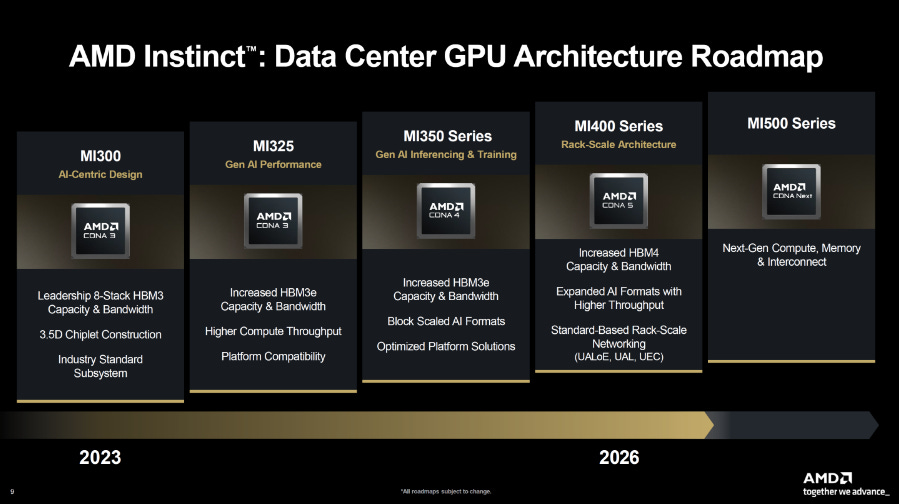
AMDwith itsMI300X / MI400 series GPUs
IntelwithGaudi 3 AI accelerators
At the same time, major technology companies are increasingly veloping in-house AI accelerators to reduce reliance on NVIDIA:
Google–TPU
Meta–MTIA / next-generation AI ASICs
Amazon–Inferentia
Microsoft–MAIA AI accelerator

2月4日
These alternatives typically target improvements in inference efficiency and cost optimization, areas where specialized hardware can compete effectively with general-purpose GPUs.
The CPU Market Landscape
With the introduction of the Vera CPU, NVIDIA is entering the traditional data-center CPU market. Its primary competitors include:
AMD EPYC processors
Intel Xeon CPUs
Custom CPUs developed by hyperscale cloud providers, such as:
Amazon Graviton
Google Axion
Alibaba Yitian
Many of these processors are ARM-based architectures with integrated AI acceleration capabilities.
NVIDIA’s strategy focuses on leveraging high-IPC Olympus cores, high-bandwidth memory architecture, and the NVLink-C2C interconnect advantage to compete in markets such as AI inference services and edge computing infrastructure.
SaaS and the Rise of Agentic AI
The AI software landscape is shifting from the Copilot era to the Agent era. User interaction models are evolving from traditional graphical user interfaces (GUIs) to API-driven agent interactions.
Projects like OpenClaw have triggered the so-called “shrimp farming” phenomenon, suggesting that many traditional applications may gradually disappear as AI agents directly orchestrate software services through APIs.
This shift could fundamentally transform the business model of software companies. Enterprise SaaS platforms may increasingly need to expose functionality as programmable APIs that AI agents can call automatically.
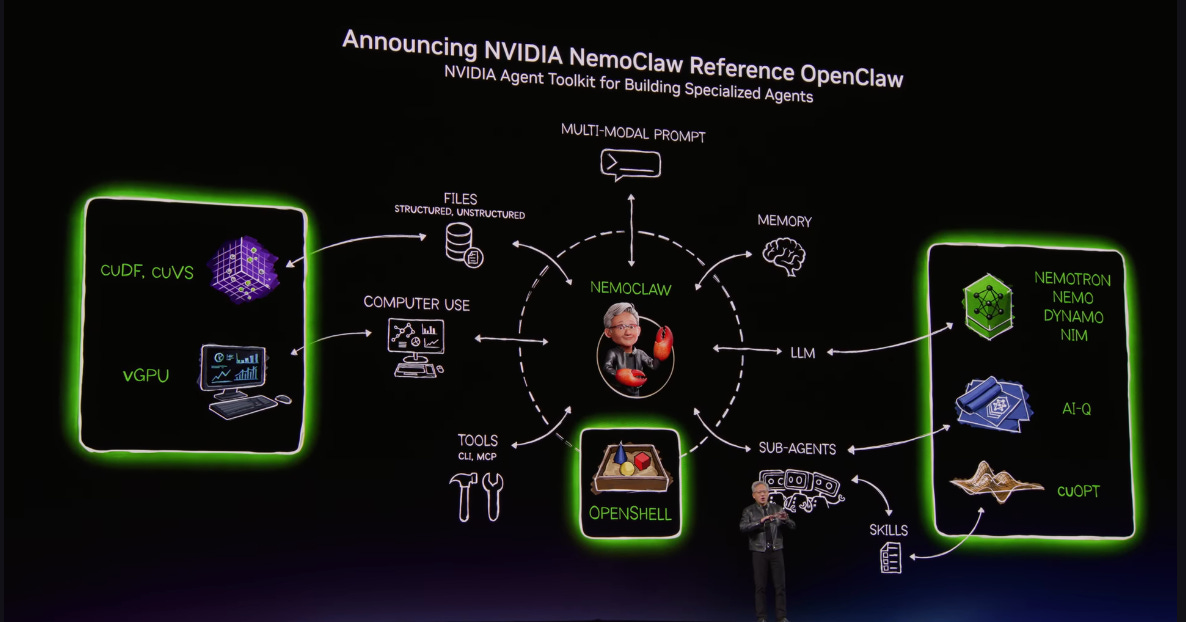
As a result, platform providers must offer secure, governable execution environments for AI agents. Technologies such as NemoClaw and OpenShell convert these requirements into commercial infrastructure services, allowing NVIDIA to build new software-driven revenue streams.
Regulatory and Ethical Challenges
AI agents often operate with high-privilege access to systems and data, and without proper governance they may cause data leakage, unauthorized operations, or cyber-attacks.
To address these risks, both enterprises and governments will need to establish:
Clear usage guidelines
Defined responsibility frameworks
Comprehensive regulatory oversight
Opportunities for Taiwan’s Industry
NVIDIA has a deep and well-established supply chain in Taiwan, including partners such as:
TSMC– chip manufacturing
Delta Electronics– server power systems
Inventec,Wistron,Compal Electronics, andGIGABYTE– server manufacturing
Foxconn– system assembly
The mass production of platforms such as Vera Rubin, Vera CPU, and the future Feynman architecture is expected to generate significant economic value for Taiwan’s semiconductor and electronics industries.
In addition, the development of space-computing modules may stimulate new demand for advanced packaging, radiation-resistant materials, and aerospace technologies, potentially expanding Taiwan’s aerospace and satellite supply chain ecosystem.

1月31日
Technical Challenges and Future Outlook
Power Consumption and Thermal Management
The Rubin GPU consumes up to 600 W, and an NVL72 rack requires more than 50 kW of power. Future Kyber racks may exceed 1 MW in power consumption. To address these challenges, NVIDIA is adopting advanced thermal and power technologies, including 800 V DC power delivery, immersion liquid cooling, and fluorinated dielectric fluids, combined with dynamic power balancing within the MGX architecture.
Looking ahead, racks may integrate carbamate-based cooling systems and GPU cavitation heat exchangers to maintain efficiency at extreme power densities.
Memory Bottlenecks
Although HBM4 provides up to 22 TB/s of bandwidth, this may still be insufficient for large-scale models. LPUs using SRAM cache can deliver up to 150 TB/s, but their capacity remains limited. BlueField 4 STX offers external caching capabilities, though it increases system complexity.
The Feynman platform is expected to adopt HBM5 or HBM4e (64 GB per stack) and may explore 3D SRAM stacking to address memory bandwidth and capacity constraints.

Multi-Agent Systems and Ecosystem Development
Future AI systems will consist of hundreds or even thousands of agents, collaborating and competing with one another. This evolution will require new scheduling strategies, communication protocols, and trust mechanisms.
NVIDIA has proposed a “token-based economy”, enabling revenue-sharing mechanisms between the engine layer (GPU/LPU) and the software layer (Agent Toolkit, NemoClaw) to support multi-agent ecosystems.
Researchers will need to develop robust agent reputation scoring and penalty mechanisms to mitigate malicious behavior and ensure system reliability.
Long-Term Forecast: 2026–2030
Second half of 2026:NVL144 racks (with VR200 GPUs) enter the market; NVIDIA and partners begin deploying DSX Air factories, potentially benefiting Taiwanese equipment suppliers.
2027:NVL576 (Kyber) racksare released, delivering a tenfold performance increase per rack; BlueField 5 and CX10 SuperNIC begin shipping.
2028:TheFeynman platformlaunches, integrating Rosa CPUs, LP40 LPUs, and Kyber interconnects, alongside HBM5 mass production. NVIDIA may also introduce the Earth-2 POD and Mars-1 space supercomputer, expanding its presence in space computing.
2029–2030:Agentic AIbecomes deeply embedded across industries. Traditional apps decline as OpenClaw and NemoClaw emerge as standard operating environments. AI agents operate in homes, offices, and even space, creating entirely new business models.
Reassessing Infrastructure and Supply Chains in the Agent Era
No Longer Just a GPU Story
This year’s NVIDIA GTC made many analysts realize that focusing solely on new GPU releases, peak compute performance, or token throughput is no longer sufficient to understand NVIDIA’s AI strategy.
Jensen Huang introduced OpenClaw into the NVIDIA ecosystem and announced NemoClaw, designed to launch Nemotron together with the OpenShell runtime using a single command.
When agents evolve from temporary chatbots into digital employees, the computational requirements extend far beyond a single GPU. Agent execution requires massive contextual memory, tool invocation, and data caching, consuming resources across CPUs, DPUs, optical switches, memory, storage, power delivery, and cooling infrastructure.
Once these demands emerge, the entire semiconductor and data-center supply chain is pulled forward—not just individual chips.
Agent Memory and Storage Requirements
As agentic AI expands context windows to millions of tokens and models approach trillion-parameter scales, systems must maintain long-term memory across sessions and tools so agents can accumulate experience.
NVIDIA’s technical blog notes that Key-Value (KV) cache demand for long-context inference is rising sharply, placing significant strain on existing memory hierarchies. AI service providers face a difficult trade-off between high-cost HBM memory and slower enterprise storage.
To address this bottleneck, the Vera Rubin platform introduces BlueField‑4 STX and Inference Context Memory Storage (ICMS).
The STX rack architecture creates a new G3.5 memory tier using Ethernet-attached flash storage, enabling agents’ long-term memories to be pre-stored and shared. Through RDMA, GPUs and LPUs gain low-latency, high-bandwidth access, improving tokens-per-second throughput and power efficiency by up to five times.
According to media report, a Vera Rubin SuperPod equipped with 16 STX racks and 16 GPU racks can supply up to 18,432 TB of context memory, specifically designed for inference workloads. This massive capacity demonstrates that the long-term memory layer has become core infrastructure for AI factories.
For enterprises, this implies a redesigned memory hierarchy:
HBM:hot data and high-bandwidth workloads
System DRAM:buffering layer
NVMe SSD + ICMS:G3–G3.5 tier for reusable KV cache
G4 storage:long-term archival and backup
NVIDIA also notes that KV cache cannot remain on GPUs permanently. ICMS enables shared access across nodes, allowing token generation speed and power efficiency to increase fivefold.
As agents become standard enterprise infrastructure, NAND and enterprise SSD demand could surge, while historically conservative NAND investment cycles may create future supply imbalances.
Advanced Process and Packaging: Transistor and Thermal Density
The compute stacks of the agent era rely not only on more GPUs and LPUs but also on breakthroughs in advanced semiconductor processes and packaging.
The Rubin GPU is expected to use 2-nm process technology with multi-chip integration, while the Feynman platform may move toward 1.6-nm nodes, combined with 3D packaging and on-chip SRAM.
These technologies push chips to physical limits, increasing cost, complexity, and thermal density, and requiring advanced packaging technologies such as:
CoWoS
SoIC
CoPoS
Higher packaging density makes cooling and testing critical challenges. Technologies such as 800-V DC power distribution, liquid cooling, fluorinated fluid immersion cooling, and dynamic power scheduling within MGX architectures are expected to become mainstream.

3月12日
Optical Communications and Silicon Photonics
Data transfer speed determines the efficiency of agent systems.
The Spectrum‑6 SPX uses co-packaged optics (CPO), integrating 512 optical channels at 200 Gb/s each, delivering 102.4 Tb/s switching capacity per chip.
Future Kyber and Feynman generations are expected to adopt silicon-photonics interconnects and higher-bandwidth optical waveguides, which will significantly increase demand for:
Photonic components
Silicon photonic modulators
Optical detectors
This will create another critical supply chain segment.

2月26日
Testing, Cooling, and Reliability
As chip values rise and packaging complexity increases, testing becomes a crucial stage in the manufacturing chain.
Demand will grow for:
System-Level Testing (SLT)
probe cards
thermal testing solutions
Cooling is no longer an optional design element—it is a prerequisite for delivering actual compute performance.
Technologies such as cold plates, immersion cooling, two-phase cooling, and even space-grade heat pipes may be deployed in data centers to ensure safe and stable operation.

3月10日

2月10日
Supply Chain Opportunities and Strategy
In summary, the agent era is redefining AI infrastructure.
From advanced process nodes, packaging, power delivery, optical networking, and testing to memory and storage, the entire supply chain must adapt capacity and technology investments to meet the needs of agents and long-context AI systems.
Markets must reassess demand for:
HBM, DRAM, SRAM
NAND and emerging 3D memory technologies
CPO and silicon photonics
HVDC power delivery systems
Advanced cooling solutions
Testing equipment
The companies capable of breaking technical bottlenecks while maintaining high yield and reliability will gain pricing power in the next wave of the AI industry.
This perspective reveals a simple truth:
“The more lobsters there are, the more data they generate; the more data there is, the more important memory and storage become.”
When AI agents truly become digital employees, the assets that will be repriced first will not only be GPUs, but also the entire infrastructure required to generate tokens and sustain agent operations.

3月14日
Compute capacity, transistors, memory, storage, and system engineering will all experience explosive growth in demand.
Conclusion
The 2026 GTC conference revealed NVIDIA’s expansive vision for the future of artificial intelligence.
From hardware architectures (Vera Rubin GPUs, Groq LPUs, Vera CPUs) to networking and storage (Spectrum-6 SPX, BlueField-4 STX), from the software stack (NemoClaw, Nemotron models) to next-generation platforms (Feynman and Kyber) and even space-based computing, the overarching goal is to build AI factories capable of supporting massive inference workloads and multi-agent ecosystems.
At the same time, the OpenClaw “lobster-raising” phenomenon has exposed new security and governance challenges, prompting NVIDIA to introduce the enterprise-grade NemoClaw solution as a foundational operating system for the agent economy.
GPUs are no longer the sole protagonists
LPUs, CPUs, and DPUs operate in coordinated architectures
Inference takes priority over training
Token economics becomes the new focal point
The boundary between Earth and space computing begins to blur
Open ecosystems and partnerships accelerate innovation
Looking ahead, artificial intelligence will permeate every aspect of human life. Balancing efficiency, cost, governance, and ethics will become a shared challenge for society as the AI era unfolds.
Thanks for reading SEMIVISION @_@! This post is public so feel free to share it.


PreviousNext
TopLatestDiscussions









See all