As AI Memory Profits Hit 65%, Automakers Become the 'Low-Priority' Clients Memory Makers Can Ignore
As AI Memory Profits Hit 65%, Automakers Become the 'Low-Priority' Clients Memory Makers Can Ignore
- Source: SemiVision
- Author: SEMIVISION
- Published: 2026-03-16T17:21:21+08:00
- URL: https://tspasemiconductor.substack.com/p/as-ai-memory-profits-hit-65-automakers (1) As AI Memory Profits Hit 65%, Automakers Become the 'Low-Priority' Clients Memory Makers Can Ignore


As AI Memory Profits Hit 65%, Automakers Become the 'Low-Priority' Clients Memory Makers Can Ignore
Original Article By SemiVision Research [Reading time: 8 mins]

Mar 16, 2026
∙ Paid
Introduction: From Chip Shortages to a Full-Blown Crisis
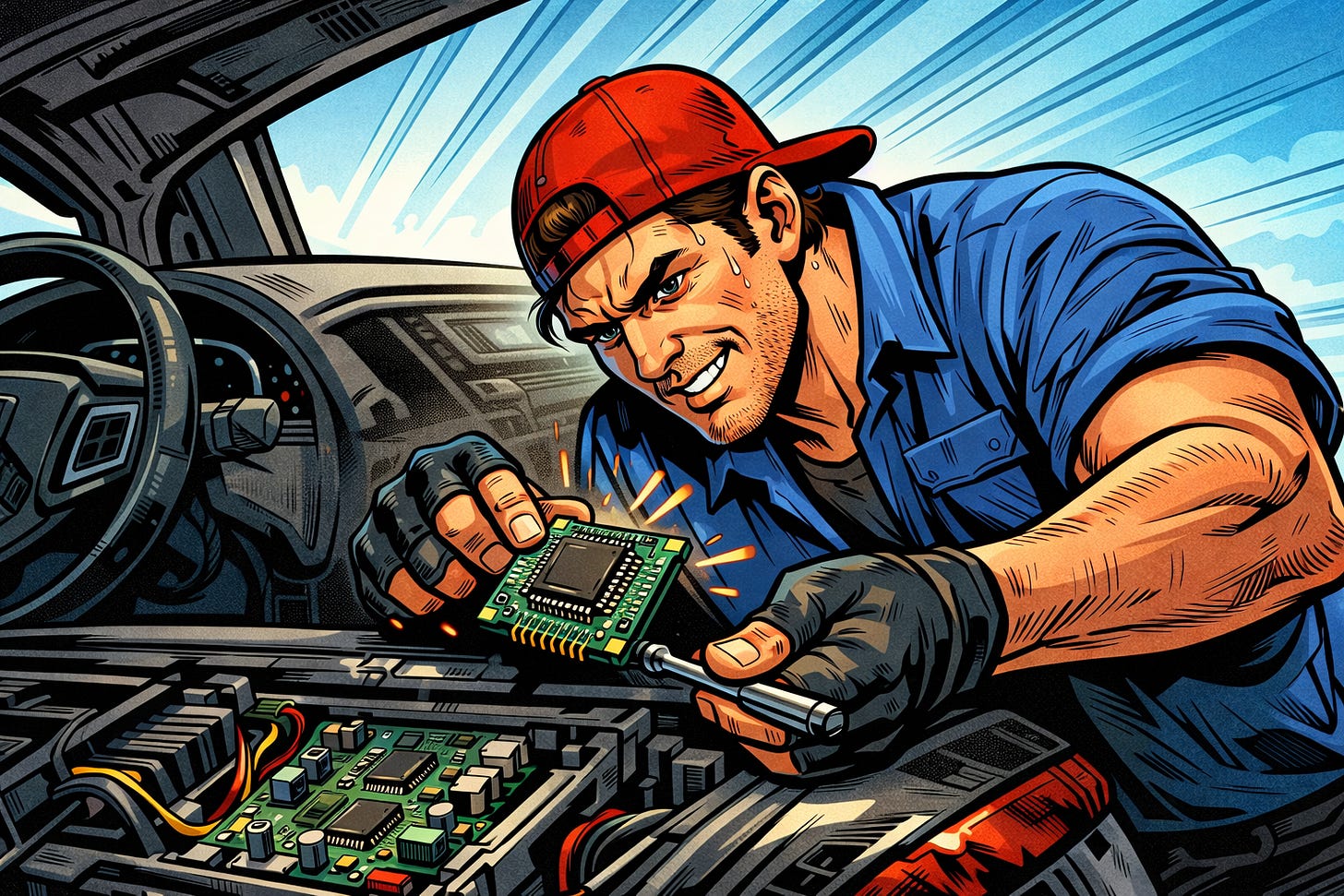
Remember the dark days of 2021, when the automotive industry was gripped by a crippling chip shortage? Factories ground to a halt, production lines idled, and car prices skyrocketed as manufacturers scrambled for microcontrollers (MCUs). It felt like the nadir of supply chain woes—a temporary “cold” that the sector could shake off with time and better planning. But fast-forward to 2026, and a new report from S&P Global paints a far grimmer picture. This time, it’s not just a hiccup; it’s a targeted assault on the very core of automotive architecture. We’re talking about a looming shortage of DRAM (Dynamic Random-Access Memory) chips, the unsung heroes powering everything from infotainment systems to advanced driver-assistance systems (ADAS).

2月12日
This isn’t merely a supply-demand imbalance. It’s a ruthless reallocation of resources, where the automotive sector is being sidelined in favor of the booming AI industry. As data centers devour high-bandwidth memory (HBM) for generative AI like ChatGPT, memory giants are turning their backs on carmakers. The stakes are higher than ever: without DRAM, the smart cars of tomorrow could become relics of yesterday. In this article, we’ll delve into the cold calculations driving this shift, the panic it’s inducing, the architectural traps ensnaring the industry, and why there’s no easy escape. Buckle up—it’s a bumpy ride ahead.
The Giants’ Pivot: Profit Over Partnership
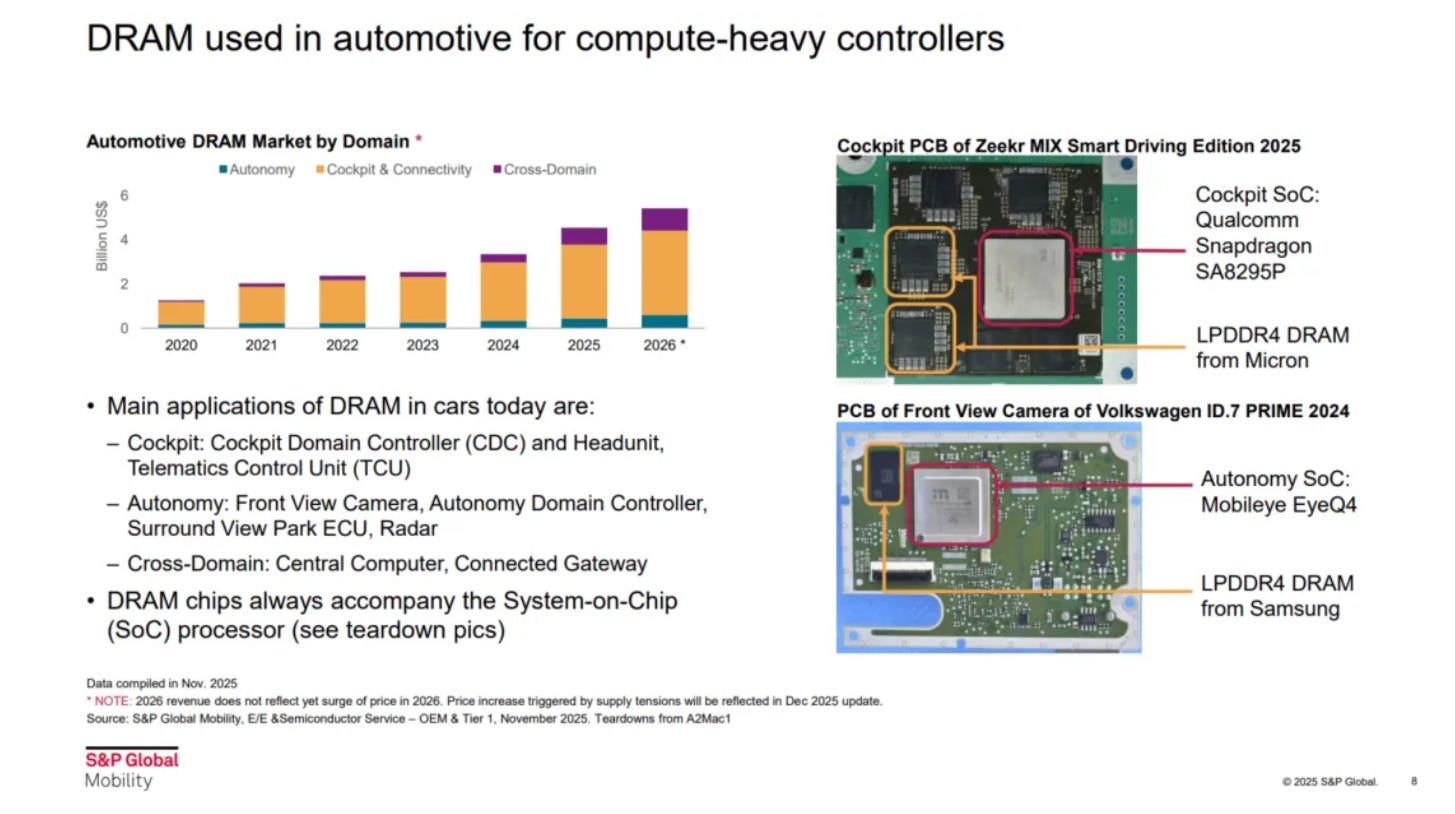
At the heart of this crisis lies a stark reality: memory manufacturers no longer view automakers as premium clients. In the semiconductor throne room, AI reigns supreme. The world’s obsession with generative AI has supercharged demand for GPUs in data centers, creating an insatiable hunger for specialized memory like HBM. The big three—Samsung, SK Hynix, and Micron—control a whopping 88% of the global automotive DRAM market. Yet, they’re redirecting production lines away from cars and toward these lucrative AI applications.
Why? It’s all about the bottom line. HBM, tailored for data centers, boasts operating profit margins exceeding 65%. That’s a goldmine compared to automotive-grade DRAM, which demands rigorous specifications, lengthy validation cycles, and razor-thin margins squeezed by cost-conscious carmakers. In the eyes of these giants, automotive DRAM is “chicken ribs”—tasty enough to nibble on but ultimately not worth the effort.
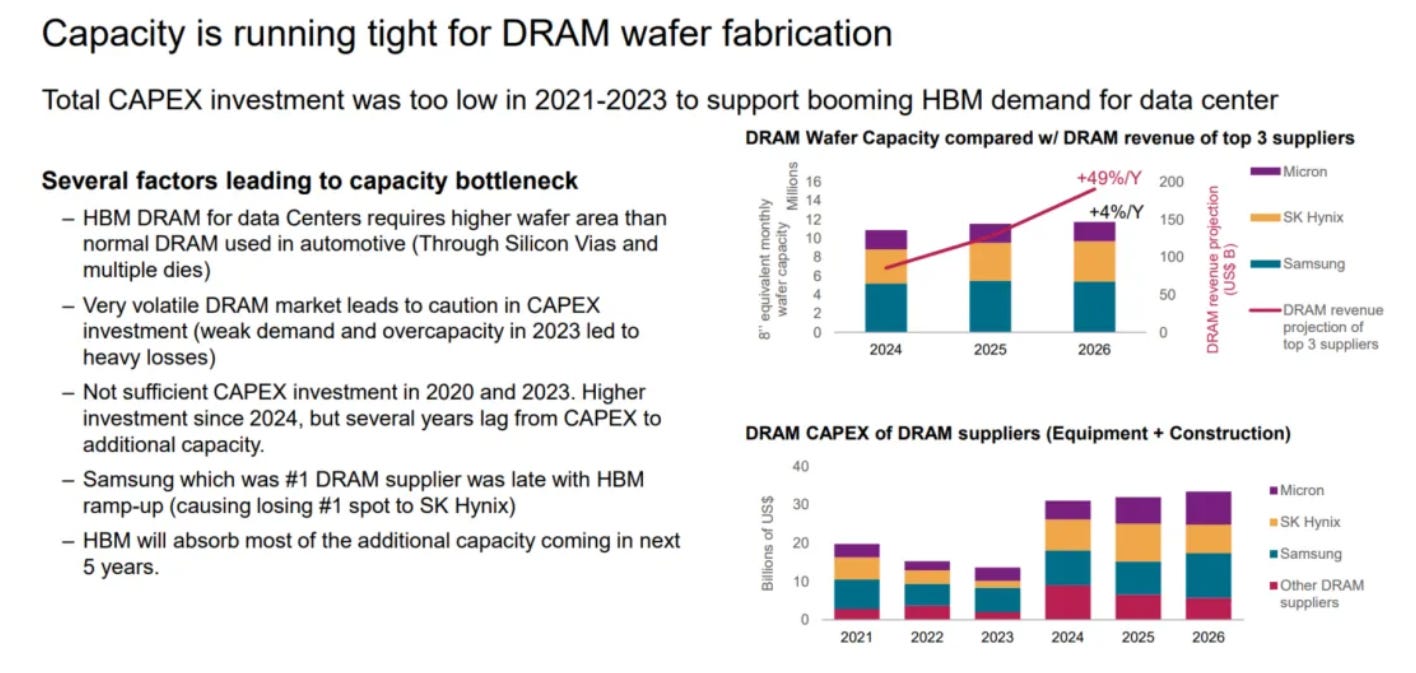
Long-term supply agreements? They’re as fragile as tissue paper in this profit-driven world. As HBM claims the lion’s share of new capacity over the next five years, the automotive industry is being squeezed into a suffocating corner. Demand for car chips isn’t dropping; it’s just that high-profit opportunities are devouring the available resources. This isn’t goodwill gone awry—it’s calculated abandonment.
Consider the broader context. The semiconductor industry has always been cyclical, with booms and busts tied to consumer electronics, smartphones, and now AI. But automobiles operate on a different timeline. Vehicles are designed years in advance, with components locked in for safety and reliability. When memory suppliers pivot overnight, carmakers are left holding outdated blueprints. It’s a mismatch that’s turning into a catastrophe.
The “Toilet Paper Effect” and the Death Knell of EOL Notices
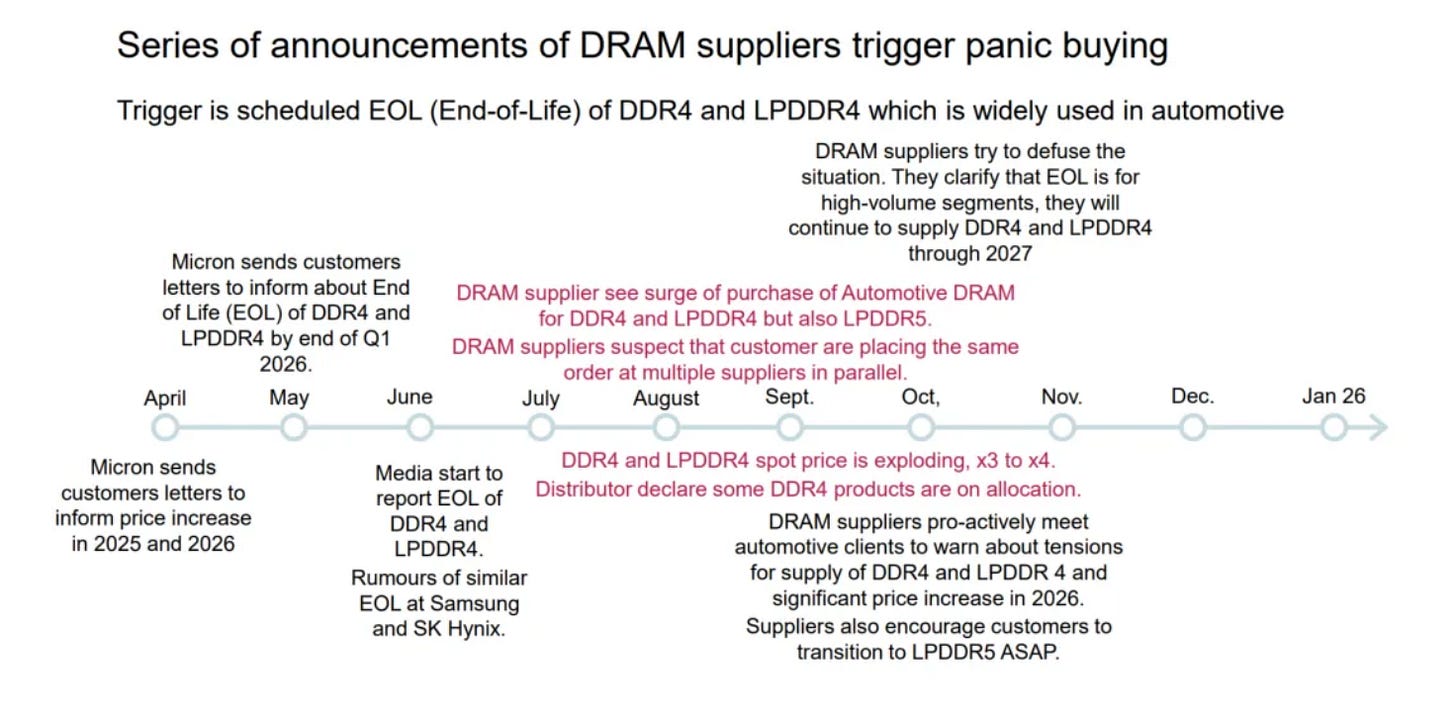
The S&P Global report introduces a term that’s as ironic as it is apt: the “toilet paper effect.” Just like the pandemic-era hoarding of toilet paper, automakers and their Tier 1 suppliers are now engaging in frantic stockpiling of DRAM chips. This collective panic isn’t solving the problem—it’s accelerating it. By clearing shelves early, they’re priming the pump for a full-blown shortage in 2026.
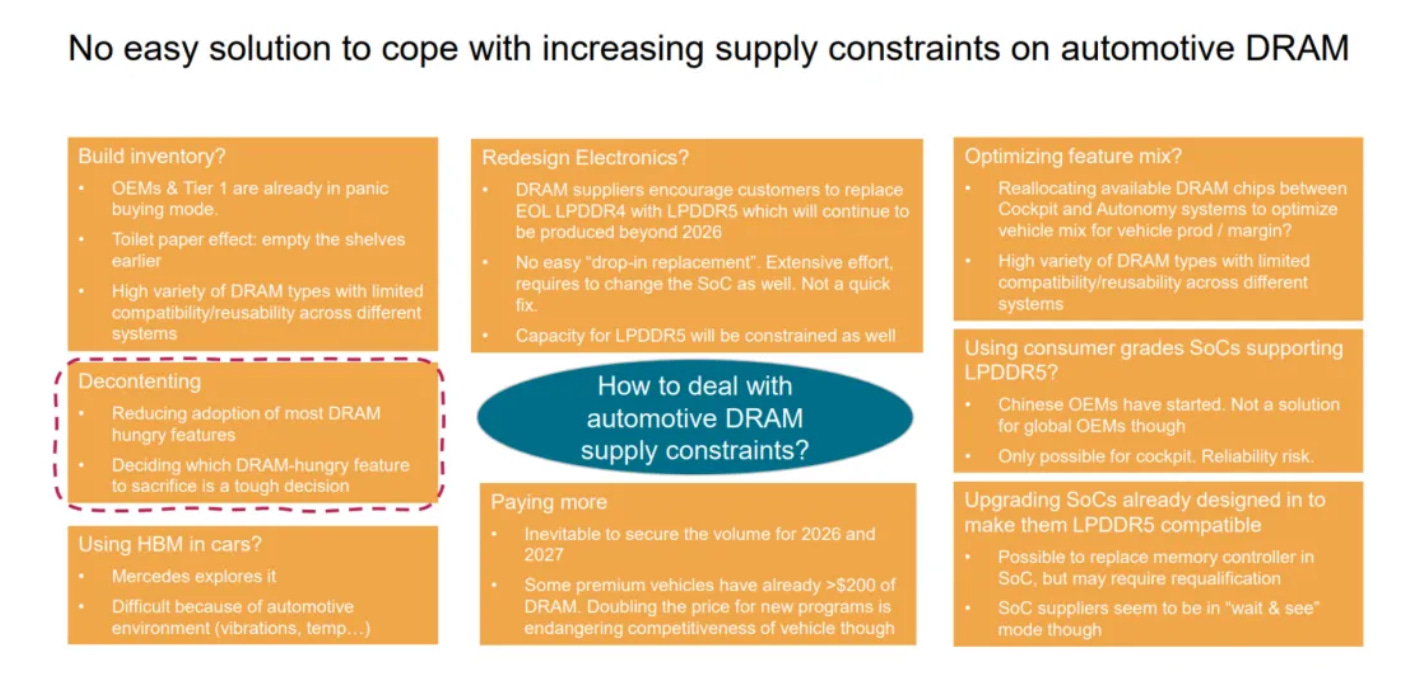
But the real executioner’s blade comes in the form of End-of-Life (EOL) notifications from suppliers like Micron. These letters announce the phase-out of mainstream automotive DRAM models like DDR4 and LPDDR4 by the end of Q1 2026. Sure, they promise continued supply through 2027, but it’s a poisoned chalice: accept doubled (or worse) prices, or overhaul your entire architecture to migrate to LPDDR5. This isn’t negotiation; it’s extortion. Suppliers are leveraging the industry’s inertia to offload costs. Blind hoarding buys time—a stay of execution—but true salvation lies in radical redesign. The report is blunt: starting January 2026, prices for certain DDR4 products could surge 3 to 4 times. Hesitate on those inflated orders, and you’ll be left empty-handed.
To understand the psychology here, think about game theory. Automakers know the chips are finite, so they over-order to secure their share, inflating demand artificially. Suppliers, sensing the desperation, hike prices further. It’s a vicious cycle that benefits no one except the memory makers’ shareholders. And with AI’s endless appetite, there’s little incentive for them to prioritize cars.

Architectural Lock-In: A Desperate Data Point
What unsettles me most is the profound disconnect between automotive design cycles and semiconductor evolution. The report drops a bombshell: among the top 10 intelligent cockpit System-on-Chips (SoCs) planned for 2028 models, every single one relies on DDR4 or LPDDR4. In autonomous driving SoCs, 8 out of 10 are similarly tethered to these aging standards.
The supply outlook breaks into two phases. In 2026-2027, it’s “price-elastic”: pay up (matching AI-level premiums), and suppliers will build. But dawdle, and shortages loom due to panic buying. Post-2027? Old DDR4/LPDDR4 supplies evaporate. The industry has two years to pivot to LPDDR5, which remains in production. That’s feasible, but it requires swift action from SoC suppliers, Tier 1s, and OEMs. Many are still in “wait-and-see” mode, betting this is just bluffing. Spoiler: it’s not.

3月11日
Dig deeper into the data. Premium vehicles, with their high-end features, are most vulnerable. Average DRAM content per car varies wildly—from under $10 in basic models to over $100 in luxury ones, even $200+ in some cases. Regions like China, with aggressive adoption of large displays, AI chatbots, and L2+ autonomy, average over $70 per vehicle. Japan lags at under $30. Brands pushing the envelope—like Tesla or Mercedes—are exposed the most.
Reallocation Challenges: Why Swapping Chips Isn’t Simple
One might think: why not just reallocate available DRAM between systems? The report crushes that hope. Analyzing specs from top cockpit and autonomy SoCs for 2028, it finds zero overlap in DRAM categories between them. Reallocation is possible only within the same system—say, swapping between Mobileye’s EyeQ5 and EyeQ6L in autonomy setups. You could theoretically drop in a compatible SoC from another vendor (e.g., Renesas V4H for Mobileye EyeQ6L), but that means rewriting software from scratch.Overall, the industry is “VERY EXPOSED” to DDR4 and LPDDR4 constraints. Chips like Qualcomm’s SA8155/8295 or Mobileye’s EyeQ5/EyeQ6L, not yet at peak, are particularly at risk. This rigidity stems from automotive’s emphasis on certification and longevity—changes introduce risks that could delay launches or invite recalls.

No Saviors on the Horizon
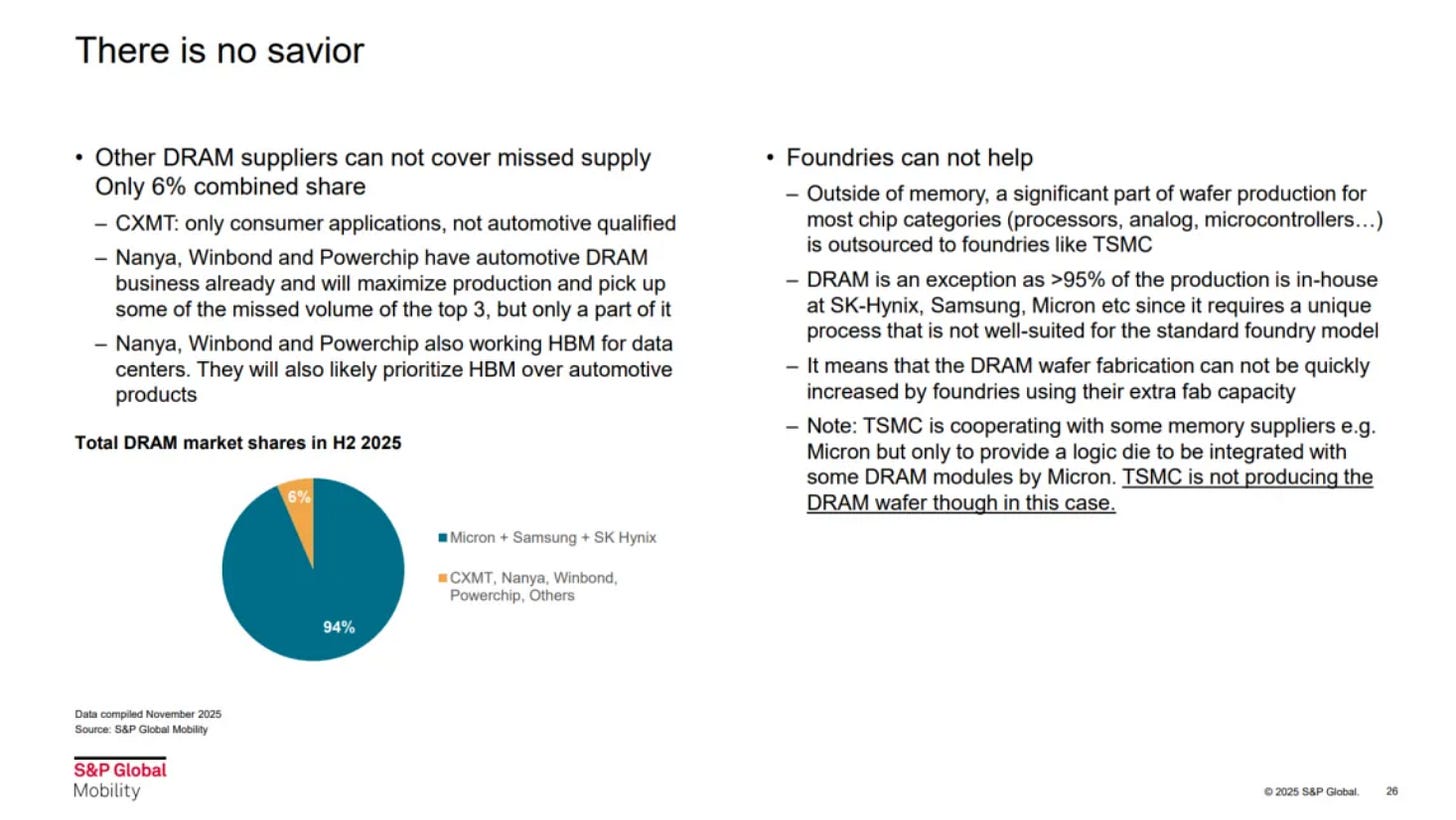
Hoping for a white knight? Forget it. Other DRAM suppliers hold just 6% market share combined. China’s CXMT focuses on consumer apps, lacking automotive qualifications. Taiwan’s Nanya, Winbond, and Powerchip do automotive DRAM but will only pick up scraps from the big three—and they’re also eyeing HBM for data centers, prioritizing profits like everyone else.

Foundries like TSMC? No help there. While they handle outsourced production for processors and MCUs, over 95% of DRAM is in-house at Samsung, SK Hynix, and Micron. Their unique processes don’t fit the foundry model. TSMC might collaborate on logic dies for DRAM modules, but they don’t produce the memory wafers themselves. Capacity can’t be ramped up overnight. This self-contained ecosystem means no external cavalry. Automakers are betting yesterday’s designs on tomorrow’s supply, and the odds are stacked against them.
The Growing Pains of High-Tech Intelligence
Ironically, the more advanced the vehicle, the harder it falls. High-level autonomy (L2+ and above) and AI assistants guzzle DRAM like nothing else. In premium cars, single-vehicle DRAM value tops $100, sometimes $200. Low-end models scrape by with under $10.
The exposure analysis is eye-opening. Global sales segments show DRAM varying from <$10 in entry-level vans to >$100 in executive sedans. By production region, China leads with >$70 per car, driven by cockpit innovations (big screens, chatbots) and autonomy penetration. Note: these 2026-2027 figures don’t yet factor in price hikes from shortages, which could double or triple costs.As AI infiltrates cars—think voice assistants that rival Siri or self-driving that navigates rush hour—the memory demands escalate. But with suppliers chasing data-center dollars, these “smart” features could become bottlenecks, forcing compromises in safety or performance.
Conclusion: A Call to Action in a Profit-Driven World
The automotive DRAM crisis is a microcosm of broader tech shifts: AI’s rise is reshaping industries, often at the expense of traditional sectors. Memory giants, lured by 65% margins on HBM, are discarding automakers like yesterday’s news. The “toilet paper effect,” EOL deadlines, architectural inertia, and lack of alternatives paint a dire future.
Yet, there’s a narrow window for redemption. With two years to migrate to LPDDR5, stakeholders must act decisively—redesign SoCs, secure supplies at premium prices, and diversify where possible. Waiting games will only lead to empty production lines and lost market share.
In the end, this isn’t just about chips; it’s about survival in an AI-dominated era. Carmakers must evolve or risk becoming obsolete. The clock is ticking—will they heed the warning, or repeat the mistakes of 2021 on a grander scale?


PreviousNext
TopLatestDiscussions








See all