The AI Interconnect War: Copper Fights Back Against Optics
The AI Interconnect War: Copper Fights Back Against Optics
- Source: SemiVision
- Author: SEMIVISION
- Published: 2026-03-13T09:40:44+08:00
- URL: https://tspasemiconductor.substack.com/p/the-ai-interconnect-war-copper-fights (1) The AI Interconnect War: Copper Fights Back Against Optics


The AI Interconnect War: Copper Fights Back Against Optics
Original Article By SemiVision Research [Reading time: 25 mins]

Mar 13, 2026
∙ Paid
The AI Interconnect War: Copper Fights Back Against Optics

The In-Rack Interconnect Challenge in the AI Era
As artificial intelligence (AI) models rapidly scale in size and computational demand, data centers are evolving from traditional single-server computing architectures to massive clusters containing hundreds or even tens of thousands of GPUs working in parallel. Massive parameter counts, dense compute workloads, and high-speed data streaming have turned short-reach in-rack connectivity into one of the key bottlenecks affecting overall system performance.
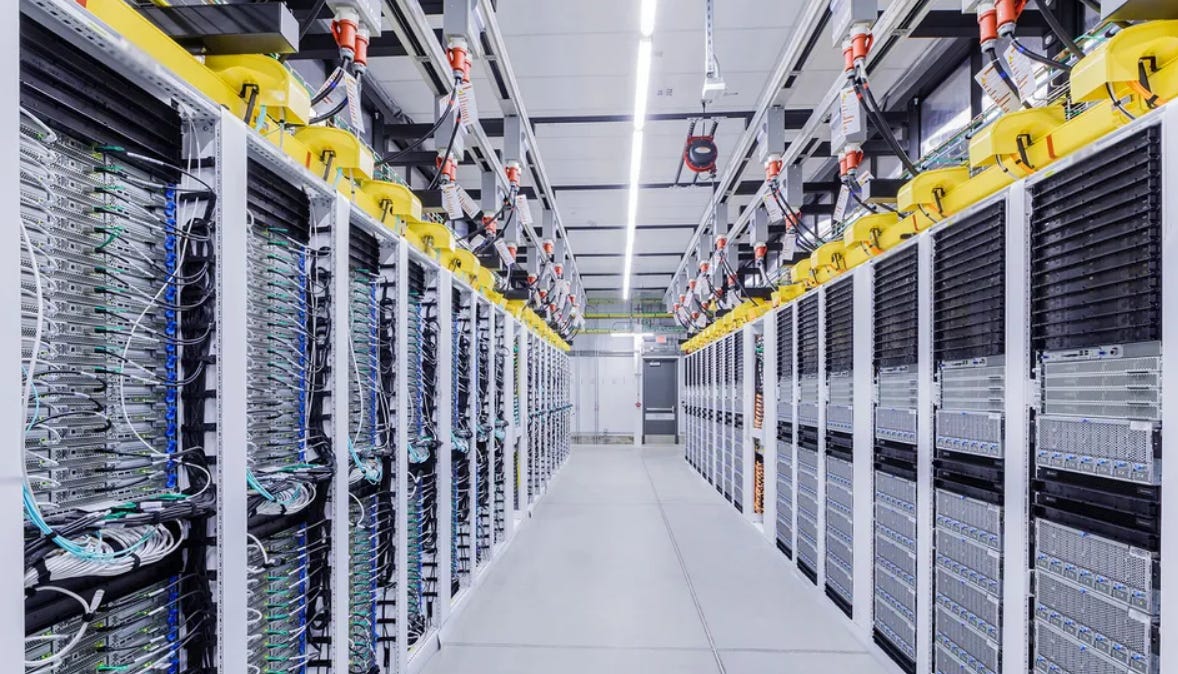
Source: Microsoft
Early adopters of large-scale AI clusters have discovered that simply adding more compute power is no longer sufficient to improve system performance. Instead, factors such as bandwidth density, latency, power consumption, and link reliability increasingly determine the efficiency of AI training and inference. As a result, a critical challenge in next-generation data center architecture is how to deliver high-speed, stable, low-power, and scalable interconnect links over short distances within the rack.
Traditional data center interconnect technologies mainly include:
Printed Circuit Board (PCB) traces– Used to connect chips within a single board or module, typically spanning only a few centimeters. Signal integrity can be maintained through high-frequency PCB materials and careful routing design.
Direct Attach Copper (DAC)– Composed of copper conductors with foam insulation and no signal-processing chips. Suitable for low-speed transmission within about 1 meter. DAC was the dominant solution in Ethernet generations prior to 400G, but in the 224G/800G era its reach is limited to around 1 meter or even shorter.
Active Copper Cable (ACC)– Integrates analog equalizers (linear EQ) at both ends of the cable to compensate for signal loss. It supports short-reach links of about 2–2.5 meters and consumes very little power (around 2.5 W for 1.6T ACC). However, its equalization capability is limited and cannot perform complex signal compensation like digital processors.
Active Electrical Cable (AEC)– Embeds digital signal processors (DSPs) or retimer chips at both ends of the cable. These components compensate for insertion loss, crosstalk, and reflection loss, enabling higher data rates and longer transmission distances. AEC has become one of the most widely used short-reach interconnect technologies in 400G and 800G server racks.
Active Optical Cable (AOC)– Replaces copper cables with optical fibers and integrates optical transceivers at both ends. AOC can provide high bandwidth over 5–30 meters, but its cost and power consumption are higher, making it less suitable for very short in-rack connections.
Co-Packaged Optics (CPO)– An advanced optical interconnect approach that integrates optical engines with switching ASICs on the same substrate. It offers extremely low energy per bit and very high bandwidth, but the technology is currently complex and expensive, and the industry generally expects large-scale deployment after 2027–2029.
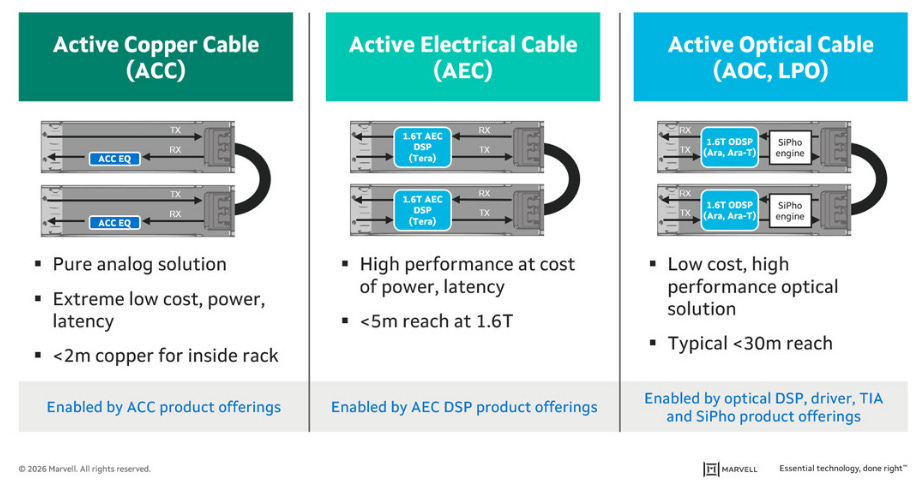
Among these options, Active Electrical Cable (AEC) has emerged as the optimal solution for short-reach in-rack interconnects in AI data centers, because it achieves the best balance between cost, power consumption, and transmission distance.
This article examines AEC technology in depth from multiple perspectives, including technical principles, industry landscape, key players, application scenarios, development trends, and challenges, providing a comprehensive view of its advantages and future evolution.
Below we will share:
Technical Principles and Architecture of AEC
Differences Between AEC and Other Cable Solutions
Power Consumption and Reach of AEC
AI and Data Center Demand for Short-Reach Interconnects
Implications of Rubin’s Cable-Free Server and Midplane Design
The 800G/1.6T Era: Physical Limits of DAC vs. AEC
Implications of Rubin’s Cable-Free Server and Midplane Design
Power Consumption and Reliability: Key Factors Driving AEC Adoption
CPO and ALC: Exploring Next-Generation Optical Interconnects
Key Suppliers and Industry Ecosystem
Cable and Connector Manufacturers
Comparison of Different Interconnect Technologies
Industry Strategy and Investment Perspective

3月10日

2025年8月17日
Technical Principles and Architecture of AEC
Core Components of Active Electrical Cables: Retimers and DSPs
The defining feature of Active Electrical Cables is the integration of retimer chips at both ends of the cable.
A retimer is a high-speed serial digital signal processor that receives, regenerates, and retransmits data signals. It can reconstruct the signal eye diagram and is far more effective than analog amplifiers in addressing insertion loss, crosstalk, and return loss.
Through a combination of clock and data recovery (CDR), forward error correction (FEC), and pre-emphasis/equalization algorithms, retimers can regenerate severely attenuated signals and restore a clean eye diagram, ensuring reliable high-bandwidth data transmission even across longer copper links.

Retimer chips are typically supplied by specialized IC design companies such as Credo, Broadcom, Marvell, and Astera Labs. According to market research, the retimer chips and copper cables together account for more than 70% of the total bill of materials (BOM) cost of an AEC. Because retimers are relatively expensive, AEC solutions are costlier than DAC cables; however, they provide the advantages of longer reach and higher bandwidth, which are essential for modern AI data center interconnects.
Differences Between AEC and Other Cable Solutions
Direct Attach Copper (DAC)– Contains no amplifiers or DSP components, so both transmission distance and bandwidth are limited. In the 224G/800G generation, the reach has shrunk to around 1 meter or less, and signal integrity becomes difficult to maintain beyond this distance.
Active Copper Cable (ACC)– Integrates analog equalizers that can compensate for roughly 20 dB of signal loss. Power consumption is extremely low (around 2.5 W for 1.6T ACC), but analog equalizers can only amplify signals and cannot reconstruct the eye diagram like a DSP. ACC is suitable for short distances under ~2.5 meters, but as speeds move toward 800G and 1.6T, its reach remains limited.
Active Optical Cable (AOC)– Replaces copper with optical fiber and uses optical transceivers at both ends. Transmission distance can reach up to 30 meters, but power consumption and cost are higher. Since in-rack server connections typically do not require such long reach, AOC is less commonly used within a rack.
Co-Packaged Optics (CPO)– Integrates optical engines based on silicon photonics or MicroLED light sources directly with switching ASICs. In theory, this architecture can reduce energy consumption to below 5 pJ/bit, but the packaging process is currently complex and expensive. In a 2025 earnings call, the CEO of Broadcom acknowledged that silicon photonics is unlikely to achieve large-scale deployment in data centers in the near term.
In comparison, AEC uses DSP-based global equalization and FEC to maintain signal integrity. Even at 800G and future 1.6T data rates, AEC can provide reliable transmission over 2–7 meters or more (depending on design). Its power consumption is lower than AOC, and its cost remains relatively manageable. As a result, AEC has become the dominant interconnect solution inside AI data center racks today.
Power Consumption and Reach of AEC
AEC specifications vary depending on data rate and configuration, resulting in different power consumption and transmission distances:
400G AEC (8×50G PAM4)– Currently the main shipping products from vendors such as Credo and Broadcom. These cables typically support transmission distances of 3–5 meters, with power consumption of about 4–6 W per port, depending on the design.

800G AEC (8×100G PAM4)– Expected to ramp in volume starting around 2025, using more advanced DSP technology and higher-bandwidth cable materials. Transmission distances are typically 3–7 meters, with power consumption around 10–12 W. Some vendors, such as Credo, have already introduced early 1.6T AEC prototypes (16×106G), with power consumption around 20 W per port, though these products are still in early-stage pilot production.
ACCs and AOCs– ACC solutions have extremely low power consumption (around 2.5 W) but shorter reach. AOC solutions provide longer transmission distances, up to 30 meters, but with higher cost and power consumption, making them more suitable for rack-to-rack or longer data center connections.
Overall, AEC provides an optimal balance within the 2–7 meter range, offering better flexibility in power delivery and mechanical layout compared with ACC and AOC. With moderate cost and power consumption, AEC has become the dominant solution for short-reach interconnects inside AI data center racks.

AI and Data Center Demand for Short-Reach Interconnects
Scale-Up and Scale-Out: Two Distinct Network Architectures
AI data center networks can generally be divided into two major categories:
Scale-Up Networks: These architectures aggregate multiple accelerators—such as GPUs or dedicated AI ASICs—within a single server or rack, requiring data to move between devices almost as quickly as it would within a single chip. This environment demands extremely low latency, very high bandwidth density, and a large number of short-reach links. NVIDIA’s NVL72 architecture is a representative example of a scale-up system, where 72 GPUs are deployed within the same rack and require ultra-high-speed interconnects. In this type of network, copper-based solutions such as AEC or ACC are typically preferred to achieve the lowest possible latency. Industry analysis has also suggested that, in scale-up environments, the reliability and predictability of copper interconnects are often more important than pursuing maximum theoretical bandwidth.
Scale-Out Networks: These architectures connect multiple servers or racks into large-scale clusters, similar to InfiniBand or Ethernet-based networking. As transmission distances increase, optical modules and pluggable optics become the mainstream solution. The industry generally expects the growth cycle of 800G pluggable optical modules to continue through 2026, while 1.6T products have already begun shipping. CPO is not expected to become a meaningful replacement until after 2027–2029.
Implications of Rubin’s Cable-Free Server and Midplane Design
At the beginning of 2026, NVIDIA showcased its new Vera Rubin NVL72 rack at CES, highlighting a “cable-free design.” In previous MGX systems, each chassis required 43 signal cables and 6 liquid-cooling tubes. In the new architecture, NVIDIA uses a midplane-based modular design to reduce internal signal cabling to zero, cutting assembly time from 2 hours to just 5 seconds.

2月26日
This announcement initially pressured cable supplier stocks, as the market feared that cable demand would decline sharply. However, deeper analysis indicates that Rubin’s “cable-free” concept mainly refers to replacing internal rack-level module-to-module cabling with midplane board-layer connections. The front-end network links still rely on AEC, and analysts have pointed out that within the NVL72 architecture, AEC continues to be used for GPU-to-switch connections, meaning there is no true elimination of external short-reach cable demand.
At the same time, Rubin’s “cable-free” approach effectively shifts wiring demand from inside the rack to the more critical area of external rack-level power delivery. As power consumption per rack rises from tens of kilowatts to 200–1000 kW in the Rubin era, demand for power harnesses, busbars, and power whips is actually increasing. In other words, cable-free design does not mean lower cable demand overall—it means the type of cabling and its point of application are changing.
The 800G/1.6T Era: Physical Limits of DAC vs. AEC
As the industry enters the 800G Ethernet era, the physical limitations of passive copper cables become increasingly apparent. Signal attenuation imposes strict constraints on transmission distance, reducing the effective reach of DAC (Direct Attach Copper) to less than 1 meter. While AOC (Active Optical Cable) can support longer distances, its higher cost and power consumption make it less economical for in-rack deployments.
By contrast, AEC (Active Electrical Cable) compensates for signal degradation through DSP-based equalization, extending transmission distances to 3–7 meters while maintaining relatively low power consumption and high reliability. As a result, AEC has become the preferred solution for 800G short-reach interconnects. Industry analysts expect 2025–2026 to mark the beginning of large-scale 800G data center deployments, with both demand and average selling prices for AEC cables potentially nearly doubling compared with the 400G generation.
Power Consumption and Reliability: Key Factors Driving AEC Adoption
When selecting interconnect technologies, the communications industry must balance distance, power consumption, cost, maintainability, and reliability. Although optical solutions can support longer reach, they generally involve higher power consumption and cost, while CPO (Co-Packaged Optics) still faces challenges in packaging complexity and thermal management.
Several industry leaders have noted in technical conferences that for short-reach interconnect scenarios, reliability and power efficiency are often more critical than achieving maximum bandwidth. For example, Credo CEO Bill Brennan has mentioned that some customers are consolidating data center deployments from 18 racks down to 6 racks, aiming to build “zero-interruption” clusters. If 7-meter AEC cables are available, these clusters can be implemented entirely with copper interconnects.
In scale-up architectures, as long as AEC can provide sufficient reach and reliability, customers tend to prefer copper cables over optical solutions. Overall, AEC improves signal integrity through DSP-based processing, offering power consumption higher than ACC but lower than AOC or CPO. It therefore represents a balanced solution combining efficiency, reliability, and cost control.
Key Suppliers and Industry Ecosystem
Retimer Chip Suppliers
The core competitive advantage in the AEC industry lies in retimer/DSP chips. Major suppliers include:
Credo– A company focused on high-performance SerDes IP and high-speed connectivity solutions, widely regarded as a leader in active cable technology. Credo’s distinctive purple-jacket AEC cables are easily recognizable in the market. The company collaborates with hyperscale customers such as Amazon and Microsoft, and has been among the first to introduce 1.6T AEC products, with approximately 20 W per port power consumption, although large-scale shipments will take time. In the longer term, Credo is also developing Active LED Cables (ALC) based on MicroLED light sources, aiming to provide a hybrid copper–optical solution with improved energy efficiency before CPO reaches maturity.
Broadcom– As a major networking chip supplier, Broadcom provides both retimers and switching ASICs. CEO Hock Tan stated in late 2025 that silicon photonics is unlikely to play a dominant role in data centers in the near term, and that the industry will continue upgrading through pluggable optics and copper-based interconnects over the next several years. Broadcom’s retimer chips are supplied to cable manufacturers such as Amphenol and Molex, enabling deployment of 800G and even 1.6T AEC solutions.

3月6日
Marvell– Offers a portfolio that includes ACC equalizers, AEC DSPs, and optical transceiver ICs. In October 2025, the company introduced the CB11208 linear equalizer, enabling 1.6T ACC with power consumption as low as 2.5 W for distances of 2–2.5 meters. Marvell and its partner Infraeo have demonstrated 800G AEC cables reaching up to 9 meters. Marvell emphasizes that ACC, AEC, and AOC will coexist, allowing customers to choose the most appropriate solution based on distance, power, and cost considerations.

2025年7月9日
Astera Labs– Specializes in CXL and PCIe retimers and connectivity products. At the Barcelos Conference, the company indicated that customers plan to expand scale-up interconnect architectures from a single rack to 2–4 racks, which may require longer-distance optical interconnects around 2028–2029. Astera provides 800G and 1.6T AEC DSPs and cable reference designs, and collaborates with cloud service providers for system validation.
3月10日
Cable and Connector Manufacturers
Another major cost component of AEC solutions comes from the copper cables and connectors. Key manufacturers include:
Amphenol– One of the world’s largest connector and cable assembly manufacturers. Amphenol provides AEC cables and high-speed connectors such as MCIO and OSFP-XD, and works with companies like Broadcom and Marvell to integrate retimer-based solutions. Amphenol has also licensed MCIO connector production to ACON.
Molex– Another major connector supplier with products targeting 400G and 800G AEC cables, collaborating with system vendors such as Intel and NVIDIA. Molex has demonstrated 2–3 meter 800G AEC cables with OSFP-XD modules, supporting 16×100G lanes.
Eoptolink, TE Connectivity, Sumitomo Electric, and others – These companies provide optical modules as well as AOC and AEC cables. With the transition to the 800G and 1.6T generations, many suppliers are diversifying across multiple interconnect solutions to address evolving market demand.
Mature and Emerging Markets
AI and cloud service providers—such as Amazon, Microsoft, Google, Meta, and Oracle—are the primary adopters of AEC technology. Emerging AI companies, including xAI, have also shown strong interest in highly reliable AEC solutions.
At the same time, demand for high-speed short-reach interconnects is gradually expanding into sectors such as automotive, 5G infrastructure, and edge computing. However, the largest and most immediate demand remains concentrated in data centers and high-performance computing (HPC) environments.
Comparison of Different Interconnect Technologies
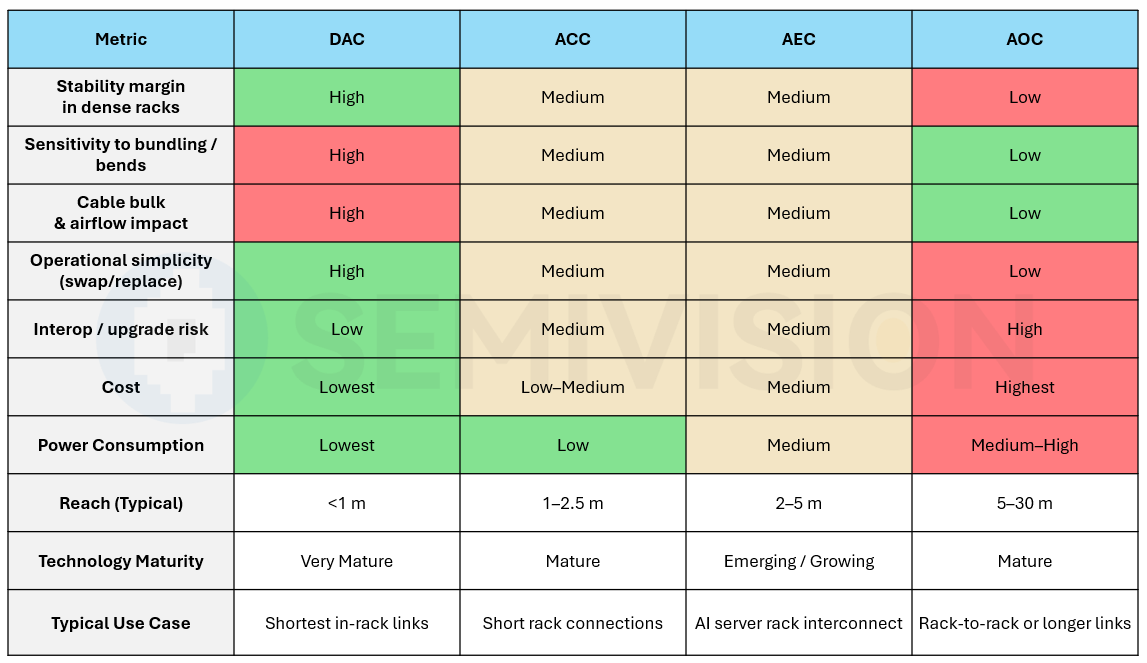
The table below compares DAC, ACC, AEC, AOC, and CPO across key performance parameters. The values shown are typical ranges, and actual specifications may vary depending on product design and implementation.
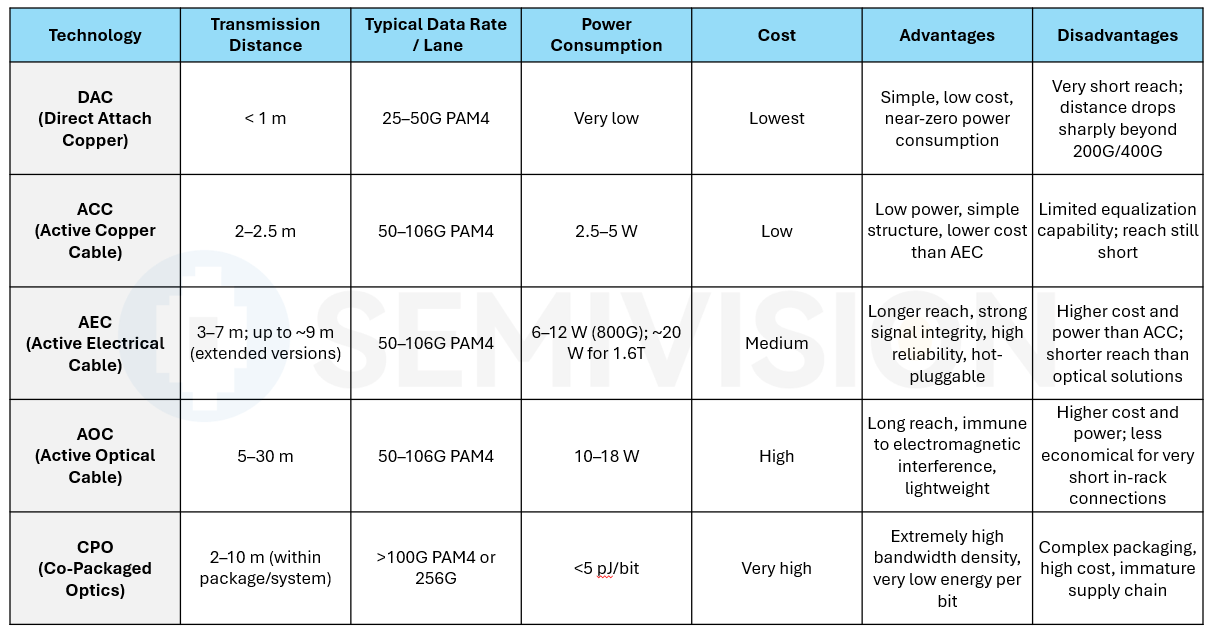
ACC and AEC: Complementary Roles
The ACC (Active Copper Cable) products introduced by Marvell in 2025 incorporate certain techniques from the optical domain into copper interconnects. By combining built-in linear equalizers with gain provided by the switch, ACC can extend transmission distance while reducing power consumption. With its lower cost and lower power usage, ACC is an ideal choice for short, point-to-point connections in 800G systems.
However, ACC cannot provide the full signal retiming and error correction capabilities that AEC offers. Therefore, for slightly longer distances or scenarios requiring higher reliability, AEC remains necessary. In the future, racks may deploy both ACC and AEC simultaneously: short links close to the motherboard may use ACC, while longer or more signal-sensitive links will rely on AEC.

In Marvell’s vision, ACC, AEC, and AOC will coexist, allowing system designers to select the most appropriate interconnect technology depending on distance, cost, and power requirements, thereby providing greater architectural flexibility.
CPO and ALC: Exploring Next-Generation Optical Interconnects
The industry is actively exploring new technologies to overcome the physical limitations of AEC. Co-Packaged Optics (CPO) integrates optical engines directly with switching ASICs, offering extremely high bandwidth density and lower energy consumption. However, companies such as Broadcom have indicated that silicon photonics and CPO are unlikely to see large-scale deployment in data centers in the near term, mainly due to supply chain maturity, packaging complexity, and the continued reliance on pluggable modules.

2025年6月15日
Another emerging approach is ALC (Active LED Cable). Credo has proposed using MicroLEDs as light sources, transmitting optical signals directly through optoelectronic converters at both ends of the cable. This approach aims to combine the efficiency of CPO with the pluggable flexibility of copper cables. The technology is still in early development, with plans for customer trials after 2027, potentially delaying the widespread adoption of CPO.

Source: Brillink
In addition, PlayNitride (Taiwan) has collaborated withBrillinkto develop an optical interconnect platform based on MicroLED arrays, GeSi avalanche photodiodes (APD), and two-dimensional vertical couplers (2D AVC). This architecture claims to deliver longer transmission distance, lower power consumption, and higher bandwidth density compared with AEC. The companies plan to jointly develop next-generation optical interconnect technologies intended to replace AEC, targeting AI computing and high-density data centers with significantly improved performance.

These emerging technologies highlight the potential of hybrid electro-optical interconnect architectures, but large-scale commercialization will still require overcoming challenges in packaging, thermal management, and cost optimization.
2026/3/12
Marvella leader in data infrastructure semiconductor solutions, andMojo Vision, the high-performance micro-LED platform company, today announced a long-term collaboration to develop a new class of optical interconnect solutions to power the next wave of high-performance AI data center infrastructure.
Mojo Vision is pioneering a highly flexible, wafers-in, wafers-out micro-LED platform to unlock AI applications in multiple high-growth markets. Built over a decade by our skilled engineers, our system-level process combines advanced 300mm silicon architecture with GaN-on-Silicon emitters, proprietary quantum dots, and micro-lens arrays to resolve conventional trade-offs in size, brightness, bandwidth density, and power. Our scalable, manufacturing-ready approach enables breakthrough products such as AI glasses and next generation optical interconnects.
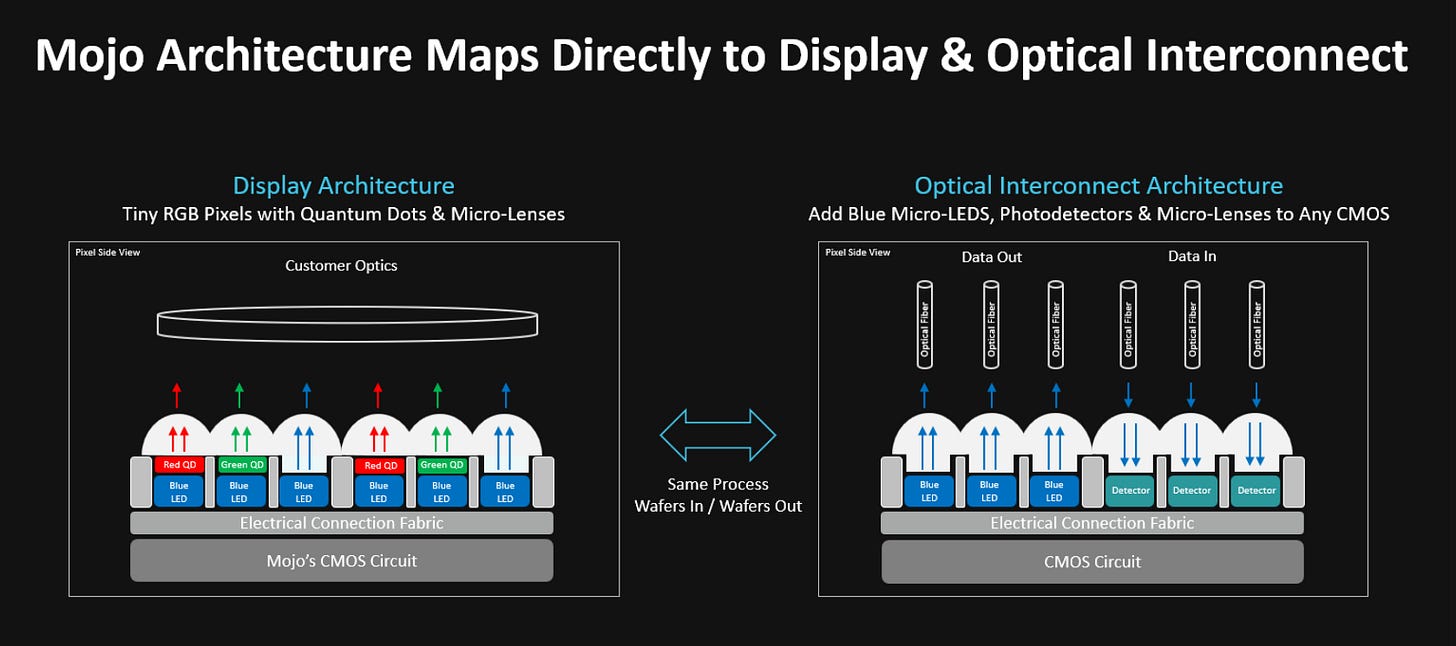
Micro-LED–based optical solutions are emerging as one promising approach to help address these next-generation requirements.
To address this challenge, Marvell served as the largest investor in Mojo Vision’s 2025 Series B Prime financing and entered into a multi-generational agreement to jointly develop a new class of optical interconnects. Built on Mojo Vision’s micro-LED platform and the Marvell industry-leading connectivity technology portfolio, the new micro-LED connectivity offerings have been in development for more than a year, and will support a variety of AI data center interconnect form factors and applications for hyperscale and cloud data center customers.
Is CPO Overheated? Industry Observations
A report by 36Kr points out that under heavy promotion from capital markets and media narratives, Co-Packaged Optics (CPO) is often portrayed as the next core technology for AI data centers. However, several industry leaders have recently attempted to temper expectations.
Companies including Broadcom, Arista, Credo, Marvell, and Astera Labs have suggested that pluggable optics and copper interconnects will remain dominant until at least 2027–2029. Broadcom has emphasized that silicon photonics is unlikely to see large-scale deployment in the near term.
The report argues that as AI clusters scale from thousands of GPUs to hundreds of thousands or even millions, networking challenges are no longer limited to bandwidth alone. Instead, system-level concerns such as reliability, power efficiency, maintainability, and operational stability become increasingly important.
As a result, “transitional technologies” such as LPO (Linear Pluggable Optics), AEC, and ALC are gradually occupying the practical deployment space that many initially expected CPO to dominate.

3月4日
Applications and Industry Developments
NVL72 / Rubin: Next-Generation GPU Racks
NVIDIA’s NVL72 system integrates 72 GPUs inside a single rack, using a backplane or midplane architecture to provide high-speed interconnects.
The Vera Rubin generation emphasizes cable-free modular design, replacing 43 internal signal cables with midplane connections and reducing assembly time significantly.
However, analysts note that front-end networking still requires AEC cables, meaning the demand for high-speed cables does not disappear.
Rubin uses ConnectX-9 networking with 800 GB/s bandwidth and the Rubin CPX modular expansion architecture, which still relies on 800G AEC cables or LPO optical modules for horizontal scaling.
In practice, Rubin’s “cable-free” concept moves cabling from inside the rack to external power and network interfaces, rather than eliminating cables entirely. Demand for high-speed AEC interconnects remains intact.
Cloud CSPs and Hyperscale Data Centers
Cloud service providers such as Amazon, Microsoft, Google, Meta, and Oracle are continuing to expand their AI cluster infrastructure.
With the arrival of 800G and 1.6T networking, these companies must reevaluate in-rack interconnect strategies.
Examples include:
Amazon AWS
Uses AEC to connect GPUs and switches within its Graviton and Trainium accelerator platforms, while collaborating with companies like BizLink to develop high-power cable harnesses and AEC solutions.
Microsoft
Upgrading Azure AI clusters to 800G Ethernet, while evaluating ACC and LPO solutions with partners such as Marvell and Astera Labs.
Meta
Planning large-scale deployment of 800G AI servers in 2026–2027, and actively sourcing multiple AEC suppliers to reduce supply-chain risk.
Oracle
Evaluating a hybrid deployment of LPO and AEC, while partnering with Lumentum to develop ZeroFlap optical modules capable of providing real-time telemetry to improve reliability in large-scale optical networks.
Supply Chain Investments and Stock Market Dynamics
For example:
Credo’s stock briefly dropped more than 6%, but quickly rebounded as investors realized that NVIDIA still intends to expand copper interconnects within racks, and that Credo is actively developing optical and photonic technologies of its own.
Some analysts suggested that buying opportunities could emerge when the stock price falls below $140.
Similarly, Taiwanese cable suppliers BizLink and ACON experienced temporary stock declines due to Rubin-related rumors. However, industry experts believe that AEC demand and power-cable demand are still growing strongly.
BizLink projects that AI-related revenue could reach 30% of total revenue within two years, with a reasonable P/E ratio of 25–30x, and expects 2025–2027 to be a period of accelerated earnings growth, potentially exceeding 25% CAGR.
ACON has also emphasized that the cable-free concept in NVIDIA’s Kyber architecture only reduces cabling under certain conditions, while overall cable demand is likely to increase due to modular design and new bus architectures.
Therefore, short-term stock volatility should not obscure long-term growth trends.
Emerging Technology Collaboration: PlayNitride and Brillink
Taiwan-based PlayNitride has partnered with Brillink, a company specializing in two-dimensional array optical coupling technology, to develop a next-generation optical interconnect platform.
This platform integrates:
High-efficiency MicroLED emitter arrays
Ultra-sensitive GeSi avalanche photodiode (APD) arrays
2D vertical couplers (2D AVC)
The architecture aims to deliver:
Longer transmission distances than AEC
Lower power consumption
Higher bandwidth density
The two companies intend to develop an optical interconnect architecture capable of replacing active cables, targeting AI accelerators and high-density data centers.
Such technologies demonstrate the growing potential of hybrid electro-optical interconnect architectures, although significant challenges remain in packaging, thermal management, and cost control before large-scale commercialization.
Signal Integrity and Electromagnetic Compatibility
Copper interconnects in data centers face challenges related to Signal Integrity (SI) and Electromagnetic Compatibility (EMC).
High-speed serial links often use PAM4 modulation, with per-lane data rates reaching 50G or 106G, leaving extremely little tolerance for eye closure, jitter, and crosstalk.
Insertion Loss
Signal attenuation occurs due to resistance, dielectric loss, and skin effect. Higher frequencies lead to greater loss. AEC retimers use re-timing and equalization to restore the eye diagram.
Return Loss
Signal reflections caused by impedance mismatch or connector discontinuities. High-quality connectors and impedance control reduce return loss.
Crosstalk
Adjacent cables can interfere with each other through electromagnetic coupling. Differential signaling (twinax) and shielding structures help suppress interference.
Linear vs Nonlinear Equalization
ACC uses linear equalizers, which may amplify noise under severe distortion.
AEC uses FFE and DFE digital equalization, enabling more accurate signal reconstruction.
Forward Error Correction (FEC)
Modern Ethernet protocols incorporate FEC schemes such as RS-FEC and KP4, allowing AEC retimers to correct bit errors and improve throughput.
EMI Control
AEC cables typically include multiple shielding layers, outer jackets, and grounding structures to suppress electromagnetic radiation.
AEC therefore represents a complete signal-integrity engineering system, not simply a cable with DSP chips.
Rack Power Delivery and Open Rack Standards
As GPU power consumption rises from hundreds of watts to 1.2–1.4 kW per card, total rack power may reach 120–130 kW or more.
Efficient and reliable rack-level power delivery is becoming another key challenge.
OCP Open Rack and ORV3 Standards
The Open Compute Project (OCP) was initiated by Facebook to share efficient data-center designs.
The Open Rack architecture introduces:
21-inch rack width (vs traditional 19-inch)
DC busbar power distribution
Improved airflow
The latest Open Rack V3 (ORV3) includes:
•Higher power density (48V DC bus, up to 500A current)
• Direct liquid cooling support
• Modular Power Shelf + Busbar architecture
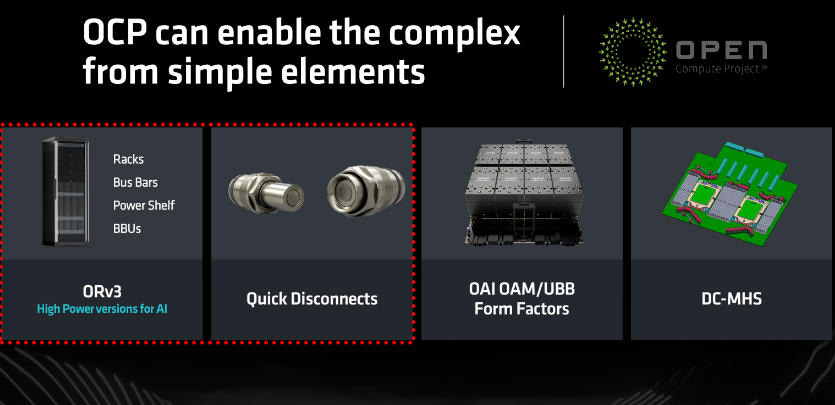
Companies such as ATEN provide ORV3-compatible racks with 44OU internal space and 48V busbar power modules.
TE Connectivity offers power solutions supporting 12–48V operation with currents up to 500A.
BizLink’s ORV3 busbar connectors also support 12–48V DC and up to 500A current, making them key components of the OCP power architecture.
Power Harness and Busbar Systems
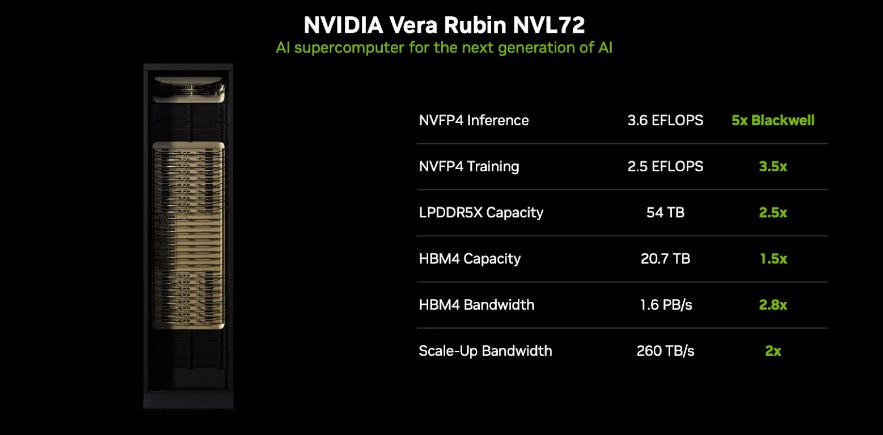
High-power data centers rely on power harnesses and busbars to distribute electricity efficiently.
A typicalRubin NVL72 rackmay include:
36 PSUs
5.5 kW per PSU
198 kW total power capacity
For redundancy, PSUs often operate at 50–60% load.
Power harness systems must support:
• High current capacity
• Low impedance and minimal voltage drop
• Modular installation and maintenance
• Safety and durability
BizLink and other cable manufacturers are developing integrated power delivery solutions combining busbars, power whips, and connectors, targeting 200–1000 kW rack environments.
As rack power increases, power cables themselves become a growing value component in the supply chain.
Advanced Packaging and Materials Impact on Short-Reach Interconnects
High-speed interconnect performance is also influenced by advanced semiconductor packaging.
CoWoS and SoIC Packaging
Technologies such as TSMC’s CoWoS and SoIC enable dense integration of AI GPUs and HBM memory.
These packages require substrate materials with low CTE, low dielectric constant, and low loss.
Low-CTE glass fabrics are widely used as core materials for advanced substrates, helping suppress warpage and improve reliability.

2025年10月27日
PCB Materials and Substrate-Like PCB (SLP)
Traditional FR4 PCB materials struggle to support 100G PAM4 signals.
Substrate-like PCB (SLP) uses finer line widths and low-loss materials, providing performance similar to package substrates.
Companies such as Unimicron, Kinsus, and Nanya PCB are expanding production capacity.
Thermal Constraints and Interconnect Choice
AI GPUs with HBM stacks create extremely high power density and thermal loads.
Improved cooling enables retimers in AEC cables to operate more reliably.
Cooling performance can also influence interconnect selection:
• Poor cooling → prefer low-power ACC or LPO
• Strong cooling → AEC or AOC may be viable

2月10日
Industry Strategy and Investment Perspective
The AI interconnect market is evolving rapidly.
Key considerations include:
Investment Timing
Short-term news can create volatility, but long-term value depends on technology leadership and market share.
Growth Drivers
Companies such as BizLink, ACON, and Amphenol are expanding market share in MCIO connectors and high-speed cables.
Long-Term Risk
Technologies like CPO and MicroLED optical interconnects may eventually replace copper cables, but commercialization timelines remain uncertain.
Standardization
Organizations such as OCP, IEEE, and PCI-SIG will shape future industry standards.

2025年8月7日
Conclusion: Balancing Copper, Ecosystems, and Photonics
Active Electrical Cables (AEC) currently play a critical role in short-reach interconnects within AI data center racks, offering a balanced combination of reliability, moderate power consumption, and cost efficiency.
While capital markets remain enthusiastic about silicon photonics and CPO, real-world deployment continues to face challenges related to supply chains, cost, and reliability.
Most industry experts expect copper cables and pluggable optics to remain dominant for the next 5–7 years.
Meanwhile, hybrid electro-optical interconnect technologies and MicroLED-based solutions are gradually maturing and may become mainstream around 2030.
Future interconnect architectures will likely combine multiple technologies:
ACC + AEC + LPO + AOC + ALC + CPO
For engineers and system architects, the optimal design will depend on distance, power, cost, and reliability trade-offs.
For investors and industry participants, understanding the technology roadmap and supply chain positioning will be key to capturing the long-term growth opportunities driven by AI infrastructure expansion.
Ultimately, the “optimal short-reach interconnect solution” will not be a single technology, but rather a dynamic balance between copper and optical ecosystems, working together to power the next generation of AI data centers.

2月24日


PreviousNext
TopLatestDiscussions








See all