From Middle East War to Taiwan’s Semiconductor Fabs: Why a Regional Conflict Could Shake the Entire World
From Middle East War to Taiwan’s Semiconductor Fabs: Why a Regional Conflict Could Shake the Entire World
- Source: SemiVision
- Author: SEMIVISION
- Published: 2026-03-09T13:35:59+08:00
- URL: https://tspasemiconductor.substack.com/p/from-middle-east-war-to-taiwans-semiconductor (1) From Middle East War to Taiwan’s Semiconductor Fabs: Why a Regional Conflict Could Shake the Entire World


From Middle East War to Taiwan’s Semiconductor Fabs: Why a Regional Conflict Could Shake the Entire World
Original Article By SemiVision Research [Reading time: 15 mins]

Mar 09, 2026
∙ Paid
From Middle East War to Taiwan’s Semiconductor Fabs: Why a Regional Conflict Could Shake the Entire World
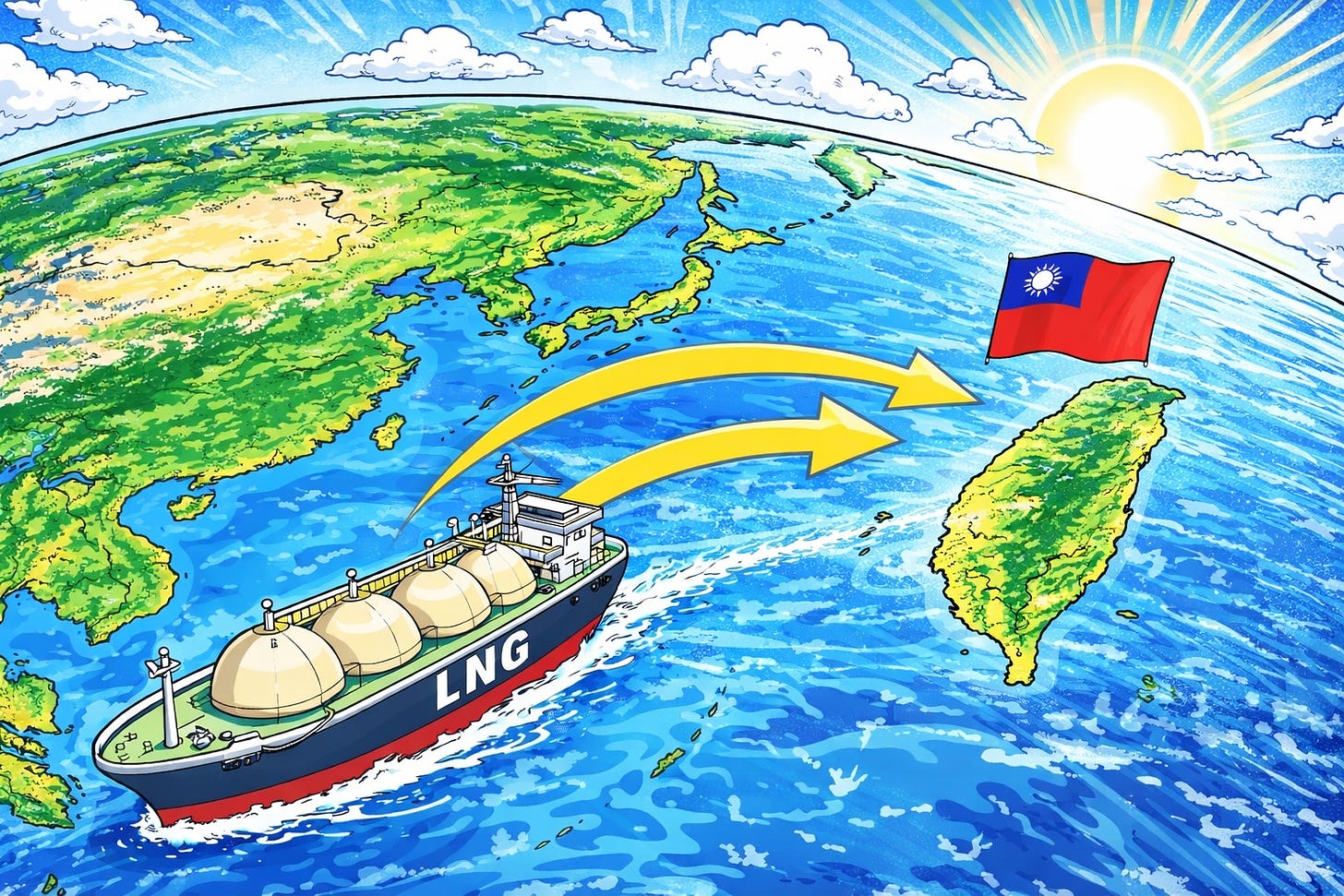
At first glance, the Middle East and Taiwan seem to belong to two completely different geopolitical stories.
One is defined by oil, shipping chokepoints, sectarian rivalries, and decades of military confrontation. The other is known for semiconductors, contract manufacturing, AI servers, advanced packaging, and the world’s most important chip foundry.
But in reality, these two theaters are tightly connected.
A war in the Middle East can push up energy prices, destabilize shipping routes, disrupt LNG flows, and raise global electricity and industrial costs. Those pressures do not stop at the Strait of Hormuz. They travel across oceans, through commodity markets, into power grids, into factory cost structures, and eventually into the cleanrooms of Taiwan’s semiconductor industry.
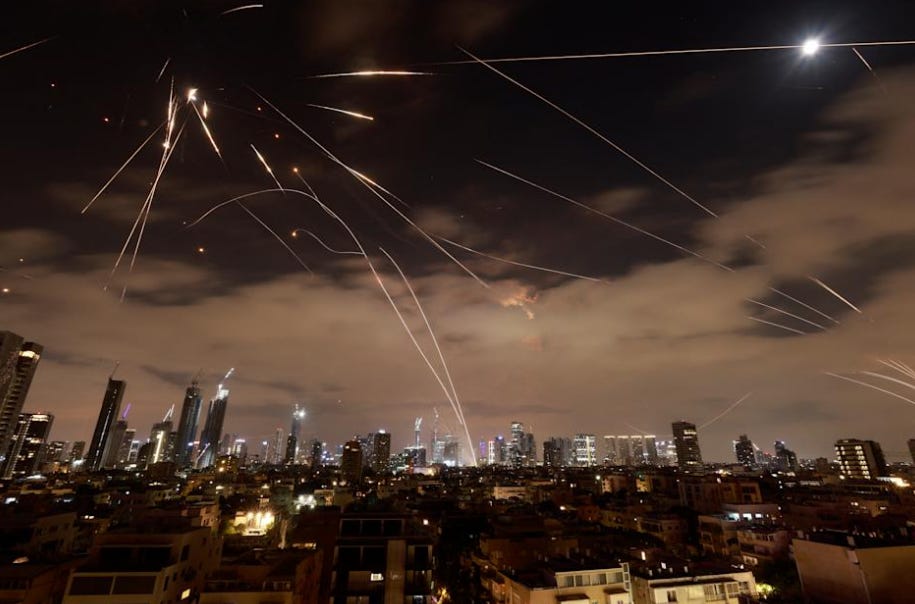
Photo by Menahem Kahana / AFP
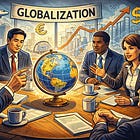
This is why the world can no longer think in isolated categories such as “energy,” “war,” “chips,” or “AI.” In the modern economy, these are not separate systems. They are one system.
And Taiwan sits near the center of it.
A regional war with global consequences
When conflict in the Middle East expands beyond symbolic retaliation and begins targeting energy infrastructure, the geopolitical meaning changes immediately.
Missiles hitting oil facilities are not just military signals. They are attacks on the circulatory system of the global economy.
The Middle East remains one of the most important energy-producing regions in the world. If oil fields, refining capacity, export terminals, or shipping lanes are damaged or blocked, the impact spreads far beyond the region itself. Oil prices jump. Insurance costs rise. Shipping routes become riskier. LNG cargoes face delays. Governments begin contingency planning. Import-dependent economies move into defensive mode.

Source: Reuters
The Strait of Hormuz is especially critical. It is one of the world’s most important maritime chokepoints for oil and gas trade. If traffic there is disrupted for an extended period, the result is not merely a short-term price spike. It can create a chain reaction across manufacturing, transportation, utilities, petrochemicals, fertilizers, and heavy industry.

Source: S&P
In theory, many countries can absorb a temporary shock.
In practice, modern supply chains are already stretched by AI-driven electricity demand, logistics complexity, debt burdens, and political fragmentation. That means the world is less resilient than it appears.
A prolonged Middle East war would therefore not be “just another regional conflict.” It would be an inflationary geopolitical event with industrial consequences.
Why Taiwan cannot ignore Middle East instability
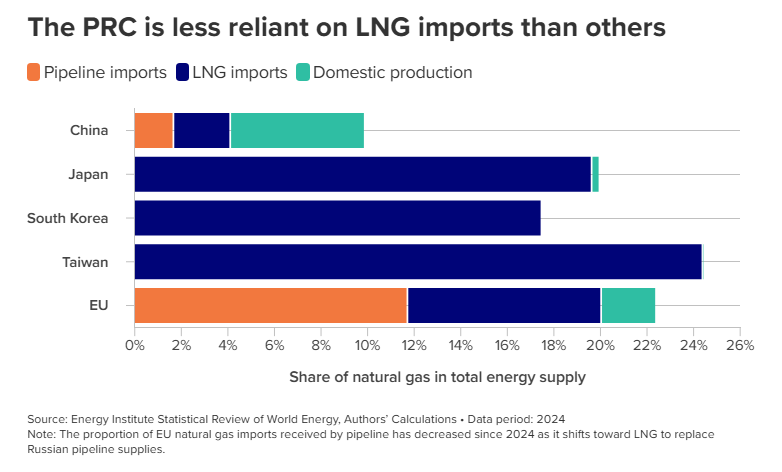
Taiwan is not a major oil producer. It is not energy independent. And it is heavily dependent on imported energy, including LNG.
That makes Taiwan particularly sensitive to disruptions in global energy markets.
When oil and LNG prices rise, Taiwan does not simply pay more at the pump. The effects move into electricity generation, industrial utility costs, transport expenses, and national energy security calculations. For a normal economy, that is already painful. For an economy built around 24/7 semiconductor manufacturing, the implications are much more serious.

Source: www.moeaea.gov.tw
Taiwan’s power generation has changed significantly in recent years. Total electricity output rose from 264.1 billion kWh in 2016 to 289.2 billion kWh in 2024, reflecting steady growth in overall demand. The generation mix has also shifted. Coal’s share fell from 45.9% to 39.2%, while natural gas increased from 31.5% to 42.4%, becoming the largest source of power. Nuclear power dropped sharply from 12.0% to 4.2%, while renewables expanded from 4.8% to 11.7%.
Impact on Taiwan’s Energy Security: With Only 11 Days of LNG Reserves, Could Taiwan Face a Supply Crisis?

Taiwan’s High Energy Vulnerability
Taiwan relies heavily on imported energy. Around 80% of its crude oil supply is imported, and approximately 33% of its liquefied natural gas (LNG) comes from the Middle East, primarily Qatar. Unlike crude oil, which has strategic reserves of around 100 days, Taiwan’s legally mandated LNG reserve is only about 11 days. Although the Ministry of Economic Affairs has emphasized that supply for March remains secure, if the Middle East conflict continues to escalate or persist, Taiwan’s Electricity Price Review Committee may eventually need to assess potential electricity tariff adjustments.
Energy Structure Increases Exposure to Oil and LNG Price Shocks
Taiwan’s power system is heavily dependent on thermal power generation. As of January 2026, Taiwan Power Company’s generation mix consisted of 50.2% natural gas and 31.3% coal. As a result, LNG supply stability and shipping schedules are even more critical than crude oil availability. While oil reserves remain relatively comfortable at over 100 days, natural gas inventories remain limited to only about 11 days.
If the Strait of Hormuz were to remain blocked for an extended period, markets would likely first react through tight LNG supply expectations, rising electricity price pressure, and downward revisions to profit forecasts for energy-intensive industries.
Although renewable energy capacity has expanded in recent years, the rollout of offshore wind and solar power has faced multiple challenges, including localization policies, technical constraints, and pandemic-related disruptions. As a result, renewable energy targets have been delayed, and its current share stands at only about 15.8%. In 2025, Taiwan’s net fuel imports accounted for roughly 4% of nominal GDP, one of the highest ratios in Asia. This makes Taiwan particularly sensitive to rising global energy prices and shipping costs.
Heavy Dependence on Middle Eastern Energy
Approximately 70% of Taiwan’s crude oil imports originate from the Middle East, especially from Saudi Arabia, Kuwait, and the United Arab Emirates. Meanwhile, about 33.7% of Taiwan’s LNG imports come from Qatar. If shipping through the Strait of Hormuz were significantly disrupted for a prolonged period, energy supplies would tighten and procurement costs would rise.
Rising Energy Costs Could Affect Industrial Competitiveness
Higher energy import costs could push up electricity prices and industrial production costs, particularly affecting energy-intensive sectors such as petrochemicals, steel, cement, aviation, and semiconductor manufacturing.
Source: CNA
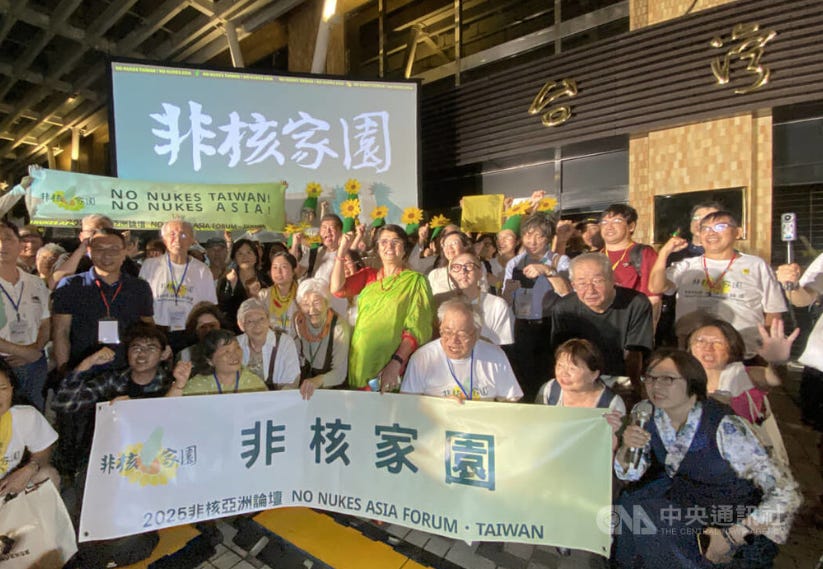
However, under the Democratic Progressive Party’s nuclear-free policy, Taiwan shut down all of its nuclear power plants in 2025. This marks a major turning point in the island’s energy strategy. However, as semiconductor manufacturing, AI infrastructure, and industrial electricity demand continue to rise, concerns over future power supply tightness are also increasing. Whether Taiwan can maintain stable, sufficient, and affordable electricity will remain a critical issue to watch closely.
Semiconductor fabs are unlike ordinary factories.
They do not tolerate unstable electricity. They do not operate on “good enough” power quality. They require constant, high-quality, uninterrupted power to support lithography tools, vacuum systems, gas delivery, water treatment, cleanroom climate control, metrology, deposition, etch, CMP, testing, and backend operations.
A voltage fluctuation, a power interruption, or a regional supply squeeze can translate into yield loss, wafer scrap, delayed output, and rising costs. At advanced nodes, the economic damage of instability is magnified enormously because each wafer carries very high embedded value.
This is the key point many people miss:
For Taiwan, energy is not just a macroeconomic issue. It is a semiconductor issue.
And because Taiwan’s semiconductor output feeds the world’s electronics, cloud infrastructure, smartphones, vehicles, AI systems, and defense supply chains, it also becomes a global issue.
The hidden bridge between war and chips: energy
The connection between Middle East conflict and Taiwan semiconductor risk runs through energy.
If Middle East tensions drive up crude oil and natural gas prices, electricity costs rise across Asia. LNG-importing economies face higher procurement costs and more uncertainty. Governments may hesitate to fully pass those costs on to industrial users for political reasons, but the pressure does not disappear. It accumulates somewhere: in public balance sheets, utility finances, industrial tariffs, or deferred infrastructure investment.
Taiwan’s manufacturing system has long benefited from reliable industrial organization and strong infrastructure discipline. But the challenge now is scale.
The semiconductor industry is expanding faster than the energy system.
That is the deeper structural tension.
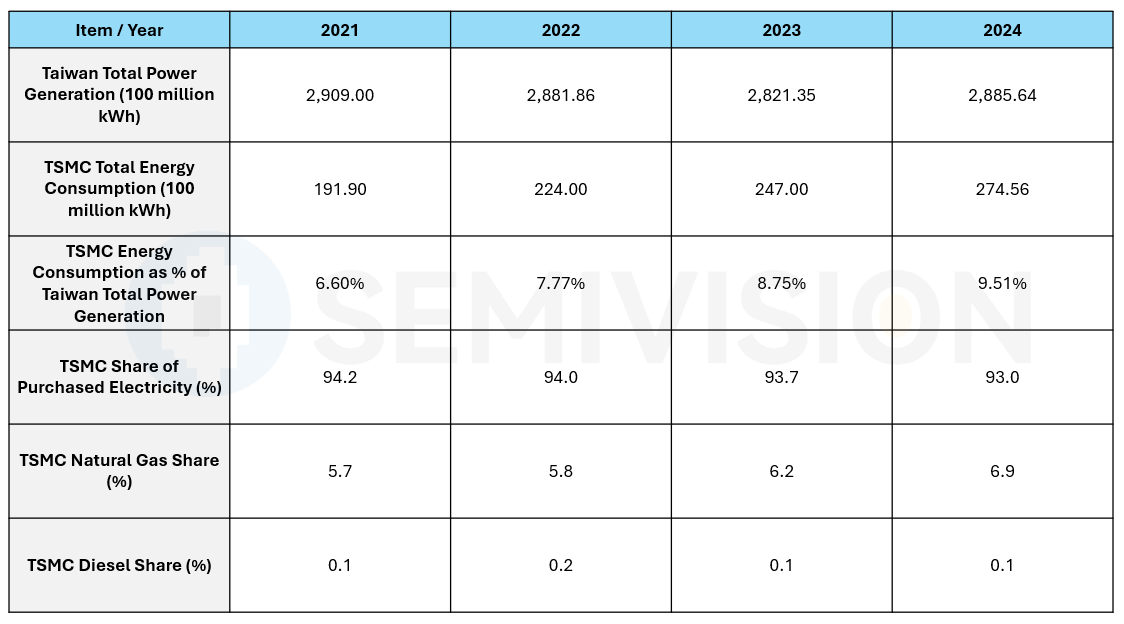
TSMC’s energy consumption has risen from about 6.6% of Taiwan’s total power generation in 2021 to about 9.5% in 2024, highlighting how rapidly semiconductor expansion is becoming a system-level power issue for Taiwan.
For years, Taiwan’s growth model could assume that power demand would rise steadily and infrastructure would catch up. But the AI era is different. AI is not a normal industrial cycle. It is a power-hungry acceleration wave.
Advanced logic, advanced packaging, HBM-related ecosystem expansion, AI server assembly, high-speed testing, and growing demand from global hyperscalers are all pulling the system upward at the same time.
This means Taiwan is no longer facing only a question of price.
It is facing a question of capacity.
TSMC’s rise changed the scale of the problem
TSMC did not merely become the world’s most advanced foundry. It changed Taiwan’s role in the global economy.
TSMC’s rise means Taiwan is now indispensable to the production of leading-edge chips. The company is central to the supply of processors used in AI training, AI inference, smartphones, HPC, networking, and increasingly advanced automotive and edge systems. Around it, an entire ecosystem of materials, equipment, packaging, substrate, testing, and server manufacturing has expanded.
As TSMC accelerated from 7nm to 5nm, from 5nm to 3nm, and now toward even more advanced generations, the requirements for power, water, logistics, and ecosystem coordination also rose sharply.
This is not just because TSMC is producing more wafers.

2月23日
It is because leading-edge manufacturing is a density business. The more advanced the process, the more sophisticated the fab environment must be. Cleanrooms become more stringent. Tool counts rise. EUV layers increase. Process steps multiply. Supporting infrastructure becomes more complex. The capital intensity climbs, but so does the infrastructure intensity.
At the same time, the semiconductor story is no longer only about front-end logic fabs.
Advanced packaging has become a new strategic bottleneck.
The rise of AI has made packaging, integration, and system-level optimization just as important as transistor scaling. CoWoS, SoIC, high-density substrate ecosystems, optical interconnect preparation, power delivery innovation, thermal engineering, and heterogeneous integration all require industrial expansion. And industrial expansion means more electricity.
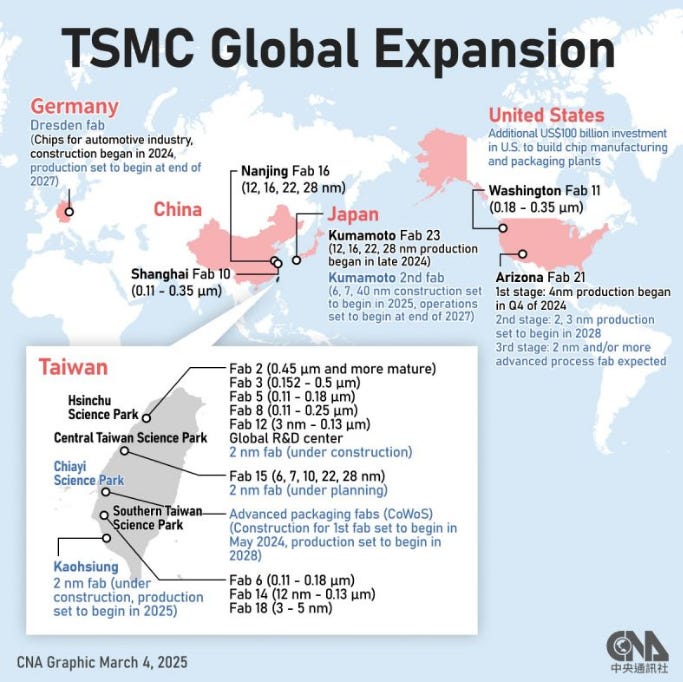
In other words, TSMC’s success is also creating a national infrastructure challenge.
The better Taiwan performs in semiconductors, the harder it must work to guarantee energy security.
The paradox of semiconductor leadership
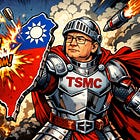
Taiwan’s semiconductor dominance creates a paradox.
The world depends on Taiwan because Taiwan is exceptionally good at concentration, execution, and scale.
2月2日
But that same concentration increases vulnerability.
If geopolitical tensions or energy shortages hit Taiwan, the global system feels it immediately. There is no easy substitute for leading-edge semiconductor output. Building capacity elsewhere takes years, massive capital, skilled labor, ecosystem coordination, and political support. Even then, manufacturing transplant does not automatically recreate process discipline, supplier density, or operational yield learning.
This is why every discussion of “de-risking” or “supply-chain diversification” runs into the same reality: you can diversify some volume, but you cannot quickly duplicate Taiwan.
That makes Taiwan’s electricity issue more than a domestic policy debate. It is a strategic international concern.
In the age of AI, semiconductors are no longer just components.
They are infrastructure.
And infrastructure requires power.
2月6日
Why AI makes the electricity problem harder
The semiconductor industry used to grow in a relatively linear way. Demand rose, capacity expanded, utilization fluctuated, and the cycle repeated.
AI broke that pattern.
Now, the entire stack is moving at once:
more advanced logic
more HBM demand
more advanced packaging
more substrate demand
more power semiconductors
more server assembly
more high-speed optics
more test and burn-in capacity
more data-center construction
This creates a compounding energy effect.
TSMC and the broader semiconductor ecosystem are not just producing chips for AI. They are participating in an industrial chain whose final endpoint is itself energy-intensive: hyperscale AI data centers.
So energy is being consumed twice.
First in making the chips. Then in running the chips.
That creates a feedback loop. The stronger the AI boom becomes, the more electricity the world needs in fabs, packaging plants, memory facilities, and server clusters. This is one reason energy markets, semiconductor markets, and geopolitical stability are becoming inseparable.
Taiwan is one of the clearest places where this feedback loop is visible.
The Taiwan power question is becoming strategic
The question is not simply whether Taiwan can avoid blackouts.
The real question is whether Taiwan can provide enough stable, scalable, high-quality electricity for the next stage of semiconductor expansion without undermining cost competitiveness.
That is much harder.
Stable power at today’s scale is not the same as stable power at tomorrow’s scale. What worked in the past may not be enough for a future defined by AI fabs, advanced packaging megasites, expanded server ecosystems, and electrified industrial processes.
This matters because semiconductor manufacturing does not like ambiguity. Companies making multi-billion-dollar long-cycle investments need confidence in utility availability. They need to know that five years from now, ten years from now, the infrastructure will still support expansion.
If they do not have that confidence, capital allocation changes.
Maybe not overnight. But gradually, marginal investment decisions shift.
In that sense, electricity is not only an operational issue. It is an investment signal.

1月31日
From the Strait of Hormuz to Hsinchu: one connected chain
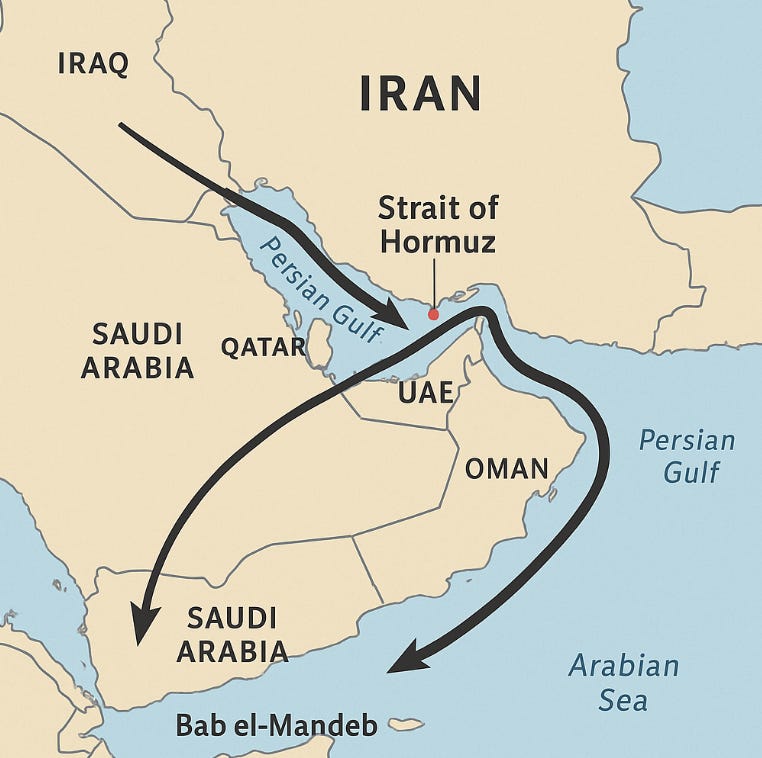
The Strait of Hormuz is one of the most critical maritime chokepoints on the planet. Geographically, it lies between the eastern edge of the Arabian Peninsula and Iran’s southern coast, connecting the Persian Gulf to the Gulf of Oman and onward to the Arabian Sea. The strait is roughly 150 kilometers long, and at its narrowest point only 40 kilometers wide. The navigable shipping lanes are extremely constrained—two miles wide in each direction, separated by an international buffer zone.
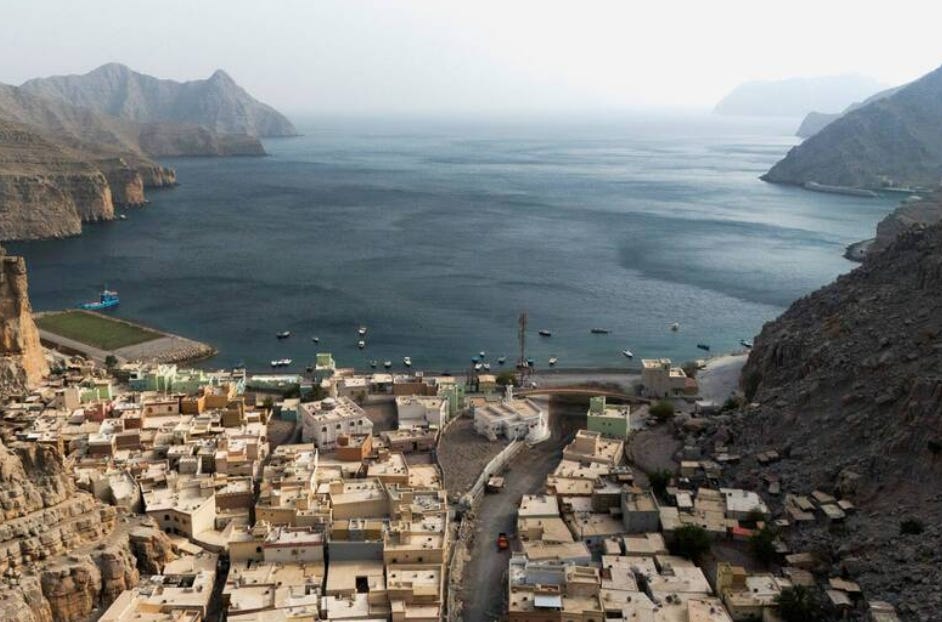
Real photo of Strait of Hormuz
This narrow waterway carries extraordinary weight: around 20% of global oil supply and the vast majority of Qatar’s liquefied natural gas (LNG) exports pass through it. Any disruption immediately reverberates through global energy markets.
A Sudden Crisis: From Regional Tension to Global Shock
Recent developments in the Middle East have triggered what many analysts now describe as a global shipping and energy crisis. According to international media reports, Iran’s Revolutionary Guard announced that the Strait of Hormuz was closed to navigation. Shortly thereafter, an unidentified oil tanker reportedly ignored warnings and attempted to transit the strait—only to be intercepted by military forces and sunk in the critical waterway.
The result was immediate and dramatic. The Persian Gulf and its approaches effectively turned into a massive maritime traffic jam. Vessel-tracking data shows over 150 crude oil and LNG carriers anchored near the coast, while hundreds of additional tankers and cargo ships remain stranded outside the strait, unwilling to approach a conflict zone. For global shipping, this represents an unprecedented paralysis of a core energy corridor.

Energy companies and shipowners reacted swiftly, ordering vessels to halt transit immediately to minimize risk. Although a U.S.-led Joint Maritime Information Center stated it had not received formal notification of a legal blockade, it warned that insurance premiums for the region are set to spike sharply, adding another layer of cost and uncertainty.
From the Strait of Hormuz to Hsinchu: one connected chain
It may sound dramatic to connect missile strikes in the Middle East to cleanrooms in Hsinchu, Taichung, or Tainan.
But that is exactly how the world works now.
A disruption in the Gulf can tighten oil supply.
Tighter oil supply can push up global energy prices.
Higher energy prices can stress LNG importers.
LNG stress can affect electricity systems.
Electricity systems affect industrial costs and reliability.
Industrial reliability affects semiconductor output.
Semiconductor output affects AI, cloud, electronics, and global productivity.
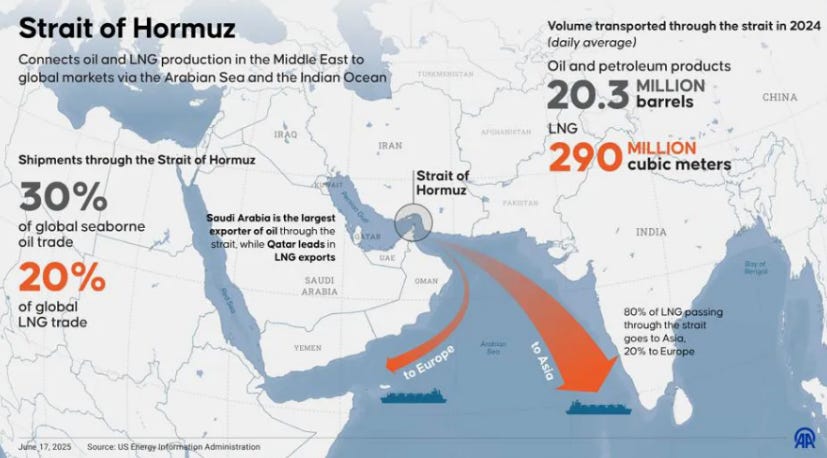
This is not a theoretical chain. It is the logic of interdependence.
The modern economy is built on fragile confidence in continuous flow:
Continuous energy,
Continuous shipping,
Continuous manufacturing
Continuous computation.
Break one of those links and the rest of the chain starts to tremble.
Taiwan matters because it is one of the world’s most important conversion points in that chain. It converts global capital, engineering talent, imported raw materials, and power into the world’s most advanced semiconductor output.
That conversion process cannot happen without electricity.
Crude Oil and Natural Gas May Face Severe Supply Shocks
Rising Probability of Supply Disruptions
Strait of Hormuz Disruption
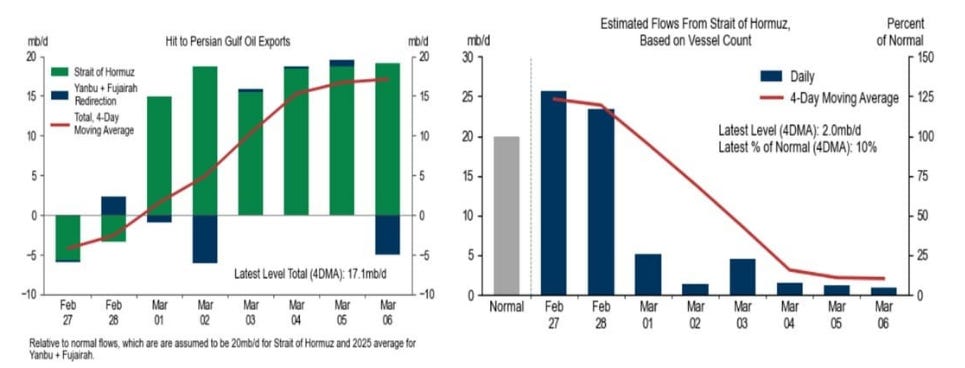
The Strait of Hormuz normally handles around 20 million barrels per day, including approximately 14 million barrels of crude oil. Currently, about 17.1 million barrels per day of flows are affected, leaving only around 10% of normal traffic operational. Compared with the supply disruption caused by the Russia–Ukraine conflict in 2022, the scale of the current shock is estimated to be about 17 times larger.
Limited Alternative Routes
Saudi Arabia and the United Arab Emirates theoretically have around 3.6 million barrels per day of spare transportation capacity, but in practice only about 900,000 barrels per day can be rerouted. The situation is further complicated by Houthi threats to attack Red Sea export routes, while several receiving ports have already been targeted, raising serious concerns about the security of these alternative supply paths.
Emerging Production Shutdowns in Middle Eastern Oil Producers
As exports from the Persian Gulf face major disruptions, crude inventories are rapidly accumulating. According to J.P. Morgan, since late February the region has accumulated roughly 76 million barrels of additional oil inventories. Of this, about 46 million barrels remain stranded on oil tankers, 22 million barrels are stored at refineries, and 8 million barrels have moved into commercial storage facilities.
This stockpile equals roughly 4.5 days of regional export capacity, with the majority concentrated in Saudi Arabia. As storage facilities approach capacity, Iraq has already cut production by around 1.5 million barrels per day, while Kuwait has shut down most of its export refining operations, maintaining only minimal production for domestic demand.
If inventory pressure continues, production shutdowns could exceed 4 million barrels per day, and in extreme scenarios may approach 6 million barrels per day.
TSMC’s expansion is a triumph—and a warning
TSMC’s rapid development is one of the great industrial achievements of the modern era.
It proved that manufacturing excellence still matters.
It proved that process discipline can become geopolitical power.
It proved that an island economy can become central to the digital age.
But TSMC’s success also reveals something uncomfortable: the next phase of semiconductor competition will not be won by process technology alone.
It will also be won by energy systems.
The future leaders in semiconductors will need more than fabs. They will need reliable grids, long-term fuel security, resilient logistics, water management, workforce depth, advanced packaging ecosystems, and political stability. In other words, semiconductor strength is becoming a whole-of-system capability.
Taiwan remains ahead in execution.
But staying ahead will require matching chip ambition with infrastructure ambition.
This is where the warning lies.
If TSMC keeps accelerating while Taiwan’s energy system struggles to keep pace, the gap becomes dangerous. Not because Taiwan will suddenly lose leadership, but because world-class manufacturing cannot be sustained forever on infrastructure anxiety.
2025年9月25日
The next global bottleneck may not be chips alone
For years, the world worried about chip shortages.
In the years ahead, the bigger concern may be the combination of chip concentration and energy fragility.
That is a different kind of bottleneck.
It is not only about how many wafers can be started, how many CoWoS lines can be installed, or how many AI GPUs can be shipped. It is also about whether the physical world beneath the digital economy can support the load.
Can enough energy be generated?
Can LNG continue flowing?
Can electricity prices remain tolerable?
Can industrial policy move fast enough?
Can infrastructure planning keep up with AI speed?
These are no longer secondary questions.
They are central questions.
Conclusion: the age of interconnected vulnerability
The lesson of this moment is simple but profound.
Middle East war and Taiwan semiconductor manufacturing are not distant stories. They are chapters of the same global narrative: one about interdependence, concentration, and the hidden fragility of modern civilization.
Oil shocks no longer stay in oil markets.
Wars no longer stay on battlefields.
Power shortages no longer stay local.
And chips are no longer just a tech-sector issue.
Everything now connects.
A missile strike near an oil facility can eventually affect the cost structure of a fab.
A shipping disruption can ripple into AI deployment.
An electricity constraint in Taiwan can affect global computing capacity.
And the success of TSMC, while extraordinary, makes the need for energy security even more urgent.
This is why the world should stop thinking in silos.
Geopolitics is no longer separate from manufacturing.
Energy is no longer separate from semiconductors.
And Taiwan is no longer just an island making chips.
It is one of the places where the future of the global economy is being physically manufactured—under the pressure of rising AI demand, rising geopolitical risk, and rising energy uncertainty.
The real question is no longer whether these systems are connected.
It is whether governments, industries, and investors are prepared for just how connected they have become.
Reference information:

Taiwan imports about 99% of natural gas. To ensure a stable supply of natural gas, the government has been taking the following measures:
Currently, there are two LNG receiving terminals owned by CPC Corporation, Taiwan (CPC). Based on the infrastructure expansion and newly-constructed projects, there will be six LNG receiving terminals in the future which will meet the natural gas demand and achieve the energy target that gas power generation accounts 50% of overall power generation.

Japan is heavily dependent on imported energy, particularly LNG and crude oil. As a resource-poor island nation, it imports most of its fuel to sustain industry, transportation, and power generation. To reduce supply risks from geopolitical disruptions or shipping chokepoints, Japan maintains large strategic petroleum reserves and diversified LNG supply contracts to strengthen energy security and ensure stable economic operations.




PreviousNext
TopLatestDiscussions








See all