"Stronger Together" to "Transform Tomorrow": The Slogan Evolution Powering the Next Semiconductor Supercycle
"Stronger Together" to "Transform Tomorrow": The Slogan Evolution Powering the Next Semiconductor Supercycle
- Source: SemiVision
- Author: SEMIVISION
- Published: 2026-02-13T14:34:43+08:00
- URL: https://tspasemiconductor.substack.com/p/stronger-together-to-transform-tomorrow (1) "Stronger Together" to "Transform Tomorrow": The Slogan Evolution Powering the Next Semiconductor Supercycle


"Stronger Together" to "Transform Tomorrow": The Slogan Evolution Powering the Next Semiconductor Supercycle
Original Article By SemiVision Research [Reading time: 10 mins]

Feb 13, 2026
∙ Paid
The semiconductor industry remains a cornerstone of global technological progress, enabling advancements in artificial intelligence (AI), electric vehicles (EVs), renewable energy, and beyond. With the market experiencing unprecedented growth—projected to reach nearly $1 trillion in annual sales by 2026, driven by a 26% year-over-year increase—the sector is navigating a dynamic landscape of innovation, geopolitical shifts, and sustainability imperatives.
This surge is fueled by the AI boom, with generative AI chips alone expected to account for roughly half of global chip sales in 2026.
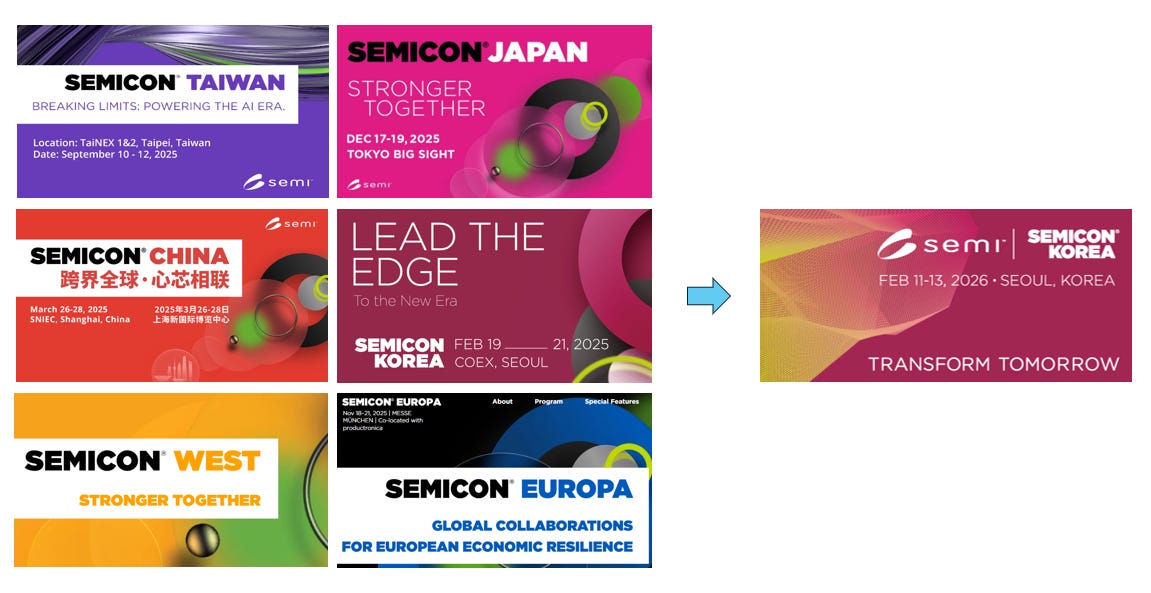
The slogans from major SEMICON events in 2025 vividly encapsulate this evolution, emphasizing themes of unity, resilience, and regional empowerment. These motifs not only reflect the industry’s response to challenges like supply chain disruptions and talent shortages but also set the stage for Semicon Korea 2026’s forward-looking slogan, “Transform Tomorrow,” which heralds a era of proactive transformation. This article delves into how these slogans illuminate key trends, providing deeper analysis into the forces shaping semiconductor development from 2025 onward.
Reflecting on 2025: Slogans Highlighting Unity and Resilience
In 2025, SEMICON events worldwide adopted bold, thematic slogans that underscored the urgent need for collective action amid persistent geopolitical tensions, supply chain vulnerabilities lingering from the post-pandemic era, and mounting environmental pressures. Far beyond promotional taglines, these slogans mirrored the industry’s core strategic priorities: forging robust global partnerships, bolstering local manufacturing ecosystems, accelerating sustainability initiatives, and embracing collaborative innovation to power the AI-driven future.
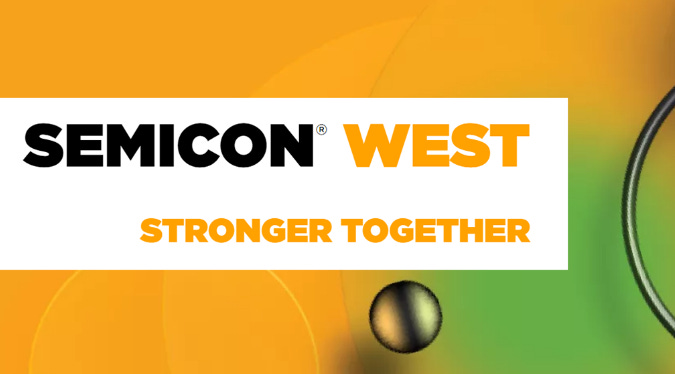
A prominent recurring motif was “Stronger Together,” appearing in multiple regional variations to emphasize synergy and shared resilience. For instance, SEMICON West 2025, held in Phoenix, Arizona (October 7-9), prominently featured “STRONGER TOGETHER” (expanded in official messaging as “Stronger Together—Shaping a Sustainable Future in Talent, Technology, and Trade”). This tagline highlighted the U.S. focus on workforce development, technological convergence, and supportive trade policies to fortify domestic fabrication capacity—aligning closely with ongoing investments under the CHIPS and Science Act to reduce overseas dependencies.
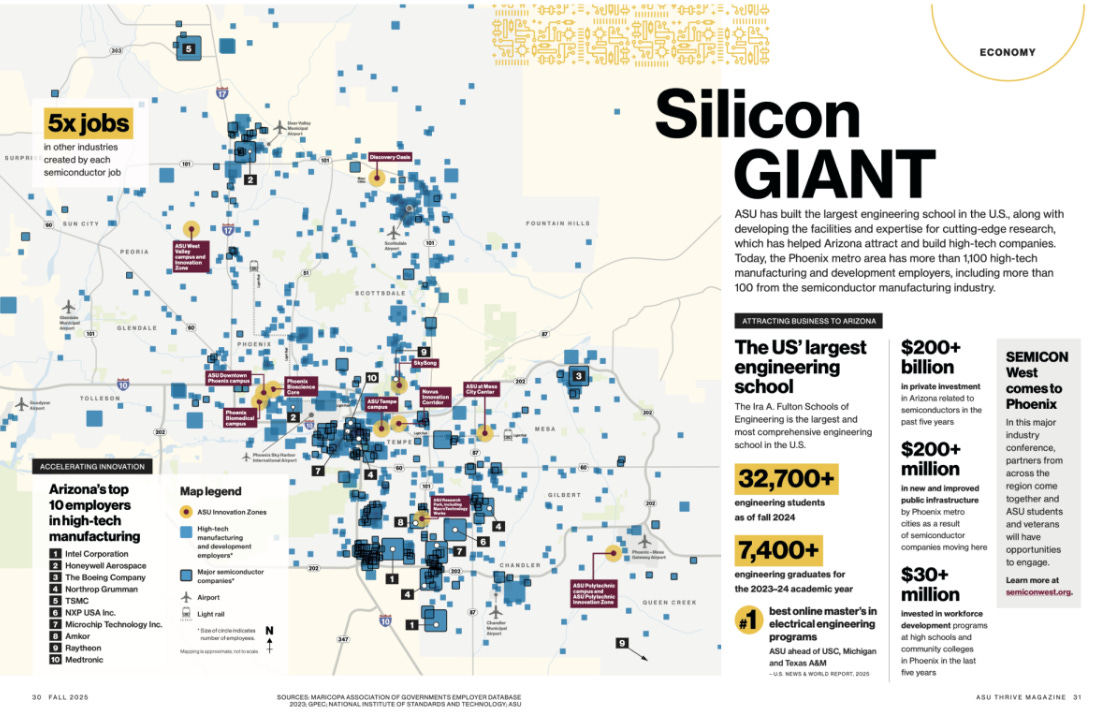
How the semiconductor boom and ASU are transforming Arizona’s economy
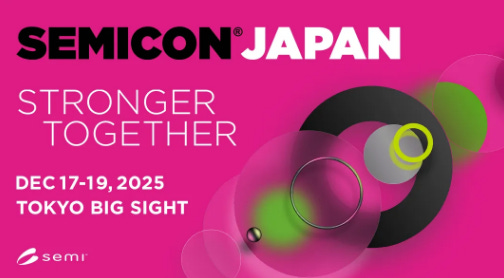
In Asia, SEMICON Japan 2025 (December 17-19, Tokyo Big Sight) embraced “STRONGER TOGETHER” as its central banner, reinforcing unity while spotlighting intersections of AI, sustainability, and semiconductor advancements—such as energy-efficient designs and quantum-related technologies.

2025年7月19日
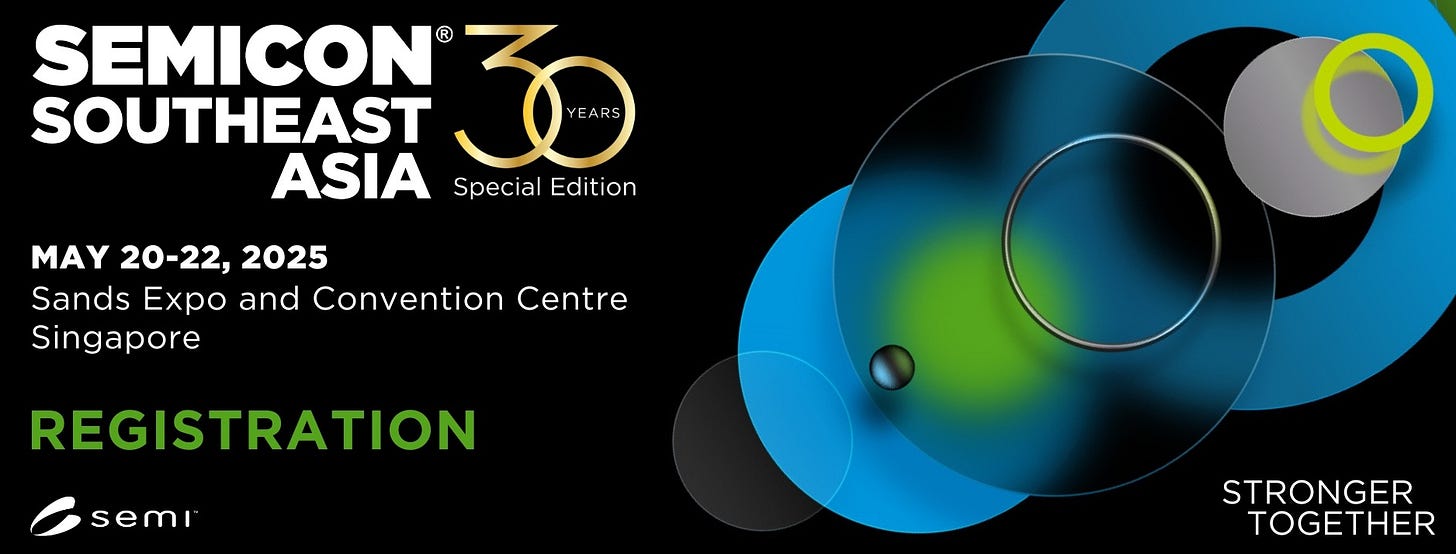
Similarly, SEMICON Southeast Asia 2025 (May 20-22, Singapore) celebrated its 30th anniversary under “Stronger Together– Collaborating to Navigate Uncertainties and Fostering Resilience,” capturing the region’s rapid emergence as a diversified manufacturing and assembly hub amid economic volatility and supply chain diversification efforts.Region-specific slogans further showcased tailored leadership ambitions.
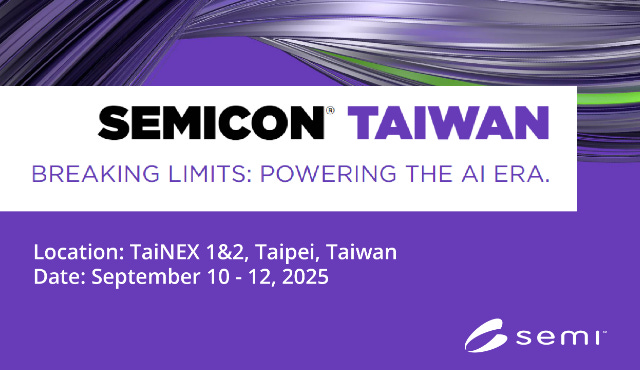
SEMICON Taiwan 2025 (September 10-12, Taipei Nangang Exhibition Center) boldly declared “BREAKING LIMITS: POWERING THE AI ERA,” positioning Taiwan—home to the world’s leading foundry ecosystem—as the epicenter for pushing boundaries in sub-3nm nodes, advanced packaging, and AI accelerators. This forward-leaning slogan celebrated collaborative ecosystems essential to sustaining “Moore’s Law 2.0” innovations.

2025年9月16日
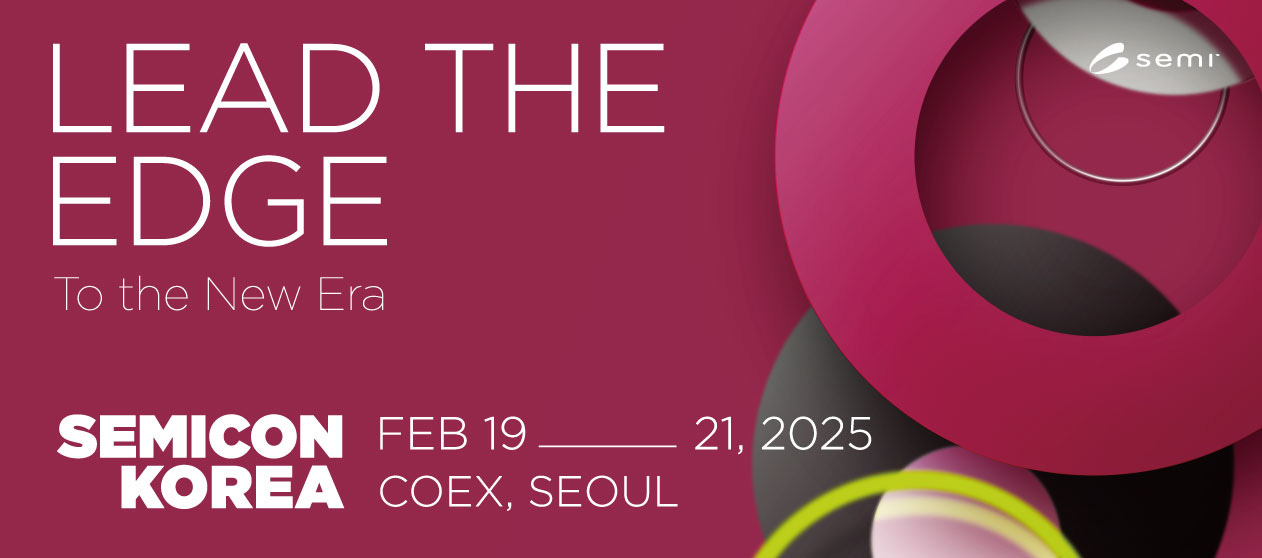
SEMICON Korea 2025 (February 19-21, COEX Seoul) adopted “LEAD THE EDGE To the New Era,” asserting South Korea’s vanguard role in cutting-edge materials and equipment, particularly high-bandwidth memory (HBM) critical for AI workloads and next-generation computing.
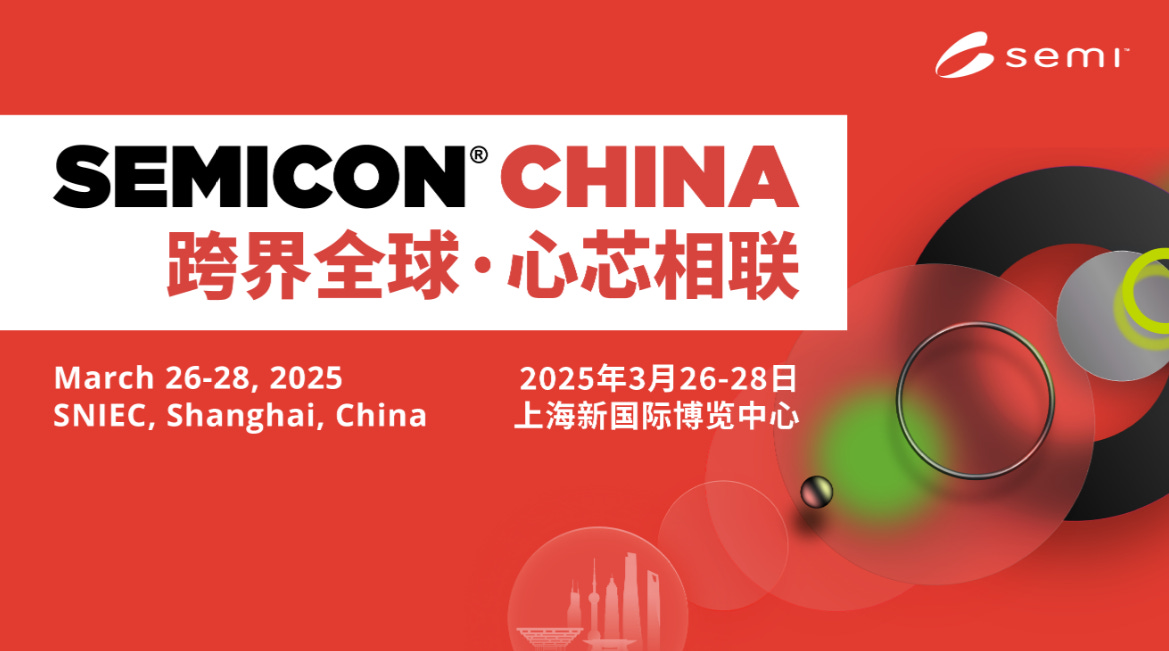
SEMICON China 2025 (March 26-28, SNIEC Shanghai) used the evocative “跨界全球·心芯相聯” (translated as “Cross-border Global · Heart Core Connected”), promoting deeply interconnected markets and dynamic domestic microelectronics growth despite export controls and global fragmentation.

2025年3月26日
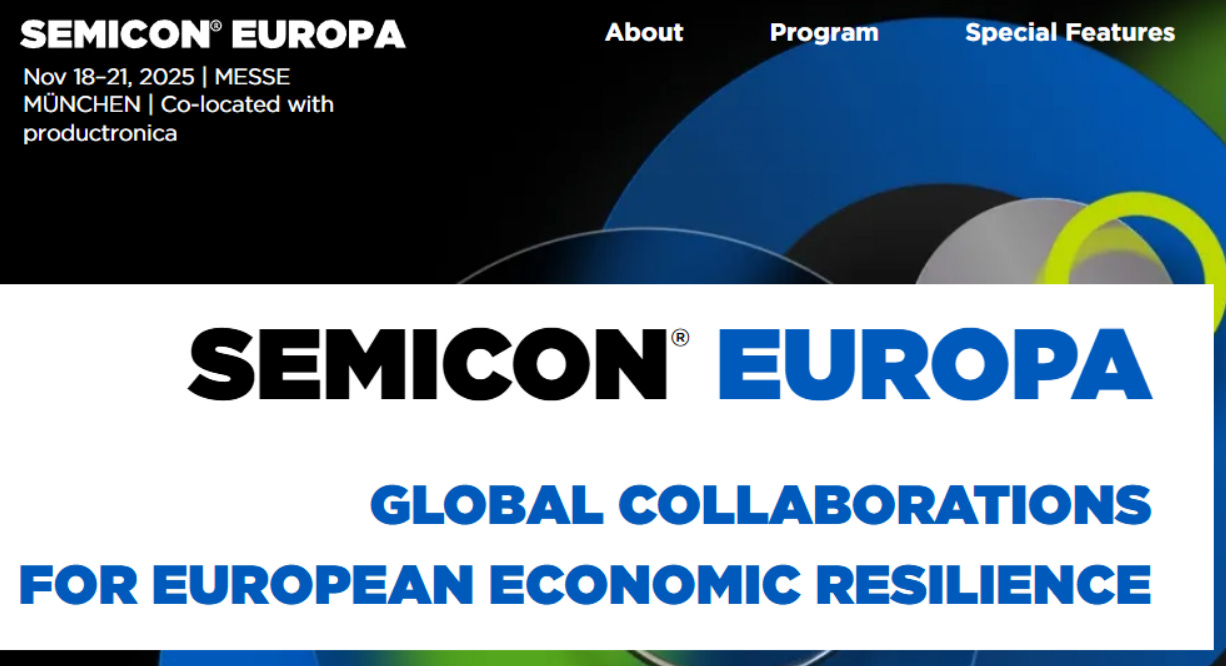
In Europe, SEMICON Europa 2025 (November 18-21, Munich) championed“GLOBAL COLLABORATIONS FOR EUROPEAN ECONOMIC RESILIENCE,” stressing international alliances to secure supply chains, foster innovation in smart mobility, MEMS sensors, and power devices for electric vehicles, while reinforcing Europe’s strategic autonomy.

2025年11月12日
These slogans—vividly captured in event banners and promotional visuals—collectively signaled a profound industry-wide pivot: moving away from isolated competition toward unified resilience. In 2025, semiconductors transcended mere node-scaling; they became strategic enablers of global stability, sustainability, and AI-powered transformation, with collaboration as the foundational force driving progress across continents.
Below we will share:
Key Trends Emerging from 2025’s Collaborative Push: A Deeper Dive into Industry Dynamics
Bridging to 2026: “Transform Tomorrow” and Future Horizons
Transformative trends in Semiconductor
A Semiconductor Future Defined by Vision and Action
Key Trends Emerging from 2025’s Collaborative Push: A Deeper Dive into Industry Dynamics
The 2025 SEMICON slogans captured a pivotal moment, propelling the semiconductor industry to record-breaking performance. Global sales reached approximately $791.7 billion in 2025—a remarkable 25.6% year-over-year increase from 2024’s $630.5 billion—largely fueled by explosive AI demand, according to the Semiconductor Industry Association (SIA) and World Semiconductor Trade Statistics (WSTS). This set a strong foundation for 2026, with projections pointing to $975 billion (WSTS Autumn 2025 forecast) or even approaching $1 trillion, driven by sustained double-digit growth in Logic and Memory segments. Below, we expand on these trends with updated market data, technological advancements, economic drivers, and strategic implications.
Global Collaboration and Supply Chain Resilience
Slogans from SEMICON Europa and West emphasized diversified, resilient networks amid U.S.-China trade frictions and export controls on advanced nodes. “Friendshoring,” nearshoring, and regional hub development accelerated, with massive investments in advanced packaging like 3D heterogeneous integration, chiplets, and CoWoS (Chip on Wafer on Substrate) to mitigate single-source risks. In 2025, this contributed to robust growth despite challenges; the U.S. led in design/IP, Asia (especially Taiwan and Korea) dominated fabrication, and Southeast Asia expanded in assembly/testing/OSAT. Fab expansions surged due to AI-driven demand, but persistent risks—such as critical material shortages and infrastructure bottlenecks—highlighted the need for multi-region footprints. Looking to 2026, geopolitical fragmentation continues to reshape value chains, with policies like the U.S. CHIPS Act extensions and Europe’s Chips Act fostering balanced, secure ecosystems.

2月6日

1月16日
Sustainability and AI Integration

2月6日

2月3日
Regional Empowerment and Talent Development
India’s “Designed in India, Made in India, Trusted by the World” mantra symbolized the rise of emerging hubs. Under the India Semiconductor Mission (ISM 1.0 and evolving to ISM 2.0 in 2026), investments exceeded ₹1.60 lakh crore (~$19 billion) by late 2025, approving 10 projects across six states for fabs, SiC facilities, advanced packaging, and OSAT. Milestones included Qualcomm’s 2nm tape-out in India, Micron’s Gujarat assembly/testing ramp-up, and Tata-led initiatives. Talent programs trained tens of thousands of engineers, with ISM 2.0 allocating funds for domestic equipment/materials and industry-led R&D.

Southeast Asia’s resilience focus drove assembly/testing growth via cost advantages and proximity to end-markets. Globally, talent shortages spurred cross-border programs, but gaps persist: Asia leads manufacturing volume, while the U.S./Europe emphasize design and innovation, fostering hybrid models for inclusive, balanced expansion.
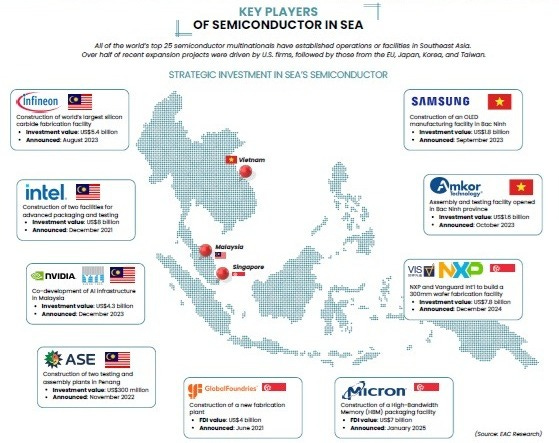
Innovation in Emerging Technologies
Korea’s “New Era” signaled the transition beyond traditional Moore’s Law scaling to “More than Moore” and heterogeneous integration. Chiplets, die stacking, and advanced packaging unlocked higher density, better yields, and customizable high-performance systems for AI accelerators and HPC. Photonics, neuromorphic computing, and quantum sensors advanced rapidly, with applications in healthcare (wearable biosensors for real-time diagnostics) and space (radiation-hardened chips). In automotive, semiconductors for EVs, autonomy, and ADAS grew strongly; the market is projected to reach $133.05 billion by 2030 at a CAGR of 11.4%, driven by SiC/GaN power devices, sensor fusion, and software-defined vehicles.

1月26日
Market Segmentation and Demand Drivers
Growth remained uneven and AI-skewed: non-memory leading-edge nodes (e.g., 2nm/1.4nm) saw explosive CAGRs (up to 300%+ in select segments through 2030), while Logic surged 37%+ and Memory 27%+ in 2025. Server/network sectors led with ~11–12% CAGR, powered by AI data centers; HBM demand constrained traditional DRAM/NAND, but overall memory rebounded sharply. China’s domestic market exemplified regional strength, hitting strong growth amid AI/IoT despite restrictions. By 2026, AI servers and edge applications will sustain momentum, though non-AI segments recover more gradually.

2月12日
Geopolitical and Economic Challenges
Optimism coexists with headwinds: escalating trade barriers, foundry price increases, and DDR5 supply tightness (as DDR4 phases out) pressured margins. Cybersecurity and ethical AI governance rose as priorities, given semiconductors’ role in critical infrastructure. Supply chain vulnerabilities—exacerbated by water/energy demands in fabs and material dependencies—prompted diversification and vertical integration. In 2026, these challenges could moderate growth to single-digit in some segments, underscoring the need for resilient, sustainable strategies.

2月2日
These deepened trends show how 2025’s unity-focused slogans built an inclusive, AI-powered ecosystem, enabling the industry to hit historic highs and position for a near-$1 trillion reality in 2026—while navigating sustainability imperatives, geopolitical realities, and talent demands for long-term resilience.
Bridging to 2026: “Transform Tomorrow” and Future Horizons
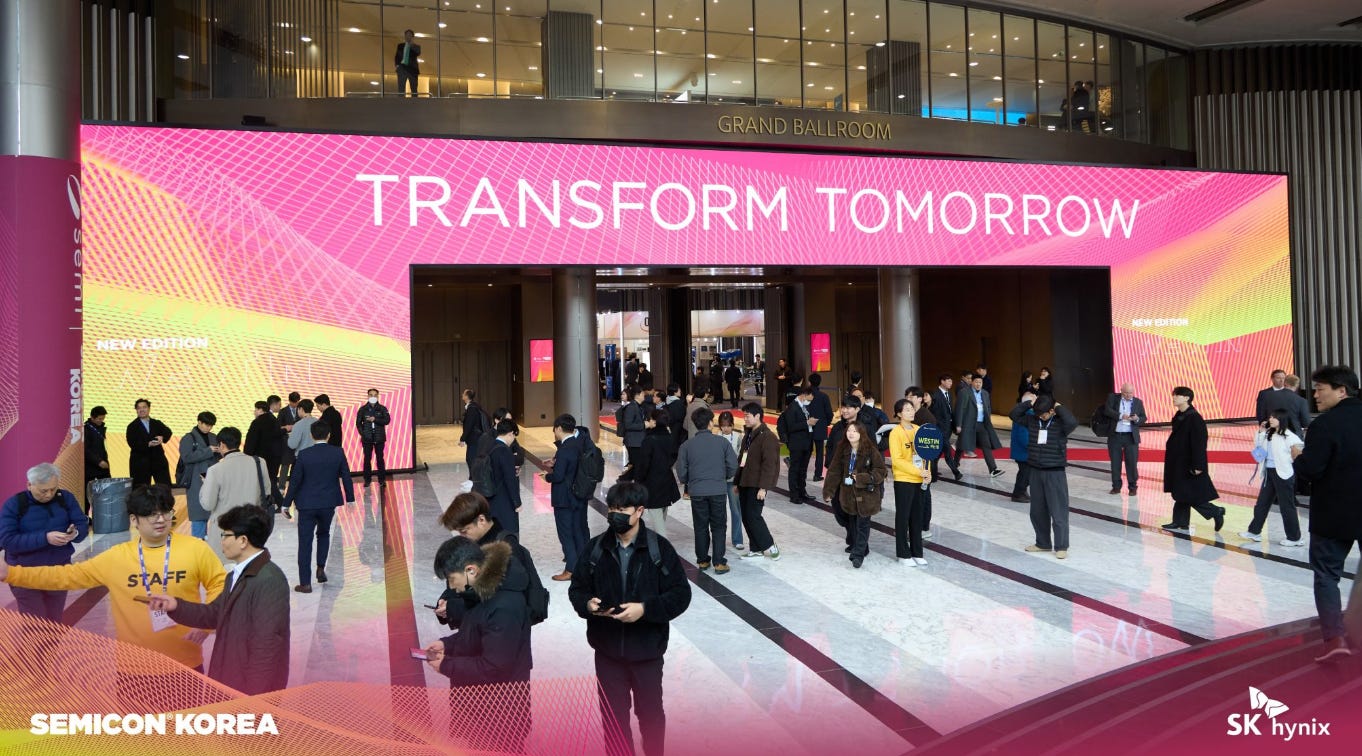
Semicon Korea 2026, held February 11-13 at COEX Seoul under the powerful theme “Transform Tomorrow,” built directly on 2025’s collaborative foundations while shifting the narrative toward proactive reinvention.
The slogan captured the industry’s urgency to not just adapt to challenges like AI scalability, energy demands, and geopolitical fragmentation—but to actively reshape the technological landscape for tomorrow’s needs. This forward momentum was vividly demonstrated through record turnout, expanded programming across multiple halls, and a star-studded keynote lineup featuring executives from Samsung Electronics, ASE, Cadence, Lam Research, SK hynix, and NVIDIA.
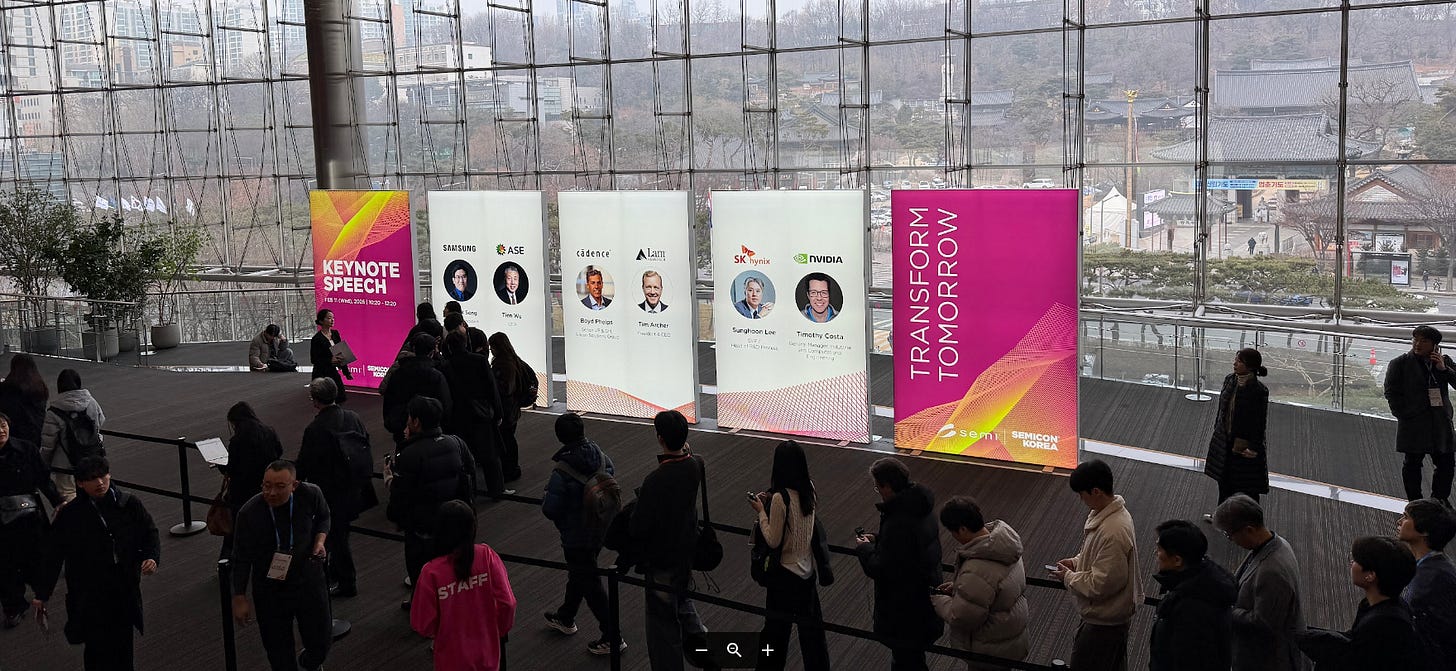
Market projections aligned perfectly with this vision: Global semiconductor sales reached approximately $791.7–$792 billion in 2025 (a 25.6% YoY surge, per SIA and WSTS), setting the stage for explosive 2026 growth. WSTS forecasts ~$975 billion in 2026 (up >25% YoY), with Deloitte and others noting the market approaching or hitting $1 trillion—driven predominantly by AI infrastructure. Logic and Memory segments led the charge, both projected to grow over 30% YoY, as generative AI chips alone neared ~$500 billion (roughly half of total sales).
In this context, “Transform Tomorrow” heralded several transformative trends:
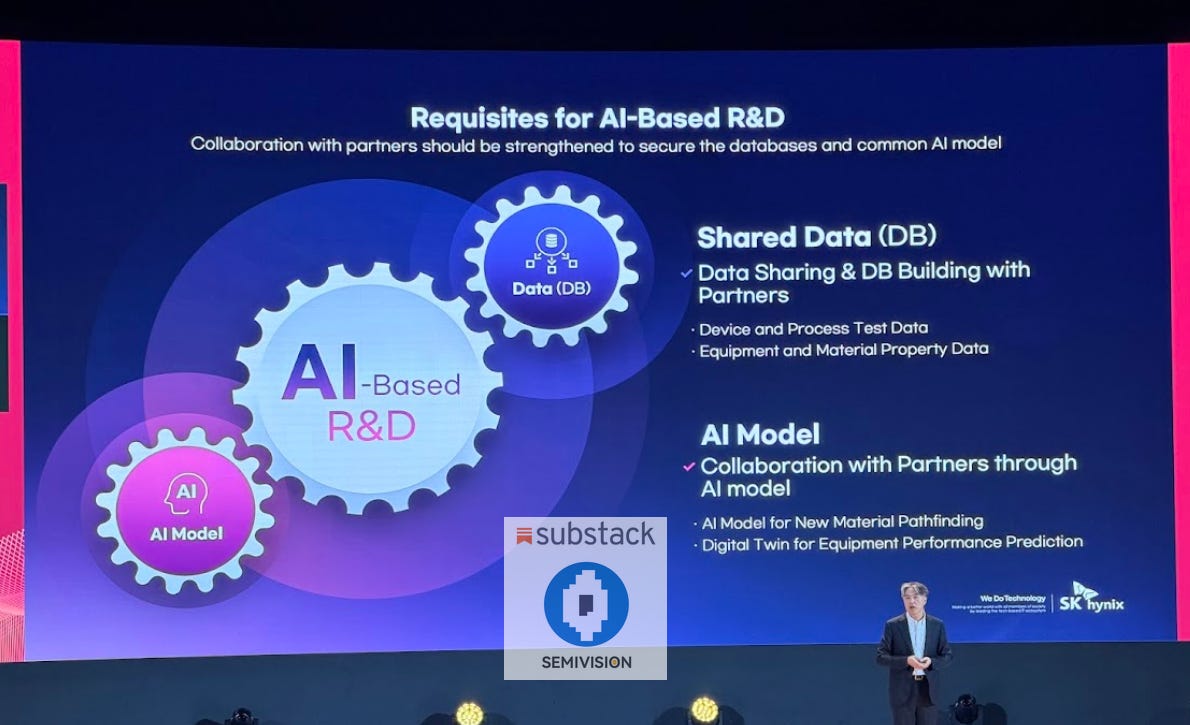
AI-Driven Fab Automation and Intelligent Systems:Keynotes spotlighted AI’s role in revolutionizing manufacturing—e.g., Samsung’s Jaihyuk Song on “Architecting the Future of AI Systems,” NVIDIA’s Timothy Costa on industrial/computing engineering, and SK hynix’s Sunghoon Lee on “AI-Driven R&D Innovation” and memory tech inflection points beyond 2027. Digital twins for predictive maintenance, AI-optimized process controls, and agentic AI in design flows accelerated fab efficiency, reducing downtime and enabling adaptive, data-driven production.
Chiplet Breakthroughs and Customizable Architectures:Cadence’s Boyd Phelps emphasized end-to-end scalable AI infrastructure, while ASE’s Tien Wu highlighted advanced packaging for system optimization. Chiplets, heterogeneous integration (e.g., 2.5D/3D CoWoS-like flows), and memory-centric designs unlocked customizable, high-performance platforms—critical for AI accelerators where HBM scarcity and packaging bottlenecks now limit scaling.


2025年6月18日
Sustainability Advances:The theme underscored zero-waste processes, bio-based substrates, closed-loop resource systems, and energy-efficient designs to address fabs’ massive water/energy footprint. With AI data centers consuming vast resources, innovations in recyclable materials, carbon abatement, and net-zero roadmaps (targeting 2030–2040) became non-negotiable for long-term viability.
Pioneering Advanced Nodes:Korea, as a memory and HBM powerhouse, led in pushing beyond traditional scaling. Samsung and SK hynix ramped 2nm (GAA/nanosheet) production in late 2025/early 2026, targeting ~10–15% speed gains and 25–30% power reductions. Globally, TSMC, Samsung, and Intel competed fiercely on 2nm/1.8nm-class nodes (with Intel’s PowerVia backside power delivery offering efficiency edges), while 1.4nm iterations loomed for 2027–2028—enabling denser, lower-power AI and edge computing.


Hybrid Global Models and Inclusive Growth:The slogan inspired blended ecosystems—Asia’s manufacturing scale (Taiwan/Taiwan foundries, Korea memory) merging with Western design/innovation (U.S. IP, Europe specialty tech). Events like the AI Summit (co-hosted with KAIST) and international forums fostered cross-border collaboration, addressing talent gaps, supply diversification, and ethical AI governance amid rising cybersecurity needs.
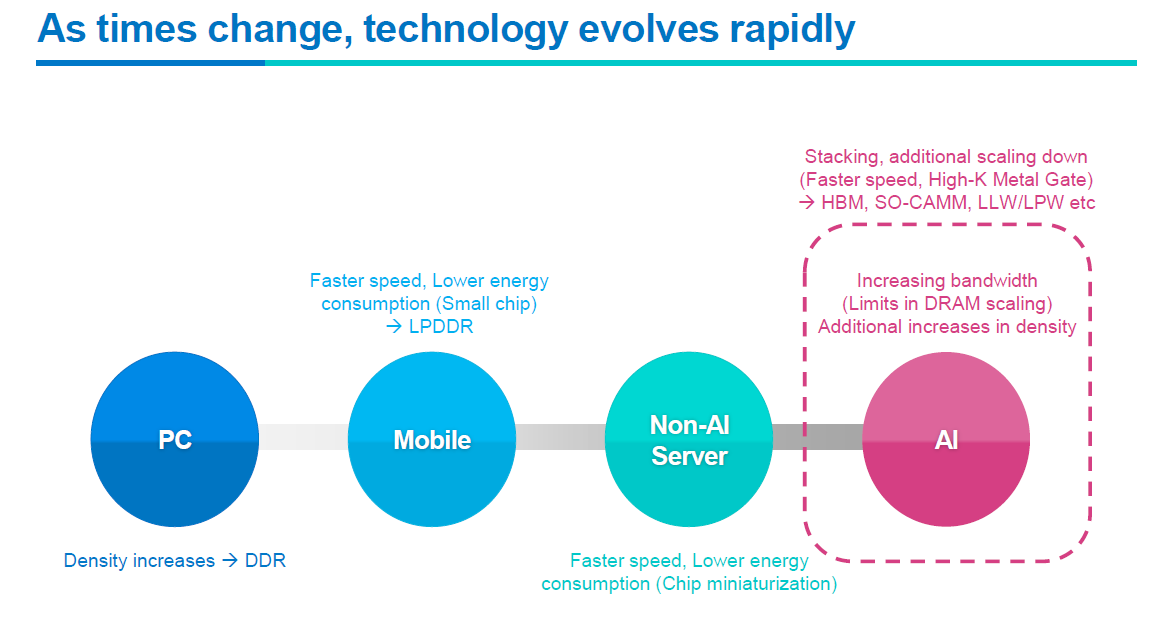
Source: Samsung
Emerging foci—such as edge AI in intelligent machines/robots, on-device agentic capabilities, silicon photonics for low-latency interconnects, and automotive/consumer AI proliferation—further underscored the transformative potential. As demand is forecasted to double toward $2 trillion by the mid-2030s (PwC/McKinsey scenarios), “Transform Tomorrow” challenged stakeholders to turn AI’s structural shift into sustainable, inclusive progress—ensuring semiconductors power not just computation, but societal advancement.

2025年12月31日
A Semiconductor Future Defined by Vision and Action
The 2025 SEMICON slogans—from ubiquitous “Stronger Together” variations to India’s bold “Building the Next Semiconductor Powerhouse”—illuminated an industry uniting against geopolitical, supply, and environmental uncertainties. These themes drove unprecedented collaboration, sustainability commitments, and regional empowerment, culminating in 2025’s record ~$792 billion sales.
Semicon Korea 2026’s “Transform Tomorrow” elevated this foundation, igniting bold reinvention amid an AI-led supercycle. With keynotes from Samsung, NVIDIA, SK hynix, and others decoding AI strategies, advanced-node ramps, and ecosystem connectivity, the event embodied the shift from resilience to proactive transformation—positioning the industry to approach $1 trillion in 2026 and sustain multi-year momentum.
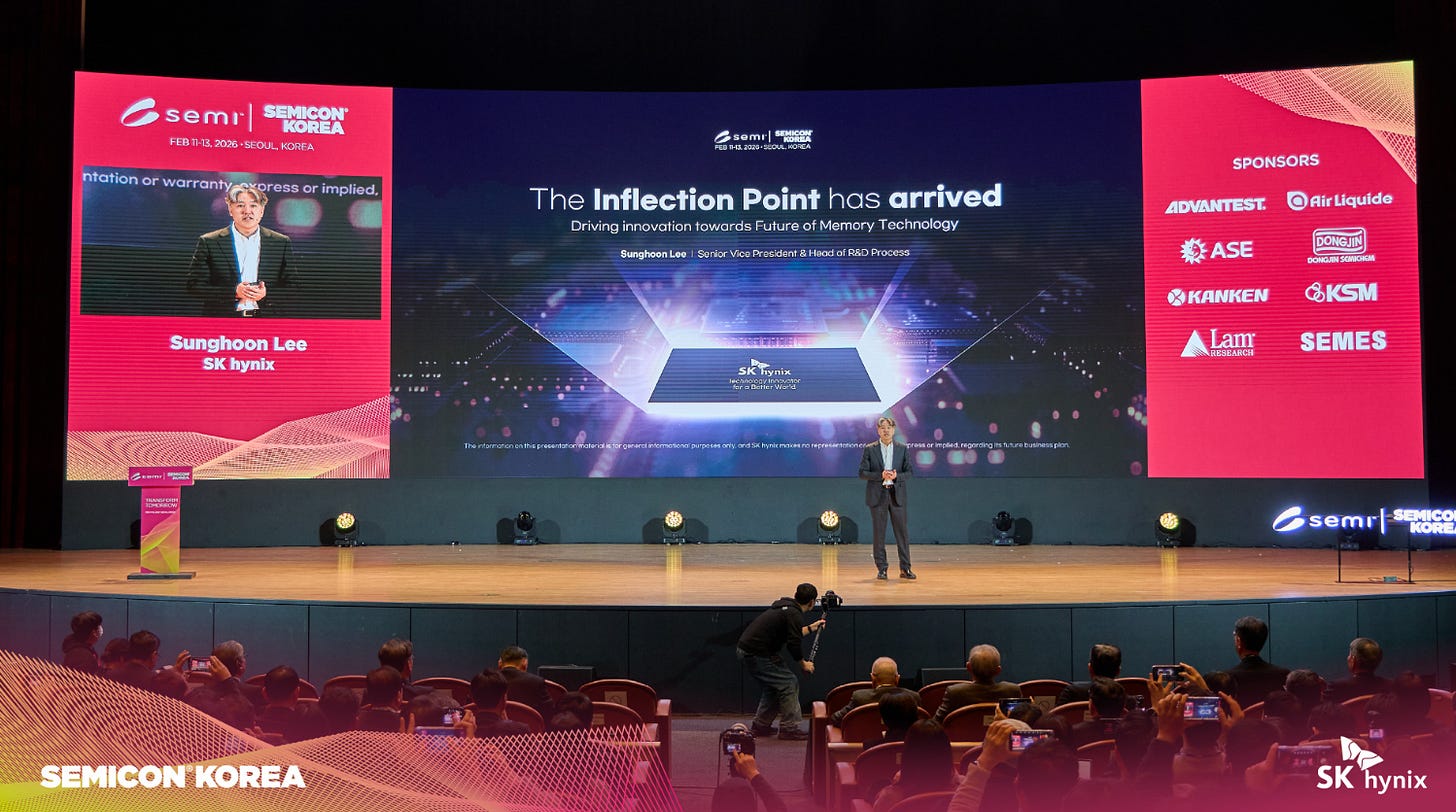
Ultimately, success hinges on translating these visionary slogans into tangible action: scaling AI responsibly, advancing sustainable manufacturing, bridging global divides, and innovating inclusively. In doing so, semiconductors will remain the invisible yet indispensable force powering a connected, intelligent, and sustainable world—truly transforming tomorrow.

SemiVision will dive deeper into these keynotes with dedicated in-depth articles soon—analyzing the technical implications, roadmaps, and competitive dynamics for our readers. Stay tuned for breakdowns on HBM scaling, system-level AI architecture, and AI-driven process innovations!


PreviousNext
TopLatestDiscussions








See all