10 Minutes to Understand Why Low Earth Orbit Is Becoming Infrastructure
10 Minutes to Understand Why Low Earth Orbit Is Becoming Infrastructure
- Source: SemiVision
- Author: SEMIVISION
- Published: 2026-02-09T09:10:27+08:00
- URL: https://tspasemiconductor.substack.com/p/10-minutes-to-understand-why-low 10 Minutes to Understand Why Low Earth Orbit Is Becoming Infrastructure


10 Minutes to Understand Why Low Earth Orbit Is Becoming Infrastructure
Original Article by SemiVision (SpaceX, MediaTek, StarCloud, NVIDIA)

Feb 09, 2026
∙ Paid
Introduction: LEO Satellites Reshaping Global Communications and the Space Economy
Low Earth Orbit (LEO) satellite systems are evolving from a once science-fiction-like space concept into a core pillar of global digital infrastructure. As the cost of deploying terrestrial networks continues to rise, demand for connectivity in remote regions surges, and 6G visions call for seamless global coverage, LEO satellites are no longer merely a supplementary layer to traditional communications. They are rapidly becoming a critical tier in an integrated space–terrestrial converged network architecture.

For technology engineers and industry analysts, the LEO sector is far more than a single satellite technology topic. It represents a cross-disciplinary systems engineering ecosystem spanning space systems engineering, radio frequency (RF) design, antenna technologies, semiconductor manufacturing, network architecture, and cloud-edge computing integration.
Historically, the concept of LEO satellites emerged as early as the mid-20th century. However, only in recent years—driven by the maturation of reusable rocket technologies (such as SpaceX’s Falcon series) and advances in satellite miniaturization—has true large-scale commercialization become possible. According to Goldman Sachs, the global LEO industry is projected to grow from approximately $25 billion in 2025 to $108 billion by 2035 under a base scenario, with even higher potential under more optimistic assumptions. This explosive growth is fueled not only by technological progress but also by the broader wave of global digitalization, including demand from the Internet of Things (IoT), smart cities, telemedicine, and emergency response applications that require low-latency, high-bandwidth connectivity.
A standout example is SpaceX’s Starlink, which has become the benchmark for the LEO industry. The company is reportedly planning an initial public offering (IPO) in 2026, with market expectations of raising up to $30 billion. Such a move could mark one of the largest fundraisings in history and signals that the LEO industry is entering a phase of accelerated expansion. With thousands of satellites already deployed, Starlink is delivering high-speed internet to underserved and remote regions worldwide, demonstrating LEO’s capability to bridge terrestrial coverage gaps.
Yet behind these star-studded commercial prospects lies a series of formidable technical, security, and reliability challenges. This article provides a comprehensive analysis of LEO satellite systems, covering their technical architecture, application trends, global competitive dynamics, Taiwan’s role in the supply chain, security threats, reliability risks, forward-looking solutions, and future commercial opportunities. The goal is to offer readers a perspective that integrates both macro-level business insights and micro-level technical understanding.
The rise of LEO satellites represents not only a transformation of the communications industry but also the sounding of a new space race. Moving from broad market opportunities to technical fundamentals, we must first understand why LEO has emerged as a true game changer capable of reshaping the global communications landscape.
This article is intended to give readers a foundational understanding of Low Earth Orbit (LEO) satellites. In future articles, SemiVision will take a deeper dive into the LEO satellite supply chain, exploring how key components are designed, qualified, and validated for space environments, as well as the specialized requirements and reliability testing needed to ensure long-term operation in orbit.
Technical Principles and System Architecture: The Core Advantages and Structure of LEO
LEO satellites operate at orbital altitudes of approximately 500 to 2,000 kilometers above the Earth’s surface. Compared with traditional Geostationary Earth Orbit (GEO) satellites (around 35,786 km) and Medium Earth Orbit (MEO) satellites (roughly 2,000–20,000 km), LEO offers several significant advantages: low transmission latency (around 20–40 ms), high bandwidth potential, and lower launch costs. These benefits stem from the shorter orbital distance, which results in very short signal round-trip times and minimized path loss. As a result, LEO is particularly well suited for latency-sensitive applications such as real-time video conferencing, remote surgery, and communications for autonomous vehicles.

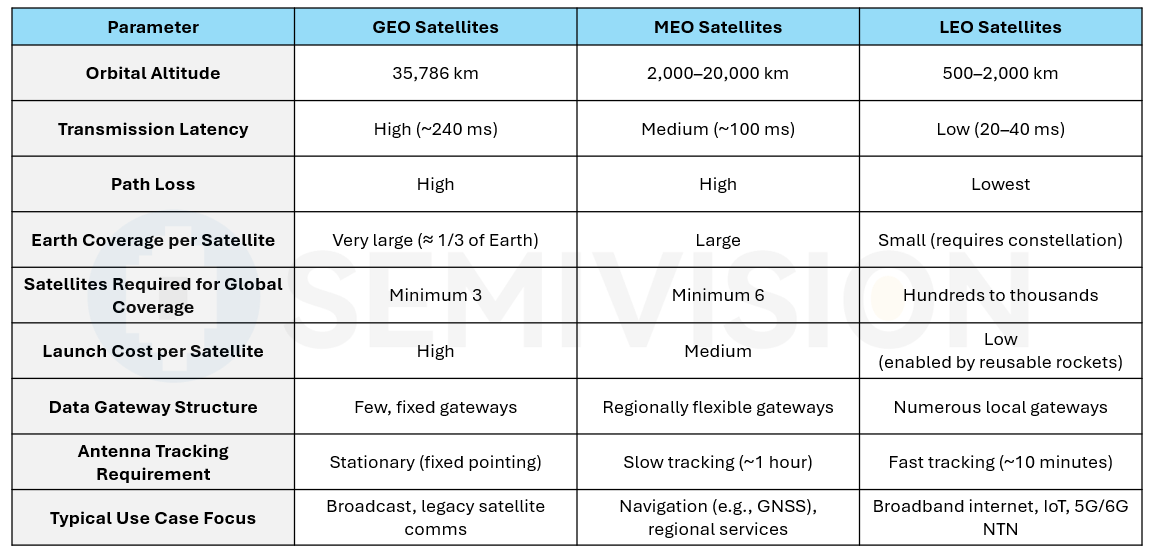
However, LEO satellites have a relatively limited coverage footprint. Each satellite covers only a small portion of the Earth’s surface, requiring the deployment of large constellations—typically numbering in the thousands—to achieve continuous global coverage. By definition, LEO satellites usually have an orbital period of less than 128 minutes (at least 11.25 orbits per day), an orbital eccentricity below 0.25, and an orbital velocity of approximately 7.8 km/s. These characteristics require frequent handovers between satellites and users, increasing overall system complexity.
From a technical perspective, LEO’s low latency and low path loss make it an ideal foundation for future 6G networks, supporting the evolution of the Internet of Remote Things (IoRT) and smart city applications. In recent years, advances in reusable rocket technologies—such as SpaceX’s Starship—have reduced the launch cost per satellite to below a few million U.S. dollars, enabling large-scale constellation deployment.
According to Qorvo’s technical guidance, the LEO market is projected to grow from $12.6 billion in 2024 to $23.2 billion by 2029, representing a compound annual growth rate (CAGR) of 13%. Despite its clear advantages, the LEO system architecture also introduces challenges, including orbital congestion and spectrum management. Next, we explore its application scenarios and key development drivers.

A complete LEO communications system architecture can be divided into three core segments:
- Space Segment
This consists of the LEO satellite constellation. Each satellite is typically equipped with phased array antennas, RF modules, and optical inter-satellite links (ISL). For example, Starlink satellites use laser links to enable data transmission between satellites, reducing dependence on ground stations and enhancing network resilience. The satellites themselves are usually designed to be compact and lightweight—often under a few hundred kilograms—to facilitate mass production and launch.
- Ground Segment
This includes gateway stations, user terminals (UTs), and network management systems (NMS). Gateway stations connect satellites to the terrestrial core network, while user terminals—such as Starlink’s “Dishy” antenna—support automatic satellite tracking. Ground network management systems leverage software-defined networking (SDN) technologies to enable dynamic resource allocation and flexible network control.
- User Segment
This segment covers a wide range of end-user devices, from consumer-grade receivers to enterprise and military communication terminals. These devices must support multi-band operation (such as Ku- and Ka-bands) and integrate with 5G/6G Non-Terrestrial Network (NTN) standards, enabling seamless convergence with terrestrial cellular networks.
Application Scenarios and Development Trends: From Remote Broadband to 6G Convergence
LEO satellites serve a wide range of application domains. Their core value lies in delivering globally consistent, low-latency connectivity, filling coverage gaps where terrestrial fiber and mobile networks are economically impractical. LEO technology, characterized by low latency and broad reach, not only complements terrestrial communications but also plays a critical role in the Internet of Things (IoT), telemedicine, and disaster response.
Key application scenarios include:
Remote Area Broadband Access
For example, Starlink provides high-speed internet to remote regions such as parts of Africa and even Antarctica, supporting education and healthcare services. By 2030, hundreds of millions of people worldwide are still expected to lack reliable internet access, making LEO a powerful tool for bridging the digital divide.
Disaster Response Communications
During natural disasters such as earthquakes or hurricanes, terrestrial infrastructure is often damaged or destroyed. LEO systems can rapidly deploy temporary communication networks. For instance, OneWeb’s system supports emergency response operations by enabling real-time video and data transmission.
Maritime and Aviation Connectivity
Ships and aircraft require global mobility coverage. LEO’s low latency is well suited for offshore oil platforms and in-flight entertainment and connectivity systems. Eutelsat OneWeb’s network, for example, focuses on maritime and aviation mobility, supporting seamless handovers.
Defense, Intelligence, Surveillance, and Reconnaissance (ISR)
Military applications demand high reliability and secure communications. LEO systems support encrypted links and unmanned vehicle control. The U.S. Department of Defense has already collaborated with Starlink to provide battlefield connectivity.

Future Vehicular Networks and UAV Communications
In the 6G vision, Non-Terrestrial Networks (NTN) will form a multi-layered architecture with terrestrial cellular networks, supporting autonomous driving and coordinated drone swarms. IoRT applications further extend LEO connectivity to remote sensors for environmental monitoring and agricultural IoT.
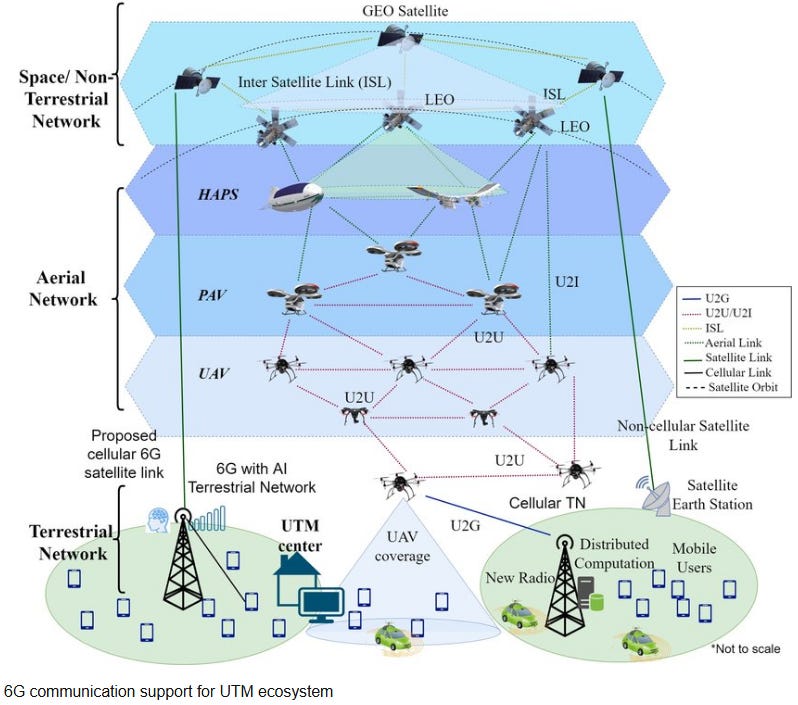
Development Trends
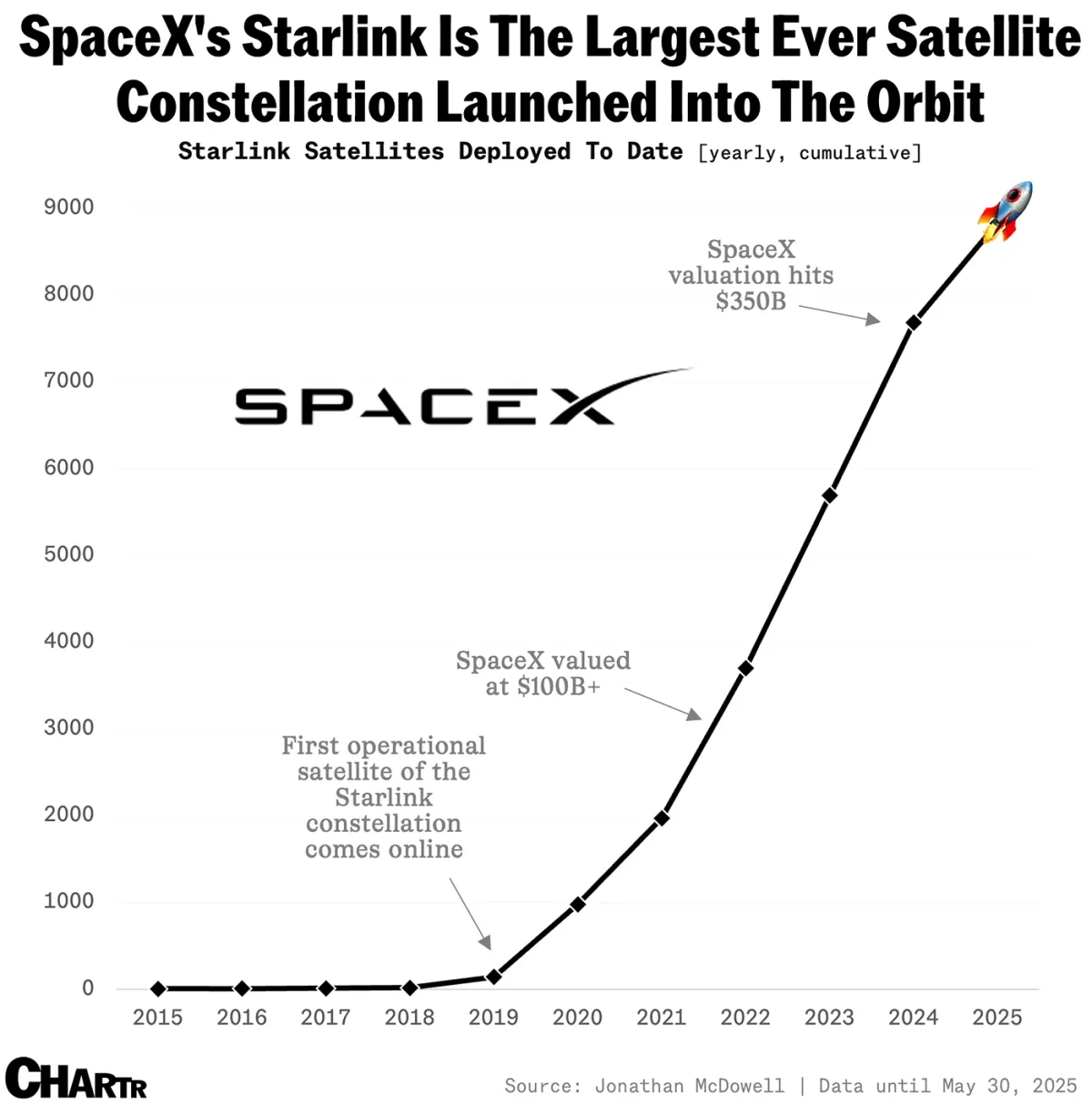
Global digitalization and the accelerating adoption of AI are major drivers. SpaceX reportedly plans to deploy up to 42,000 satellites by 2030, while Amazon’s Project Kuiper targets around 3,000 satellites by 2029, with competition centered on bandwidth and coverage. The 3GPP organization has already incorporated LEO into future 6G standardization efforts, promoting integration with terrestrial networks.
Patent analyses of Taiwan’s LEO communications sector suggest that domestic companies should closely monitor Qualcomm’s technology positioning to avoid overlapping competitive areas. In addition, LEO’s potential role in space-based AI computing is emerging. Elon Musk has envisioned using satellite constellations powered by solar energy to build a low-cost “space AI computing center” that provides generative AI computing power back to Earth. This trend extends LEO’s role beyond communications into the computing domain, opening new commercial opportunities.
Global Competitive Landscape: Industry Giants and Collaboration Models
Competition in the LEO industry is intensifying, with major players includingSpaceX’s Starlink, Amazon’s Project Kuiper, and Eutelsat’s OneWeb, each adopting distinct strategic approaches.
SpaceX Starlink

Currently the largest LEO constellation, Starlink has deployed more than 6,000 satellites and follows a vertically integrated model, developing its own satellites, launch vehicles, user terminals, and operating platform. Its technological strengths include phased array user terminals and optical inter-satellite links (ISL), enabling global coverage. According to its official information, Starlink offers download speeds of up to 200 Mbps, with a strong focus on the consumer market. Its planned 2026 IPO is expected to further expand its influence.
This year’sStarlink Super Bowl adhighlighted a new frontier in global connectivity, showcasing how satellite internet can deliver affordable connectivity even in areas beyond the reach of traditional cellular networks. The commercial underscored SpaceX’s partnership with T-Mobile and its push to bring direct satellite-to-cell services to mainstream audiences, signaling a shift in how people think about network coverage and communication infrastructure.
What’s clear from this high-visibility moment is the ambition and confidence behind Elon Musk’s strategy. By bringing Starlink into one of the most watched advertising platforms in the world, it not only raised public awareness of satellite-based internet, but also demonstrated a broader vision for scalable, ubiquitous connectivity powered from orbit—a vision that extends well beyond legacy telecom models and into the future of global networking.

Amazon Kuiper
Backed by the AWS ecosystem, Kuiper focuses on integrating edge cloud services with satellite connectivity. Its Protoflight mission in 2023 successfully demonstrated end-to-end connectivity. Kuiper’s laser-based mesh network forms a space-based grid, with its key competitive advantage being seamless integration with cloud services—particularly attractive for enterprise users. The project aims to deploy 3,236 satellites by 2029
OneWeb (Eutelsat OneWeb)

OneWeb adopts a B2B and government partnership model, collaborating with telecom operators and national governments. It operates over 600 satellites in approximately 1,200 km orbits, providing low-latency connectivity across land, sea, and air applications. Following its acquisition by Eutelsat, the company has strengthened its focus on security, interoperability, and 24/7 rapid deployment support.
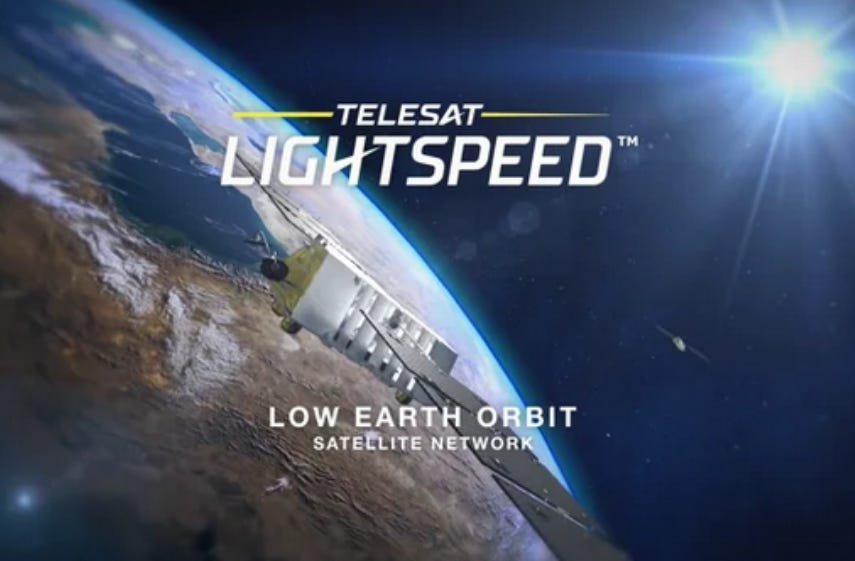
Other competitors, such as China’s CASC and Europe’s Telesat Lightspeed, are also accelerating their deployments. Global regulatory and policy dynamics—particularly spectrum allocation and orbital slot usage rights—play a significant role in shaping competition. The U.S. FCC and the ITU dominate international standards, while Taiwan primarily participates through its supply chain contributions.
The competitive landscape can be characterized as a contrast between “scale vs. ecosystem.” SpaceX emphasizes vertical integration and scale, whereas Amazon and OneWeb focus more on partnerships and ecosystem integration. By 2030, the market is expected to reach hundreds of billions of dollars, and winners will need to strike a balance between cost efficiency and technological innovation.
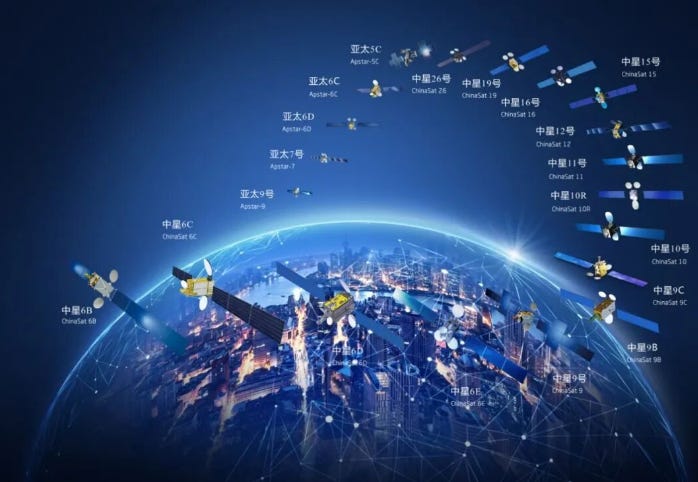
New progress has been made in areas including satellite localization and satellite internet development, laying a solid foundation for building a world-class leader in the satellite application industry and for the start of the upcoming Five-Year Plan period. At present, a high-throughput geostationary satellite internet network exceeding 100 Gbps capacity has been fully put into operation. China Satcom, in cooperation with leading international operators, now provides more efficient and broader global roaming services, better supporting maritime, aviation, and various satellite internet applications.
In the maritime segment, the global network has doubled the signal rate for individual vessels, while coverage along major global shipping routes has expanded to 95%, meeting the needs of ocean-going fleets. In aviation, through its own network and international roaming partnerships, the global aviation network supports smart civil aviation initiatives, providing high-speed in-flight connectivity for major domestic airlines and serving over 500,000 passengers on connected flights.
During the 14th Five-Year Plan period, China Satcom implemented a layout of “one headquarters, three bases, and a global ground station network.” It has built 16 domestic ground stations and 17 overseas ground stations, and completed platforms for unified multi-satellite telemetry, tracking and control (TT&C), service monitoring, and broadband applications. Digitalized operations and management capabilities have significantly improved, while satellite TT&C, service monitoring, and high-speed broadband service capabilities have been comprehensively enhanced.
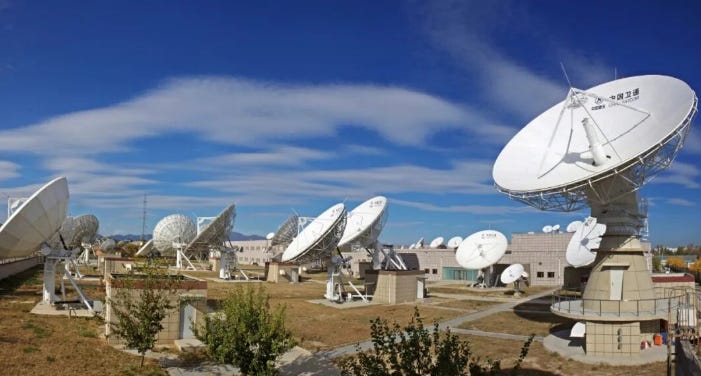
Over the past five years, China Satcom has adhered to an integrated space–ground resource development strategy, guided by the principles of resource foundation, network as the core, terminals as the key, and information service development. It has worked to strengthen core competitiveness, cultivate new productive forces, expand service coverage, and promote high-level technological self-reliance and self-strengthening—building key advantages to support national development and the high-quality growth of the satellite communications industry.

Alibaba Cloud’s Qwen-3 has become the first general-purpose AI model to be uploaded and operated in orbit, marking a major milestone in space-based artificial intelligence. In late 2025, Chinese aerospace startup Adaspace Technology deployed Qwen-3 to its orbital computing centre as part of the Star-Compute Project, a planned constellation designed to support AI inference and training from low-Earth orbit. During the historic operation, the full process — from uploading a query from Earth, running the model in orbit, and returning the result — took less than two minutes.
This development transforms satellites from pure communication relays into active AI compute nodes, potentially reducing latency and extending AI services to remote regions. The achievement also highlights China’s growing ambitions in next-generation infrastructure and competition in cloud and space computing.
Qwen-3 is part of Alibaba’s open-source Qwen family of models, which includes a range of architectures trained on trillions of tokens in over 100 languages and widely adopted on platforms such as Hugging Face and ModelScope.
The orbital deployment underscores a shift toward space-based AI, where edge inference in orbit could support new applications in science, communications, and Earth observation — expanding AI’s reach beyond terrestrial data centres.

MediaTek, a leading IC design company, has partnered with French satellite service provider Eutelsat (in alliance with OneWeb) and Airbus to complete the world’s first 5G NTN (Non-Terrestrial Network) test. The trial leveraged OneWeb’s low-Earth-orbit (LEO) satellites equipped with MediaTek chipsets to validate the feasibility of 5G satellite communications.
At MWC 2025, MediaTek unveiled its 5G-Advanced modem chipset M90, delivering peak download speeds of up to 12 Gbps. The M90 integrates satellite communications (NTN) technologies, including 3GPP IoT-NTN for low-data-rate connectivity applications and NR-NTN for high-data-rate connectivity services.
5G NTN technology enables direct 5G connectivity from space, making it suitable for remote and underserved regions. It helps expand global network coverage, reduce networking costs, and support applications such as IoT, maritime communications, and aviation connectivity.
2025年7月15日
Elon Musk Proposes AI Data Centers in Space
Elon Musk has proposed a radical concept: extending AI compute infrastructure beyond Earth by deploying AI data centers directly into space, integrated with satellite networks. The core idea is to distribute AI computing capabilities across low-Earth-orbit (LEO) satellites, forming a space-based, cloud-like AI infrastructure.

Source: NTT
This concept—often referred to as “space computing”—envisions AI workloads being processed not only in terrestrial hyperscale data centers, but also within orbiting satellite systems. The architecture emphasizes distributed, edge-oriented AI, with a particular focus on inference and selective training tasks that benefit from low latency and autonomous decision-making.
From Ground-Centric AI to Orbital Compute
Under this model, satellites would no longer function solely as communication relays. Instead, each satellite would integrate compute, storage, and networking capabilities, enabling on-board AI inference. This allows decisions to be made in space—without needing to transmit data back to Earth-based data centers—dramatically reducing latency and dependence on ground infrastructure.
Technically, this approach relies on:
Optical communications between satellites
AI accelerators and edge AI servers hardened for space environments
Co-Packaged Optics (CPO) and ultra-high-speed interconnects such as 800G and 1.6T optical links
Distributed cloud AI architectures optimized for inference-heavy workloads
In the long term, each LEO satellite could function as a self-contained micro–data center, capable of sensing, computing, storing, and transmitting data autonomously.
Why Space-Based AI Matters
Space-based AI data centers offer several strategic advantages:
Ultra-low latency for global coverage
Orbital AI nodes can deliver near-instant intelligence to remote regions, oceans, airspace, and underserved geographies where terrestrial infrastructure is limited or unavailable.
Reduced backhaul and bandwidth costs
Processing data in orbit eliminates the need to downlink massive raw datasets, transmitting only refined insights or decisions to Earth.
Resilience and decentralization
A distributed orbital compute layer reduces reliance on centralized ground data centers, enhancing robustness against natural disasters, geopolitical disruptions, or infrastructure failures.
Enabling real-time autonomous systems
Applications include autonomous vehicles, maritime navigation, aviation, disaster response, defense, IoT sensing, and global AI-driven monitoring systems.
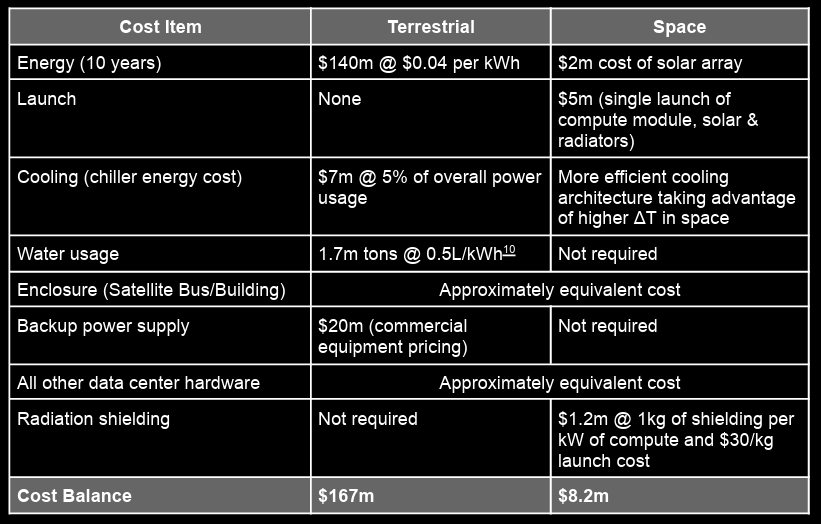
Source: starcloud
A Broader Industry Movement — Not Just Elon Musk
Importantly, Elon Musk is not the only technology leader exploring AI-in-space architectures. Major players are actively investing in related concepts:
Elon Muskhas publicly discussed leveraging satellite constellations and AI to build a space-native compute layer.
Alphabethas explored distributed cloud and edge AI models that align with orbital computing principles.
NVIDIAsupports emerging space-AI startups through its hardware platforms, AI software stacks, and optical interconnect technologies.
Starcloud, a startup backed by NVIDIA, is actively developing AI-enabled satellite data center concepts and orbital computing infrastructure.

This convergence suggests that AI data centers in space are transitioning from science fiction to a credible long-term infrastructure roadmap.
How Starcloud Is Bringing Data Centers to Outer Space

Challenges Still Ahead
Despite its promise, space-based AI data centers face substantial challenges:
Power generation and thermal management in orbit
Radiation-hardened AI chips and memory
Launch costs and satellite lifecycle economics
Software orchestration across thousands of distributed compute nodes
Regulatory, security, and spectrum coordination issues
However, as launch costs decline, optical interconnects mature, and AI inference becomes more energy-efficient, these barriers are gradually lowering.
A New Layer of AI Infrastructure
If realized, orbital AI data centers would represent a new layer in global computing infrastructure, complementing terrestrial hyperscalers rather than replacing them. AI would no longer be confined to Earth-bound server farms—it would become a planetary and orbital capability, operating seamlessly across ground, air, sea, and space.
In this vision, space is not just a network—it becomes an active computational domain.
This article is intended to give readers a foundational understanding of Low Earth Orbit (LEO) satellites. In future articles,SemiVision will take a deeper dive into the LEO satellite supply chain, exploring how key components are designed, qualified, and validated for space environments, as well as the specialized requirements and reliability testing needed to ensure long-term operation in orbit.


PreviousNext
TopLatestDiscussions








See all