From TSMC’s Earnings to the U.S.–Taiwan Tariff Deal: AI, Capital Flows, and the Geopolitical Reordering of Semiconductors
From TSMC’s Earnings to the U.S.–Taiwan Tariff Deal: AI, Capital Flows, and the Geopolitical Reordering of Semiconductors
- Source: SemiVision
- Author: SEMIVISION
- Published: 2026-01-16T12:00:54+08:00
- URL: https://tspasemiconductor.substack.com/p/from-tsmcs-earnings-to-the-ustaiwan From TSMC’s Earnings to the U.S.–Taiwan Tariff Deal: AI, Capital Flows, and the Geopolitical Reordering of Semiconductors


From TSMC’s Earnings to the U.S.–Taiwan Tariff Deal: AI, Capital Flows, and the Geopolitical Reordering of Semiconductors
Original Article by SemiVision

Jan 16, 2026
∙ Paid
Record-High Q4 and Full-Year 2025 Results; Optimistic Outlook for Q1 2026
TSMC delivered its strongest results in history in Q4 2025. Consolidated quarterly revenue surpassed the NT$1 trillion milestone for the first time, reaching approximately NT$1.046 trillion (about USD 33.7 billion), while net income also exceeded NT$500 billion for the first time, at roughly NT$505.7 billion (about USD 16.3 billion). Earnings per share for the quarter came in at NT$19.50.
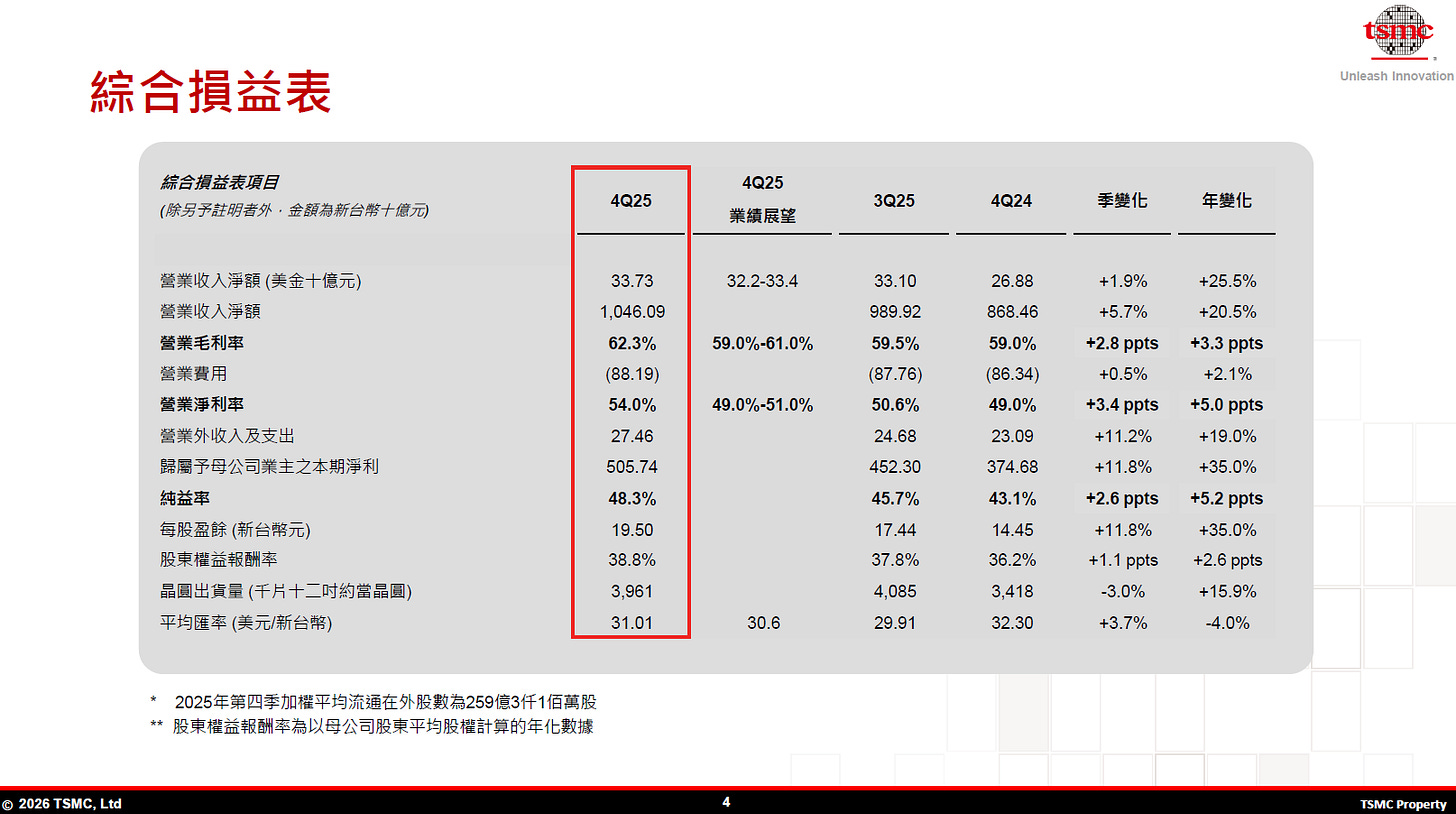
Compared with the same period in 2024, Q4 revenue grew 20.5% year over year, while net profit surged 35.0%. Driven by robust demand for advanced nodes and continued optimization of product mix, gross margin climbed to 62.3%, setting a new historical high and significantly exceeding the company’s prior guidance range of 59%–61%. This margin level even edged above the previous record of 62.22% in Q4 2022, underscoring TSMC’s strong pricing power in advanced manufacturing, despite rising depreciation from massive capital investments.
On a full-year basis, 2025 consolidated revenue reached NT$3.809 trillion (approximately USD 122.9 billion), representing 31.6% year-over-year growth.
Full-year gross margin averaged 59.9%, up 3.8 percentage points from the prior year.Net income hit a record NT$1.7178 trillion (around USD 55.4 billion), with EPS of NT$66.25, marking the strongest annual performance in TSMC’s history.
Supported by these exceptional results, TSMC also delivered a confident outlook for early 2026.
The company expects Q1 2026 revenue to reach another all-time high, in the range of USD 34.6 billion to USD 35.8 billion, representing more than 4% sequential growth. Gross margin is projected to remain elevated at 63%–65%, with operating margin of 54%–56%, indicating that near-term profitability will stay resilient even as depreciation expenses rise with aggressive capacity expansion.
In addition, TSMC announced a significant upward revision to its capital expenditure plan. For 2026, capex is now expected to reach USD 52–56 billion, up roughly 30% from the USD 40.9 billion invested in 2025, setting a new historical record. This level of investment far exceeds prior market expectations and reflects management’s strong conviction in sustained multi-year demand growth.
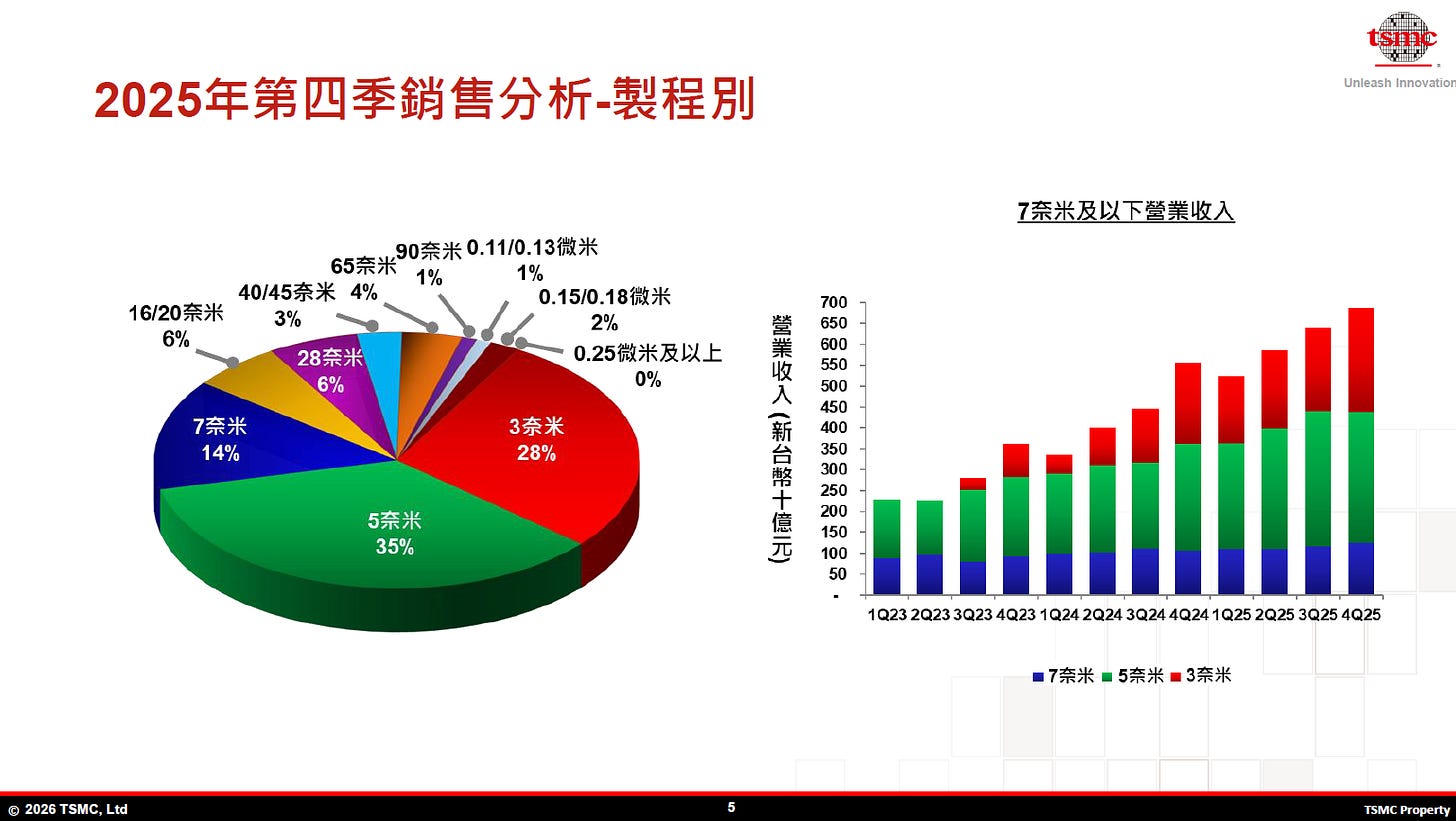
TSMC emphasized that even with record-high capital spending in 2026 to position the company for future growth, it remains committed to delivering long-term earnings expansion and shareholder value. Notably, approximately 70%–80% of capex will be allocated to advanced process technologies, around 10% to specialty technologies, and 10%–20% to advanced packaging, testing, mask production, and other supporting infrastructure.

2025年8月25日
2025年9月25日
This allocation highlights a clear strategic focus: concentrating capital on the most advanced technologies to meet surging market demand—particularly from AI and HPC—while maintaining TSMC’s long-term technology leadership.
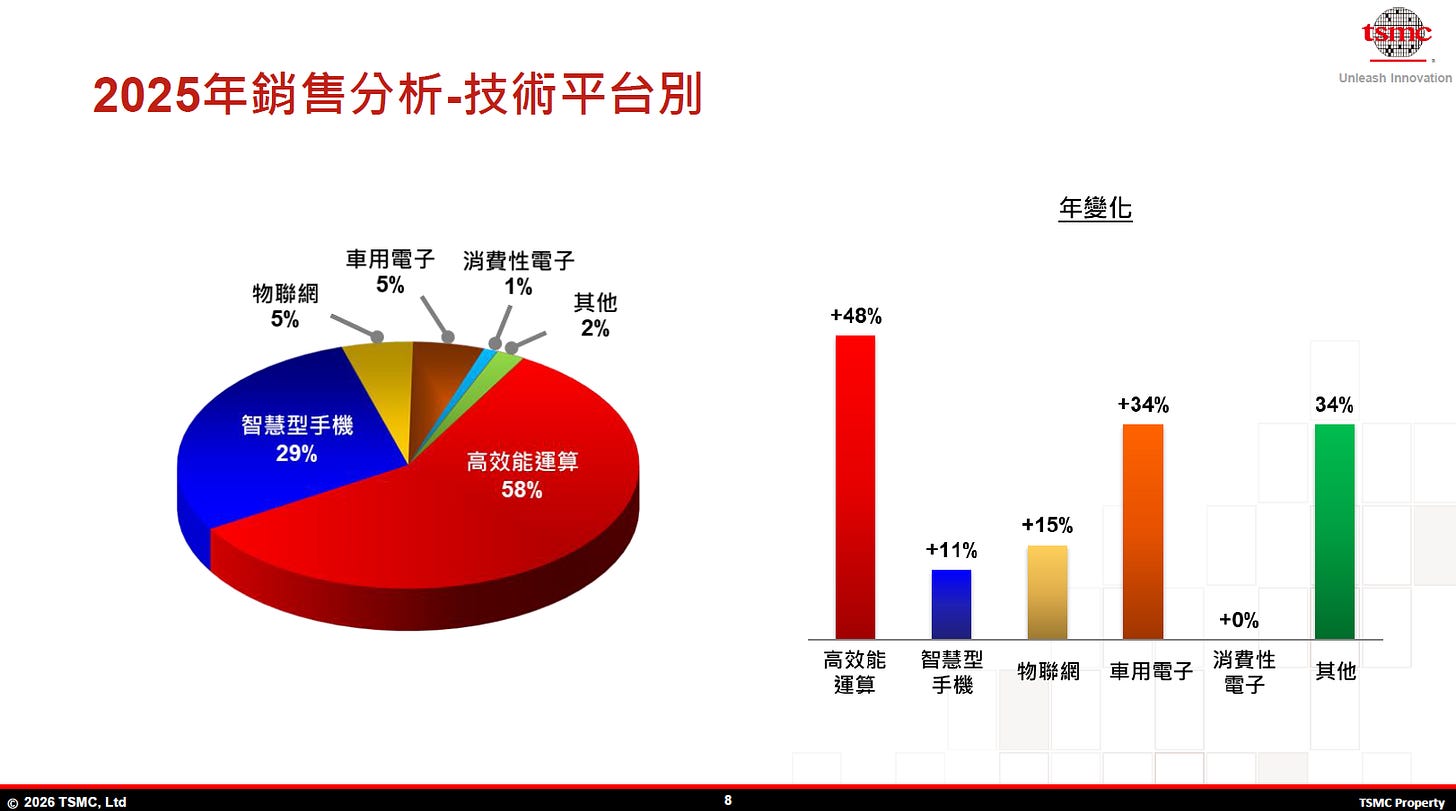
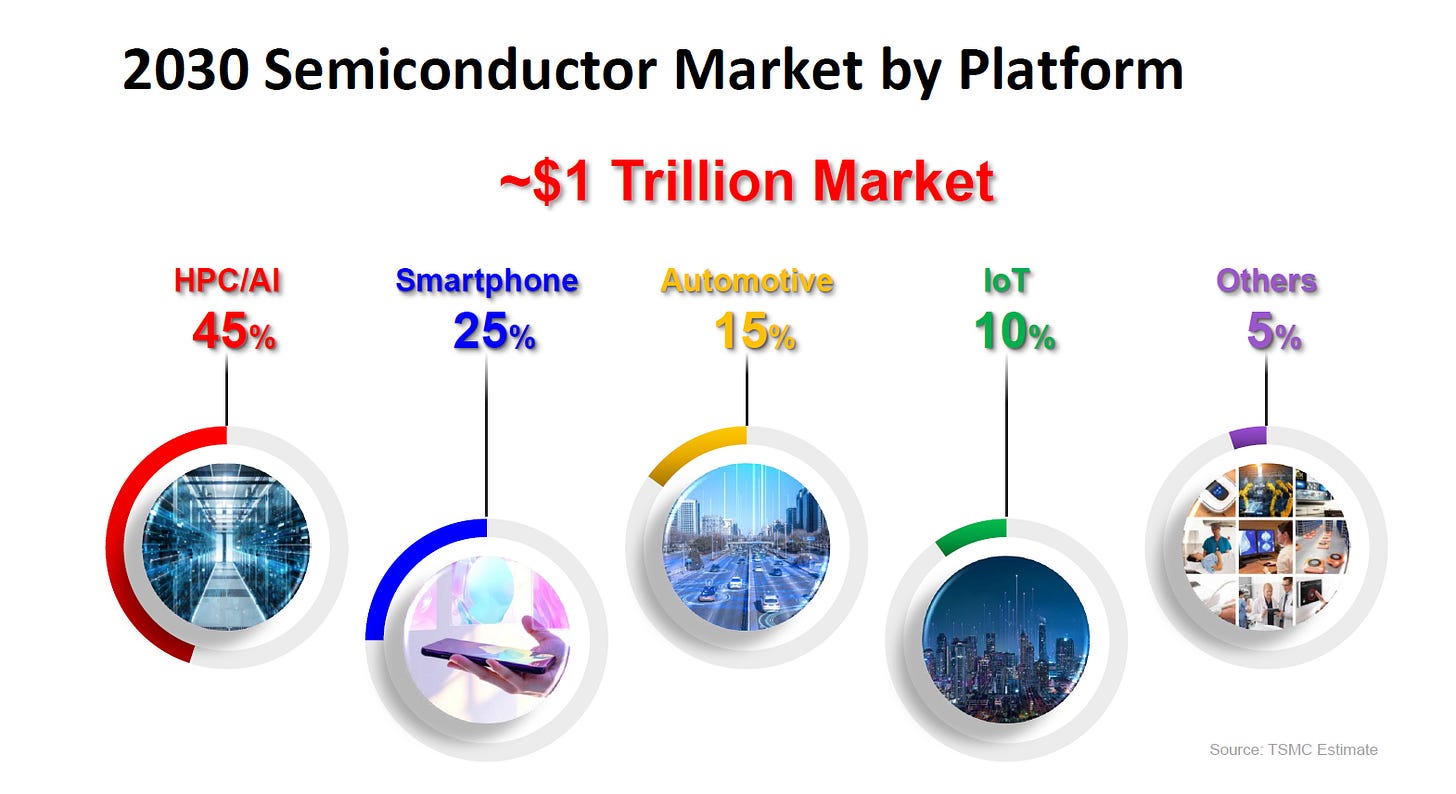
Red: AI/HPC, Blue: Mobile phone, Yellow: IOT, Orange: Automobile
AI Demand Surge: C.C. Wei on Its Authenticity and Investment in Advanced Technologies
In response to market skepticism that the recent AI boom could be a “bubble,” TSMC Chairman and CEO C.C. Wei stated unequivocally at the earnings call that AI demand is real and sustainable, and that the company has strong confidence in its long-term trajectory. Wei revealed that over the past three to four months, he personally engaged in intensive discussions with key customers to verify whether demand for AI-related chips is supported by a solid long-term foundation. The outcome, he said, was reassuring: customers did not merely offer verbal assurances, but also presented concrete data showing that AI applications are actively driving healthy business growth and generating substantial returns. He humorously added that after reviewing these customers’ financial statements, he found that “they are making even more money than TSMC,” drawing lighthearted laughter from the audience. This further underscored the significant profitability downstream service providers are enjoying from the AI wave. Taken together, TSMC is clearly not concerned that AI demand is illusory—the strong order momentum from end customers such as cloud service providers (CSPs) provides compelling evidence that the AI boom rests on a solid foundation.
To meet surging AI demand, TSMC is aggressively expanding its most advanced manufacturing and packaging capabilities. On the 2-nanometer (N2) process, Wei announced that development is progressing smoothly: N2 entered volume production as scheduled in Q4 2025 at both the Hsinchu and Kaohsiung sites, with initial yields exceeding expectations. Orders from smartphones, high-performance computing (HPC), and AI accelerators are ramping rapidly, and 2026 is expected to mark the first major wave of capacity expansion for 2nm. Continuing its comprehensive process-family strategy, TSMC plans to follow N2 with enhanced N2P variants that deliver improved performance and power efficiency, as well as the A16 advanced node, which introduces a new power delivery architecture tailored for high power-density AI and HPC applications. Industry observers interpret A16 and similar nodes as targeting data center energy-efficiency bottlenecks, signaling that AI computing is shifting from simply “stacking more compute” toward a stronger emphasis on efficiency. TSMC has also acknowledged that the capital required for fab construction and equipment at the 2nm generation is significantly higher than for prior nodes. However, strong market demand for high-performance, high-density chips positions the N2 family to become a cornerstone technology supporting AI and HPC applications over the next decade. In short, the AI megatrend is driving TSMC to double down on the most advanced process technologies, ensuring it remains ahead in the next generation of semiconductor competition.
2025年2月5日
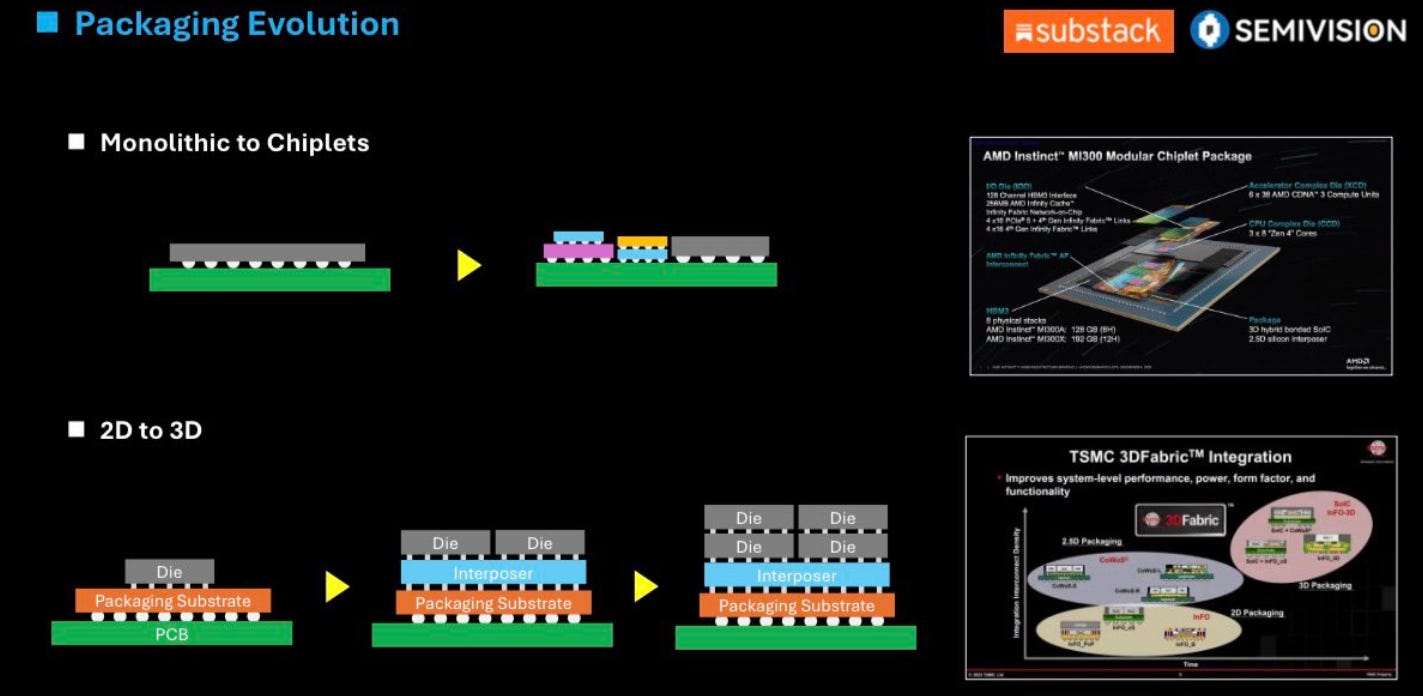
Beyond wafer fabrication, TSMC is also intensifying its investment in advanced packaging. As AI high-performance chips increasingly rely on heterogeneous integration—such as high-bandwidth memory (HBM) stacking—TSMC’s advanced packaging capacity has at times struggled to keep pace with demand in recent years. Wei noted that TSMC maintains a leading position in advanced packaging technologies and that market demand remains robust. In the 2026 capital expenditure plan, more than 10% of total spending will be allocated to advanced packaging, testing, mask production, and related areas. This indicates that TSMC is accelerating the expansion of advanced packaging capacity, including high-end wafer-level stacking solutions such as CoWoS, InFO, and SoIC, to eliminate bottlenecks and meet customer demand. At the same time, this expansion is expected to benefit the broader ecosystem of equipment and materials suppliers.
Market analysts point out that TSMC’s massive capital spending effectively signals to the market that it is backed by long-term customer commitments. Historically, TSMC has been highly disciplined, refraining from aggressive capacity expansion without clear visibility into long-term orders and customer prepayments. The decision to raise 2026 capex to as much as USD 56 billion, with more than 70% allocated to advanced nodes, sends a strong message: the global cloud giants’ arms race in AI compute is not cooling off—instead, it is pulling forward capacity investments to secure supply for 2027–2028 and beyond. Looking ahead, by scaling advanced process and packaging capacity, TSMC is set to further solidify its central role in the AI chip supply chain and ensure that it fully captures the long-term value of this transformative technology wave.
Accelerating U.S. Fab Expansion: Scaling Capacity to Meet AI Customer Demand
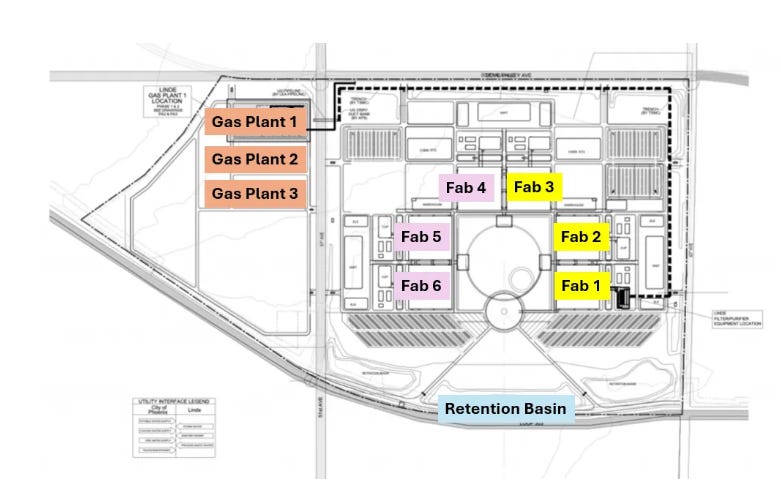
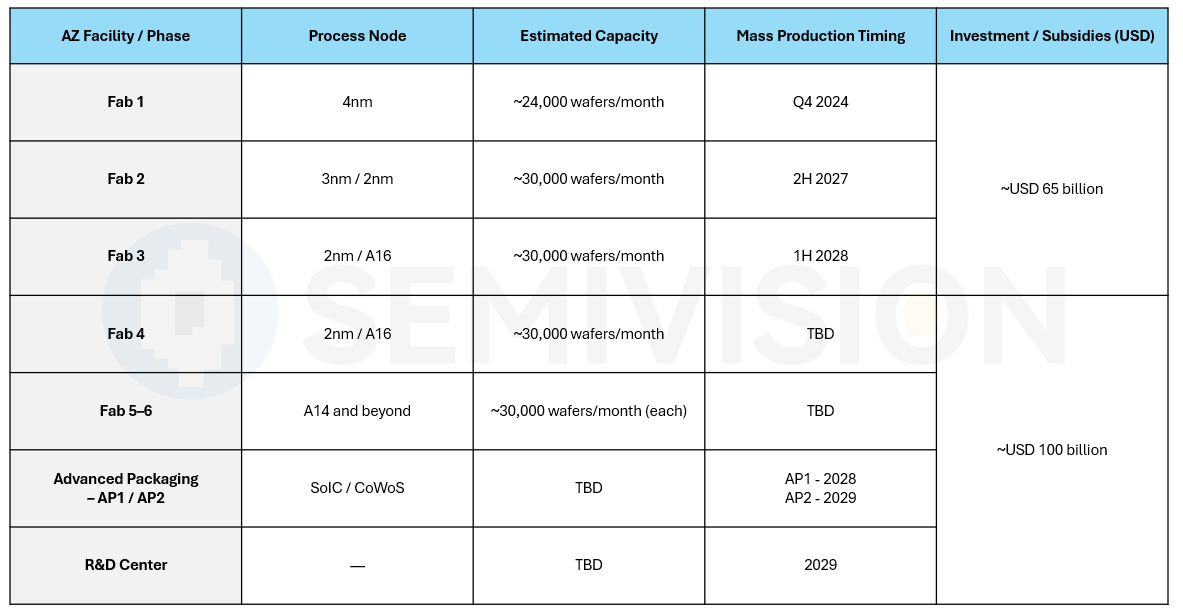
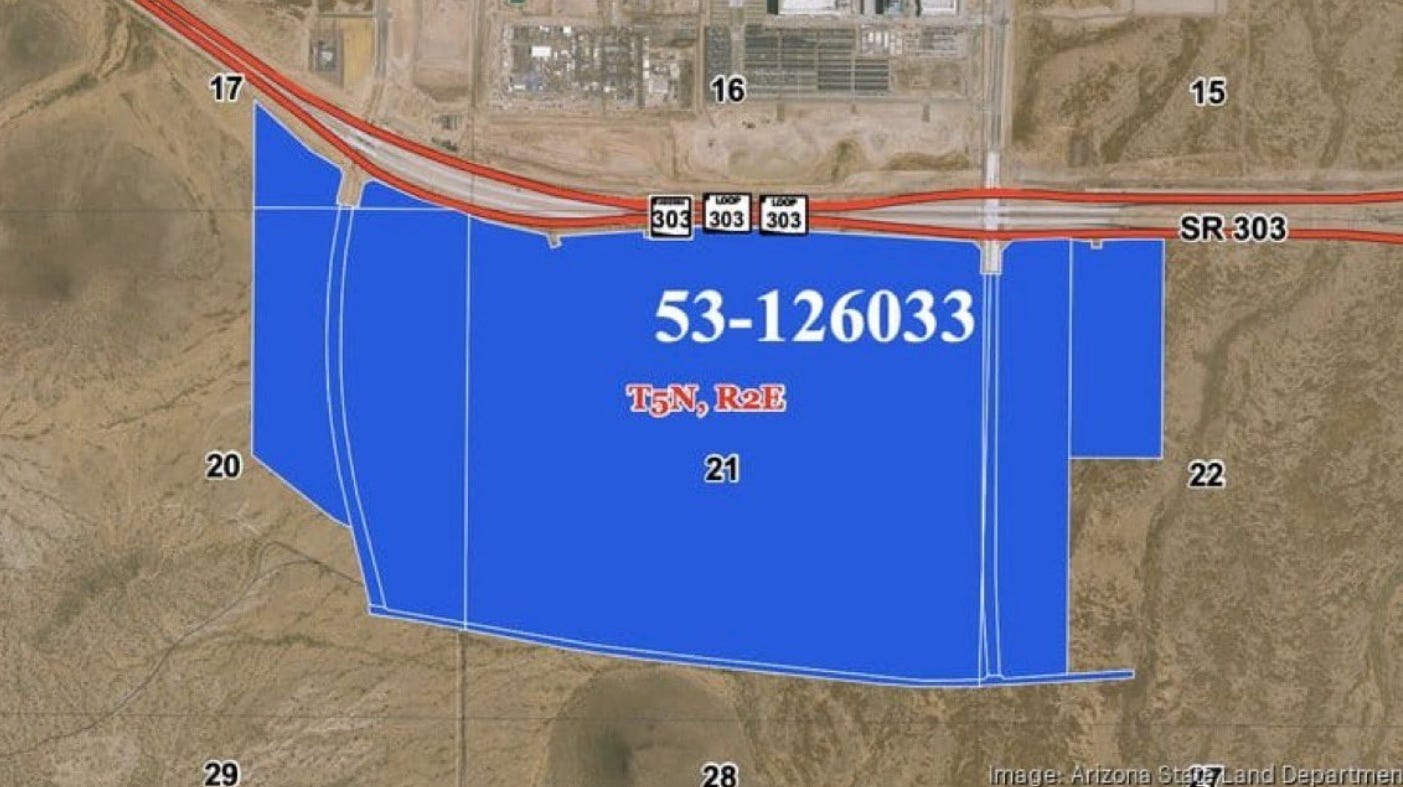
Notably, as TSMC undertakes a major capacity expansion, its overseas fab construction plans are also being accelerated in parallel—most prominently in Arizona, where progress has drawn significant market attention. C.C. Wei revealed that recent media reports suggesting TSMC may add four to five additional fabs in the United States are not without basis. He confirmed that TSMC has recently acquired a second large parcel of land in the U.S., stating candidly, “That is a hint—we need this land.” This move clearly signals that the company is planning further expansion to meet the continuous and growing order demand from U.S. customers. Wei explained that the primary driver is the strong pull from major U.S. AI customers, who are requesting substantial capacity support, leaving TSMC little choice but to accelerate fab expansion in order to keep pace with customer needs. Fueled by this demand, TSMC’s U.S. manufacturing footprint is rapidly expanding, taking shape as an independent GigaFab cluster.
According to Wei, the first Arizona fab (Fab 21 Phase 1) successfully entered volume production in Q4 2024. Although the project previously faced concerns over delays due to labor availability and construction timelines, it is now producing as scheduled, demonstrating TSMC’s ability to overcome execution challenges and reach key milestones. The second fab (Phase 2) at the same site has completed its main construction and is expected to begin tool installation in 2026, with volume production pulled in to the second half of 2027. Originally, the Phase 2 ramp was expected to occur later, but in response to strong and urgent demand from U.S. customers, TSMC decided to accelerate the production timeline. In addition, construction of a third fab is already underway, while applications have been submitted for a fourth fab and the first advanced packaging facility at the Arizona site. These developments indicate that multiple new production facilities will be added to the Arizona campus over the coming years. To support this large-scale expansion and maintain long-term flexibility, the recently acquired second land parcel is intended to accommodate future phases of growth. Ultimately, TSMC envisions transforming the Arizona site into a fully integrated fab cluster, spanning from wafer manufacturing to advanced packaging, and designed to serve rising demand for advanced-node technologies from smartphone, AI, and HPC customers.

2025年4月19日
Wei also noted that yields and defect density levels at the Arizona fabs are now approaching those of TSMC’s Taiwan fabs, a highly encouraging signal for overseas expansion. Previously, the market had expressed concerns that U.S.-based manufacturing might suffer from lower yields and higher costs due to a lack of local experience. Current results, however, indicate that TSMC has successfully transferred a significant portion of its manufacturing expertise and operational discipline to the U.S., achieving product quality close to Taiwan benchmarks. This suggests that while overseas fabs inherently carry higher costs, there has been no material compromise in quality or efficiency, and further optimization remains possible as operational experience accumulates.
Beyond the U.S., TSMC’s specialty-technology fab in Kumamoto, Japan, entered volume production in late 2024, with a second Japan fab currently under construction, while preparations are also underway for its European fab in Dresden, Germany. Together with the continued build-out of multiple 2nm fabs in Taiwan, these overseas sites form a new global manufacturing footprint for TSMC. Wei emphasized that all overseas expansion decisions are fundamentally customer-driven, reflecting the desire of global customers for greater regional supply-chain flexibility. At the same time, TSMC factors in the importance of adequate government support to ensure long-term shareholder value. With strong collaboration from advanced U.S. customers as well as federal, state, and local governments, TSMC is accelerating capacity expansion in Arizona, with all projects progressing smoothly and in line with plan. Taken together, U.S. government policy and customer demand are reinforcing one another, driving TSMC’s U.S. fab strategy to expand well beyond the originally planned two fabs and positioning the company to meet the massive chip demand of the AI era ahead.
U.S.–Taiwan Tariff Agreement Reached: Tariffs Cut to 15% and a USD 500 Billion Investment Commitment
Coinciding with the day TSMC released its strong earnings results (January 15, 2026), a major breakthrough emerged in U.S.–Taiwan economic and trade relations. The U.S. Department of Commerce announced that the United States and Taiwan had reached a new trade agreement under which the U.S. will reduce the “reciprocal tariff” rate applied to Taiwanese goods from 20% to 15%. In exchange, Taiwan’s technology sector will significantly expand its investment footprint in the United States. The news, first reported by outlets such asThe New York Timesand CNBC, was quickly confirmed by both governments and is widely viewed as a milestone in U.S.–Taiwan economic cooperation.

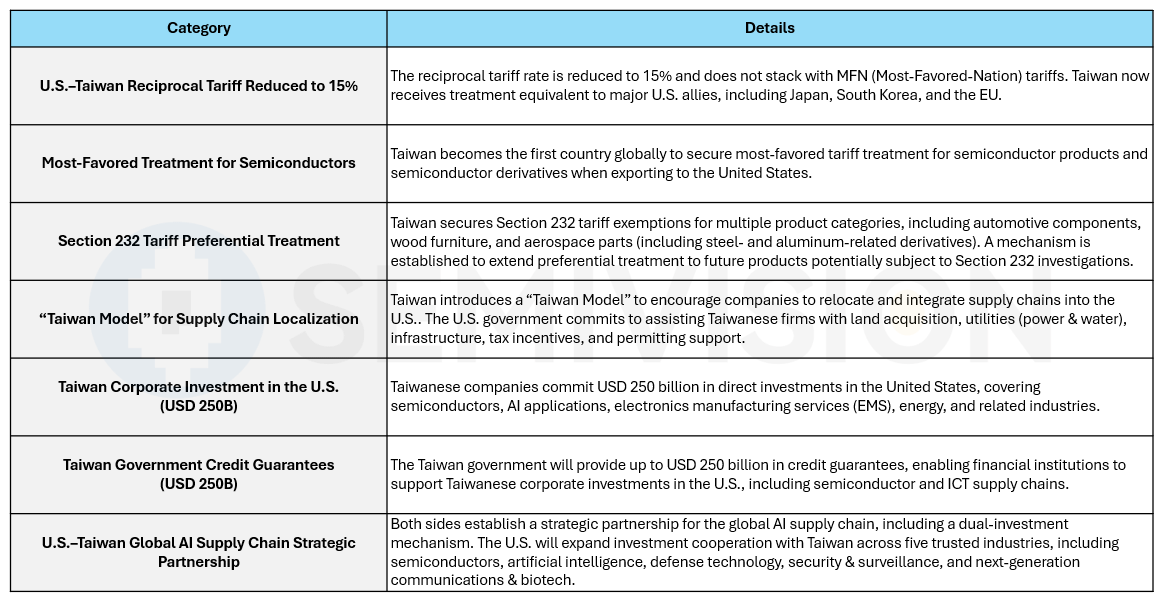
Summary of Key Outcomes from the U.S.–Taiwan Tariff Negotiations
In return, the United States will lower reciprocal tariffs on Taiwanese goods to 15% and has pledged that certain categories will no longer be subject to these tariffs. These exemptions include generic pharmaceuticals and their active ingredients, aircraft components, and selected natural resource products, enhancing the competitiveness of these industries’ exports to the U.S. market. Reciprocal tariffs are a trade measure the United States has increasingly employed in recent years, typically applied at a uniform rate to trading partners without a formal free trade agreement. Previously, the U.S. had set a baseline rate of around 20% for many countries; Taiwan’s reduction to 15% reportedly aligns its treatment with that of close U.S. allies such as Japan and South Korea. As a result, the agreement effectively grants Taiwan de facto most-favored-nation–like treatment within the U.S. tariff framework, ensuring that Taiwanese exports are no longer subject to higher tariffs than those faced by key U.S. partners.
More critically, the agreement introduces special tariff arrangements for semiconductor products entering the U.S. market. The Department of Commerce clarified that, under tariffs imposed pursuant to Section 232 of the Trade Expansion Act of 1962, Taiwanese companies that build chip manufacturing facilities in the United States will be granted specific exemptions. In particular, Taiwanese firms currently constructing new wafer fabs in the U.S.—including TSMC—will be fully exempt from Section 232 tariffs during the construction phase. This means that equipment, tools, and construction materials shipped from Taiwan or other regions to the U.S. for fab construction will not incur additional tariffs. During this phase, companies will also be allowed to import equipment or related products equivalent to up to 2.5 times the planned capacity under construction, free from Section 232 restrictions.
Once the fabs are completed and enter volume production, the U.S. will further allow these companies to import semiconductor products—such as chips—equivalent to 1.5 times their U.S.-based production capacity each year, in order to maintain supply-chain flexibility. In effect, even after establishing manufacturing operations in the U.S., companies like TSMC will still be able to ship a defined volume of chips from overseas facilities, including Taiwan, into the U.S. market without facing punitive tariffs. This mechanism ensures additional supply flexibility to respond to demand fluctuations during U.S. operations. Practically speaking, the U.S. is granting Taiwan’s semiconductor industry a “quota plus tariff exemption” preferential treatment within the Section 232 national security tariff framework: as long as companies commit to investing and building fabs in the U.S., the potential impact of future semiconductor import tariffs can be substantially mitigated.
Section 232 tariffs were originally applied mainly to imports such as steel and aluminum deemed critical to national security. Beginning in 2025, however, the Trump administration expanded their scope to semiconductors, widely viewed as a pressure tool to encourage chip manufacturing to return to U.S. soil. By explicitly granting exemptions and quotas for Taiwanese chips under this agreement, the U.S. is clearly seeking to use positive incentives to drive a greater share of Taiwan’s semiconductor capacity to the United States. U.S. Secretary of Commerce Howard Lutnick was even more direct, warning that if Taiwanese chipmakers choose not to build fabs in the U.S., they could face punitive tariffs of up to 100% in the future. His remarks underscore the firmness of the U.S. stance, effectively equating U.S. investment with tariff relief. Lutnick also disclosed a key policy objective for the first time: the U.S. hopes to relocate roughly 40% of Taiwan’s semiconductor supply chain to American soil. This ambitious target highlights Washington’s long-term strategy to attract a substantial share of Taiwan’s semiconductor capacity and upstream/downstream supply chain—ranging from wafer fabrication to materials, equipment, and testing—into the United States. On one hand, the U.S. is accelerating the build-out of a domestic semiconductor ecosystem through tariff leverage and policy incentives; on the other hand, for Taiwan, this signals mounting pressure to reconfigure an industry that has long been highly centralized.
The agreement also takes into account concerns from more traditional industries. The Department of Commerce stated that, within the Section 232 framework, tariff rates applied to Taiwanese automotive components, lumber, and related products will likewise not exceed 15%. In other words, beyond high-tech sectors, both sides have reached tariff-buffer arrangements for selected traditional industrial products to ease the burden on Taiwanese exporters. These measures are expected to help preserve the competitiveness of Taiwan’s diversified export portfolio in the U.S. market and further deepen bilateral trade and investment ties.
Implications of the Agreement for TSMC and Taiwan’s Technology Sector Investing in the United States
The implementation of the new U.S.–Taiwan tariff agreement will have far-reaching implications for TSMC and the broader Taiwanese technology industry’s investment and operating environment in the United States. First, the combination of tariff reductions and quota mechanisms significantly lowers the tariff costs and risks associated with U.S. manufacturing for Taiwanese companies. In TSMC’s case, its Arizona fabs will be fully exempt from Section 232 tariffs during construction and expansion, allowing advanced equipment and materials to be imported tariff-free and helping to control fab construction costs. Once the fabs enter volume production, TSMC will still be permitted to ship chips from Taiwan to the U.S. market in quantities of up to 1.5 times its U.S. production capacity per year, without incurring punitive tariffs.
This arrangement is strategically important for TSMC. On the one hand, it ensures supply flexibility: when U.S. domestic capacity is insufficient, TSMC can continue to support American customers by dynamically allocating output from its Taiwan fabs, avoiding supply disruptions caused by tariff barriers. On the other hand, it effectively caps TSMC’s tariff exposure in the U.S. at 15%, far below the potential 25% or even 100% punitive tariff rates that have been discussed. Given that advanced chips often cost thousands of dollars per unit, the difference between a 15% tariff and rates exceeding 25% is economically substantial. With this buffer in place, TSMC now has much clearer visibility into the tax costs associated with U.S. expansion, significantly reducing uncertainty surrounding future U.S. trade policy.
For example, Taiwan’s USD 250 billion in credit guarantees could be used to support financing for TSMC and its supply-chain partners as they build facilities in the United States, lowering funding costs and reducing financial risk. At the same time, U.S. commitments to exempt certain Taiwanese imports from tariffs mean that TSMC will be able to operate in a predictable, low-tariff environment even when importing chips or equipment from Taiwan, reducing the risk of losses from abrupt policy shifts.
For TSMC, these conditions clearly strengthen the incentive to expand in the United States. While building fabs in the U.S. brings benefits such as closer proximity to customers and greater geopolitical risk diversification, it also entails higher costs and potentially lower operating efficiency than in Taiwan. As a result, earlier investments in Arizona once raised investor concerns about margin dilution. However, with U.S. government subsidies and customers willing to pay a premium, the financial impact of overseas expansion has been significantly mitigated. According to industry analysis, TSMC has maintained its long-term gross margin target of above 56%, without lowering guidance due to U.S. production. On the contrary, as U.S. customers increasingly prioritize supply-chain resilience, they are willing to pay higher foundry prices for “made-in-the-U.S.” capacity, enabling TSMC to capture a degree of geopolitical premium. In this sense, TSMC is transforming its U.S. manufacturing footprint from a potential cost burden into a high-value “insurance-like” supply-chain service. Major customers such as Apple and NVIDIA are prepared to pay for enhanced supply security and reduced political risk, while TSMC deepens its strategic ties with key U.S. clients. Consequently, the tariff agreement further ensures that TSMC’s U.S. expansion will be supported by both policy protection and market demand, potentially strengthening its global competitive position over the long term.
That said, for TSMC and other Taiwanese technology companies, expanding investment in the U.S. also presents practical challenges. These include mobilizing skilled engineering talent to support overseas operations and managing the complexities of cross-border operations—both of which entail hidden costs. Wei has candidly noted that his greatest concern today is not competition from Intel, but whether Taiwan’s domestic power supply can keep pace with the company’s rapid capacity expansion. This underscores the fact that even as TSMC globalizes its footprint, it remains heavily reliant on Taiwan as its core base for R&D and manufacturing support. Should bottlenecks arise in Taiwan’s electricity, water, or labor infrastructure, overall capacity growth could be constrained.

2025年4月1日
Accordingly, TSMC has emphasized that even as it accelerates U.S. expansion, it will continue to invest aggressively in Taiwan, advancing multiple phases of 2-nanometer fabs in Hsinchu and Kaohsiung with government support, while simultaneously expanding advanced process and packaging capabilities at home. This highlights TSMC’s dual-track strategy: rooted in Taiwan while deploying globally. The U.S.–Taiwan tariff agreement adds momentum to this approach and signals that TSMC’s investment trajectory and supply-chain footprint in the coming years will be increasingly intertwined with U.S. policy.
Global Supply Chain Geopolitics: Restructuring Under U.S.–China Rivalry and Taiwan’s Role
TSMC’s strong earnings growth and the newly announced U.S.–Taiwan tariff agreement together reflect that the global semiconductor supply chain is entering a new phase of geopolitical restructuring. On one hand, the United States—working in coordination with allies such as Taiwan—is tightening its control over advanced chip manufacturing and expanding onshore investment. On the other hand, China, constrained by persistent U.S.-led technology restrictions, is accelerating efforts to build a self-sufficient semiconductor ecosystem. In the years ahead, U.S.–China technological competition is set to intensify further, with semiconductors as a central strategic battleground. Shifts in the supply-chain landscape will have profound implications for the relative positioning of both powers.
From the U.S. perspective, a series of recent actions—including stringent chip export controls on China, aggressive promotion of domestic fab expansion, and the use of incentives to draw additional Taiwanese investment into the United States—are all aimed at weakening China’s access to cutting-edge semiconductors. After the Trump administration took office in 2025, chips were explicitly elevated to a national security priority. Section 232 investigations argued that excessive reliance on foreign semiconductor supply posed risks to critical infrastructure, including national defense. As a result, Washington adopted a dual-track strategy of “penalties plus incentives”: on the one hand, threatening punitive tariffs on foreign-made chips (potentially 25% or even 100%); on the other, offering tariff exemptions and subsidies to attract allied manufacturers to build capacity in the U.S. As the world’s leading pure-play foundry, TSMC plays a pivotal role in this grand strategic contest. By granting Taiwanese chips exemptions under Section 232 and lowering tariffs to 15%—a level broadly aligned with U.S. allies—Washington is effectively integrating Taiwan into a U.S.-led advanced semiconductor bloc. The U.S. Secretary of Commerce’s stated goal of relocating roughly 40% of Taiwan’s semiconductor supply chain to the United States further underscores America’s intent to reduce dependence on Taiwan as a single geographic node and instead establish domestic capacity as a risk-sharing anchor. For China, this is clearly unfavorable: even absent a conflict, the U.S. is deliberately seeking to reduce the global system’s reliance on Taiwan-made chips, thereby diminishing China’s potential leverage over Taiwan’s semiconductor importance.

2025年3月4日
On the Chinese side, massive resources have been mobilized in recent years to pursue semiconductor self-reliance. However, sustained technology blockades coordinated by the U.S. and its allies have prevented breakthroughs at advanced nodes. Between 2023 and 2024, the U.S. repeatedly tightened export controls on China, severely restricting access to advanced manufacturing equipment, EDA software, and high-performance computing (HPC) and AI chips. Even where exports of products such as NVIDIA’s H100 or H200 were permitted, they came with strict bandwidth caps and volume restrictions. Under these constraints, China’s high-end chip development has effectively been forced to decouple from the global technology frontier. The global semiconductor industry is increasingly bifurcating into “two worlds”: one led by the U.S., Taiwan, Japan, South Korea, and the EU, which controls sub-5nm advanced processes and AI chip supply; and another centered on China and a limited set of partners, largely confined to 14nm (SMIC: 7nm) and more mature nodes, pursuing alternative paths in packaging and assembly but remaining far from the leading edge in the near term. The U.S.–Taiwan tariff agreement is likely to accelerate this bloc-based fragmentation. Taiwan is clearly aligning with the U.S. camp, strengthening its role as a supplier of advanced chips to America, while China is excluded and may face even greater shortages of third-party advanced chip sources as TSMC’s capacity shifts overseas. China may attempt to respond by further supporting domestic champions such as SMIC, developing indigenous EDA tools and equipment, and sourcing lower-end chips through third countries. Over the long term, however, if the U.S. and its allies succeed in building a semiconductor supply network that effectively bypasses China, China’s technological competitiveness in the AI era will face severe structural constraints.

2025年3月26日
From a global supply-chain restructuring perspective, TSMC’s investments in the United States, Japan, and Europe are part of a broader trend. Major economies have launched semiconductor revitalization programs in recent years: the U.S. with the CHIPS Act, the EU with the European Chips Act, and Japan with substantial subsidies to attract fabs from TSMC, Micron, and others. As a result, wafer manufacturing capacity—once heavily concentrated in East Asia, particularly Taiwan and South Korea—is beginning to spread across North America and Europe. In the coming years, supply-chain regionalization and diversification will become increasingly pronounced. The U.S. aims to secure leadership in advanced logic processes; Europe focuses on automotive and mature-node technologies; Japan seeks to revive memory and advanced packaging. As the global technology leader, TSMC is participating in all of these regional strategies: building advanced logic capacity in Arizona, partnering with Sony in Japan for automotive image sensor wafers, and planning to serve European automotive and industrial customers from Germany. From a risk diversification standpoint, this restructuring helps mitigate the impact of localized disruptions—whether natural disasters or geopolitical events—on global chip supply. For example, in the event of heightened tensions or conflict in the Taiwan Strait, dispersed capacity across the U.S., Japan, and Europe could serve as a partial buffer, reducing the shock to the global economy. At the same time, regionalized production provides governments and enterprises with greater confidence in “local supply,” reducing exclusive reliance on East Asian manufacturing hubs.
For Taiwan itself, however, this new supply-chain configuration presents both opportunities and risks. Taiwan has long been the irreplaceable center of the global semiconductor industry—often described as a “silicon shield”—with more than half of the world’s foundry capacity and over 90% market share in leading-edge processes. This concentration has given Taiwan significant strategic value and bargaining power in international politics. Yet as TSMC and other industry leaders respond to allied governments’ requests by shifting portions of capacity overseas, the degree of concentration within Taiwan will inevitably decline. If, as the U.S. hopes, as much as 40% of Taiwan’s semiconductor production were to relocate to the United States, Taiwan’s relative importance would correspondingly diminish. One school of thought argues that TSMC’s global dispersion could weaken Taiwan’s “silicon shield” effect: if advanced chips are no longer produced exclusively in Taiwan, international perceptions of the strategic importance of cross-strait stability may evolve, and Taiwan’s unique status as a technology hub could be partially diluted. This is a critical issue that Taiwan must weigh carefully.
At the same time, Taiwan faces internal structural challenges amid this industrial transformation. As TSMC’s expansion accelerates, domestic constraints related to talent development, power supply, and land availability are becoming increasingly apparent. C.C. Wei has repeatedly urged the Taiwanese government to help improve energy supply, as advanced semiconductor manufacturing requires extremely stable and abundant electricity. As new 2nm fabs come online in the coming years, insufficient grid capacity could emerge as a bottleneck. Moreover, rapid expansion is driving intense demand for skilled engineers, raising questions about how to retain and cultivate sufficient talent while preventing poaching by foreign competitors offering higher compensation. It is increasingly clear that Taiwan must proactively invest in education and infrastructure to provide a solid foundation for the continued growth of its “national champion” semiconductor industry.
Overall, the signals sent by TSMC’s earnings and the U.S.–Taiwan tariff agreement outline a new geopolitical landscape for the global semiconductor supply chain in the years ahead. The United States is working with allies to build a self-reliant and controllable advanced chip supply system, while China is being pushed onto a difficult path of technological self-sufficiency. Supply chains are shifting from extreme concentration toward dispersion, with each region assuming differentiated roles. Taiwan stands at the center of this transformation, striving to balance partner expectations with its own strategic interests. In the near term, Taiwan remains an indispensable technology leader and capacity provider; over the longer term, its role will evolve as supply-chain restructuring progresses. TSMC’s decision to invest aggressively in the United States, Japan, and Europe reflects not only commercial logic but also a strategic response to geopolitical realities. Looking ahead, competition and cooperation across the global technology supply chain will become increasingly complex. U.S.–China rivalry in semiconductors is set to intensify, as countries worldwide seek equilibrium between supply-chain security and industrial competitiveness. Taiwan, in turn, must leverage its strengths, deepen cooperation with the U.S., Japan, and Europe, and maintain leadership in R&D and manufacturing to ensure it continues to play a critical and irreplaceable role in the emerging global division of labor. In the coming years, changes in the semiconductor supply-chain map will profoundly shape global technological power dynamics and geopolitical strategy—and the choices and performance of TSMC and Taiwan will undoubtedly be among the most consequential factors.
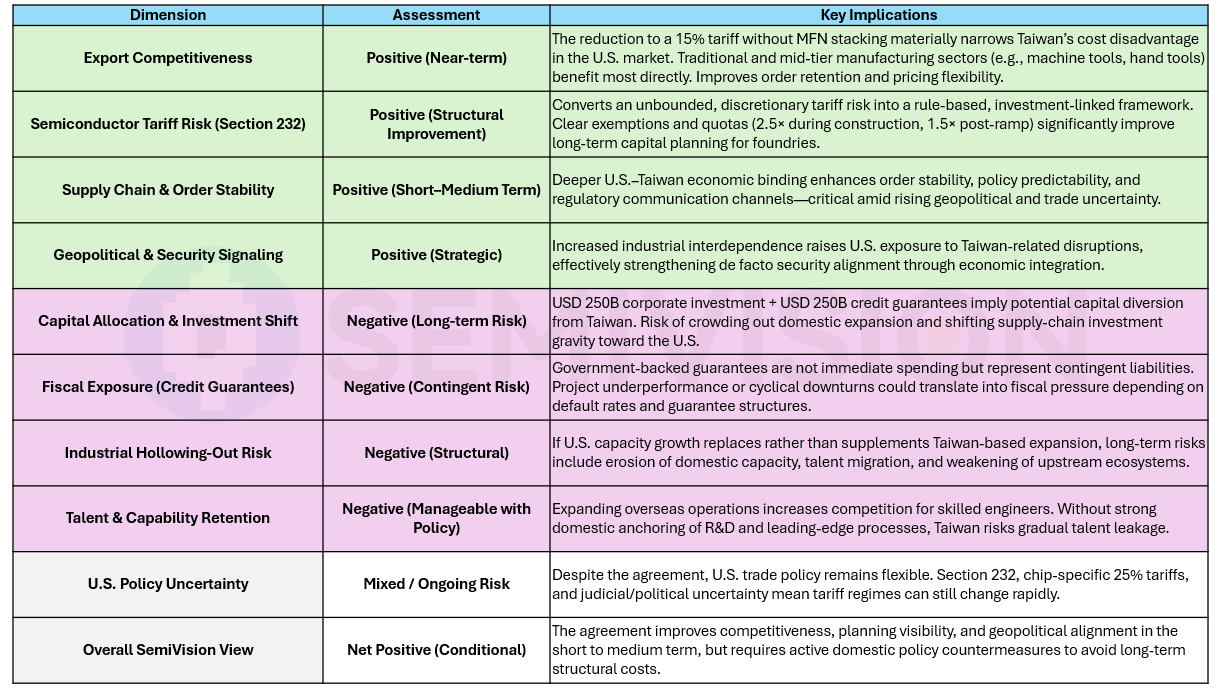
SemiVision Summary View
From SemiVision’s standpoint, the U.S.–Taiwan tariff agreement is net positive in the short to medium term, particularly for export competitiveness, semiconductor investment planning, and geopolitical alignment. However, the long-term cost curve—capital migration, talent dynamics, and fiscal exposure—must be actively managed, not passively accepted.
The agreement buys Taiwan time, predictability, and access.
Reference:
Taiwan Semiconductor Manufacturing Co. (TSMC) is shelling out nearly $200 million to buy the land south of its fast-growing Phoenix plant.
The semiconductor giant was the winning and only bidder during an Arizona State Land Department auction on Jan. 7, with TSMC Arizona President Rose Castanares raising the winning paddle with a bid of $197.25 million.


PreviousNext
TopLatestDiscussions








See all